Ready to Add Your Pin
to the Map?
Send us your most recent power bill. We’ll review your usage, assess your property, and give you a straight answer on sizing, cost, and payback.
Every pin on this map was installed by the same small crew. Meet the people who build it.
Featured Service Areas
Rocky View. Mountain View. Foothills.
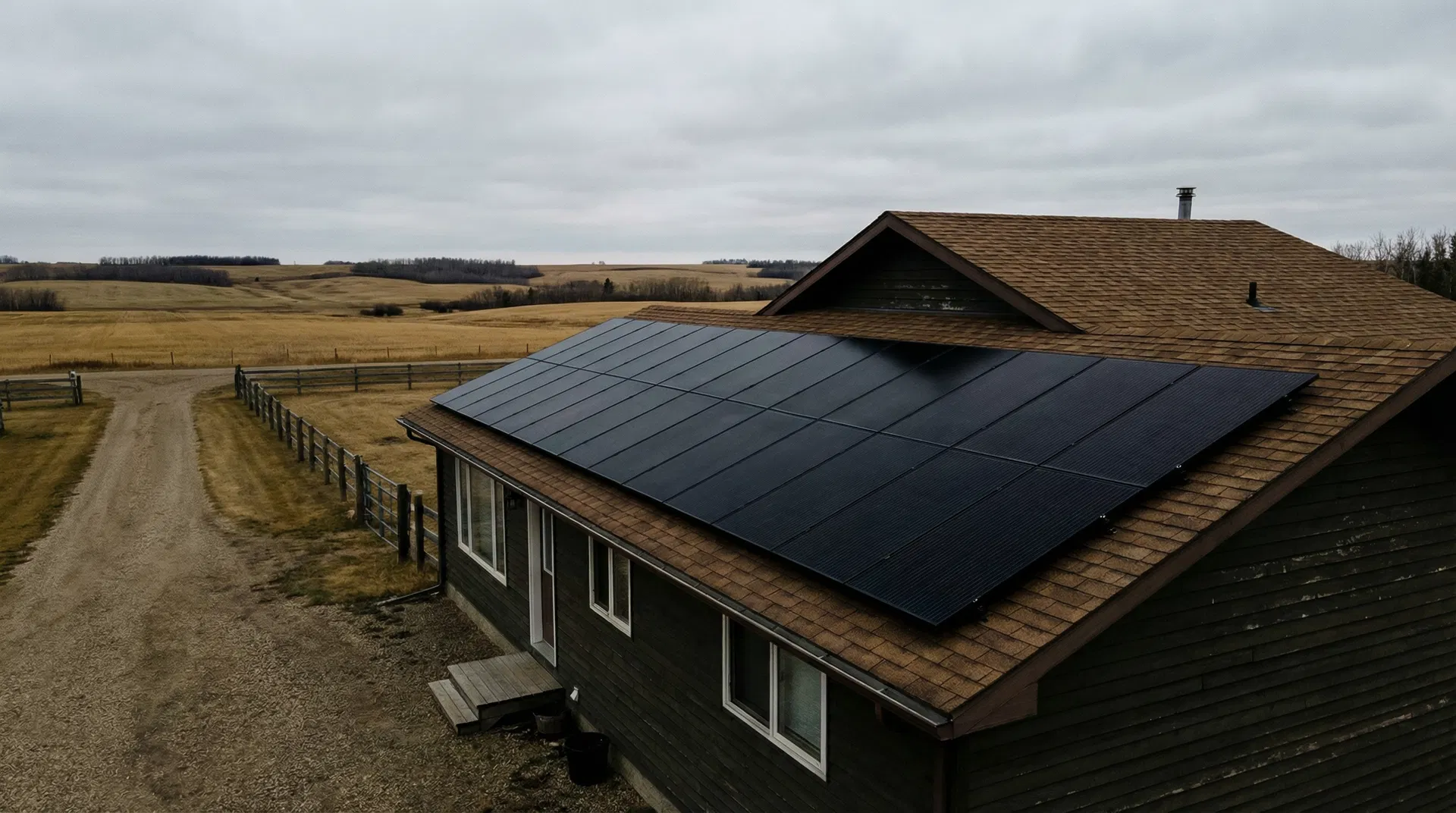
Near Cochrane, AB
Rocky View County
Acreage home on open prairie near Cochrane. Rooftop system flush-mounted on the south-facing asphalt shingle slope. Black monocrystalline panels, black frames, integrating cleanly with the dark brown shingles. System sized to the household load with a small outbuilding.
Outcome
Fortis interconnection completed in 4 weeks. First winter performance confirmed snow shedding within 24–48 hours of accumulation. Production tracking within projected range.
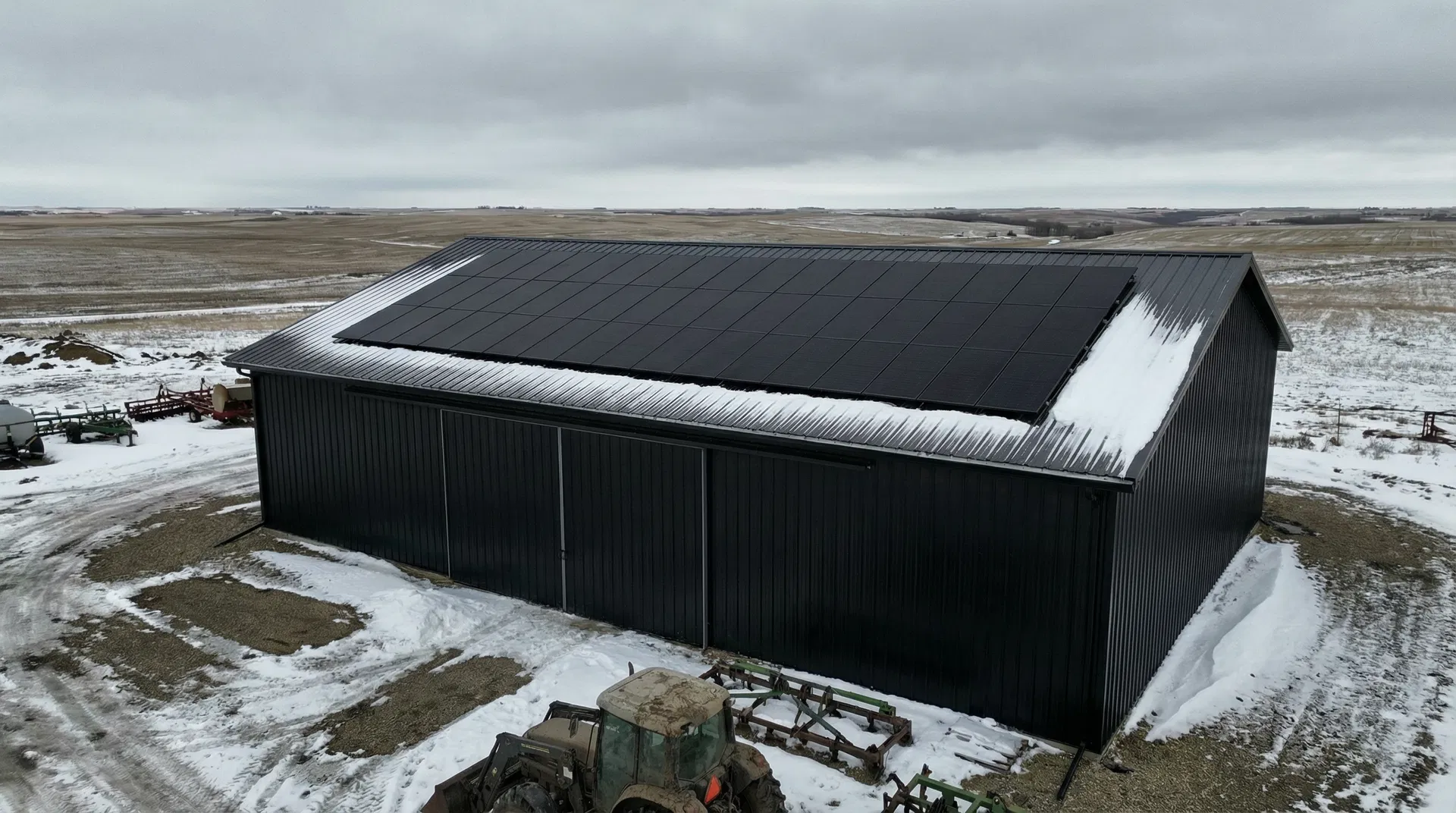
Near Didsbury, AB
Mountain View County
Large black metal-clad equipment barn on a flat prairie farm. Rooftop system flush-mounted across the full south-facing slope of the corrugated metal roof. Black panels, black frames, for a low visual profile. System sized to the barn's shop and equipment electrical load.
Outcome
EQUS interconnection completed in 5 weeks. Snow shedding confirmed through first winter: the steep corrugated roof clears quickly. Owner confirmed system performing as designed through first full season.
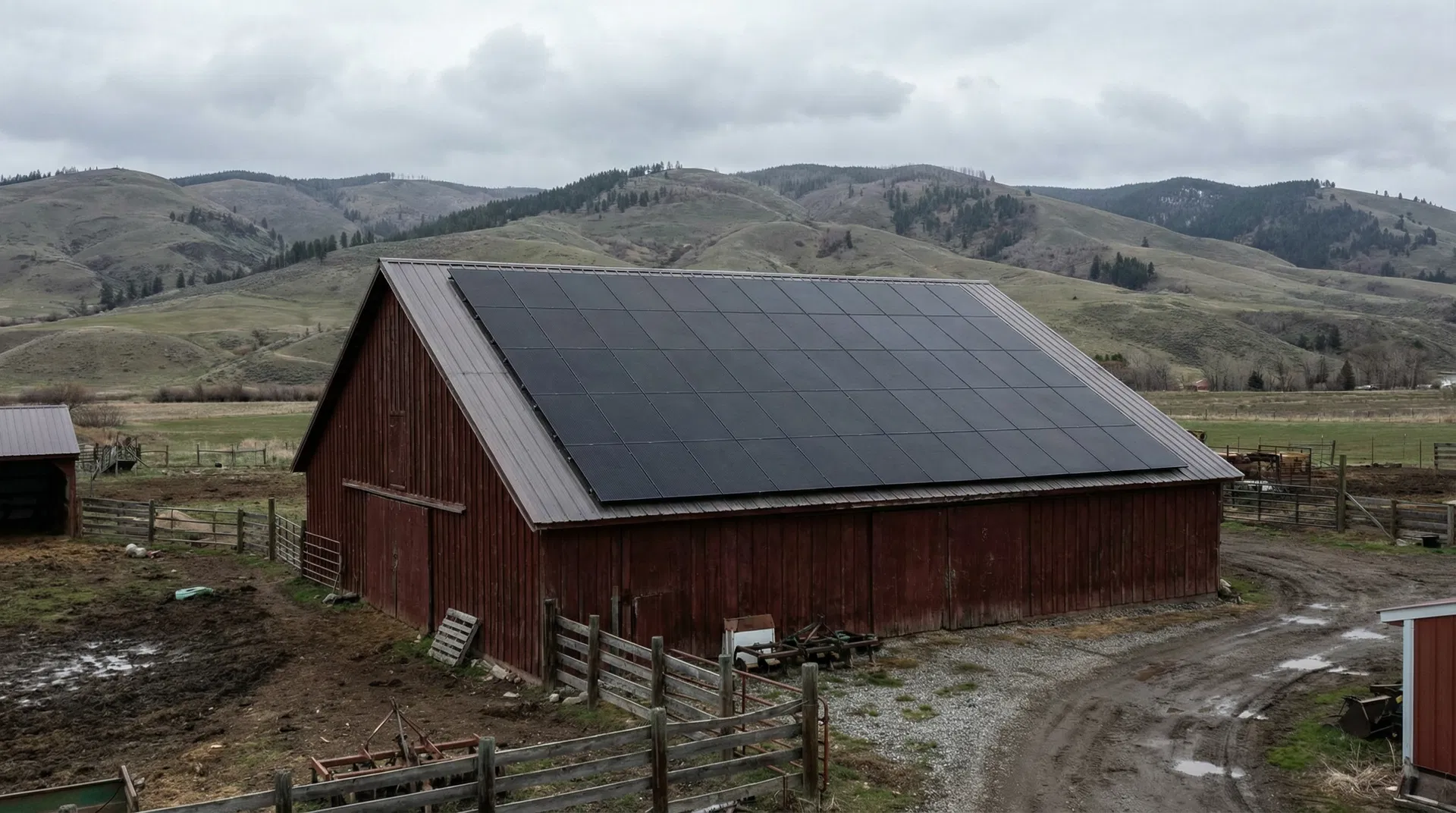
Near Okotoks, AB
Foothills County
Traditional cattle operation with a large red wood barn in the Foothills. Rooftop system installed across the full south-facing metal roof slope. Black monocrystalline panels, black frames, for a low visual profile from the road. System sized to offset water pump, barn lighting, and general farm electrical load.
Outcome
Fortis interconnection completed in 6 weeks. System performing through first full Alberta winter. Owner confirmed snow shedding within 48 hours of accumulation and production consistent with design projections.
Before & After
Drag to see the difference.
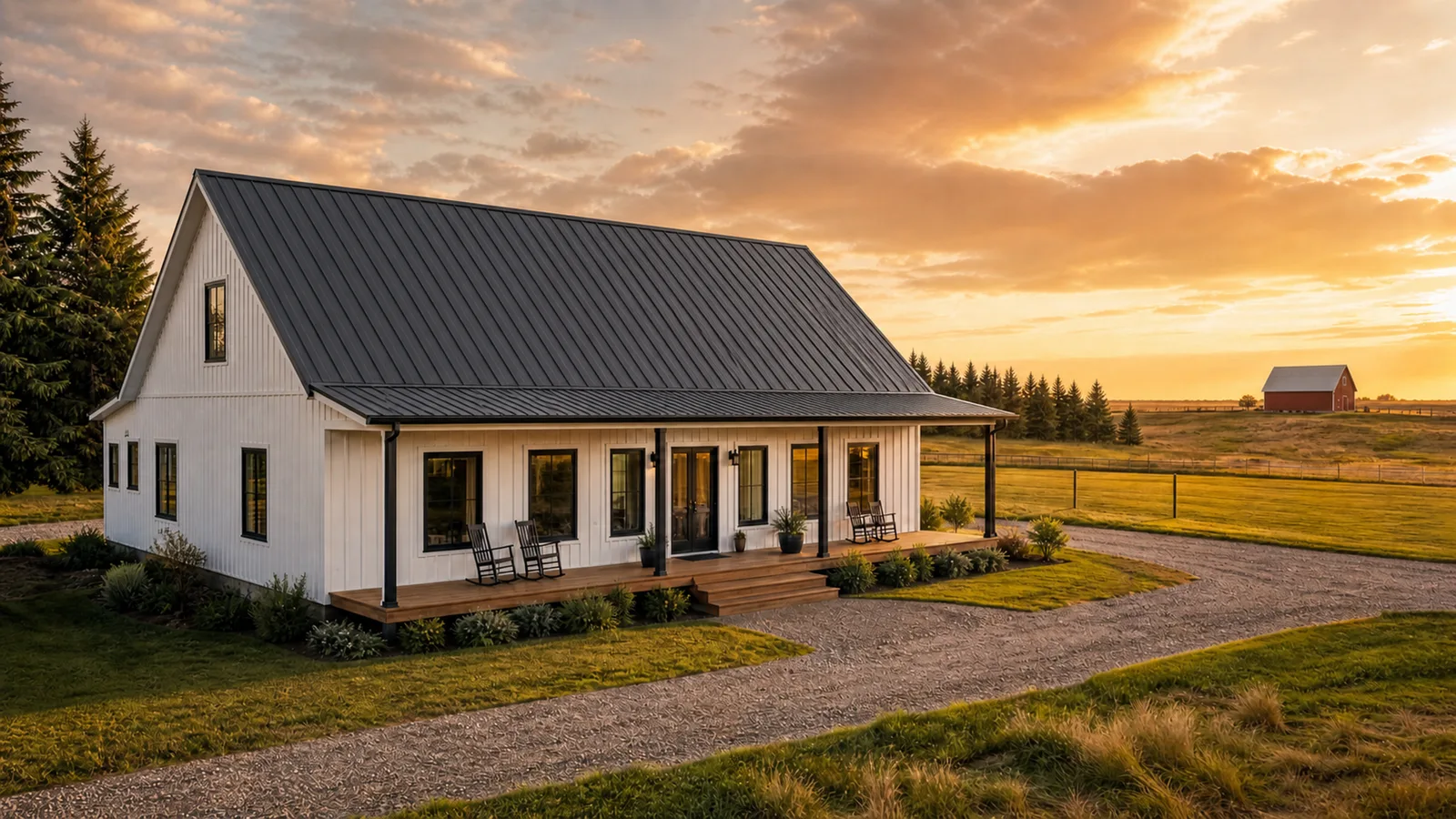
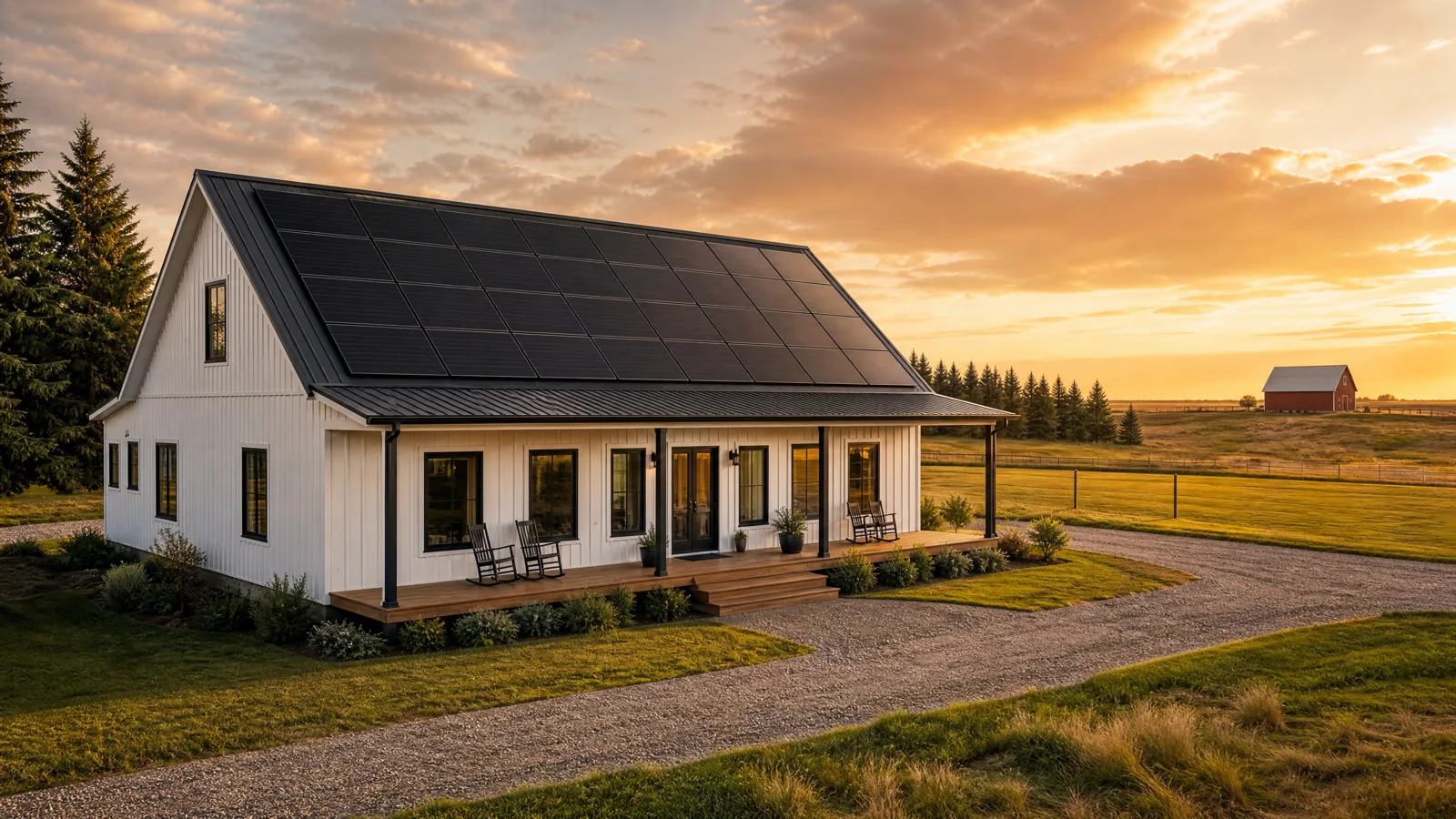
The same acreage roof, before and after an all-black array. Panels sit flush and low-profile, built to belong on the building.
 BeforeAfter
Additional Service Areas
Across Rural Alberta.
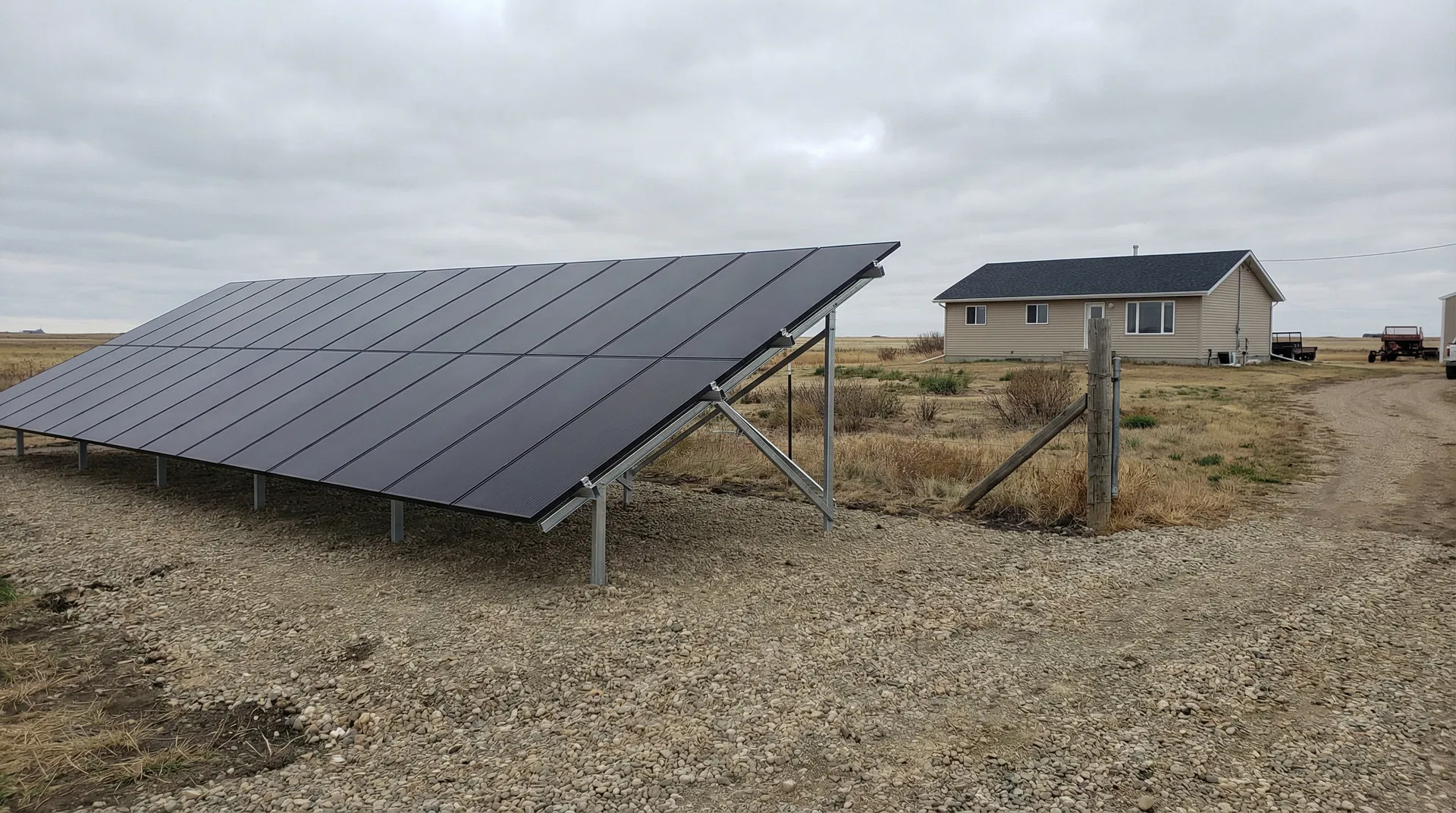
Near Strathmore, AB
Wheatland County
Acreage property on flat prairie near Strathmore. Ground-mount system on galvanized steel racking in the yard, south-facing at optimal pitch. Residence visible in the background. Black monocrystalline panels. System sized to household and yard electrical load.
Fortis interconnection completed in 3 weeks. System covers household and outbuilding loads. Commissioned in fall and performed through first winter without issues.
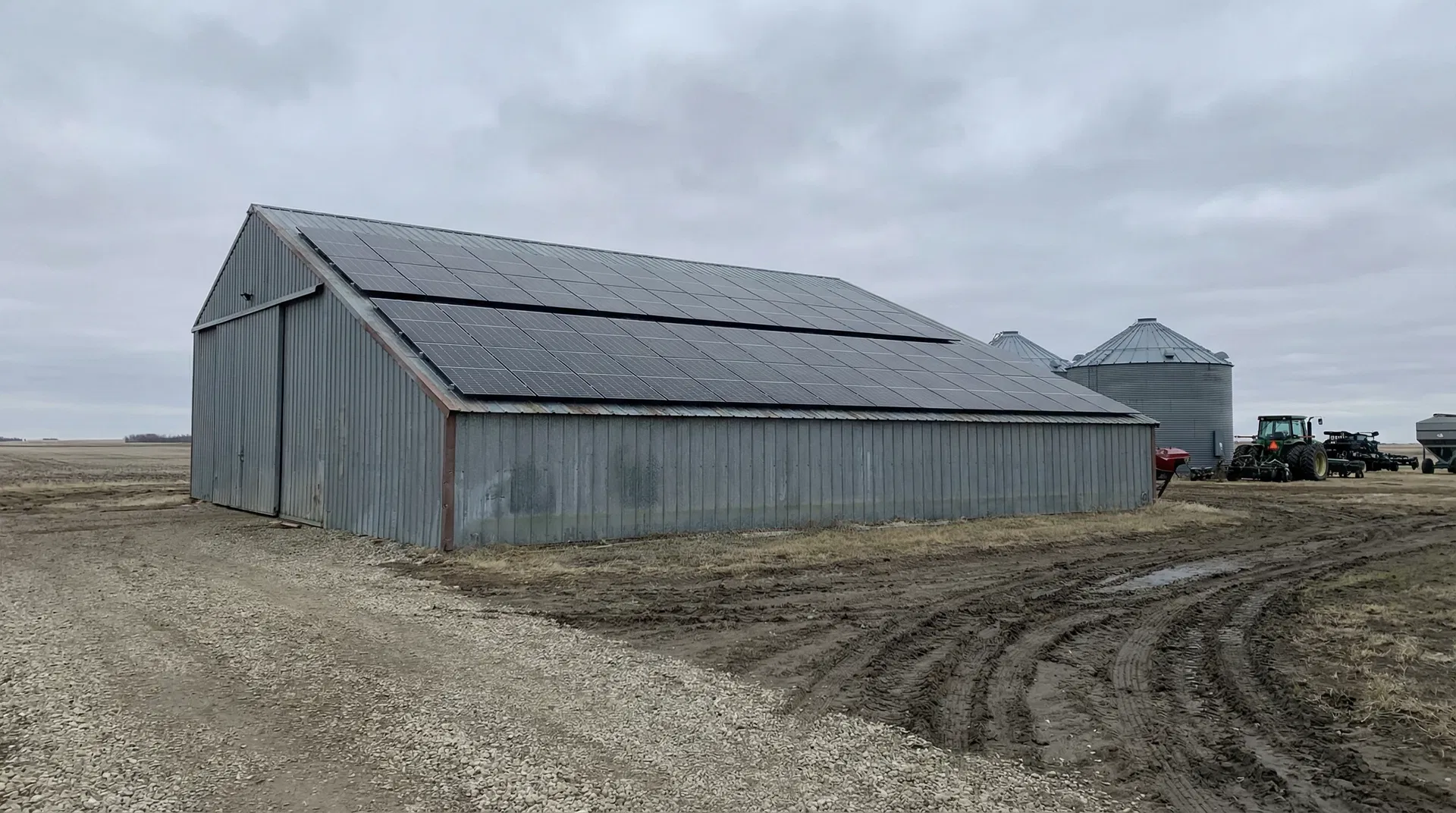
Near Lacombe, AB
Lacombe County
Grain farm with a large corrugated metal quonset barn. Rooftop system flush-mounted across the full south-facing slope. Grain bins and equipment visible in the farmyard. System sized around the farm's handling and storage electrical load.
ATCO interconnection completed in 5 weeks. System sized to offset peak fall grain handling loads. Snow shedding confirmed through two winters.
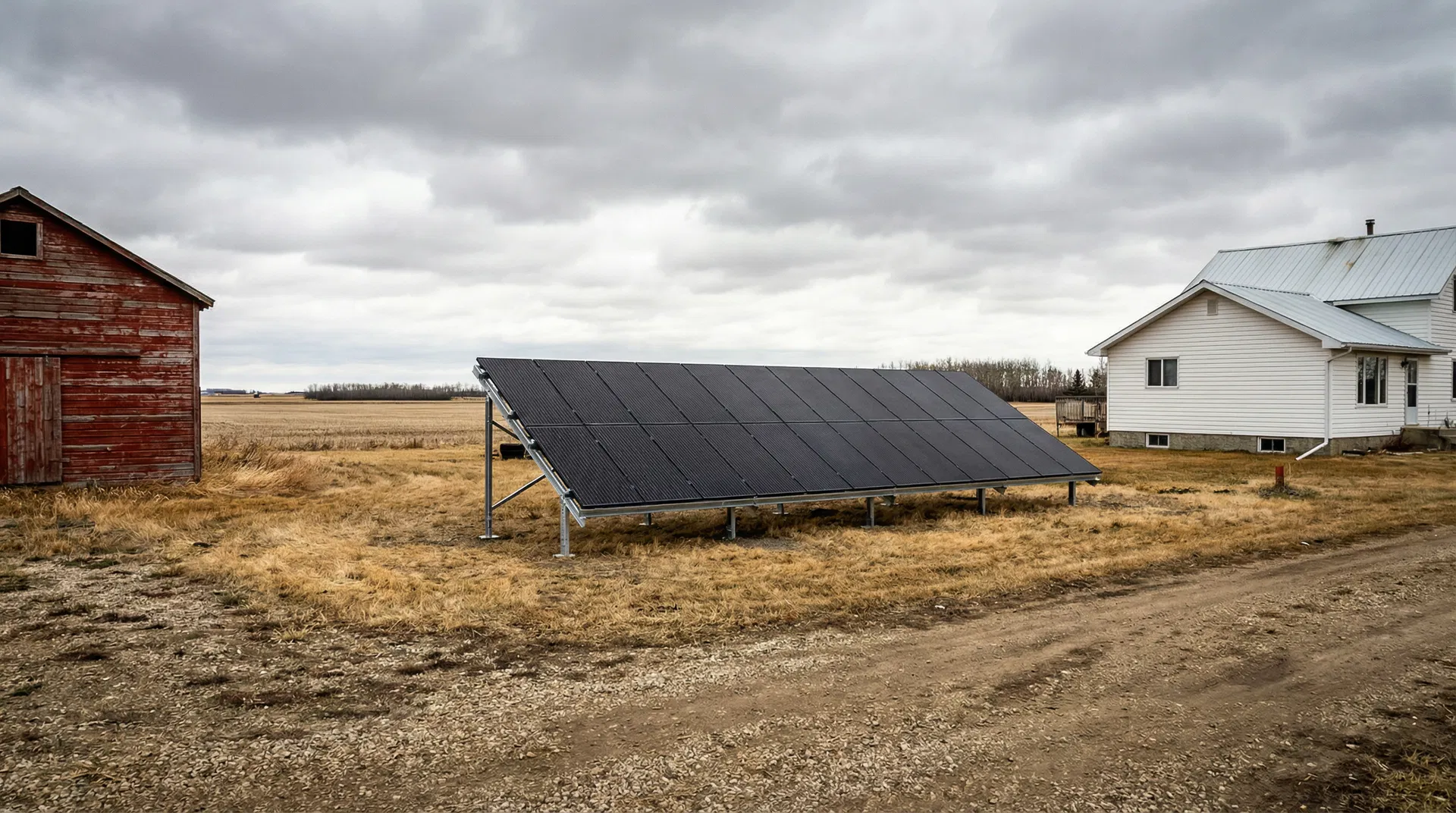
Near Ponoka, AB
Ponoka County
Rural farmyard between an old red barn and a white farmhouse. Ground-mount system on galvanized steel racking, south-facing, positioned in the open yard. Black monocrystalline panels. System sized to the household and yard electrical load.
EQUS REA interconnection completed in 4 weeks. System offsets household and water pump loads. Owner confirmed system producing as projected through first full year.
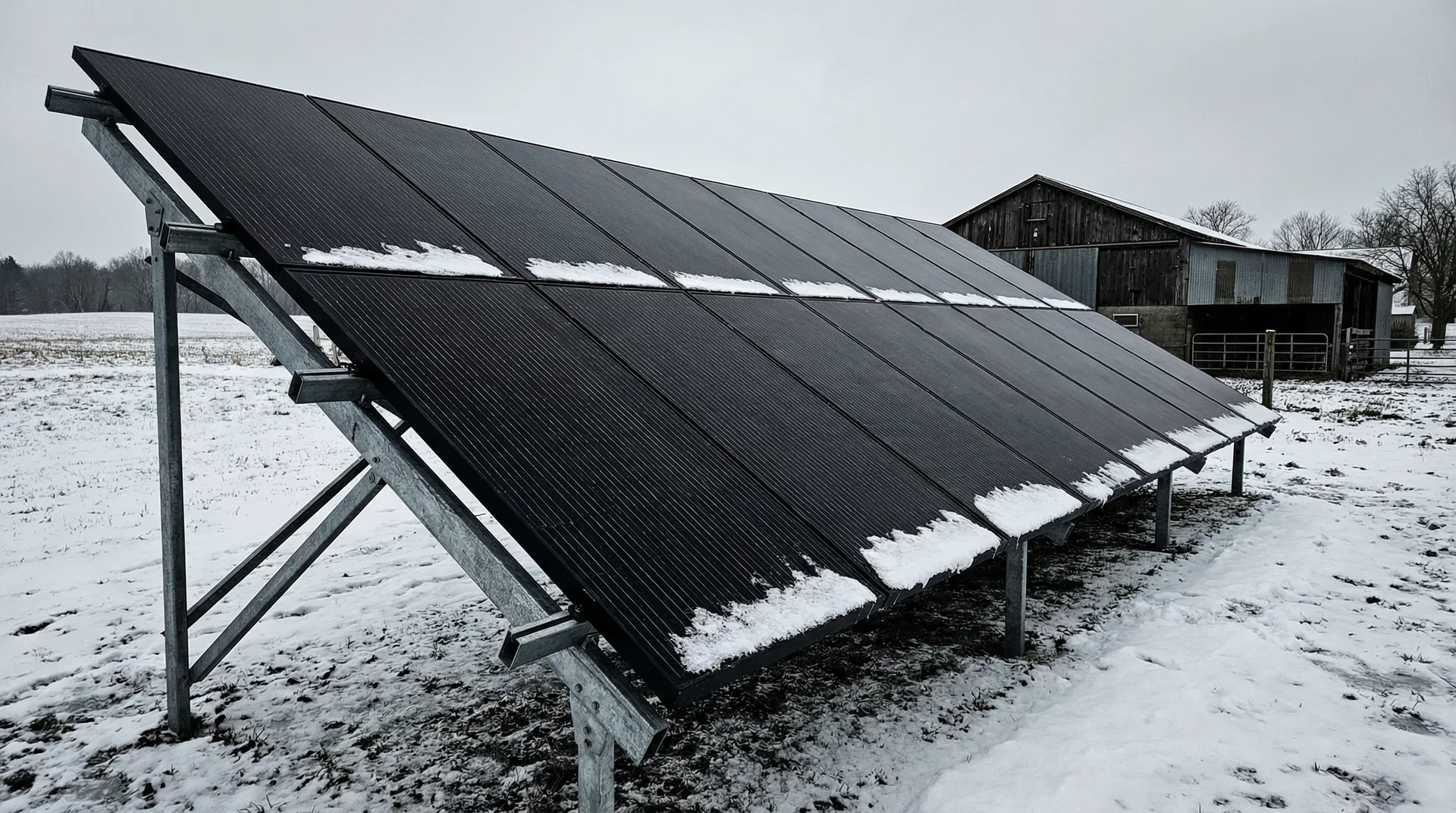
Near Rocky Mountain House, AB
Clearwater County
Rural property near Rocky Mountain House. Ground-mount system on galvanized steel racking, steeply pitched for winter performance. Old barn visible in the background. Black monocrystalline panels photographed mid-winter with snow clearing from the lower edge.
ATCO interconnection completed in 5 weeks. System performing through first full Alberta winter. Steep pitch confirmed effective snow shedding, with panels clearing within 24 hours of accumulation.

Near Three Hills, AB
Kneehill County
Small white acreage farmhouse on open prairie near Three Hills. Rooftop system flush-mounted across the full south-facing asphalt shingle slope. Black monocrystalline panels, black frames, for a clean, integrated look against the dark shingles. System sized to household load.
Fortis interconnection completed in 3 weeks. System sized to household load. Commissioned in late summer, first winter production confirmed within projected range.
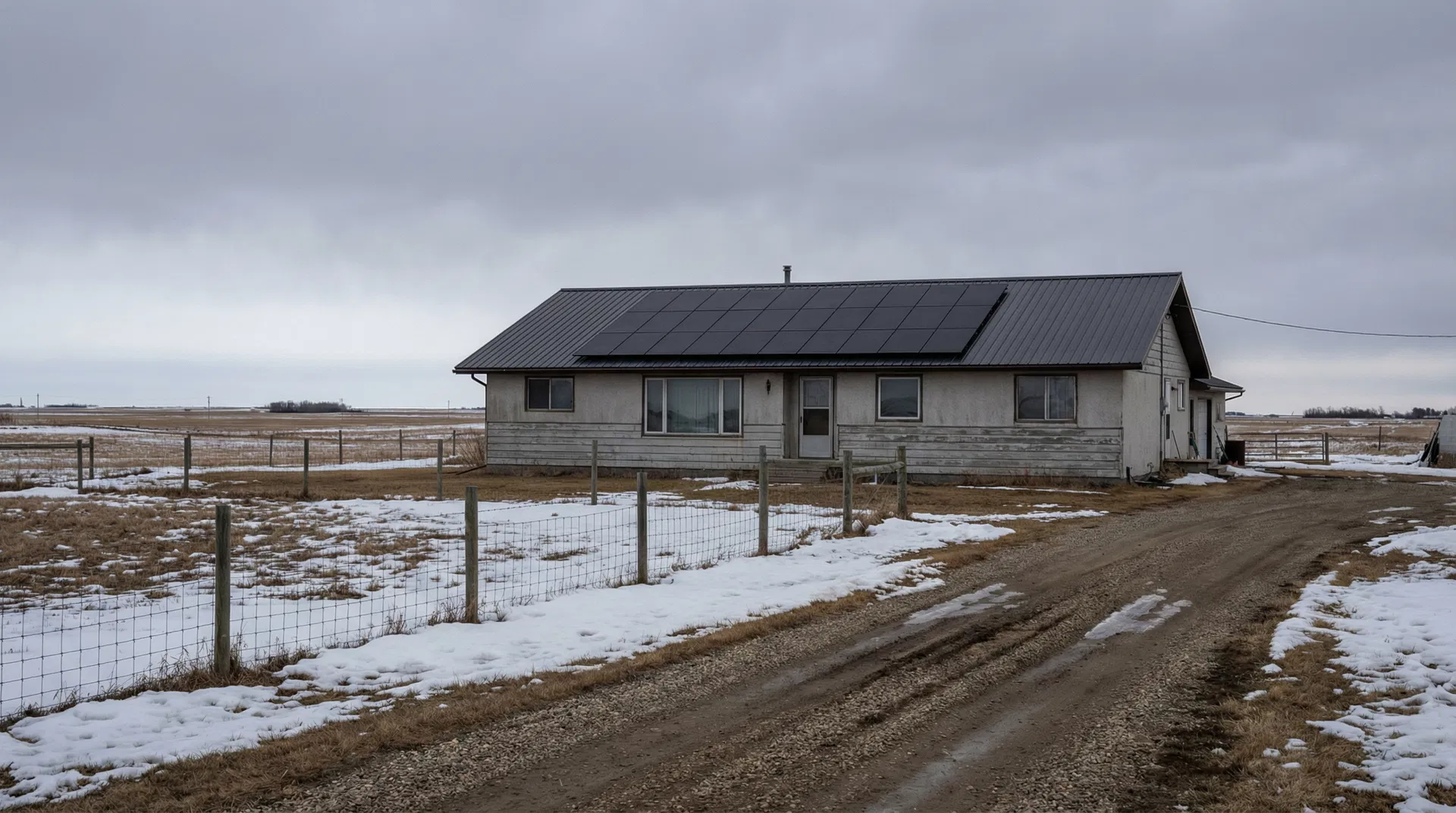
Near Castor, AB
Paintearth County
Older rural farmhouse near Castor with a dark standing-seam metal roof. Rooftop system flush-mounted on the south-facing slope. Black monocrystalline panels. Photographed in winter, snow on the ground, panels clear. System sized to the household electrical load.
ATCO interconnection completed in 4 weeks. System sized to household load. Owner confirmed production tracking within projected range through first full year.
Common Questions
Questions About These Projects.
Your Property.
Your System.
Send us your most recent power bill. We’ll review your usage, assess your property, and give you a straight answer on sizing, cost, and payback.