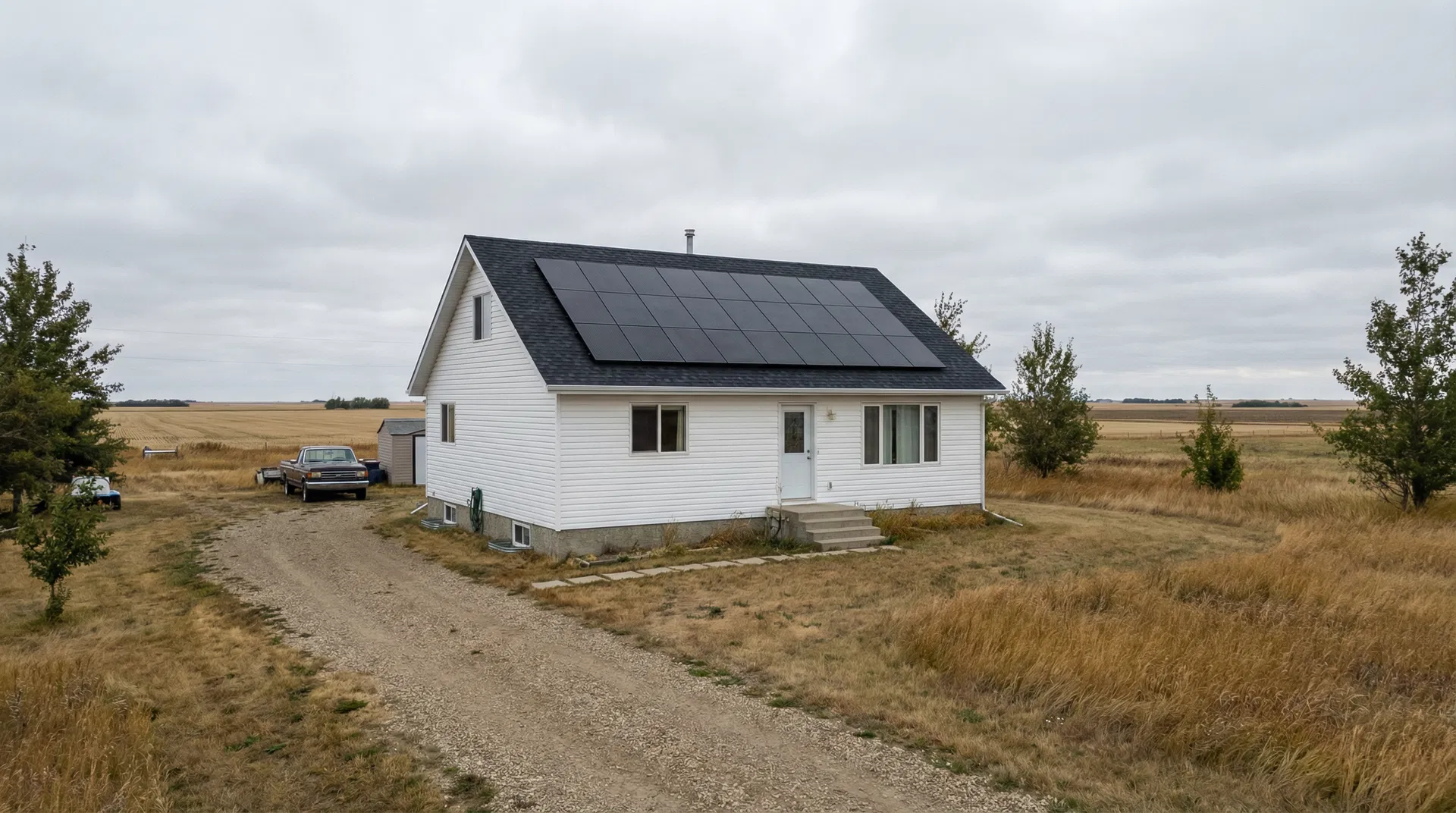
Searching for solar consultation Okotoks Alberta? Here's what happens after you book. We start with your most recent power bill. The 12-month usage graph on that bill shows how your load swings through the year, and it tells us more about system size than any rule of thumb. Next we look at the site: roof pitch, orientation, shade from trees or outbuildings, and whether the yard has room for a ground mount. Systems for this service run from 8 to 25 kW, with 10 kW a common starting point, but the bill and site decide where your property lands in that range. We design with LONGi panels and APsystems microinverters. Microinverters let each panel work on its own, so one shaded panel doesn't pull down the rest of the array the way it can with a single string inverter. That matters on rural properties where trees, grain bins, and outbuildings throw shadows at odd hours. The consultation costs nothing and you're under no obligation to move forward. Production figures and payback come out of the design and your bill, not a generic estimate. Once you've reviewed the design, you'll know exactly what we'd install and why.
Solar Planning for Okotoks Properties
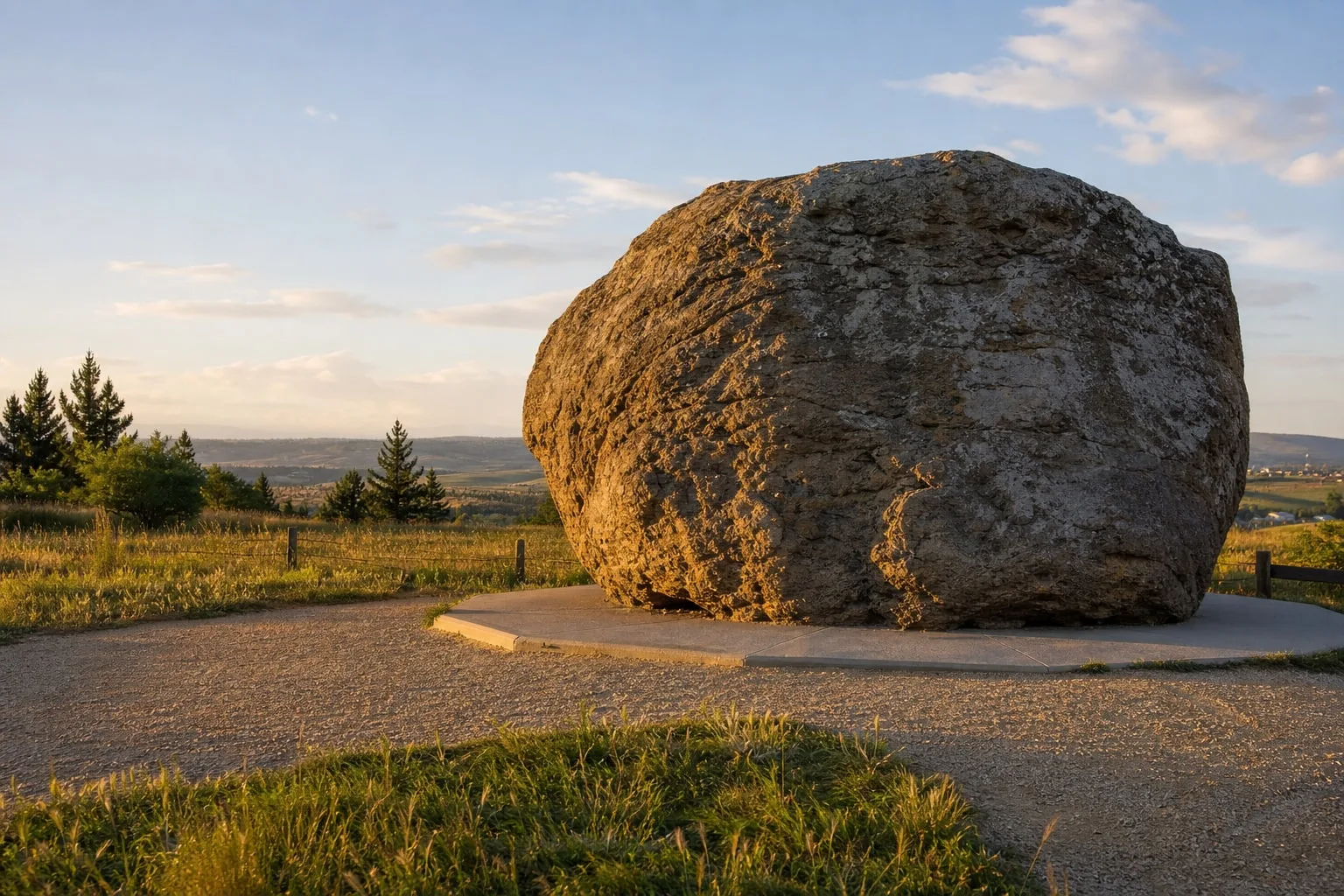
Solar planning here starts with the property, not the roof measurement. Statistics Canada's 2021 census counted 30,405 residents, and many of them live on acreages where the electrical load runs well past the house. A heated shop, a well pump, and a grain dryer on the same service change the design more than most people expect. Wire service here is FortisAlberta (electricity distribution), so every system goes through their micro-generation application, and we handle that paperwork for you. Our first look covers where the panel sits, how the service entrance is set up, and which buildings share the meter. Okotoks Erratic (The Big Rock) is the landmark most people know, but the properties we design for are working places with their own demands. We don't start from a generic package. We start with how the property uses power, and your most recent power bill shows that faster than any guess.
Electrical Site Review for Okotoks Properties
Voltage Rise
Voltage rise happens when solar exports push the local grid voltage higher than normal at the point where your system connects. Rural distribution lines are often long, which can make the effect more noticeable at the far end of the line. When voltage runs high, the inverter may reduce output to stay within limits, so we factor that into how large the array should be.
Single-Phase vs Three-Phase
Rural properties may have single-phase or three-phase service, and the difference matters for the design. Single-phase service is common on homes and smaller properties, while larger shops, irrigation pumps, and grain equipment often run on three-phase. That split affects which inverter configuration fits and how much system capacity the service can support.
Panel Infrastructure
Older electrical panels on rural properties were often installed for a lighter load than they carry today. We check the panel's amperage rating, how many breaker spaces are free, and the age and condition of the panel itself. If it can't support the system, an upgrade means replacing or expanding the panel so it can carry the solar load safely, and we'll walk you through that before the design is final.
Service Entrance Review
We check the service entrance conductors, the meter base, and the grounding where power enters the building. The meter base condition matters because FortisAlberta reviews the micro-generation application against the existing service, and a corroded or damaged base can cause problems with that application. If an upgrade is required, we'll explain exactly what it involves before any work starts.
Right-Sizing Solar for Okotoks Properties
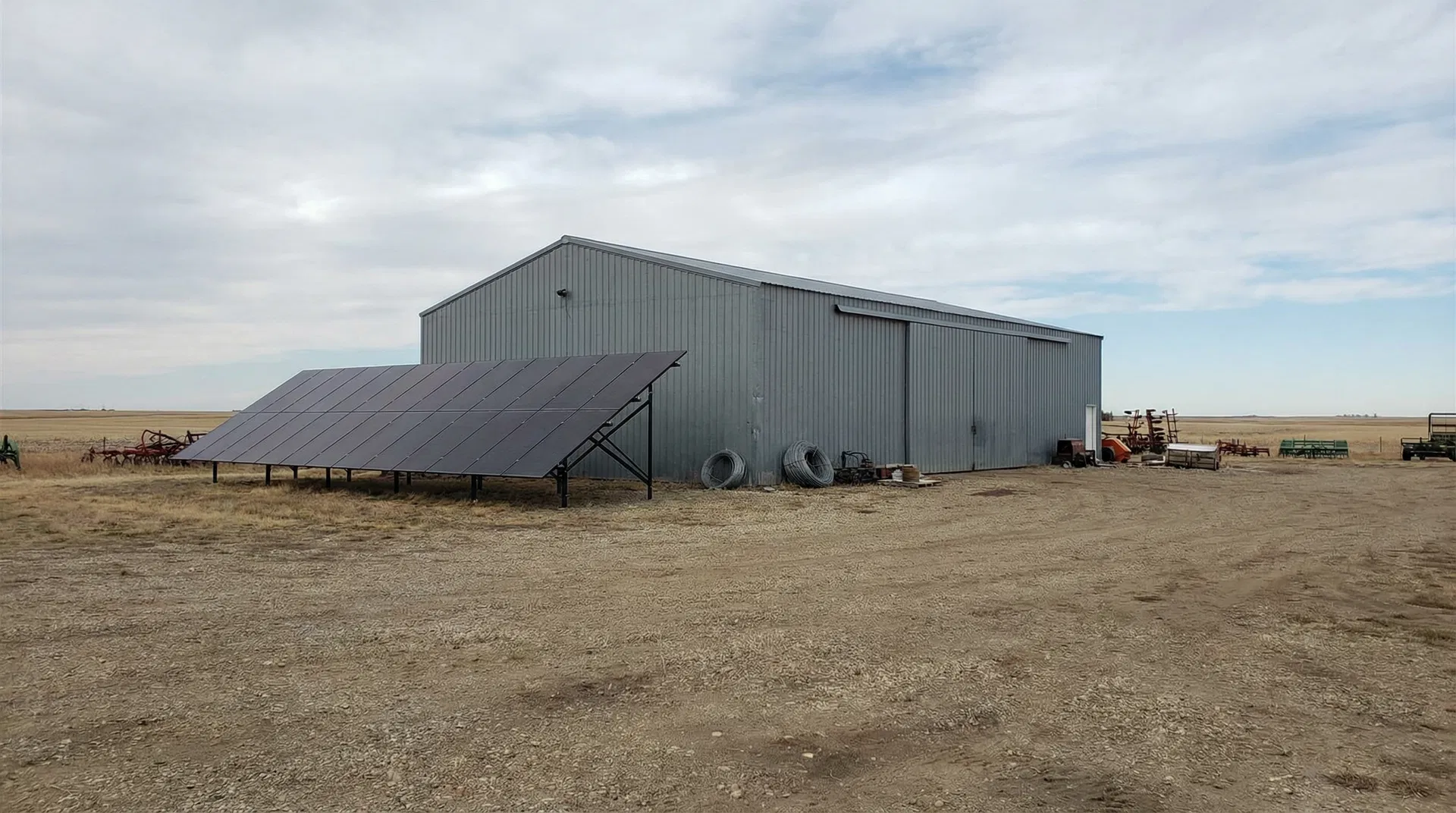
Rural systems tend to be sized larger than urban ones because the load is bigger. A house might run a heat pump, an EV charger, and a fridge, but the property also has a shop with a welder, outbuildings with their own lighting, and maybe an irrigation pump or grain handling equipment. Each of those loads changes how much solar makes sense, and we don't guess at them. Roof or ground mount is the next call. A roof works well when the pitch and orientation are good and nothing shades it. A ground mount makes more sense when trees or buildings cast shadows on the roof, the pitch is poor, or the yard has open land that isn't needed for anything else. We look at the site before we pick one. Sizing starts with the 12-month usage graph on your most recent power bill, not a rule of thumb. That graph shows what the property actually draws across the year, including the seasonal swings a single monthly total hides. Paired with the site design, it shows whether a system near 10 kW fits or whether the property needs more of the 8 to 25 kW range. We don't size a rural system from a square footage number, because that approach misses the loads that matter most.
Typical Load Profiles We Design For Near Okotoks
Home + Heated Shop
This profile covers a house plus a heated shop with a 240-volt welder and a compressor that cycles through the workday. Shop loads often run during daytime hours, and we check how that timing lines up with the array's output. We size from the 12-month usage graph on your most recent power bill, then test the shop schedule against the site design.
Acreage with Irrigation Pump
A 15 HP pump running for several hours a day can add a large share of the property's load. On a three-phase service, that changes which inverter setup fits and how large the system should be. We size from the 12-month usage graph on your most recent power bill, then check the pump's run hours against the site design.
Farmyard with Grain Handling
A 7.5 HP auger motor and a grain dryer fan run hard for a few weeks at harvest, then sit idle for much of the year. That burst pattern shows up clearly on the usage graph, so we look at it closely before we pick a size. Seasonal loads like this are why we don't size from a rule of thumb, and your bill and site design settle the number.
FortisAlberta Interconnection in Okotoks
FortisAlberta is the wire service for this area, so every grid-connected system goes through FortisAlberta's micro-generation application. That's the step where the utility reviews how your system ties into the distribution side, and a clean design package makes the review go smoother. We handle the application for you. We prepare the design package, the equipment specifications for the LONGi panels and APsystems microinverters, and the site details the utility asks for. You don't need to learn their forms or chase down the paperwork. We keep track of the back-and-forth with FortisAlberta on your behalf and bring you in when they need something from you. Because each application is reviewed against the utility's own requirements, we confirm those requirements during the design review, before anything is submitted. That way you know what's involved before you commit to a system. The most useful thing you can send us at this stage is your most recent power bill, since it helps us confirm the account and meter details.
Project Economics and Design Review
| System Size | Annual Production | Year 1 Savings | Payback Period |
|---|---|---|---|
| 8-25 kW range, 10 kW typical |
Production, savings, and payback require a property-specific design and your most recent power bill.
How We Work in Okotoks
Bill and Load Review
We review your power bill to understand your energy use in Okotoks and size the system to your actual consumption, not a generic estimate.
Site Assessment
We assess your roof or ground area, south-facing exposure, electrical service, and utility interconnection requirements specific to your property.
Design and Utility Application
We produce a system layout, production estimate, and cost summary, then submit your micro-generation application to your utility on your behalf.
Installation and Commissioning
Our crew installs racking, panels, inverter, and electrical connections. All work is performed by licensed electricians. We commission and test before handoff.
Current Program and Interconnection Review
Utility connection review
FortisAlberta reviews every grid connection application before a system can be connected to its distribution network. Range Road Solar handles the design package and the application so you aren't working through the utility process alone. We confirm what the review requires during the design stage, before anything is submitted.
Current program review
Commercial, farm, and residential eligibility is reviewed against current rules at design time. We don't assume a program applies because it did in the past. Each property gets checked on its own during the design review.
Frequently Asked Questions
Get a Solar Assessment for Okotoks
Submit a recent power bill and we will review your consumption and provide an honest assessment for your Okotoks property. No obligation.
(587) 330-7502 Book a CallRelated Resources
More Solar Services in Okotoks