Solar rebates and incentives in High River, Alberta change from year to year, and the rules depend on whether a property is residential, farm, or small commercial, so we review what's current every time we scope a project in the 8 to 15 kW range for the area. The programs that can apply include micro-generation credits through your electricity retailer, the federal Clean Technology Investment Tax Credit for farm and business properties, and municipal programs where they exist. Which ones your project actually qualifies for depends on your property use, your tax situation, and rules that change on government timelines we don't control, so we check eligibility at design time rather than quoting a number up front. Every system we design uses LONGi panels and APsystems microinverters, equipment we've standardized on because it holds up well across the panel-mount and ground-mount setups we see on both in-town lots and the acreages nearby. A residential rooftop on an older lot is a different project than a shop-and-house setup on an acreage with three-phase service, and the rebate picture can look different for each one too, since program eligibility often tracks property use and ownership structure, not just system size. If you're running a farm operation, the Clean Technology ITC is usually the piece worth asking about first; if it's a straightforward home install, the micro-generation credit conversation matters more. We lay out which programs are worth pursuing for your specific property as part of the free design review, before you commit to anything.
Solar Planning for High River Properties
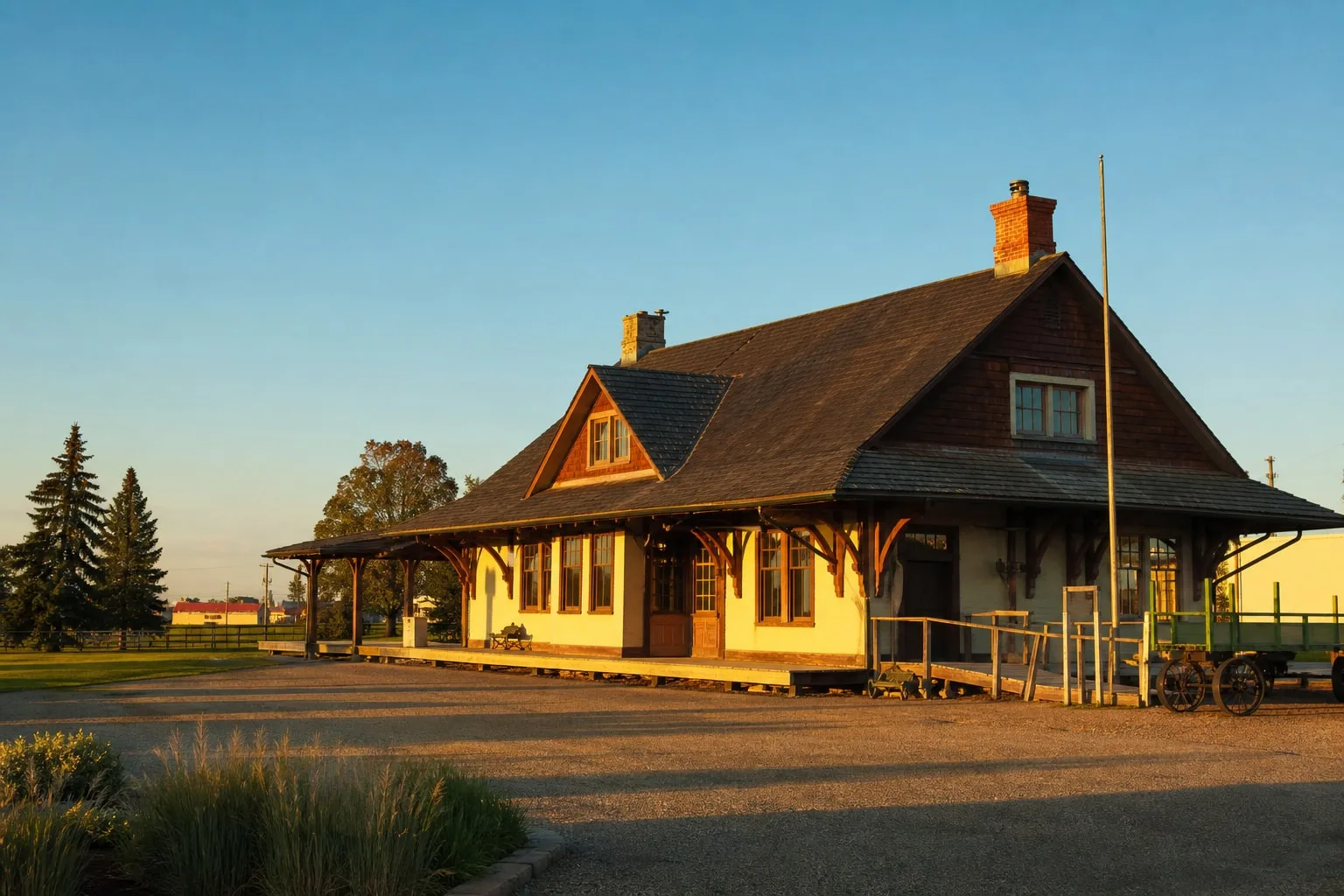
The area has been home to the Museum of the Highwood and a property mix that goes back to its founding on February 12, 1906: century-old infill lots, newer subdivisions, and acreages out on the flats where the river cuts through. With a population of 14,324, there's enough variety here that we see everything from compact in-town rooftops to spread-out farm and acreage layouts, and no two projects get sized the same way. A system here isn't designed off a brochure number. We look at roof pitch and orientation, or available yard space if you're going ground mount, your electrical panel, and the usage pattern on your most recent power bill before we size anything. Older housing stock near the downtown core often comes with electrical panels that haven't been touched since the original build, while newer subdivisions tend to have modern 200 amp services that make interconnection more straightforward. Rebates and incentive programs that apply to a project also shift depending on whether the property is zoned residential, farm, or small commercial, so that's part of the design conversation too, not an afterthought. We confirm what applies to your specific property during the design review, using your most recent power bill and a site visit, not a generic estimate.
Electrical Site Review for High River Properties
Voltage Rise
Voltage rise happens when the voltage at your property's electrical connection drifts from what the distribution line is delivering, usually because of distance from the transformer or the gauge of the service wire. On a property with marginal voltage conditions, an inverter can see readings outside its normal operating window and clip output or shut down rather than risk damage. We check this during the site assessment so the system design and inverter settings account for the actual conditions at your service, not an assumed ideal.
Single-Phase vs Three-Phase
Properties around the area show up with both single-phase and three-phase electrical service, depending on when the property was built and what it was built for. Three-phase service is common on larger farm and shop setups, while most residential lots run single-phase, and the two require different inverter selections and affect how much capacity we can realistically add. We confirm which service type you have early, since it shapes the whole system design, not just the equipment list.
Panel Infrastructure
Older electrical panels, especially on properties built before modern breaker standards, sometimes don't have the spare breaker capacity or busbar rating a solar system needs. We check the panel's age, amperage rating, and available breaker space as part of the site visit. If the panel can't support the added circuits, an upgrade means a new panel or a subpanel sized to the project, which we'll scope and quote before the system design is finalized, not after.
Service Entrance Review
The service entrance and meter base are what FortisAlberta looks at closely when reviewing a micro-generation application, since the meter base has to support bidirectional metering. We inspect the condition of the entrance cable, the meter base, and the grounding setup during our site visit. If the meter base is outdated or damaged, it needs an upgrade before FortisAlberta will approve the interconnection, and we'll flag that as part of the design review rather than finding out partway through the project.
Right-Sizing Solar for High River Properties
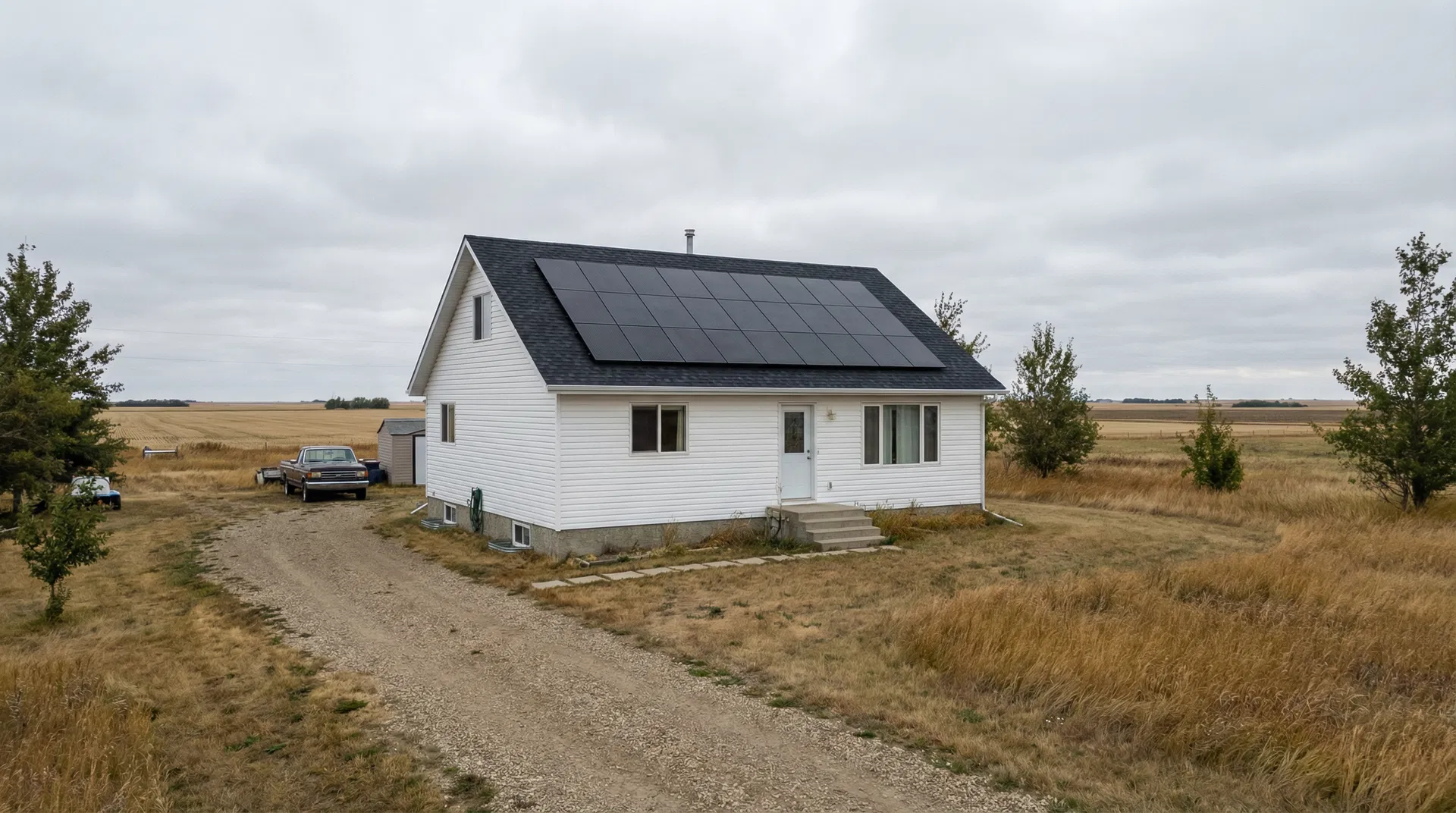
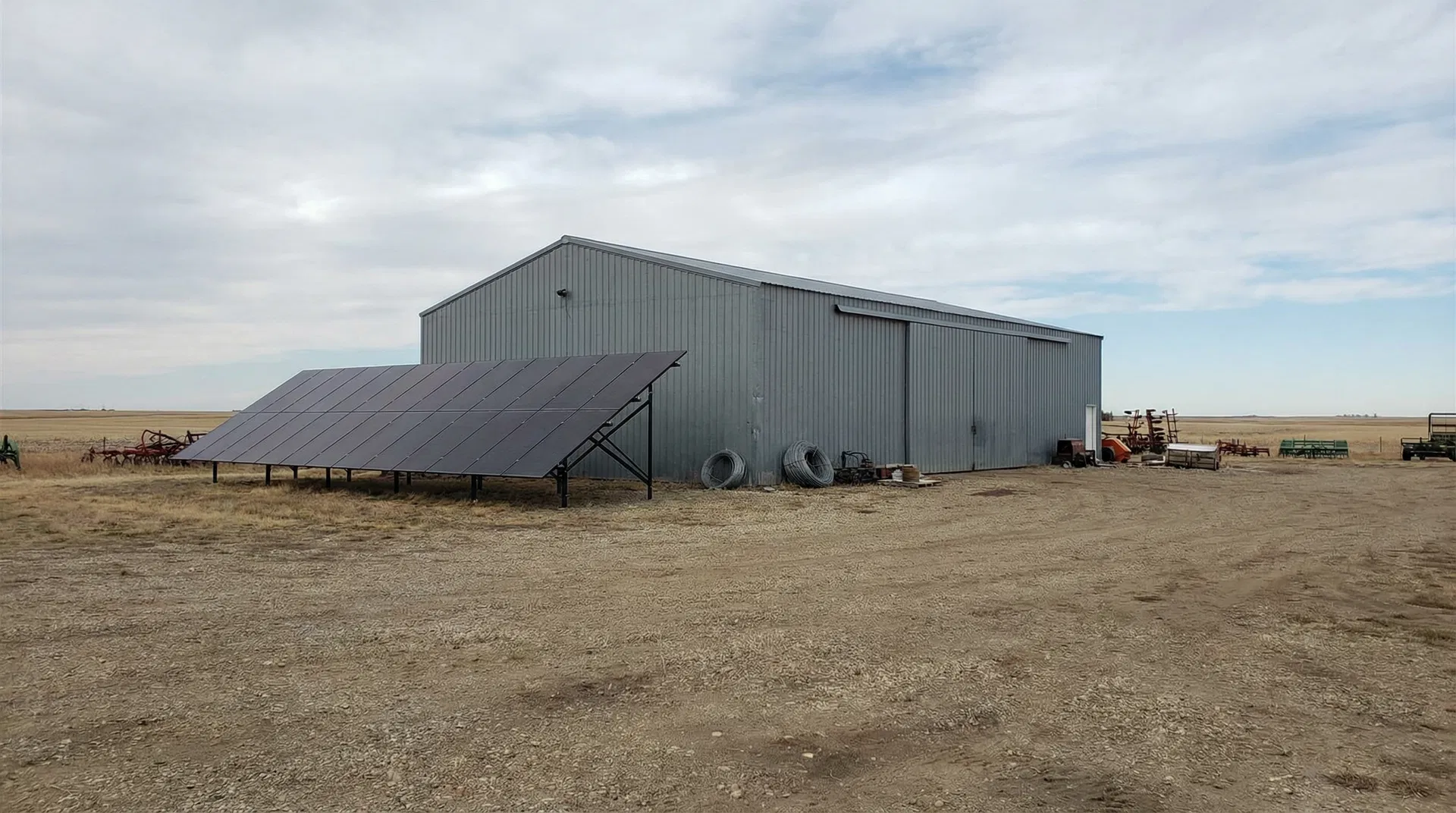
Rural and acreage properties around the area usually need a bigger system than a comparable in-town house, simply because there's more going on behind the meter: a home plus a heated shop, a well pump, grain handling equipment, or irrigation, all pulling from the same service. Sizing a system for a property like that means accounting for every one of those loads, not just the house. Roof versus ground mount is a real decision, not a default. A roof with good south or west exposure and no shading from trees or outbuildings is often the simplest option. But if the roof is shaded, pitched wrong, or the layout just doesn't work, and the yard has open space to spare, ground mount becomes the better call, especially on acreages where land isn't the constraint that it is on a smaller in-town lot. Either way, we don't size a system off a rule-of-thumb number per square foot or per appliance. We size it from the 12-month usage graph on your most recent power bill, which shows your actual consumption pattern across the seasons, heating loads included. That graph, combined with a site design that accounts for your roof or yard conditions, is what tells us whether an 8 kW system covers what you need or whether you're looking at something closer to 15 kW.
Typical Load Profiles We Design For Near High River
Home + Heated Shop
This is a common setup on acreages in the area: a house plus a detached shop with electric heat, maybe a welder or air compressor running intermittently. The shop's heating load usually shows up as a seasonal spike on the power bill, and we size around that spike using the usage graph rather than the summer average, so the system still makes sense in January.
Irrigation and Outbuilding Load
Properties running irrigation pumps or multiple outbuildings have load patterns that look different from a straight residential account: short, heavy draws instead of a steady baseline. We look at how those draws show up on the most recent power bill and design the system and inverter configuration around that pattern instead of treating it like a typical house.
Straightforward Residential
A lot of in-town homes here are a simpler case: one house, one electrical service, a predictable daily pattern. For these, the design review usually moves faster since there's less infrastructure to assess, but we still size the system from your actual usage graph rather than assuming every house the same square footage needs the same system.
FortisAlberta Interconnection in High River
FortisAlberta is the wire service here, so any grid-tied solar system in the area goes through FortisAlberta's micro-generation application process before it can be switched on. That application is separate from your retailer, the company that bills you for electricity, and separate from the local building permit process. We prepare and submit the FortisAlberta paperwork as part of your project: the single-line electrical diagram, equipment specifications for the LONGi panels and APsystems microinverters, and the site information FortisAlberta needs to review the interconnection. We don't control FortisAlberta's review timeline, and we won't promise one. What we do is make sure the application package is complete and accurate the first time, since an incomplete submission is the most common thing that slows a project down. Your signed contract with us includes this application as part of the scope, so it's not an extra step you have to manage yourself or a separate invoice that shows up later.
Project Economics and Design Review
| System Size | Annual Production | Year 1 Savings | Payback Period |
|---|---|---|---|
| 8-15 kW range, 10 kW typical |
Production, savings, and payback figures are specific to your property and are provided only after a design review using your most recent power bill.
How We Work in High River
Bill and Load Review
We review your power bill to understand your energy use in High River and size the system to your actual consumption, not a generic estimate.
Site Assessment
We assess your roof or ground area, south-facing exposure, electrical service, and utility interconnection requirements specific to your property.
Design and Utility Application
We produce a system layout, production estimate, and cost summary, then submit your micro-generation application to your utility on your behalf.
Installation and Commissioning
Our crew installs racking, panels, inverter, and electrical connections. All work is performed by licensed electricians. We commission and test before handoff.
Current Program and Interconnection Review
Utility connection review
FortisAlberta reviews every grid-tied micro-generation application in the area before a system can be switched on. We prepare the full design package, including the single-line diagram and equipment specifications, and submit it on your behalf as part of the project scope.
Current program review
Residential, farm, and small commercial properties can be eligible for different incentive and credit programs, and the rules change on timelines we don't set. We check what currently applies to your property type and ownership structure during the design review, before we finalize a quote.
Frequently Asked Questions
Get a Solar Assessment for High River
Submit a recent power bill and we will review your consumption and provide an honest assessment for your High River property. No obligation.
(587) 330-7502 Book a CallRelated Resources
More Solar Services in High River