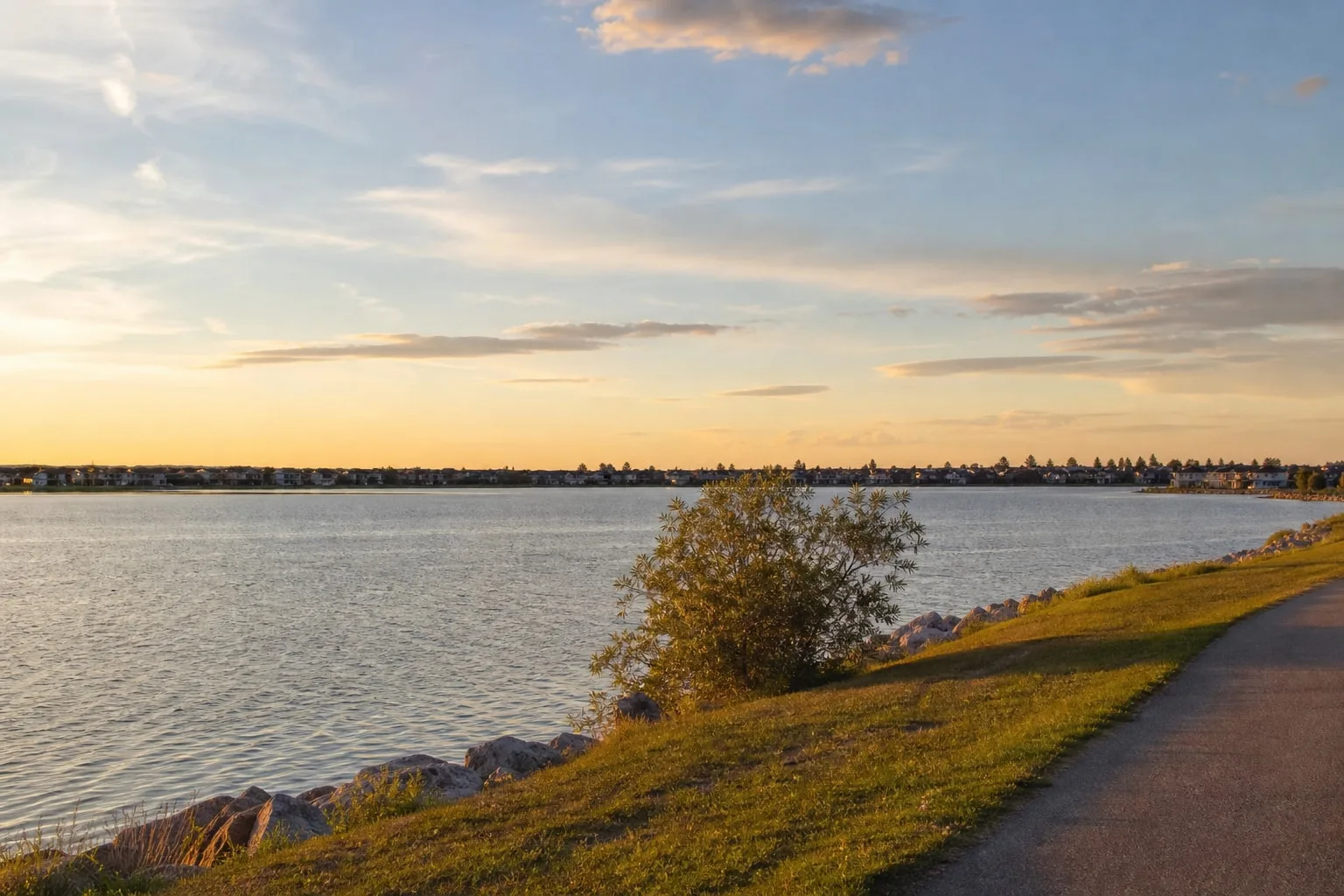
Solar rebates and incentives in Chestermere, Alberta cover three different angles, and most homeowners only know about one of them. There's the micro-generation credit you earn through your wire service once your system is interconnected, the federal Clean Technology Investment Tax Credit for farm and business operations, and whatever municipal programs happen to be active when you apply. We review all three against current rules at the time we design your system, because what applied last year isn't always what applies this year. Every system we spec for this area uses LONGi panels paired with APsystems microinverters. APsystems' module-level design means a tree shadow crossing one corner of a roof, or a dormer that shades part of an array for an hour in the afternoon, only drags down the panels actually in shade instead of the whole string. On the mix of in-town lots and larger acreage parcels we see around Chestermere Lake and Anniversary Park, that flexibility matters: no two roofs here have the same obstruction pattern. For a farm or small business weighing the federal tax credit, the paperwork starts with your most recent power bill and a site visit, the same as a residential quote. We'll tell you straight whether your operation likely qualifies before you spend time filling out federal forms, and we'll flag any municipal program that's active for your property type. Nothing here is a guess dressed up as a number. It's a review, done against the rules as they stand the week we design your system.
Solar Planning for Chestermere, Alberta Properties
Chestermere, Alberta has grown to 22,163 residents, and a lot of that growth sits on properties that mix in-town lots with acreages near the lake. That mix matters when we're sizing a system: a lakefront lot with mature trees casts different shade than an open acreage lot a few minutes out. We don't guess at shade, roof pitch, or panel count from a satellite photo. We walk the property, check the electrical panel, and pull the 12-month usage graph off your most recent power bill before we size anything. Environment Canada's climate normals put the regional bright sunshine average at 2,395.7 hours a year, and Natural Resources Canada rates the specific PV yield for this part of the province at roughly 1,292 kWh per kW of installed capacity. Those are regional benchmarks, not a promise for your roof. Your actual output depends on orientation, shading, and how your system is wired, which is why every quote we write starts with a site visit, not a spreadsheet. For rebates and incentives specifically, the rules shift often enough that we review them fresh at design time rather than quoting last year's numbers. We'll tell you plainly what applies to your property and what doesn't.

Electrical Site Review for Chestermere, Alberta Properties
Voltage Rise
Voltage rise happens when the distance and wiring between a property and the nearest distribution transformer let line voltage climb higher than the inverter expects. On longer rural runs or properties farther from a transformer, that rise can trip an inverter's over-voltage protection before the system reaches its rated output. We measure voltage at the panel during the site visit and size the inverter and string layout around what we actually find, not a textbook number.
Single-Phase vs Three-Phase
Properties around here run on either single-phase or three-phase electrical service, and which one you have changes what inverter hardware fits. Three-phase service generally supports more inverter capacity on one connection, while single-phase service caps how much you can install without additional equipment or panel changes. We confirm which service you have during the site visit before we spec any equipment.
Panel Infrastructure
Older electrical panels weren't built with a second power source in mind, and breaker capacity hasn't always kept pace with newer homes' loads, let alone a backfed solar breaker. We check the panel's age, its busbar rating, and existing breaker capacity to see whether it can safely add a solar breaker. If it can't, an upgrade means a new panel sized for both your existing loads and the system we're proposing, which we scope and quote as part of the design.
Service Entrance Review
The meter base and service entrance are the connection point FortisAlberta reviews most closely in a micro-generation application, since that's where the utility's metering and your system physically meet. We check the meter base's condition and rating as part of every site visit, because a worn or undersized meter base can hold up the application until it's addressed. If an upgrade is needed, we scope it up front so it's priced into the project instead of surprising you mid-install.
Right-Sizing Solar for Chestermere, Alberta Properties
Rural and acreage properties around here usually carry more electrical load than a single urban home: a house plus a heated shop, a well pump, maybe irrigation or grain-handling equipment running seasonally. That's one reason systems out this way tend to land larger than a typical in-town rebate program might assume. We don't size off a rule of thumb like watts-per-square-foot of roof. We size off the 12-month usage graph on your most recent power bill, which shows us exactly how your load moves through the year, winter heating bumps, summer irrigation draws, shop use, all of it. Roof mount works well when you've got open, south- or west-facing roof area without much shading and don't need to carry a huge load. Ground mount becomes the better call when trees or outbuildings shade the roof, when the roof pitch or orientation works against you, or when the yard has open land and the array works better at grade, especially on acreage layouts where a shop or outbuilding sits apart from the house. Neither option is automatically right. We walk the property, look at where the shade falls through the day, and match the mount type to what's actually there before we touch a design number.
Typical Load Profiles We Design For Near Chestermere, Alberta
Home + Heated Shop
This profile covers a house plus a detached shop that's heated through winter, often with its own subpanel or sub-service. We size for both loads together, not just the house, which usually means a bigger system and sometimes a look at whether the shop needs its own inverter. The 12-month usage graph on your most recent power bill tells us when the shop's heating load actually hits, which shapes how we lay out the array.
Home + Well Pump + Outbuildings
Acreage properties with a well pump and a handful of outbuildings draw power in short, sometimes heavy bursts rather than one steady load. We look at how those bursts show up on your most recent power bill and design around starting loads, not just average draw, so the system can handle the pump kicking on. Outbuilding wiring and distance from the main panel also factor into how we lay out the array and any sub-metering.
Farm Operation with Grain Handling or Irrigation
Grain dryers, augers, and irrigation pumps run seasonally but can pull hard when they're on, which is a different pattern than a steady household load. We size around that seasonal pattern using your most recent power bill's usage graph, rather than averaging the whole year into one number that misses the spike. For some operations this points toward a larger system or three-phase equipment; we confirm which during the site visit.
FortisAlberta Interconnection in Chestermere, Alberta
FortisAlberta is the wire service here, and that's true whether your property sits inside town or out toward the lake. Because they're the distribution company, not the retailer, any system we design has to go through their micro-generation interconnection application before it's allowed to connect to the grid. We handle that whole package: single-line diagrams, equipment specs for the LONGi panels and APsystems microinverters, and the forms FortisAlberta needs to review the connection. You don't fill out utility paperwork. We do. We also coordinate directly with FortisAlberta on technical requirements as they come up during the review, since those requirements can change project to project depending on your existing service and the size of system you're installing. If anything in their review calls for an upgrade to your panel or meter base, we'll flag it before the application goes in, not after. The goal is one clean submission, reviewed on its own facts, without guesswork about what FortisAlberta will or won't accept.
Project Economics and Design Review
| System Size | Annual Production | Year 1 Savings | Payback Period |
|---|---|---|---|
| 8-15 kW range, 10 kW typical |
Production, savings, and payback numbers depend on a property-specific design and your most recent power bill, and we won't quote them until we've reviewed both.
How We Work in Chestermere
Bill and Load Review
We review your power bill to understand your energy use in Chestermere and size the system to your actual consumption, not a generic estimate.
Site Assessment
We assess your roof or ground area, south-facing exposure, electrical service, and utility interconnection requirements specific to your property.
Design and Utility Application
We produce a system layout, production estimate, and cost summary, then submit your micro-generation application to your utility on your behalf.
Installation and Commissioning
Our crew installs racking, panels, inverter, and electrical connections. All work is performed by licensed electricians. We commission and test before handoff.
Current Program and Interconnection Review
Utility connection review
FortisAlberta reviews every micro-generation grid connection application before a system is allowed to connect, and that review covers the technical side of your interconnection, not the rebate side. Range Road Solar prepares and submits that full application package, including equipment specs and single-line diagrams, so you're not the one piecing together a utility form.
Current program review
Residential, farm, and commercial eligibility for any current rebate, credit, or tax incentive gets checked against the rules in place at the time we design your system, not whatever was true last year. We review your property type and intended use against current criteria before we build a quote around any program.

Frequently Asked Questions
Get a Solar Assessment for Chestermere
Submit a recent power bill and we will review your consumption and provide an honest assessment for your Chestermere property. No obligation.
(587) 330-7502 Book a CallRelated Resources
More Solar Services in Chestermere