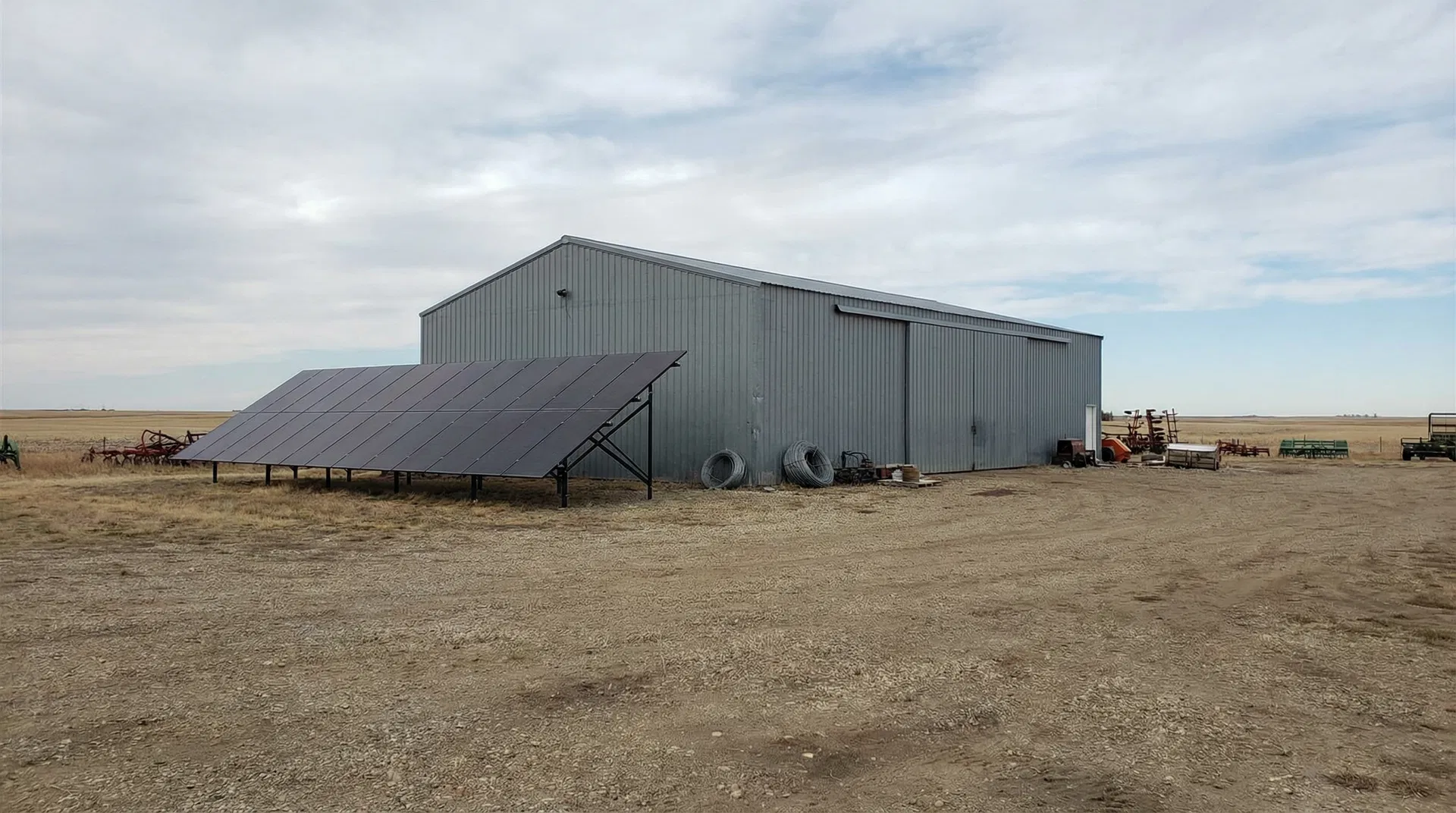
Looking for solar ground-mount-solar Chestermere alberta? We install ground mount systems on open yards where a roof won't carry the job. Each array uses LONGi panels on engineered ground-mount racking, with APsystems microinverters so every panel produces on its own. The racking gets less attention than it deserves. Ground mount frames carry the full weight of the array and have to stay put through every season, so we design the footing and frame around the soil and layout on your site instead of pulling a standard kit off the shelf. A ground mount tends to make sense when trees or outbuildings shade the roof, when the roof pitch faces the wrong way, or when you've got open ground that isn't doing anything else. The array can sit where it won't block a driveway or a view you care about. Layout matters more than most people expect. We look at the sun path across the yard, the slope, the distance to the house, and the route to the electrical service. You'll see the layout on a drawing before anything gets built. Trenching is the step people forget. Cable has to run from the array to the service, and the depth and conduit depend on what's underground. We arrange utility locates before any digging starts, so nothing gets cut. Maintenance is light. Keep grass and weeds cut back from the array, check the racking hardware after the first season, and watch your monitoring data for any drop in output. If something looks wrong, we'll come out and check it. Every ground mount quote starts with your most recent power bill and a site visit, so the system reflects your property and your usage, not a number from a brochure.
Solar Planning for Chestermere Properties
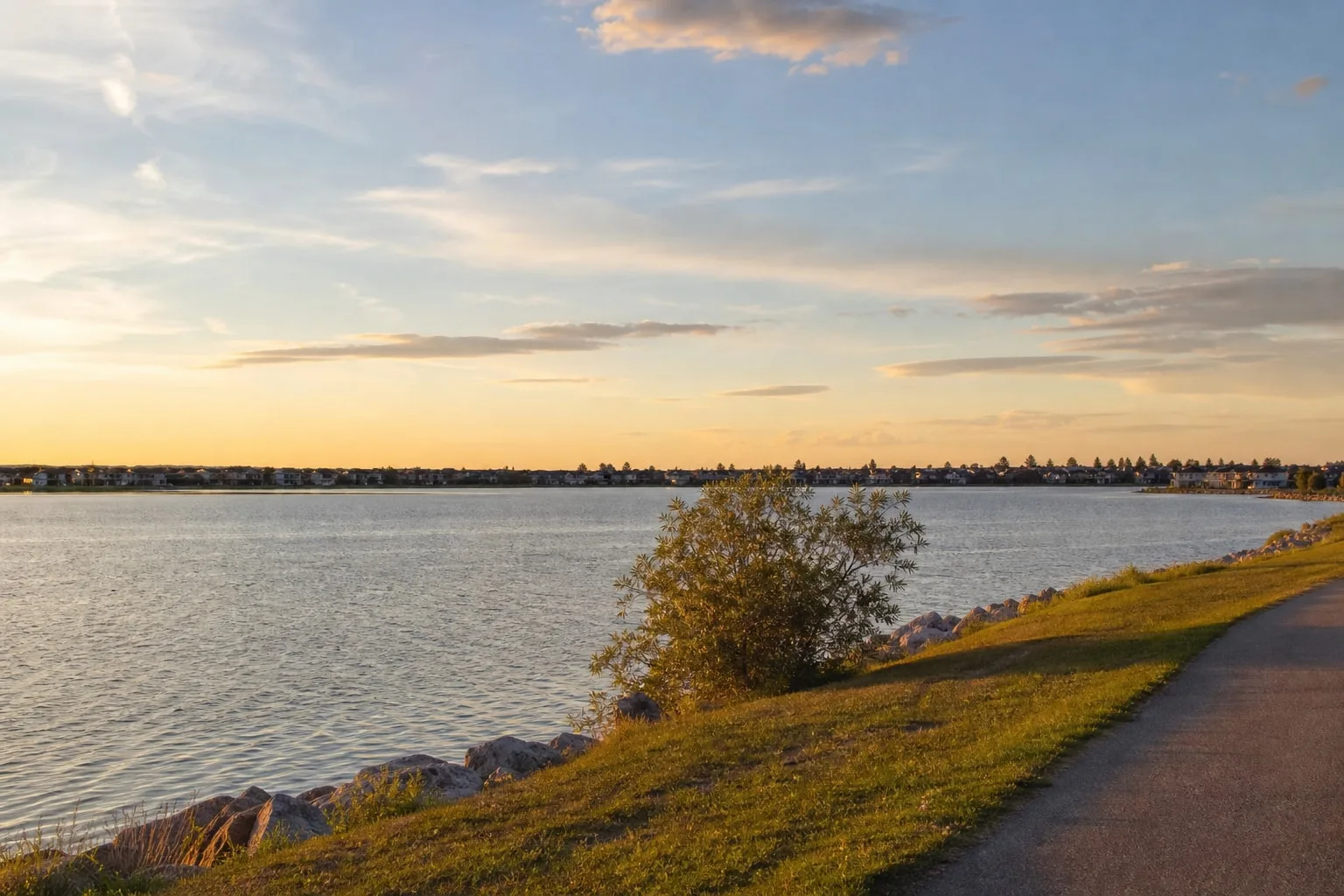
The 2021 Census put the population of Chestermere, Alberta at 22,163. If your property has more open ground than roof space, the first question changes. Before we talk panel count, we want to know how much open yard you have, which way it faces, and what sits between it and the house. Your electricity comes through FortisAlberta, so every grid-tied system goes through FortisAlberta's micro-generation connection process. We prepare the application and the design package so you aren't stuck translating utility forms. Chestermere Lake and Anniversary Park are local landmarks, but they don't tell us much about a ground mount site. The useful details are on the property itself. Ground mount planning also means checking access, clearance from buildings and fence lines, and a trench route back to the meter. We walk the site, check those details, and tell you plainly if the spot you picked is a bad one. Production, savings, and payback depend on your design and your most recent power bill. We'll show you numbers built from your site, and if those numbers don't justify the project, we'll say so.
Electrical Site Review for Chestermere Properties
Voltage Rise
Voltage rise happens when the power your array pushes onto the line lifts the voltage at the connection point, and how much it lifts depends on the distribution conditions at your site. When voltage climbs too high, inverters can reduce output to stay within limits, which means clipped production you paid for. We factor voltage rise into inverter selection and system sizing before we recommend a capacity.
Single-Phase vs Three-Phase
Rural properties can have single-phase or three-phase service, and the difference shapes which inverter and array size make sense. Single-phase service covers most homes and smaller shops, while three-phase service is typically found on larger loads like irrigation pumps. We confirm which one you have before selecting equipment, because the phase sets how much output the service can carry.
Panel Infrastructure
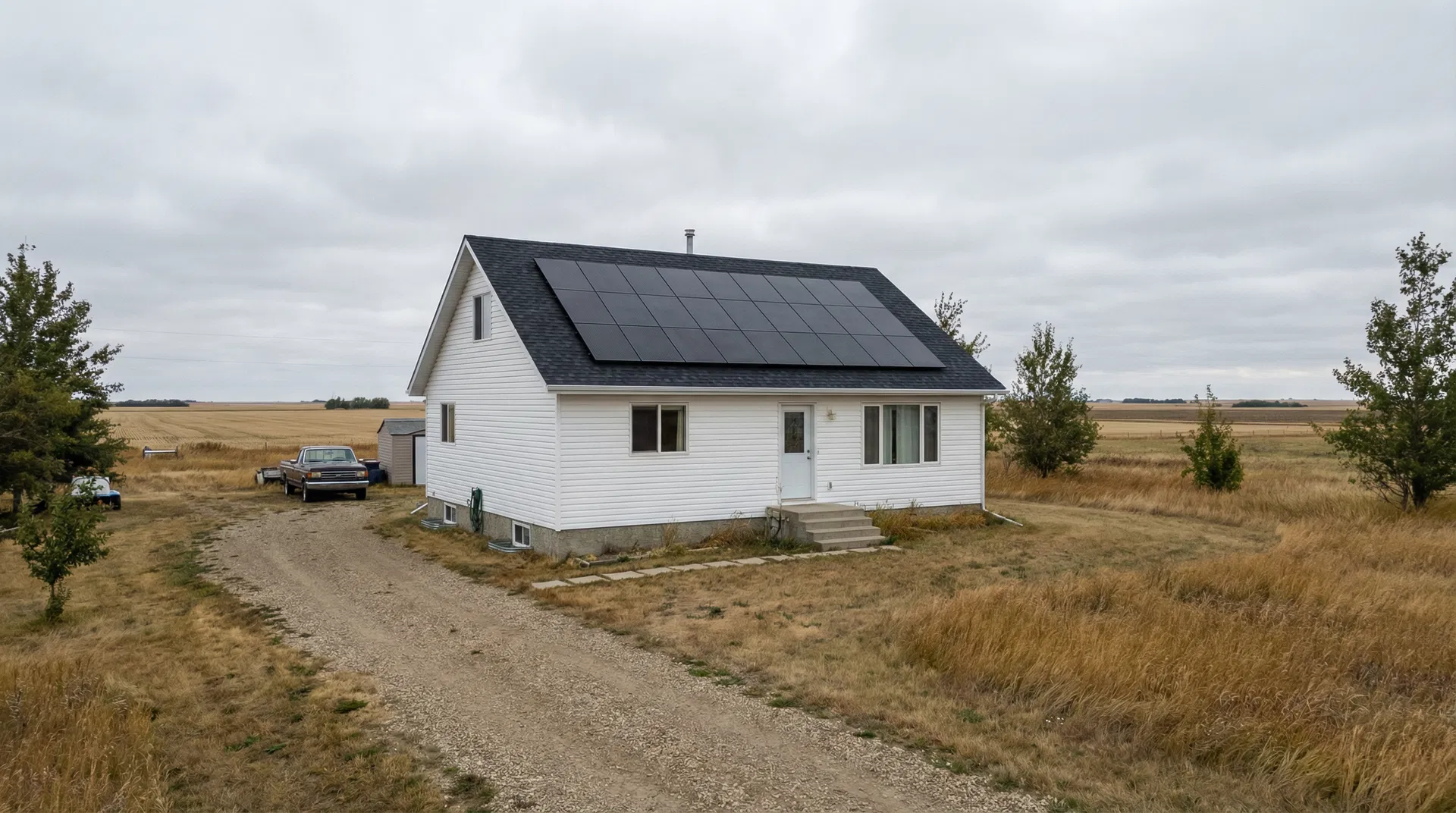
Older panels on rural properties were often installed when loads were much smaller, so breaker capacity and panel age matter before a solar system goes in. We check the main breaker rating, the bus, and the overall condition of the panel, and we look for signs of overheating or non-standard wiring. If the panel can't support the added system, the upgrade means replacing it with a larger panel and updating the feeder, which we scope into the design before any work starts.
Service Entrance Review
We check the service entrance and meter base on every site review, because their condition determines whether the micro-generation application can move forward. A corroded or damaged meter base can stop an interconnection, so we inspect it before anything goes to FortisAlberta. If the entrance needs an upgrade, we'll explain what's involved and how it fits into the project.
Right-Sizing Solar for Chestermere Properties
Rural systems tend to be bigger than urban ones because the load isn't just the house. A typical acreage might run the home, a heated shop, a well pump, a block heater or two, and a few outbuildings, and each one adds to the daily draw. Irrigation or grain handling can push the load higher still, especially during the busy season. That's why a rule of thumb based on square footage misses the mark out here. Roof or ground mount is the next decision. A roof works when the pitch and orientation are right and nothing shades the array for much of the day. Ground mount makes more sense when trees or buildings shade the roof, the pitch faces the wrong way, or the yard has open ground that won't be used for anything else. We look at what you have before recommending either option, and we'll tell you when the roof is the better call. Sizing starts with your most recent power bill. Alberta utility bills include a 12-month usage graph, and that graph shows the seasonal pattern of your load better than any estimate we could make over the phone. We match the array to that pattern, then check it against the site design, the equipment, and the electrical capacity at the service. The power bill and the site design work together. The bill tells us how much you use and when. The site design tells us how much of that the property can physically support. Where those two disagree, we'll explain which one is driving the size and why.
Typical Load Profiles We Design For Near Chestermere
Home + Heated Shop
A home with a 30 by 40 foot heated shop has a steady daytime load in the shop and a higher evening load at the house. Shop tools like compressors and welders start with a surge, and that surge shapes the inverter and service decisions. We size the array from the 12-month usage graph on your most recent power bill and the shop's equipment list.
Home + Well and Irrigation Pump
A 5 horsepower irrigation pump runs hard for a few months and then drops off, which makes the seasonal peak the number that matters. Pump start-up draw can be the largest single load on the property, so we check it against the service capacity before sizing anything. The 12-month usage graph on your most recent power bill shows the summer peak clearly.
Home + Grain Dryer and Outbuildings
Harvest loads are short and heavy, and the grid covers those peaks. The array's job is the steady year-round draw of the house and outbuildings, so the usage graph matters more than the peak. We match the array to that base load and confirm the service can handle the dryer.
FortisAlberta Interconnection in Chestermere
Electricity for your property comes through FortisAlberta, so that's the utility we work with on every grid-tied system. Connecting a solar array to the grid requires a micro-generation application to FortisAlberta, and that application needs a complete design package behind it. We prepare that package for you, including the system design, equipment details, site layout, and the electrical information FortisAlberta asks for. Our job is to get the application right the first time. We check the service entrance, confirm the equipment specs match what's being installed, and flag anything that could cause a delay before materials are ordered. If FortisAlberta asks for more information, we handle that exchange so you aren't left guessing about what's next. You don't need to become an expert in the interconnection process. You'll get a plain-language summary of what's been submitted, what FortisAlberta has requested, and what happens next. Ground mount projects add a few steps, like the trench route and the array location, and we include those in the package from the start.
Project Economics and Design Review
| System Size | Annual Production | Year 1 Savings | Payback Period |
|---|---|---|---|
| 10-30 kW range, 15 kW typical |
Production, savings, and payback require a property-specific design and your most recent power bill.
How We Work in Chestermere
Bill and Load Review
We review your power bill to understand your energy use in Chestermere and size the system to your actual consumption, not a generic estimate.
Site Assessment
We assess your roof or ground area, south-facing exposure, electrical service, and utility interconnection requirements specific to your property.
Design and Utility Application
We produce a system layout, production estimate, and cost summary, then submit your micro-generation application to your utility on your behalf.
Installation and Commissioning
Our crew installs racking, panels, inverter, and electrical connections. All work is performed by licensed electricians. We commission and test before handoff.
Current Program and Interconnection Review
Utility connection review
FortisAlberta reviews every grid connection application for a solar system, and that review is part of what we manage for you. Range Road Solar prepares the design package and submits the application on your behalf. We keep you posted on anything FortisAlberta asks for along the way.
Current program review
Commercial, farm, and residential eligibility is reviewed against current rules at design time, so the project reflects what actually applies to your property. Program rules change, so we don't quote anything here that could be out of date. We check the details against your site when we design the system.
Frequently Asked Questions
Get a Solar Assessment for Chestermere
Submit a recent power bill and we will review your consumption and provide an honest assessment for your Chestermere property. No obligation.
(587) 330-7502 Book a CallMore Solar Services in Chestermere