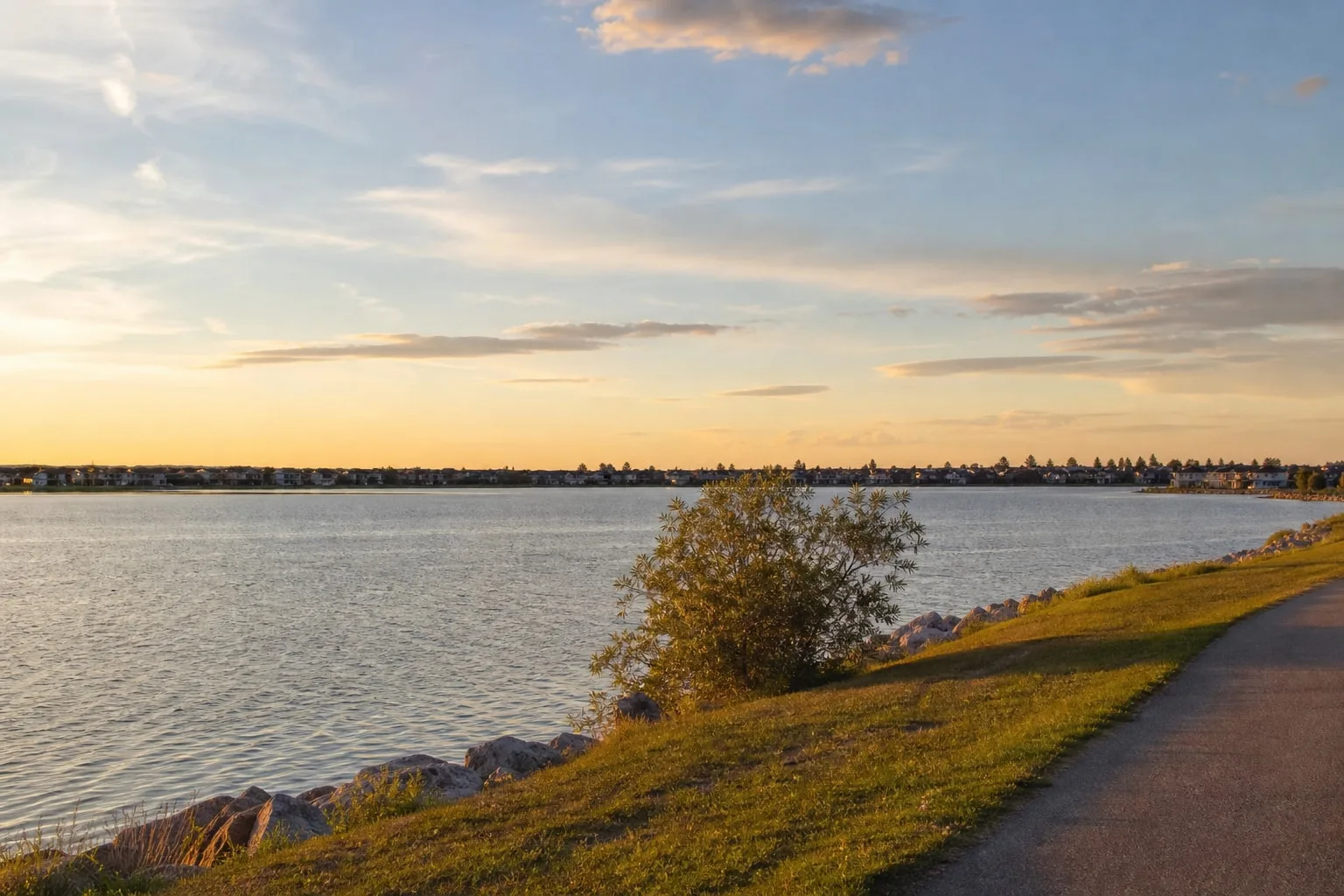
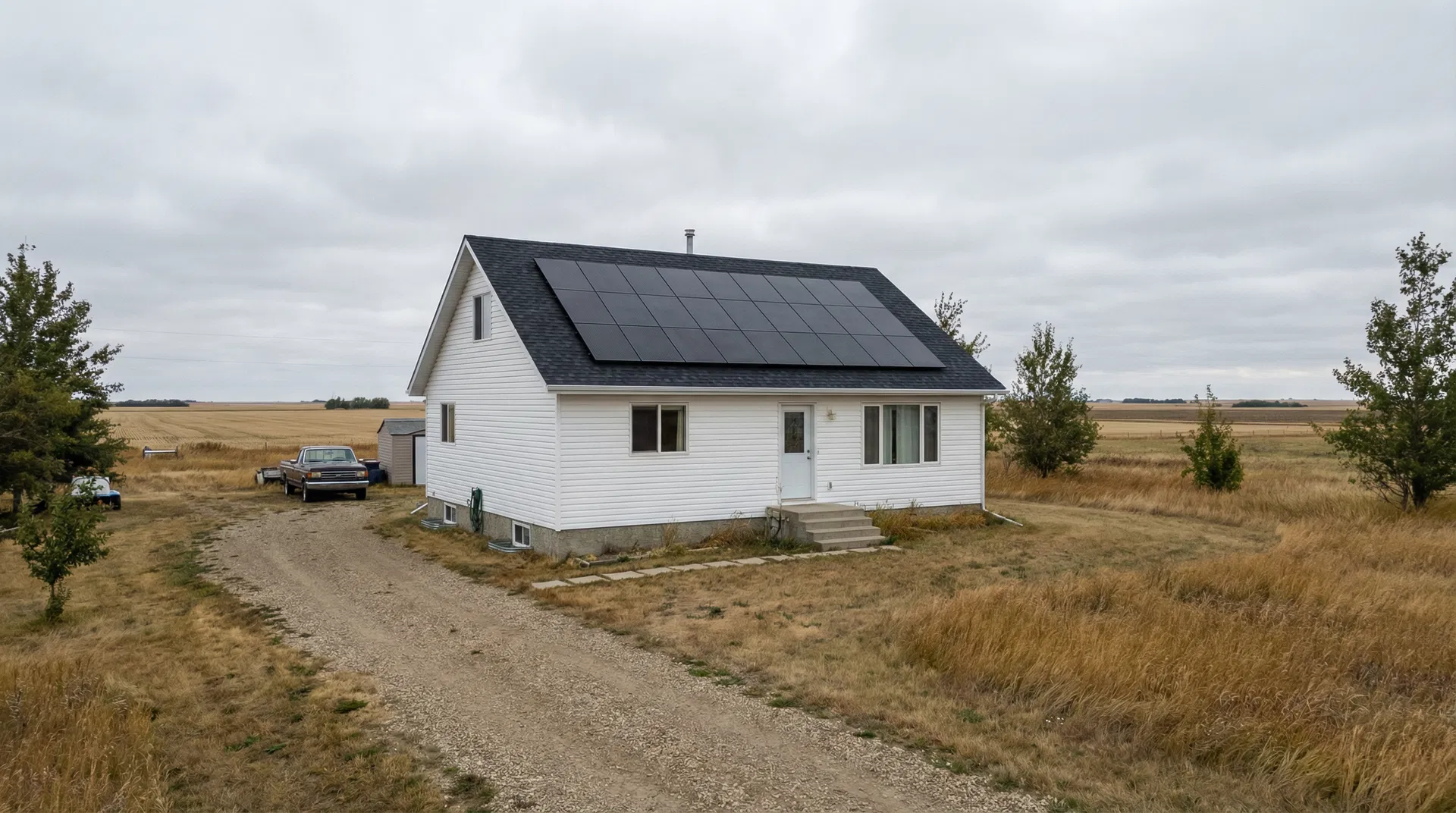
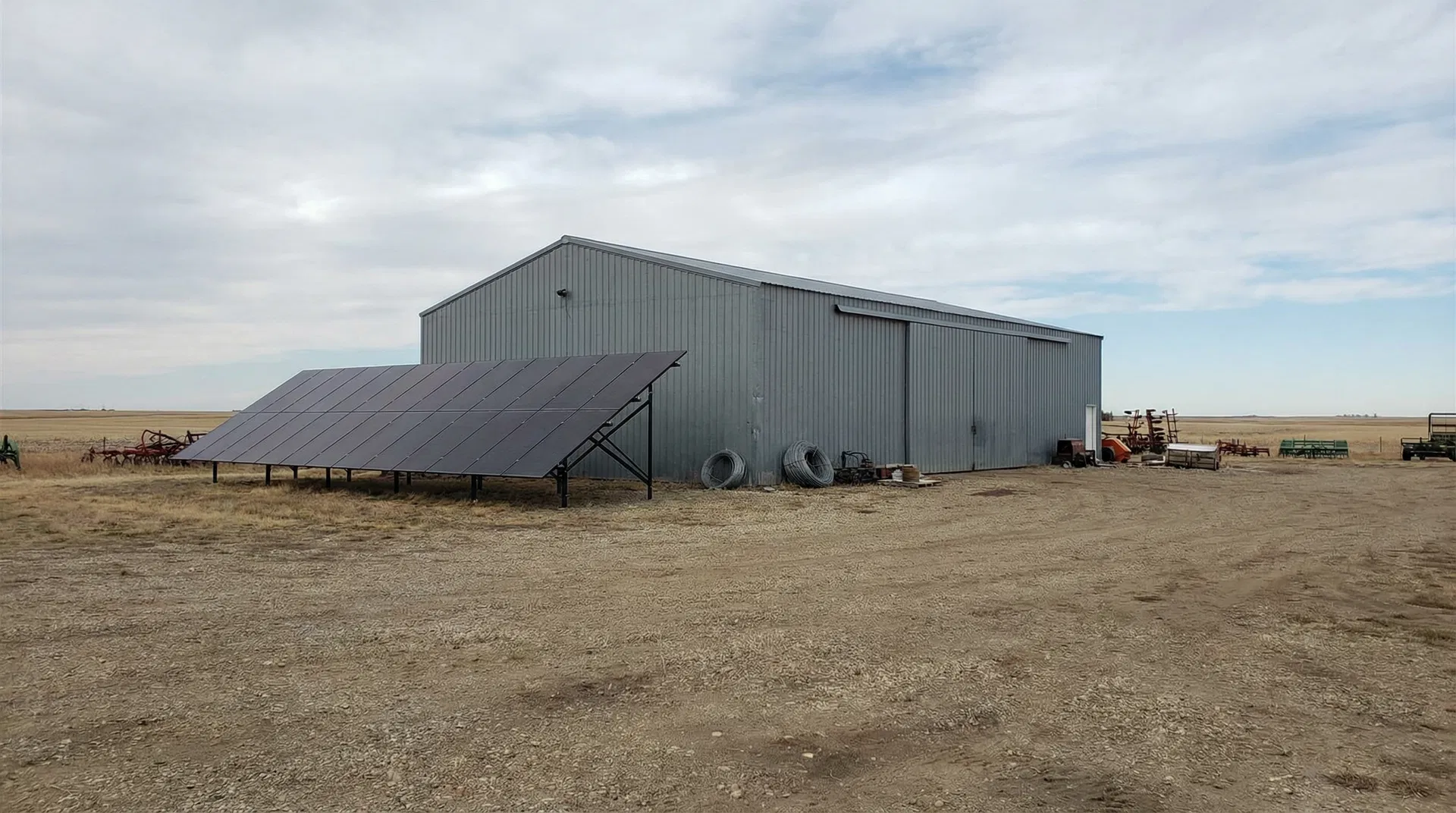
Solar farm solar Chestermere alberta projects run from 20 kW to 50 kW, with 25 kW as the typical size we design for. That range covers a farm house with a shop, a grain dryer, or a livestock barn carrying a few heavy loads at once. Ground mount is our preferred layout for larger farm systems because it gives the array open exposure, keeps panels clear of building shadows, and leaves room to add capacity later. Our farm designs use LONGi panels paired with APsystems microinverters, so each panel's output is handled on its own. That matters on farm sites, where a tree line, a grain bin, or a row of outbuildings can shade one section of the array at certain times of day. Module-level conversion keeps that shading from pulling down the whole string the way a single central inverter can. Rooftop systems still make sense for some properties. A newer shop roof with a good orientation and no shading can carry a meaningful share of the load without any ground work. We check the roof's age and structure first, and we'll tell you plainly if a shed roof needs reinforcement before it can carry the array. Ground mounts involve more civil work: footings or ground screws, trenching for the DC and AC runs, and a plan for the disconnect and meter location. We spell out that scope in the design package so you see every line item before anything gets dug. Those site decisions often shape the final scope more than the panels do, so we settle them early.
Solar Planning for Chestermere Properties
Farm solar planning starts with the wire service and the loads, in that order. FortisAlberta is the wire service here, so every grid connection we design runs through the same utility that reads your meter. We check the service entrance, the panel, and the connection point before we draw anything, because a layout that looks right on paper can still need equipment changes to connect cleanly. Chestermere Lake and Anniversary Park give the community much of its character, but neither one tells us what a farm needs. A quarter section with a grain bin, a shop, a well pump, and a house runs on a different schedule than a residential lot. Those loads, when they run, and the buildings they sit in shape the whole design. We start every farm project with your most recent power bill. The 12-month usage graph on that bill shows the seasonal shape of your load, and that shape matters more than a single average. From there, site design covers roof pitch and age, shading from trees or outbuildings, orientation, and how much open ground is available for a ground mount. Range Road Solar confirms production and payback through that design review, using your property rather than a generic regional figure.
Electrical Site Review for Chestermere Properties
Voltage Rise
Voltage rise happens when a solar system pushes power back onto the distribution line and local voltage climbs above its normal range. How much it climbs depends on the distribution conditions at your property, including line length and what else sits on the same feeder. When voltage gets high enough, the inverter reduces output or clips, so we size the array with that behaviour in mind.
Single-Phase vs Three-Phase
Rural properties in Alberta are served by either single-phase or three-phase service, and the difference shapes which equipment makes sense. Single-phase service limits the inverter types and system capacity you can connect, while three-phase service supports larger motors and more capacity. We confirm which one you have before we select inverters, so the design matches the service.
Panel Infrastructure
Older electrical panels on farm properties were often sized for a much smaller load than a shop, a grain system, and a solar array now put on them. We check the panel's age, its rated capacity, and the open breaker spaces to see whether the system can connect without changes. If the panel can't support the system, the upgrade means replacing it, and we quote that as a separate line item.
Service Entrance Review
We inspect the service entrance and meter base for corrosion, loose connections, and the rating of the equipment feeding the meter. The meter base condition matters for the micro-generation application to FortisAlberta, because the utility needs a safe, accurate connection point for the system. If the base needs replacing, we flag it during design so the application doesn't go in on equipment that isn't ready to connect.
Right-Sizing Solar for Chestermere Properties
Rural properties usually run more than one load, which is why farm systems tend to be bigger than the array on a comparable residential lot. A house draws one way, but add a shop with a welder, outbuildings with lights and heaters, and grain or irrigation equipment, and the total picture changes fast. We size for the whole property, not just the house, because a system sized for the kitchen will leave the shop and the bin fan drawing from the grid. Roof or ground mount depends on the buildings and the land. A roof works when the pitch is reasonable, the structure is sound, and nothing shades it for most of the day. Ground mount is usually the better call when trees or buildings shade the roof, when a shed roof or older barn has the wrong pitch or orientation, or when the yard is spread out with open land near the meter. Sizing starts with the 12-month usage graph on your most recent power bill. That graph shows the whole year, so we see when the property peaks instead of guessing from one month. A load that peaks in July calls for a different array than one that peaks in January, and that pattern steers the size more than any rule of thumb. We pair the usage graph with the site design, covering roof or ground space, shading, and orientation. Your bill and your site together set the system size. The bill tells us how much the property uses and when. The site tells us how much array it can physically carry. If those two numbers don't match, we'll tell you which one is the limit and what that means for the design.
Typical Load Profiles We Design For Near Chestermere
Home + Heated Shop
A house with a heated shop puts a steady base load on the system, plus bursts from a 240-volt welder, a compressor, and an electric shop heater. Shop loads come and go, so the 12-month usage graph on your most recent power bill shows whether they push winter usage higher. We size the array to that pattern, then confirm the roof or ground space can carry it.
Grain Handling + Yard Power
A 5 hp auger and a 3 hp grain bin fan run hard at harvest, while yard lights and a well pump draw all year. That harvest spike is often where the sizing decision gets made, because the peak month sets how much array a property can use well. We check motor start-up demand against the inverter and service size before we commit to a layout.
Irrigation Pump + Livestock Barn
A 10 hp irrigation pump runs through the growing season, while a livestock barn adds water heaters and two 3 hp ventilation fans. The pump and fans start with a surge that's bigger than their running draw, so we size the inverter against the largest motor, not the average load. The usage graph on your most recent power bill shows how the summer months stack up against winter.
FortisAlberta Interconnection in Chestermere
FortisAlberta is the wire service for this area, which means every farm system we design connects to the FortisAlberta grid through its interconnection process. We handle the application package. That includes the site plan, the equipment specifications, and the details the utility needs to review the connection, so the paperwork matches what actually gets installed. Your part is short. Tell us which meter and service the project will connect to, and send your most recent power bill so we can confirm the account and the load pattern we're designing around. Farm properties sometimes have a separate yard service or a shop on its own account, so we sort out the service point during design. Naming the wrong one means redoing paperwork, and we'd rather catch it before anything gets submitted. Once the application is in, FortisAlberta reviews the connection on its own schedule. We can't promise how long that review takes, and we'll keep you updated on each step we can see. The LONGi panels and APsystems microinverters are specified in the design package from the start, so the application and the installed system describe the same equipment.
Project Economics and Design Review
| System Size | Annual Production | Year 1 Savings | Payback Period |
|---|---|---|---|
| 20-50 kW range, 25 kW typical |
Production, savings, and payback require a property-specific design and your most recent power bill before we can state them.
How We Work in Chestermere
Bill and Load Review
We review your power bill to understand your energy use in Chestermere and size the system to your actual consumption, not a generic estimate.
Site Assessment
We assess your roof or ground area, south-facing exposure, electrical service, and utility interconnection requirements specific to your property.
Design and Utility Application
We produce a system layout, production estimate, and cost summary, then submit your micro-generation application to your utility on your behalf.
Installation and Commissioning
Our crew installs racking, panels, inverter, and electrical connections. All work is performed by licensed electricians. We commission and test before handoff.
Current Program and Interconnection Review
Utility connection review
FortisAlberta, as the wire service, reviews grid connection applications for the system. Range Road Solar prepares the design package that the review requires. The specific review steps are confirmed with the utility's current process at design time.
Current program review
Commercial, farm, and residential eligibility is reviewed against current rules at design time. We don't rely on past program terms when we scope a project, because rules change. Each design review confirms what applies to your property before you commit to anything.
Frequently Asked Questions
Get a Solar Assessment for Chestermere
Submit a recent power bill and we will review your consumption and provide an honest assessment for your Chestermere property. No obligation.
(587) 330-7502 Book a CallRelated Resources
More Solar Services in Chestermere