Solar net-metering Chestermere alberta projects start with the property and finish with a system that's tied into your existing account. We install LONGi panels with APsystems microinverters, so each panel works on its own instead of depending on the weakest panel in a string. That matters on rural lots, where a tree line, fence, or shop roof can shade one corner of the array for part of the day. Rural properties usually carry more than one load. There's the house, a shop or garage, and sometimes a barn, a well pump, or a grain dryer, and each one shows up differently on the usage graph. Residential systems usually fall between 8-12 kW, with 10 kW the typical build, and where your property lands depends on its loads and site design. A farm or acreage with heavy seasonal loads tends to sit at the upper end, while a single house with a modest yard may sit lower. We handle the design package, the FortisAlberta application, and the installation, so you're never juggling separate contractors for each step. Once the system is designed, the connection paperwork gets the same attention as the panels, because the connection is what makes net metering work. Your part is small: send us your most recent power bill, and we'll start from the 12-month usage graph on it.
Solar Planning for Chestermere Properties
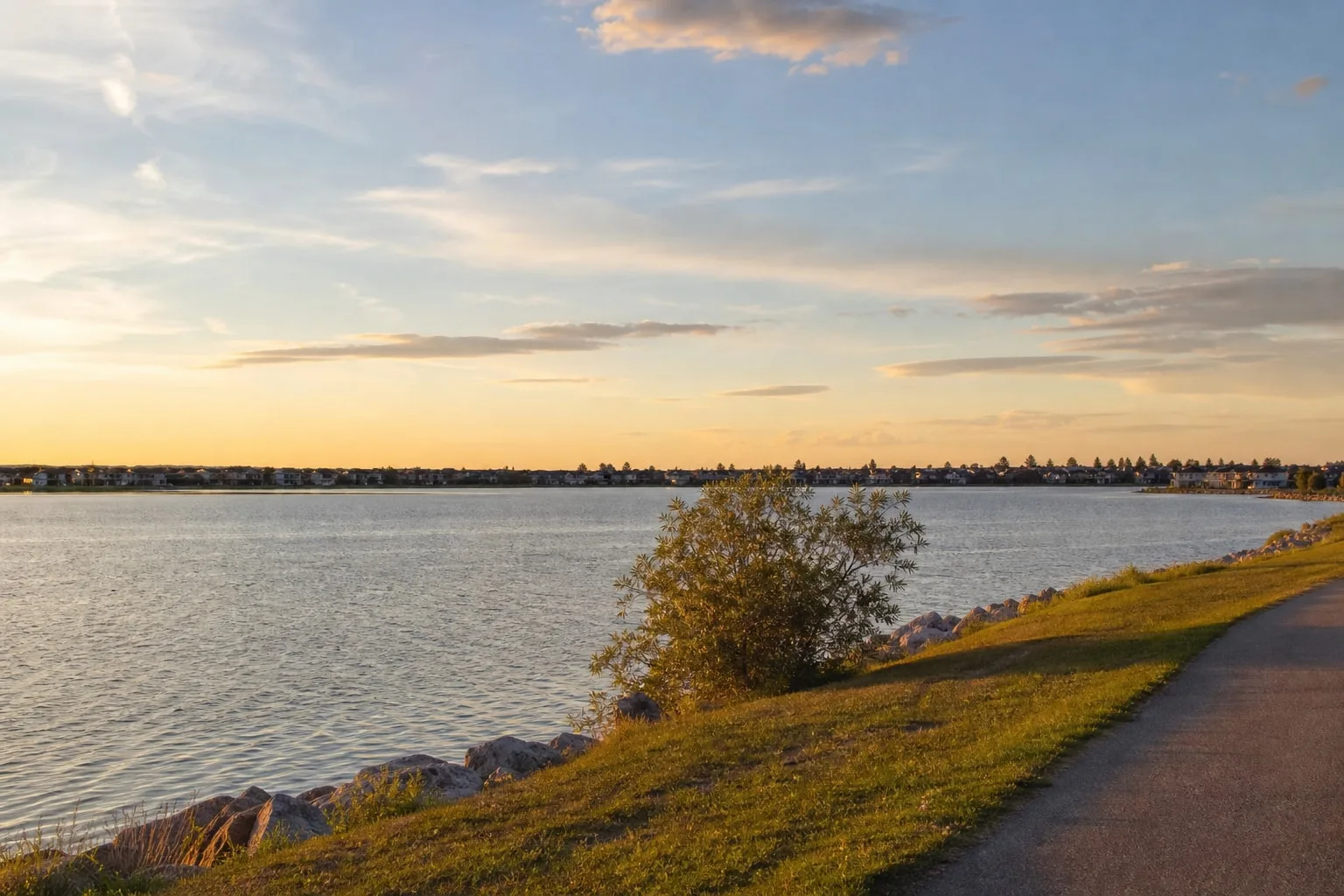
Solar planning in Chestermere starts with the property, not a catalogue of panels. The 2021 census counted 22,163 people here, and that mix shows up in the lots we see. Chestermere Lake and Anniversary Park shape daily life, and the properties around them vary a lot in size and layout. Some have a yard and a shop, some have a barn, and some have a house that's been expanded over the years. We look at roof pitch, tree line, and where the meter sits before we draw anything. A system that fits the house may not fit the shop, and the electrical service has to handle both. Net metering and micro-generation are a utility process first, so we start with the site and the account, then build the design package around them. You'll get a plan that shows where the panels go, how the APsystems microinverters are arranged, and what the connection requires. We don't guess at production numbers. Your most recent power bill and the site design tell us what the system will likely do, and we'll walk you through that math before you commit to anything.

Electrical Site Review for Chestermere Properties
Voltage Rise
Voltage rise happens when a solar system pushes power back onto the distribution line and the local voltage climbs above its normal level. How much it climbs depends on the distribution conditions at the property, which we check during the design. When voltage rises too far, inverters can clip or back off output, which limits what the system delivers and affects how large a system makes sense.
Single-Phase vs Three-Phase
Rural properties may have single-phase or three-phase service, and the difference shapes what the system can do. Single-phase service is common on homes and smaller acreages, while some larger shops and irrigation pumps are wired for three-phase. Knowing which you have tells us which inverter configuration fits and how much capacity the service can carry.
Panel Infrastructure
Older electrical panels on rural properties often have breaker capacity set for the loads of their day. We check the breaker capacity, the panel's age, and its condition, since those determine whether a new system can connect without changes. If the panel can't support the system, the upgrade means replacing it with a higher-capacity unit, which we scope as part of the design.
Service Entrance Review
We review the service entrance and the meter base before the micro-generation application goes in. The meter base condition matters because the metering setup has to be sound for the FortisAlberta connection to be approved. If the meter base or service entrance needs an upgrade, we'll tell you what that work involves and how it fits into the project before you commit.
Right-Sizing Solar for Chestermere Properties
Rural systems tend to be larger than urban ones because the load isn't just the house. A property with a house, a heated shop, a few outbuildings, and an irrigation pump or grain handling equipment carries several separate loads, and each one draws power at a different time of day. Sizing for the house alone undershoots the real demand, and sizing for everything at once can overbuild. We look at how those loads actually run. The first decision is roof or ground mount. A roof mount works well when the roof has a usable pitch, good orientation, and little shade from trees or nearby buildings. A ground mount makes more sense when trees or outbuildings shade the roof, the pitch is poor, or the yard has open land you're happy to use. On acreages and farms, ground mounts often win because the yard has room and older roofs are often oddly shaped. Sizing comes from your usage, not from a rule of thumb. We use the 12-month usage graph on your most recent power bill to see how consumption moves across the year, which shows where the big draws are. Then we pair that with the site design, including roof or ground conditions, to set the system size. A current bill and a site design together tell us far more than a square-foot estimate ever could.
Typical Load Profiles We Design For Near Chestermere
Home + Heated Shop
A house plus a heated shop with a 3 hp compressor and a welder that runs a few evenings a week. The shop load is short but sharp, so we check the combined daily curve on your usage graph rather than sizing for the nameplate on the tools. A 10 kW design is a common starting point for this profile, and your most recent power bill confirms or adjusts it.
Acreage + Irrigation Pump
A house, a machine shed, and a 15 hp irrigation pump that runs for several hours at a stretch during the growing season. The pump creates the largest swing on the usage graph, so the site design checks how the system and the electrical service handle its start-up draw. Sizing for this profile usually moves toward the upper part of the 8-12 kW range, and your bill shows how far.
Farm Yard + Grain Handling
A farmyard with a grain dryer and auger running through harvest, plus a house and a shop that stay steady through the year. Harvest loads are seasonal and can sit far above the household draw, so we review how the usage graph spikes in those months before choosing a system size. We size against the full year, not only the quiet months.
FortisAlberta Interconnection in Chestermere
FortisAlberta is the wire service for Chestermere, so the micro-generation connection application goes through FortisAlberta. Because FortisAlberta handles the connection, the application details matter as much as the panels. We prepare the design package for you. That includes the site drawing, the equipment details for the LONGi panels and APsystems microinverters, the information about your existing electrical service, and the forms that go with the application. We submit it, track it, and answer the questions that come back from the utility, so you don't have to learn the process from scratch. You'll know what has been sent and what's still open at every stage. If the review turns up something on the property that needs attention, we'll explain it plainly and show you the options before any work starts. Our job is to make the connection side of the project predictable, even though the utility sets its own pace.
Project Economics and Design Review
| System Size | Annual Production | Year 1 Savings | Payback Period |
|---|---|---|---|
| 8-12 kW range, 10 kW typical |
Production, savings, and payback require a property-specific design and your most recent power bill, so no figures appear here.
How We Work in Chestermere
Bill and Load Review
We review your power bill to understand your energy use in Chestermere and size the system to your actual consumption, not a generic estimate.
Site Assessment
We assess your roof or ground area, south-facing exposure, electrical service, and utility interconnection requirements specific to your property.
Design and Utility Application
We produce a system layout, production estimate, and cost summary, then submit your micro-generation application to your utility on your behalf.
Installation and Commissioning
Our crew installs racking, panels, inverter, and electrical connections. All work is performed by licensed electricians. We commission and test before handoff.
Current Program and Interconnection Review
Utility connection review
FortisAlberta reviews micro-generation connection applications for properties in Chestermere, and we prepare the design package that goes with each one. We handle the drawings, equipment details, and paperwork so the review has a complete file to work from. Your part is confirming the site details and sending your most recent power bill.
Current program review
Commercial, farm, and residential eligibility is reviewed against current rules at design time, not assumed from a previous project. Rules can change, so we check them as part of each design rather than quoting from memory. If anything applies to your property, we'll tell you during the design review, and if nothing does, we'll say that too.

Frequently Asked Questions
Get a Solar Assessment for Chestermere
Submit a recent power bill and we will review your consumption and provide an honest assessment for your Chestermere property. No obligation.
(587) 330-7502 Book a CallRelated Resources
More Solar Services in Chestermere