If you searched for solar solar-repair Chestermere alberta, you're probably dealing with one of three things: an inverter throwing a fault code, a panel or string that has dropped off, or a system old enough that nobody has looked at it in years. Inverter faults are often the first thing people notice, and they're frequently easier to diagnose than they look. We pull the fault history, check the communication link, and confirm whether the unit has failed or is reacting to something upstream, like a loose connection or a voltage problem on the line. Panel replacement comes next when a module is cracked, delaminated, or producing well below the rest of the array. We service all brands, but LONGi panels are our default for replacements, and we check electrical specs against the existing modules before anything goes on the roof or racks. Microinverter systems add their own questions. On APsystems microinverters, a single unit that drops offline usually shows up as one panel going flat in the monitoring app, which gives us a clear starting point. We swap in a matching model, confirm it reports, and check that the array is balanced again. System audits are the least exciting service and the one that catches the most. We walk the array, check mounting hardware and wiring for wear, look at the inverter enclosure for heat or moisture, and compare output against what the design should be producing. Acreage and farm properties often have longer wire runs out to outbuildings and more dust, livestock, and weather exposure, so we look more closely at conduit and connections there. We're not here to sell a new unit when a reset or connector swap will do the job, and if something does have to be replaced, we'll explain why before any work starts.
Solar Planning for Properties in Chestermere, Alberta
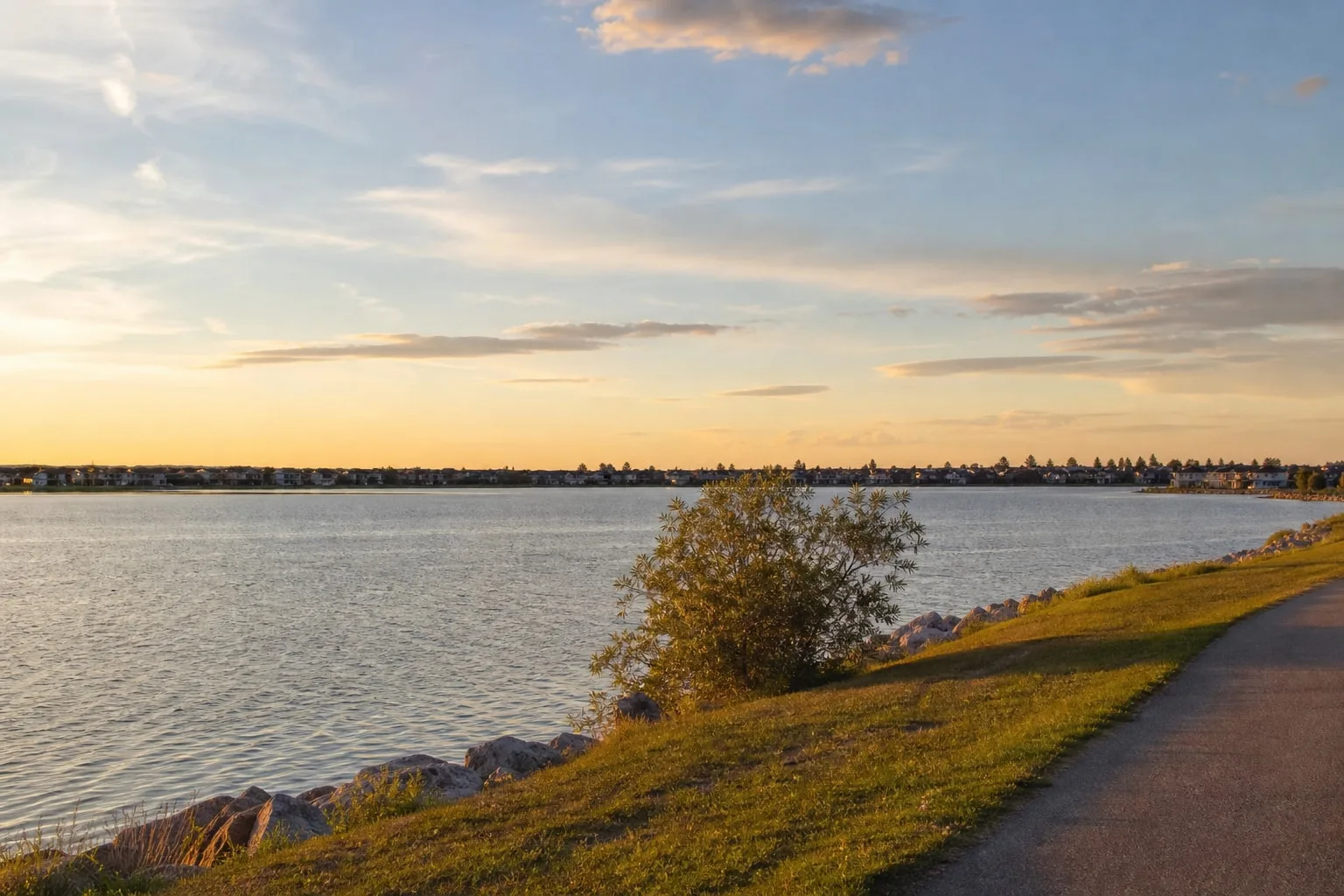
Properties around Chestermere, Alberta don't all look alike, and that's the first thing we check on any repair call. Whether your system sits close to Chestermere Lake or nearer to Anniversary Park, the questions usually come down to two things: what the array is doing right now, and what it was designed for in the first place. FortisAlberta is the wire service here, so any grid connection paperwork runs through that utility, and we handle the application side for you. Solar planning starts with the property, not a template. A system that worked fine on the original roof can behave differently after a re-roof, a new shed that throws shade across the array, or a tree that has filled in on the south side. We look at the panel layout, the inverter location, the wiring run, and the roof or ground-mount structure before we touch anything. That gives us a clear picture of what's failing and what's just getting old, and those two call for very different fixes. Range Road Solar confirms system design outcomes through a site design and your most recent power bill, so we don't guess at what a repaired array should produce. If the numbers don't justify a repair, we'll tell you that too.
Electrical Site Review for Rural Properties
Voltage Rise
Voltage rise happens when a solar system pushes power back onto a line that's already carrying its own voltage, and the distribution conditions at the property can make that effect more or less noticeable. On a long rural service, the voltage at the inverter can climb high enough to trigger clipping or shutdowns during peak output. That's why we check the measured voltage at the point of connection before we settle on a system size or confirm that an existing array is running at its design output.
Single-Phase vs Three-Phase
Properties in rural Alberta may have single-phase or three-phase service, and the difference shapes which inverters can be connected and how much capacity the system can deliver. Single-phase service suits most homes and smaller outbuildings, while three-phase service is common on larger farm and acreage properties with heavy motors. Knowing which one you have before repair or replacement work begins keeps us from specifying an inverter that won't match the service.
Panel Infrastructure
Older electrical panels on rural properties were often sized for the loads of their day, not for a solar system feeding back through the breakers. We check breaker capacity, bus rating, panel age, and whether the panel shows heat, corrosion, or add-on circuits that have used up its spare space. If the panel can't support the system, the upgrade means a replacement panel sized for the combined load, with breakers and wiring matched to it.
Service Entrance Review
Our service entrance review covers the meter base, the service conductors, and the disconnect, because the meter base condition is part of the micro-generation application to FortisAlberta. A corroded, loose, or damaged meter base can cause problems that look like inverter faults, so we check it before blaming the equipment. If the meter base needs upgrading, we'll tell you what that involves and handle the application side with the utility as part of the project.
Right-Sizing Solar for Rural Alberta Properties
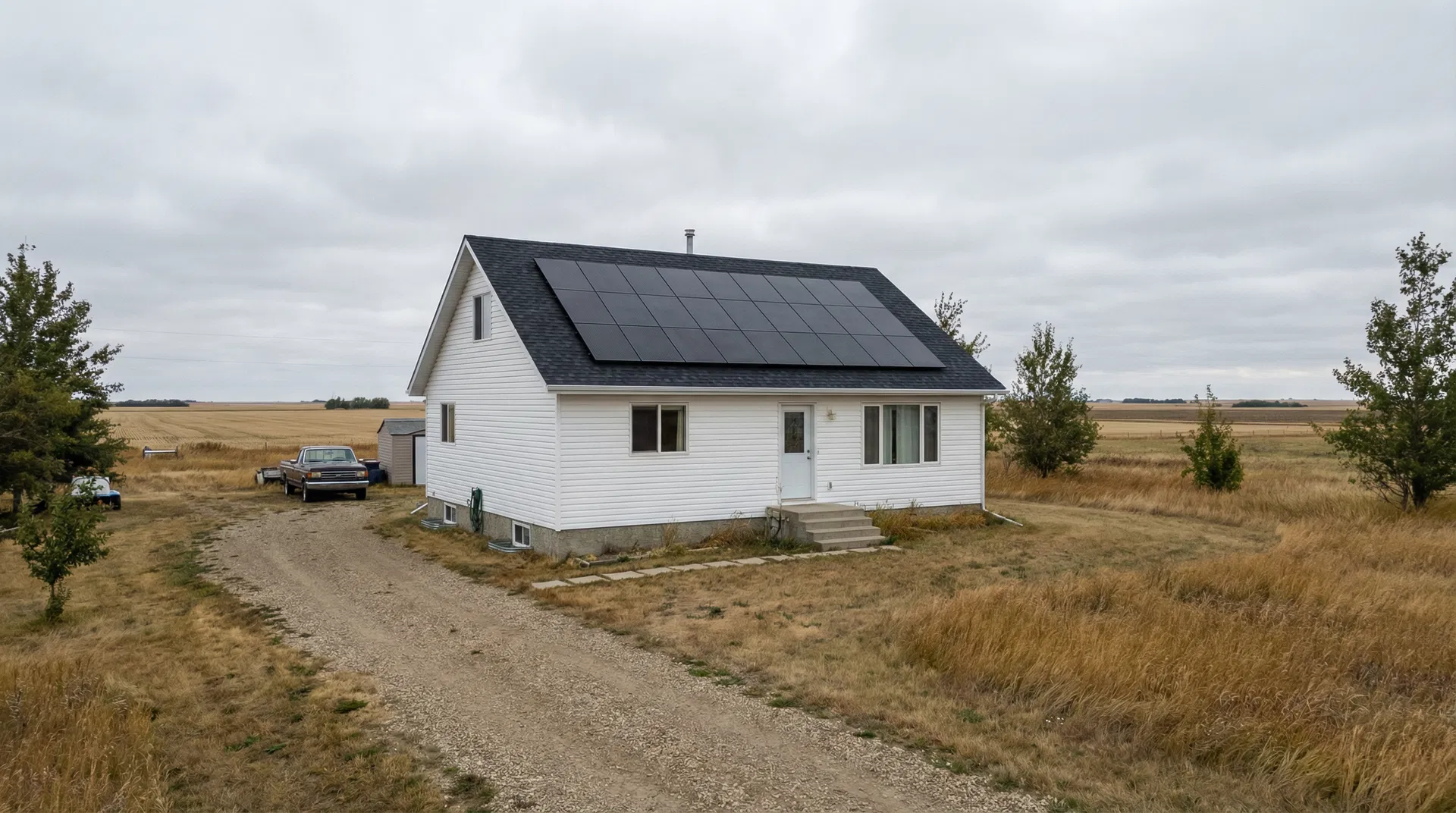
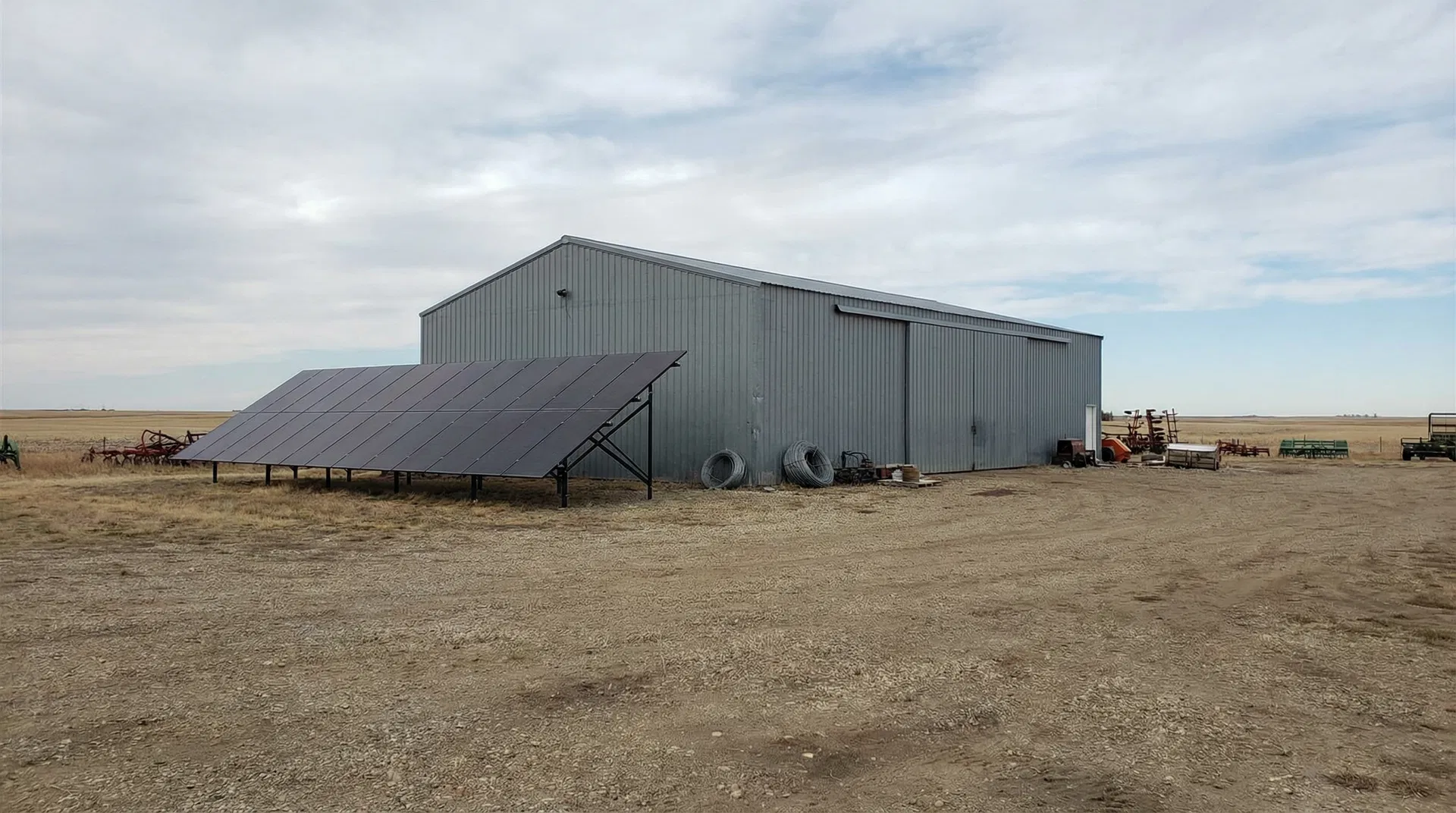
Rural Alberta systems usually end up larger than urban ones because the property runs more loads. A home might share its meter with a shop, a well pump, a grain dryer, yard lights, and a block heater plug-in, and each one changes the daily usage pattern. That's why we don't size a system from the house alone. Roof or ground mount is the first real decision. A roof works well when the pitch and orientation are good and nothing overhead casts shade. Ground mount makes more sense when trees or outbuildings shade the roof, the pitch is poor, or the yard has open space that isn't needed for anything else. On acreage and farm layouts, we also look at how far the power has to run back to the panel, and whether the ground is clear of irrigation lines and buried utilities. Sizing starts with your most recent power bill. The 12-month usage graph on that bill shows the seasonal pattern better than any rule of thumb, so a shop that works hard in winter gets sized differently from a property that peaks in midsummer. We combine that graph with the site design, roof or yard measurements, and the equipment you want, then recommend a system size within the 8 kW to 20 kW range. Your current power bill and the site design together tell us what the system needs to do, and the design review confirms the final number.
Typical Load Profiles We Design For Near Chestermere
Home + Heated Shop
This profile pairs a house with a heated shop that runs welders, a compressor, and a garage heater through the colder months. We size the array against the shop's daytime draw, and the 12-month usage graph on your most recent power bill shows whether that load is steady or seasonal. A 10 kW system is a common starting point for this mix, and the design review confirms the final size.
Acreage with Well Pump and Outbuildings
This profile covers a home with a well pump, a livestock waterer, and two outbuildings on a spread-out yard. The pump's start-up draw is short, but it can overlap with the house running, so we check peak loads instead of averages alone. A 12 kW to 15 kW array is a typical range for this mix, and the design review confirms where your property lands.
Farm Yard with Grain Handling
Farm yards with grain augers, a dryer, and a machine shed usually have their biggest loads in short bursts during harvest. The 12-month usage graph on your most recent power bill shows whether those bursts are the real driver or whether the house and shop set the baseline. A 15 kW to 20 kW system is the upper end of our range for this layout, and the design review sets the final size.
FortisAlberta Interconnection in Chestermere, Alberta
FortisAlberta is the wire service for this area, so grid connection paperwork for a solar system goes to FortisAlberta. Range Road Solar handles the application for you, from the design package through to submission, so you aren't left chasing forms or decoding utility requirements on your own. When we repair or maintain an existing system, we pull the original interconnection details for that property and check whether the equipment still matches them. A replacement inverter, a different panel model, or a change in array size can make the original paperwork out of date, so we check before the work starts instead of after. If something doesn't line up, we'll flag it early and explain what it means for the job. Our goal is to keep the utility side simple for you. You'll get a plain explanation of what's being submitted, why it's needed, and what we need from you to keep the file moving. Nothing goes to FortisAlberta without you knowing what it says.
Project Economics and Design Review
| System Size | Annual Production | Year 1 Savings | Payback Period |
|---|---|---|---|
| 8-20 kW range, 10 kW typical |
Production, savings, and payback require a property-specific design and your most recent power bill.
How We Work in Chestermere
Bill and Load Review
We review your power bill to understand your energy use in Chestermere and size the system to your actual consumption, not a generic estimate.
Site Assessment
We assess your roof or ground area, south-facing exposure, electrical service, and utility interconnection requirements specific to your property.
Design and Utility Application
We produce a system layout, production estimate, and cost summary, then submit your micro-generation application to your utility on your behalf.
Installation and Commissioning
Our crew installs racking, panels, inverter, and electrical connections. All work is performed by licensed electricians. We commission and test before handoff.
Current Program and Interconnection Review
Utility connection review
FortisAlberta reviews grid connection applications for systems in this area, and Range Road Solar handles the design package that goes with them. You'll know what's being submitted before it goes in.
Current program review
Commercial, farm, and residential eligibility is checked against current rules during the design review. We don't name or describe any specific program here because rules change, so we confirm what applies to your property when we look at the site.
Frequently Asked Questions
Get a Solar Assessment for Chestermere
Submit a recent power bill and we will review your consumption and provide an honest assessment for your Chestermere property. No obligation.
(587) 330-7502 Book a CallRelated Resources
More Solar Services in Chestermere