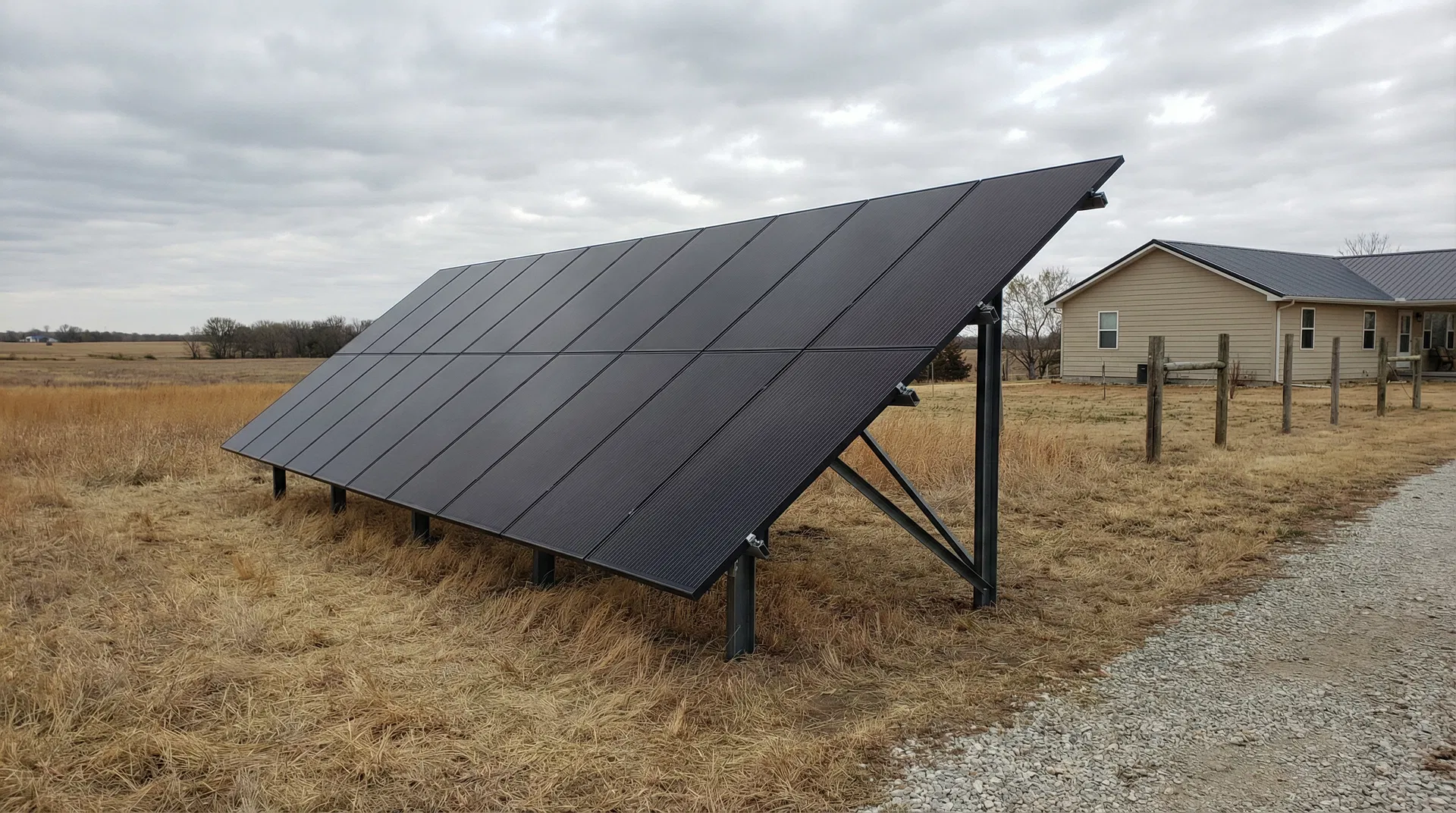
Every off-grid solar installation near Chestermere starts with the same question: what does this property actually need to run? That answer shapes everything from panel count to battery capacity to inverter selection. For off-grid solar in Chestermere, Alberta, we build systems using LONGi panels paired with hybrid inverters and lithium battery storage. LONGi panels give us consistent output across a wide range of conditions and hold up to the physical demands of rural Alberta properties. Hybrid inverters handle both the solar charging and the battery management in a single unit, which simplifies the system and reduces the number of components that can fail. Lithium batteries are the right choice for most off-grid builds because they handle partial states of charge better than older chemistries and cycle more times over their service life. The specifics of battery sizing, though, depend on your load profile, your average usage, and how many days of autonomy you want without a solar input. We size systems in the 5-15 kW range for off-grid applications near here, with 8 kW being a common starting point for a well-equipped acreage home. Shops, outbuildings, and irrigation loads push the system larger. Cabins and seasonal properties often sit at the lower end of that range. We won't recommend more system than you need, and we won't undersize it either. The design review is where we get specific about your property.
Solar Planning for Chestermere Properties
Not every property near Chestermere sits close enough to a utility line to make a grid connection practical. When a FortisAlberta service extension quotes run high, or when the property is a seasonal cabin, a secondary acreage, or a remote outbuilding, off-grid solar becomes the straightforward option. You own the system outright, you're not paying monthly distribution charges, and you're not waiting on utility scheduling. That independence has real value on rural Alberta land. Off-grid design is more involved than a grid-tied system, though. The battery bank has to carry the load through nights and cloudy stretches, the inverter has to handle startup surges from pumps and motors, and the panel array has to be sized with enough headroom to keep the batteries topped up through shoulder seasons. We don't size these systems from a rule of thumb. We start from your actual usage, the site layout, the orientation of the available roof or ground space, and the specific loads you're running. From there, we build a system that holds up through Alberta winters without leaving you short. If the property already has a FortisAlberta connection and you're considering adding battery backup rather than going fully off-grid, we'll walk through both options during the design review so you can make that call with real numbers in front of you.
Electrical Site Review for Chestermere Properties
Voltage Rise
Voltage rise occurs when a solar system exports power and the voltage on the distribution line climbs above acceptable limits. On rural properties with longer service runs, the line impedance is higher, which makes voltage rise more likely and more pronounced. If voltage rise pushes the line above the inverter's operating threshold, the inverter clips its output or shuts down entirely, reducing system performance. We account for local distribution conditions during system sizing so the array doesn't exceed what the line can handle.
Single-Phase vs Three-Phase
Rural Alberta properties can be served by either single-phase or three-phase electrical service, and the distinction matters for inverter selection and system capacity. Single-phase service is common for residential acreages, while larger farm operations with heavy motor loads often have three-phase. Sizing a solar system without confirming the service type first can lead to inverter mismatches that require expensive corrections after installation. We confirm service type during the site review before any equipment is specified.
Panel Infrastructure
Older electrical panels on rural properties often weren't built with solar backfeed in mind, and breaker capacity can be a limiting factor for the size of system we can install. We assess the panel's age, its main breaker rating, and the available breaker slots before finalizing a system design. If the panel can't support the system safely, an upgrade is required before installation proceeds, and we include that scope in the project quote so there are no surprises.
Service Entrance Review
The meter base and service entrance condition matters for any system that ties into the FortisAlberta grid, because the utility reviews this equipment as part of the interconnection application. A deteriorated or non-compliant meter base can hold up the application or require a replacement before approval. We check the service entrance condition early in the design process so that any required upgrades are scoped and scheduled before the application is submitted, not after.
Right-Sizing Solar for Chestermere Properties
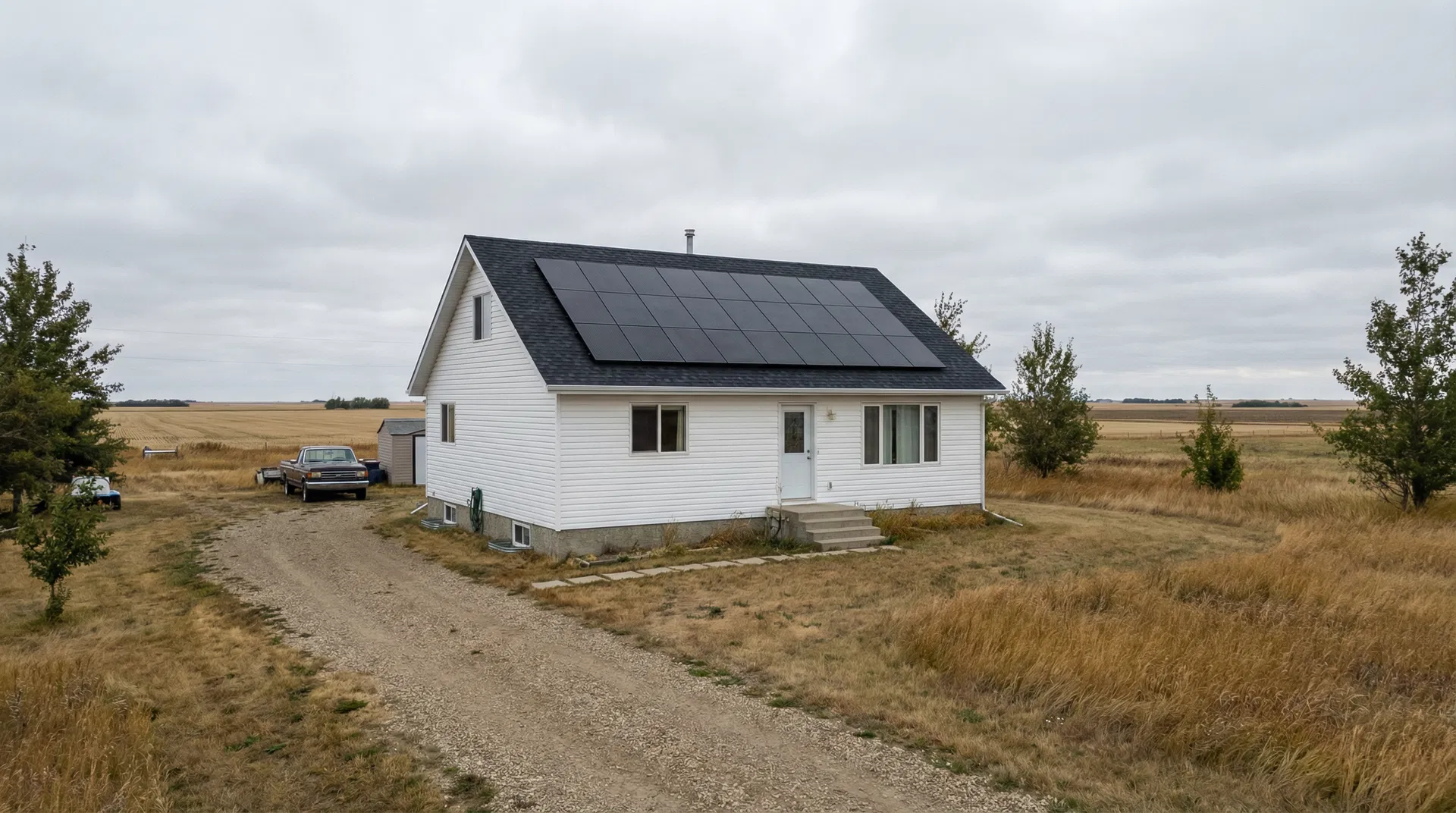
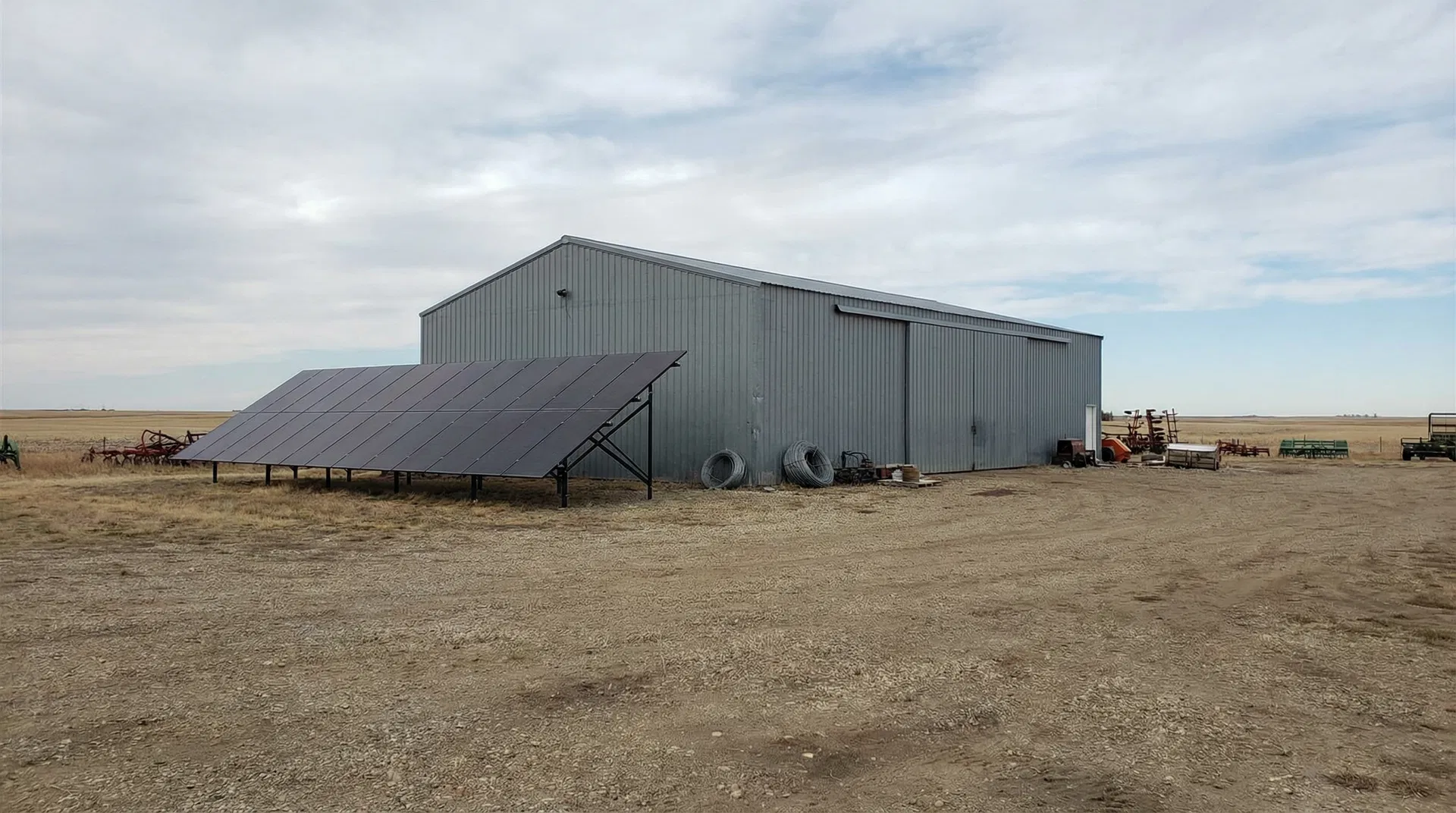
Rural properties near Chestermere often carry more electrical load than a typical suburban home. A heated shop, a well pump, outbuildings with lighting and outlets, and seasonal loads like irrigation or grain handling all add up. That's why off-grid systems on acreages often land well above what you'd install on a city lot. We design for what the property actually runs, not a stripped-down version of it. The starting point for sizing is the 12-month usage graph on your most recent power bill. That graph shows how your consumption moves through the seasons, which is exactly what we need to size the battery bank and array correctly. A system sized only for summer use won't carry you through an Alberta winter without running a generator more than you'd like. We work from the full annual picture. Roof versus ground mount is another decision we work through with you. Some acreage homes have roofs that are a natural fit, with good pitch, clear southern exposure, and no shading from nearby buildings or shelterbelts. Others don't. When the roof is shaded by mature trees or outbuildings, when the pitch is too shallow, or when there's more usable land than usable roof, a ground-mounted array is often the better call. It's also easier to expand later if your loads grow. We don't push one option over the other. We look at the site and recommend what actually works.
Typical Load Profiles We Design For Near Chestermere
Acreage Home with Heated Shop
This is one of the most common off-grid scenarios we see: a main residence combined with a heated workshop or garage running 240V equipment and a natural gas or electric heating system. The shop's motor loads, lighting, and heating demand push total consumption well above a standalone home. We size the inverter to handle startup surges from compressors and power tools, and the battery bank to carry overnight loads without running a backup generator every night.
Seasonal Cabin or Secondary Property
A seasonal cabin or secondary acreage building typically runs lighter loads than a full-time residence, but intermittent occupancy creates its own sizing challenge. The system has to keep the battery bank healthy during weeks when no one is there, and then handle full household loads when the property is in use. We size the array with enough input to maintain the batteries during idle periods, and we spec a battery capacity that covers a full weekend of use without a solar top-up.
Well Pump and Outbuilding Power
Properties where the primary need is reliable power for a well pump, perimeter lighting, gate controls, or a small outbuilding don't need a full residential off-grid system. A 5-7 kW system with a properly sized battery bank can handle these loads cleanly. The critical design factor is the pump's startup surge current, which can be 3-5 times the running draw and will overwhelm an undersized inverter. We confirm pump specifications before selecting inverter capacity.
FortisAlberta Interconnection in Chestermere
Chestermere falls within FortisAlberta's service territory. For a fully off-grid system, there's no grid interconnection application to file, because the system isn't tied to the utility at all. That's one of the practical advantages of going off-grid on a rural property: you skip the application process entirely and don't need FortisAlberta's approval to energize your system. If your property does have an existing FortisAlberta connection and you're adding a hybrid system with battery backup rather than cutting the grid tie completely, the situation changes. In that case, an interconnection application is required and Range Road Solar handles the design package and submission on your behalf. We don't guess at what FortisAlberta will require. We work from their current technical requirements and submit a complete package the first time. What we can't promise is approval timing, because that sits with the utility. What we can promise is that your application goes in with everything it needs, and we follow up if there are questions on their end.
Project Economics and Design Review
| System Size | Annual Production | Year 1 Savings | Payback Period |
|---|---|---|---|
| 5-15 kW range, 8 kW typical |
Production, savings, and payback estimates require a property-specific design and your most recent power bill.
How We Work in Chestermere
Bill and Load Review
We review your power bill to understand your energy use in Chestermere and size the system to your actual consumption, not a generic estimate.
Site Assessment
We assess your roof or ground area, south-facing exposure, electrical service, and utility interconnection requirements specific to your property.
Design and Utility Application
We produce a system layout, production estimate, and cost summary, then submit your micro-generation application to your utility on your behalf.
Installation and Commissioning
Our crew installs racking, panels, inverter, and electrical connections. All work is performed by licensed electricians. We commission and test before handoff.
Current Program and Interconnection Review
Utility connection review
For off-grid systems with no grid tie, there's no FortisAlberta interconnection application required. If you're adding a hybrid system that maintains a grid connection alongside battery storage, FortisAlberta reviews the interconnection package and Range Road Solar prepares and submits the full design documentation on your behalf. We don't ask you to deal with the utility directly.
Current program review
Residential, farm, and commercial solar installations may be eligible for programs and incentives that change from year to year. We don't list programs on this page because eligibility rules and funding availability shift, and listing a program that's no longer active doesn't help you. During the design review, we confirm what's currently available and what your property and system qualify for.
Frequently Asked Questions
Get a Solar Assessment for Chestermere
Submit a recent power bill and we will review your consumption and provide an honest assessment for your Chestermere property. No obligation.
(587) 330-7502 Book a CallMore Solar Services in Chestermere