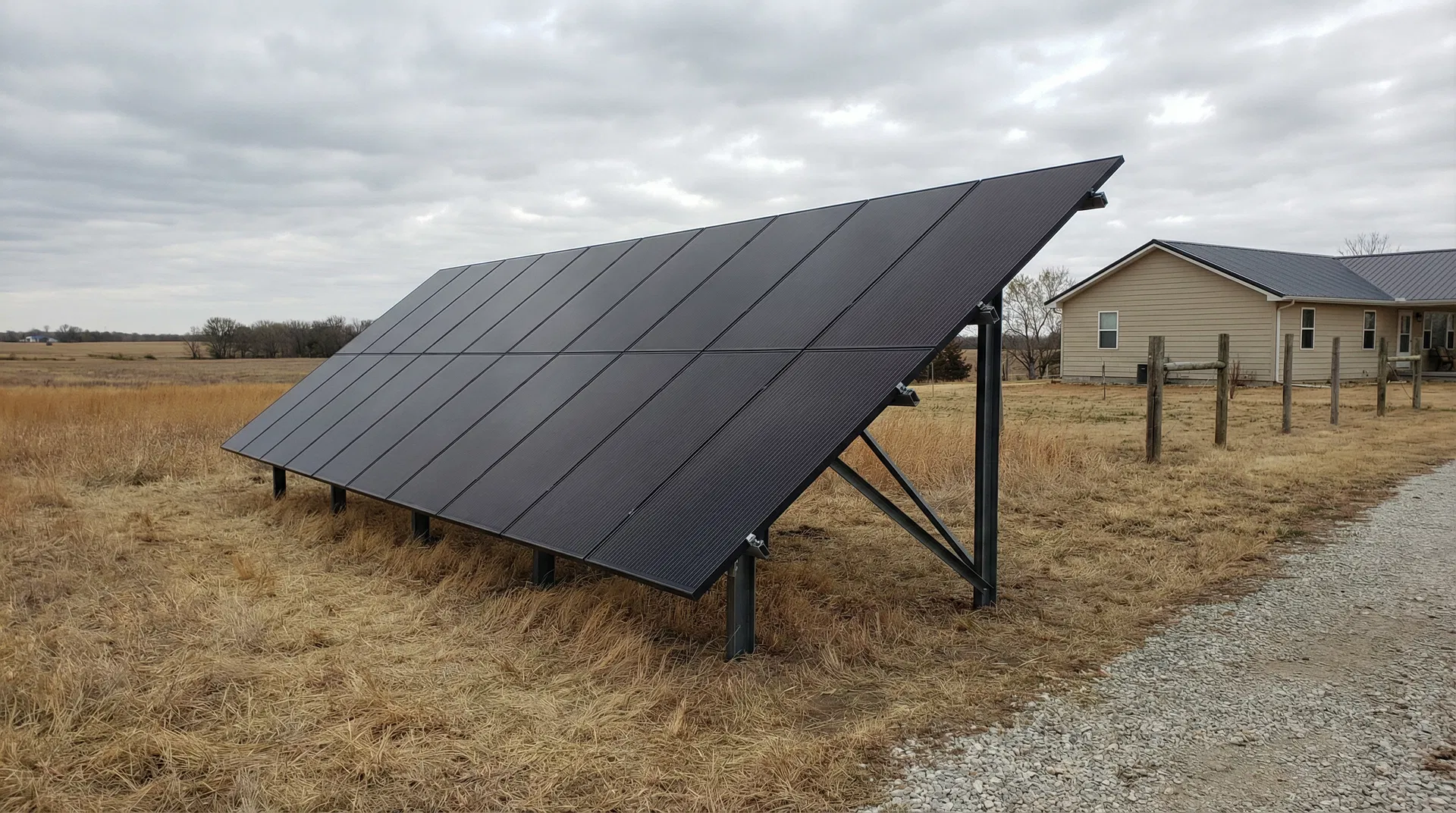
Solar off-grid solar in High River, Alberta means building a system that stands completely on its own. No grid backup, no utility settlement, no monthly bill. What you get instead is a LONGi panel array paired with a hybrid inverter and a lithium battery bank sized to carry your loads through low-generation periods. LONGi panels are what we default to across all of our installs. They hold up in rural Alberta conditions and they're available in formats that suit both roof and ground-mount configurations. For off-grid work, ground mounts are often the right call. Acreage and rural sites around High River tend to have available land, and a ground-mounted array gives us full control over tilt, orientation, and shading clearance without being constrained by an existing roof pitch or structure. Hybrid inverters are central to how these systems work. They manage the relationship between your panels, your battery bank, and your loads in real time. If the panels are generating more than you're using, the excess charges the battery. If demand exceeds generation, the battery covers the gap. The inverter coordinates all of that automatically. Lithium battery storage is the standard we specify. It handles the charge and discharge cycles that off-grid systems demand without the maintenance requirements of older battery chemistries. Your actual battery capacity is determined during the design review based on your load profile and the number of storage days that makes sense for your site. We provide honest production estimates based on your actual power bills and site conditions, not inflated projections.
Solar Planning for High River Properties
Not every property near High River is sitting on a FortisAlberta line. And even when a grid connection is technically available, the cost to extend service to a remote site, cabin, or secondary structure can make an off-grid solar system the more practical path. That calculation comes down to your specific site, not a general rule. Off-grid solar works differently than a grid-tied system. There's no utility credit mechanism, no net metering arrangement. What you're building is a complete power supply: panels that generate, a battery bank that stores, and an inverter that manages the flow. The system has to be sized to cover your actual loads, including your worst-case demand periods. That's why we start every design from your most recent power bill, not from rule-of-thumb estimates. Properties in this part of Alberta vary widely, from small weekend cabins with modest loads to acreages running shops, water systems, and outbuildings. Each one needs a design built around what it actually uses. We don't apply a template and call it done. We size the system to fit your property.
Electrical Site Review for High River Properties
Voltage Rise
Voltage rise happens when a solar system pushes power back toward the grid and the local distribution line voltage climbs above acceptable limits. On rural properties served by long distribution runs, line impedance is higher, which makes voltage rise more likely to become a constraint. If voltage rise is a limiting factor on your site, it can affect inverter clipping and reduce what the system actually delivers relative to its rated capacity.
Single-Phase vs Three-Phase
Rural Alberta properties can be served by either single-phase or three-phase power depending on the loads the site was originally designed for. Shops running large motors or grain handling equipment are more likely to have three-phase service, while residential acreages typically have single-phase. The phase configuration on your property directly affects which inverter models are compatible and how the system capacity can be allocated across your loads.
Panel Infrastructure
Older electrical panels on rural properties aren't always sized for a solar addition. We assess breaker capacity and panel age as part of every site review, looking at whether the main breaker can support the added back-feed current and whether the bus bar has physical space for the required interconnect breaker. If the existing panel can't support the system safely, a panel upgrade is scoped into the project before installation begins.
Service Entrance Review
The service entrance and meter base condition matters for any system that connects to the FortisAlberta network, even in a hybrid off-grid configuration that maintains a grid tie. We check the meter base for compatibility with current utility requirements as part of the application package. If the meter base requires an upgrade to meet FortisAlberta's standards, that work is identified early so it doesn't create a delay once the application is submitted.
Right-Sizing Solar for High River Properties
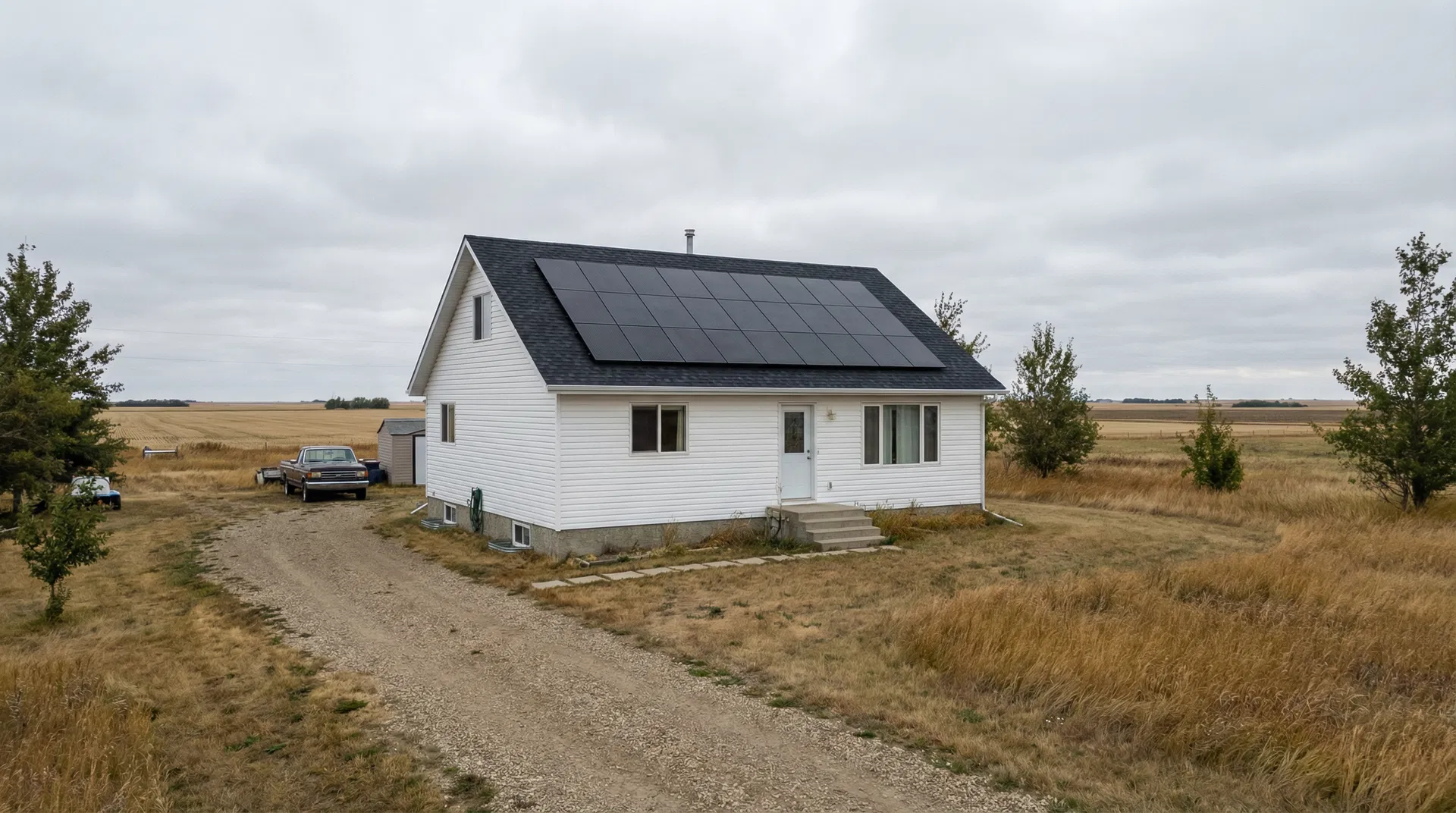
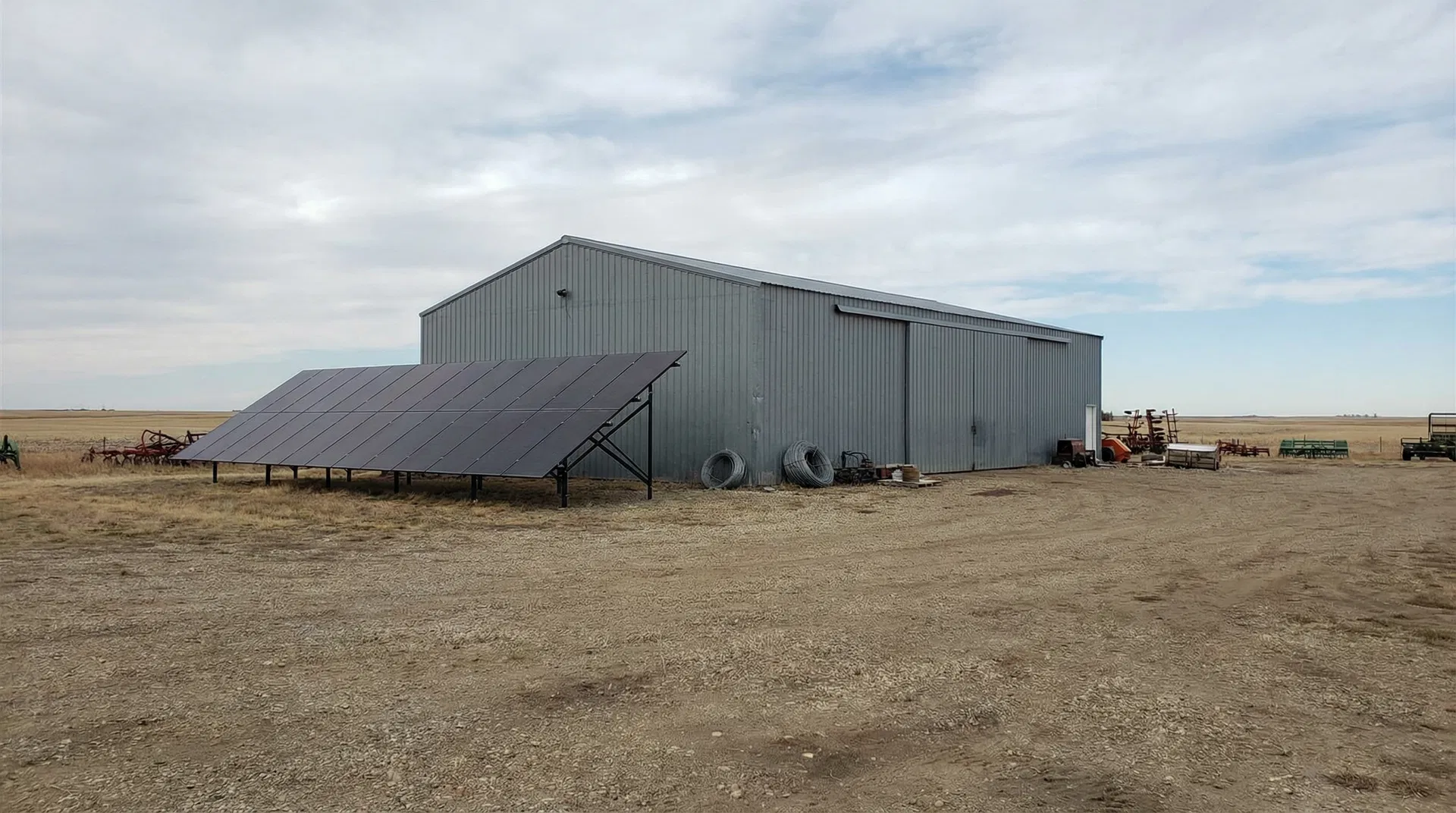
Rural properties around High River don't run on a single load. A typical acreage might include the main house, a heated shop, a water pump, and one or more outbuildings. An off-grid system has to cover all of it, including the loads that only run seasonally. That's why rural systems in this part of Alberta tend to land in the upper half of the 5-15 kW range, and sometimes beyond it. You can't size an off-grid system for the house and hope the shop takes care of itself. The roof versus ground-mount decision comes down to the specific site. If your roof has good south-facing exposure, reasonable pitch, and no shading from trees or adjacent buildings, a roof mount can work well. But on many rural acreages, the roof geometry isn't ideal, or the buildings are scattered across the yard in ways that make a centralized ground mount a cleaner option. When land is available, a ground-mounted array gives us full control over orientation and tilt without being constrained by what's already built. We size every system from the 12-month usage graph on your most recent power bill. That graph shows us your seasonal peaks, your baseline consumption, and the spread between your highest and lowest months. Rule-of-thumb estimates don't capture any of that. Your actual usage pattern is what determines how much panel capacity and how many battery kilowatt-hours your system needs to perform reliably. Bring us your most recent bill and we'll build a design from the real numbers.
Typical Load Profiles We Design For Near High River
Home Plus Heated Shop
A residential acreage running a house alongside a heated shop is one of the most common off-grid scenarios we design for in this area. The shop typically adds forced-air heating, lighting, compressors, and power tools to the base household load, which pushes total consumption well above what a home-only system would need to cover. We pull both loads from the 12-month usage graph on your most recent power bill and size the battery bank to carry the combined draw through low-generation periods.
Cabin or Seasonal Retreat
Off-grid cabins and seasonal retreats have a simpler load profile than a year-round acreage, but they still require careful sizing. A cabin running lights, a refrigerator, a water pump, and small appliances needs a system large enough to stay ahead of multi-day low-generation stretches without grid backup. A 5 kW system with appropriately sized battery storage is a common starting point for this scenario, though actual sizing depends on occupancy patterns and the specific appliances involved.
Acreage With Water and Irrigation
Properties running well pumps, pressure systems, or seasonal irrigation equipment alongside a house have a load profile that fluctuates significantly by time of year. Water loads can spike demand in ways that a flat monthly average doesn't capture. We look at the seasonal breakdown in your most recent power bill to identify those peaks and make sure the system can handle them, not just the average month.
FortisAlberta and Off-Grid Connections in High River
FortisAlberta is the wire service for High River and the surrounding rural area. For a true off-grid system, there's no grid interconnection application required because the system doesn't connect to the FortisAlberta network at all. You're generating, storing, and consuming your own power without any tie to the distribution grid. That said, some property owners want to understand both options before committing to a fully off-grid design. If a grid connection is already present and you're considering a hybrid arrangement that can islander from the grid during outages, that configuration does require a FortisAlberta micro-generation application. Range Road Solar handles the design package and the application in that case. For a site where grid service doesn't exist or where extension costs make it impractical, a fully off-grid design is often the cleaner path. We'll walk through the options during your design review so you understand exactly what each configuration involves before any work begins.
Project Economics and Design Review
| System Size | Annual Production | Year 1 Savings | Payback Period |
|---|---|---|---|
| 5-15 kW range, 8 kW typical |
Production, savings, and payback estimates require a property-specific design and the 12-month usage graph on your most recent power bill.
How We Work in High River
Bill and Load Review
We review your power bill to understand your energy use in High River and size the system to your actual consumption, not a generic estimate.
Site Assessment
We assess your roof or ground area, south-facing exposure, electrical service, and utility interconnection requirements specific to your property.
Design and Utility Application
We produce a system layout, production estimate, and cost summary, then submit your micro-generation application to your utility on your behalf.
Installation and Commissioning
Our crew installs racking, panels, inverter, and electrical connections. All work is performed by licensed electricians. We commission and test before handoff.
Current Program and Interconnection Review
Utility connection review
For hybrid off-grid systems that maintain a FortisAlberta grid connection, a micro-generation application is required before the system can be activated. Range Road Solar prepares the design package and submits the application on your behalf. For fully off-grid systems with no grid tie, no utility application is needed.
Current program review
Farm operations, commercial properties, and residential acreages may qualify for programs that offset project costs. Eligibility rules change, and what applied to a project last year may not apply today. We review current rules against your property type and system design at the time of your design review, not against whatever was current when you first started researching.
Frequently Asked Questions
Get a Solar Assessment for High River
Submit a recent power bill and we will review your consumption and provide an honest assessment for your High River property. No obligation.
(587) 330-7502 Book a CallMore Solar Services in High River