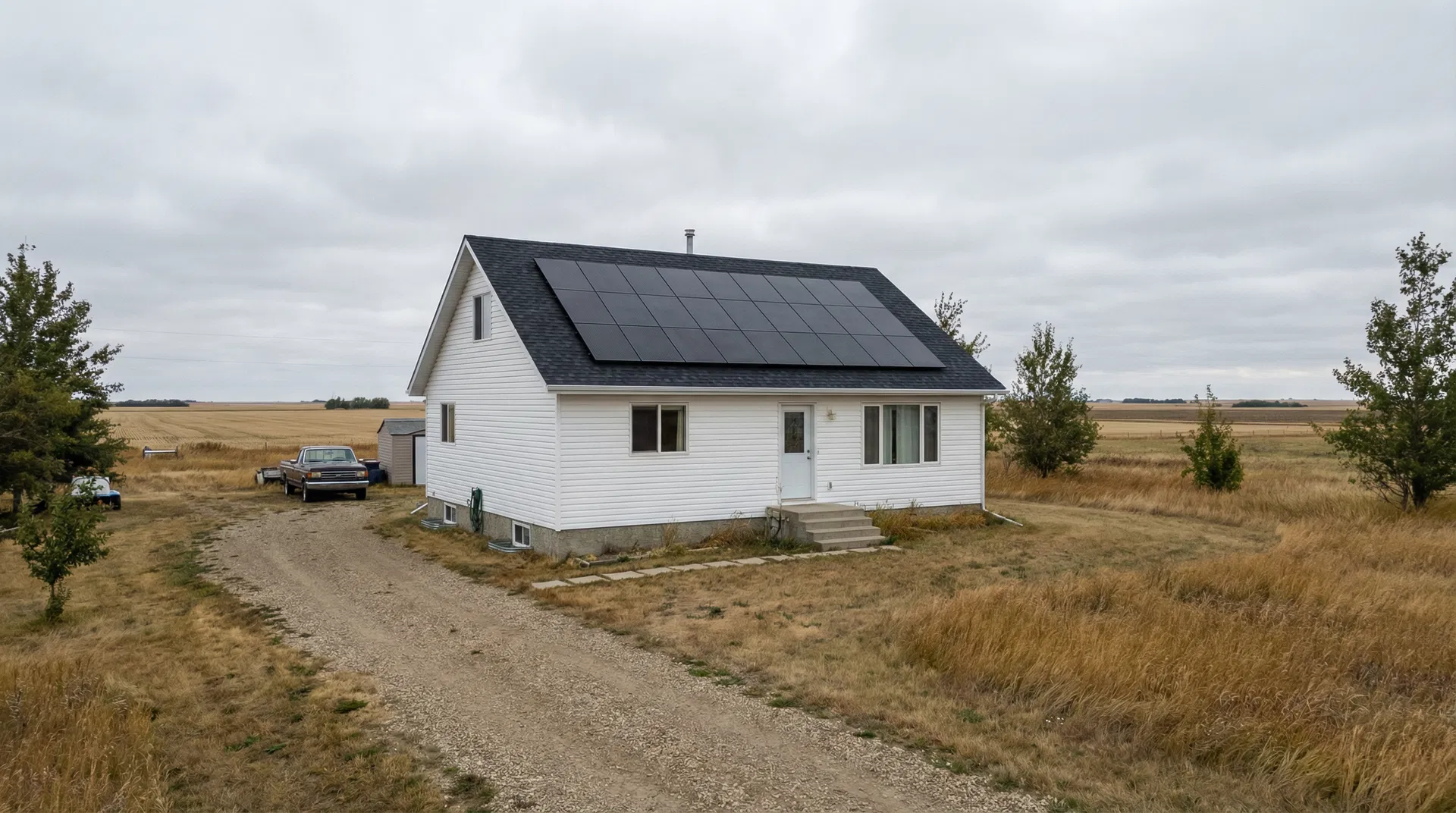
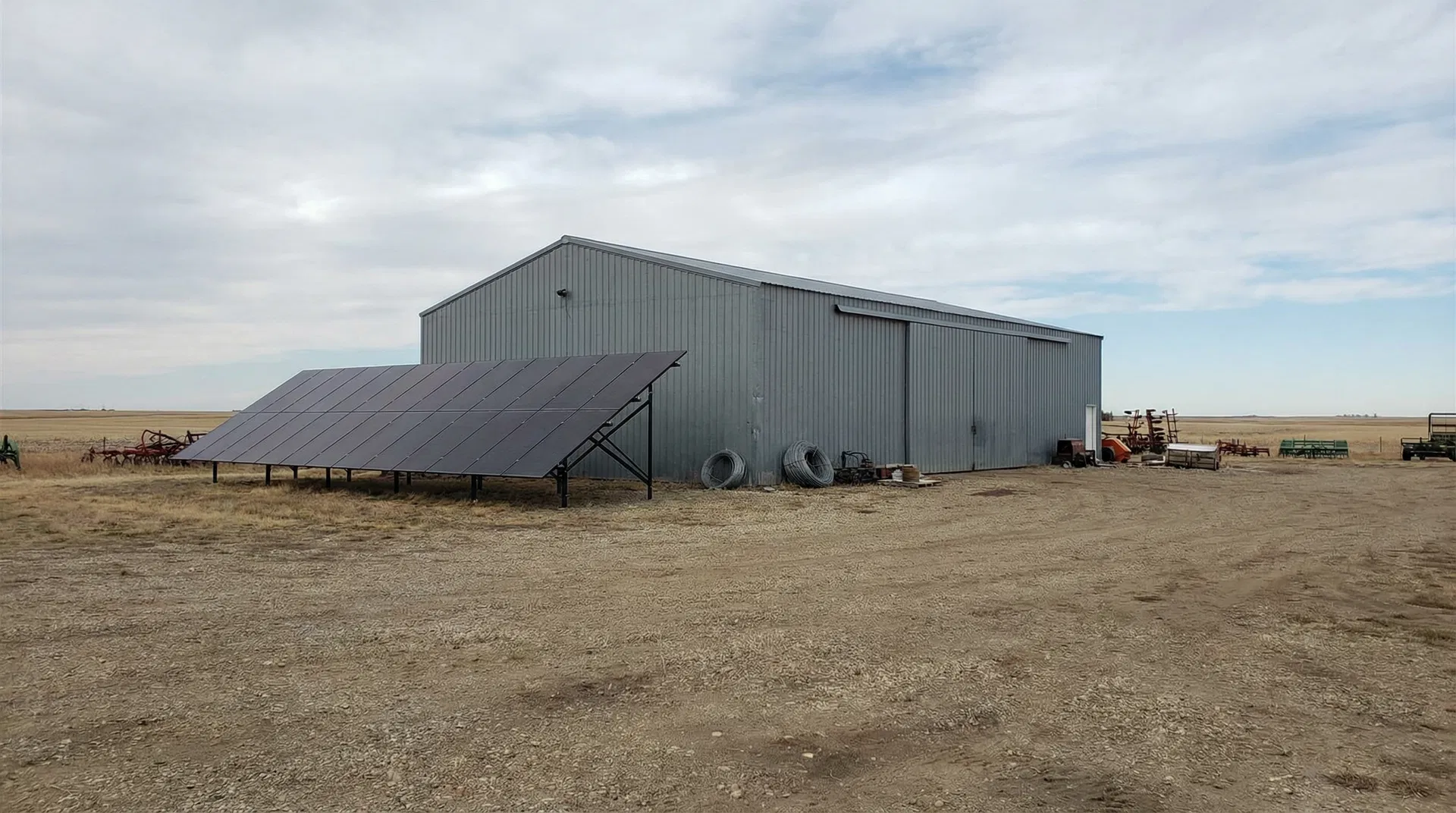
Solar cost in High River, Alberta comes down to three things: system size, mounting style, and the electrical work your property needs before the panels go up. Our systems here fall in an 8-15 kW range, and 10 kW is the typical starting point for a home with a shop or a few outbuildings. Every system is built on LONGi panels paired with APsystems microinverters. The microinverters work at the panel level, so shade on one panel doesn't pull down the rest of the array. That's a design decision you pay for up front, and it's worth understanding before you compare quotes. Labour, racking, wiring, and the electrical review make up the rest of the picture. Racking is where roof and ground-mount projects split the most. A roof install uses fewer posts, but it depends on the roof's age, pitch, and orientation. A ground mount needs a clear footprint and trenching for the cable run, but it doesn't touch your shingles and can be sized to the land you actually have. We don't give a price over the phone. The number depends on the site, the equipment that fits it, and what the electrical review turns up. We walk you through each line of the quote so you can see what's driving the total. If a panel upgrade or a meter base change is needed, that shows up as its own line too, not buried in the install price. A quote based on a site visit and your most recent power bill will tell you more than any per-watt figure a website can post.
Solar Planning for High River Properties
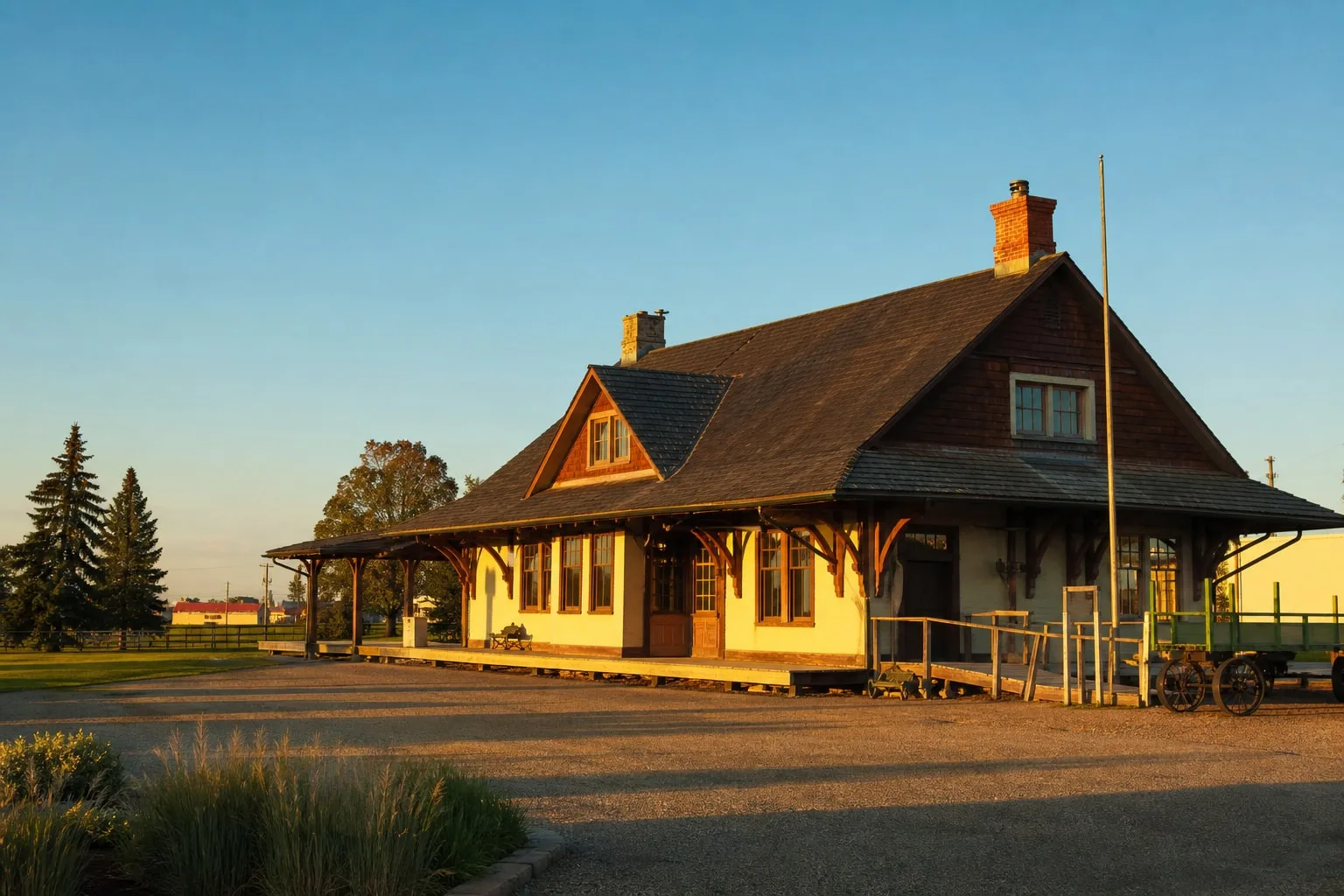
Solar planning for a High River, Alberta property starts with the site, not the panel count. The community's official history dates its founding to February 12, 1906, and plenty of the properties we visit carry that age in their wiring, outbuildings, and yard layouts. Newer acreages present a different picture. The house may have gone up after the land was subdivided, which means the service entrance and the outbuildings were planned on separate schedules. Those two situations need different conversations, and we treat them that way. The Museum of the Highwood, George Lane Memorial Park, and the Fort Spitzee (Historic Mural Tour) all point back to that history. It's a useful reminder that the area's properties were built in stages, and the electrical systems reflect that. Alberta's power bill has two sides. Your retailer supplies the energy, and the wire service delivers it and owns the lines to your meter. Here the wire service is FortisAlberta, so the connection review runs through them. We look at roof pitch, tree line, outbuilding placement, and open ground before we recommend a layout. We don't guess at those details from a satellite photo. We walk the property, check the panel and meter base, and build the design from what we find.
Electrical Site Review for Rural Properties
Voltage Rise
Voltage rise happens when an inverter pushes power back onto a distribution line that already sits near the upper end of its voltage range. Conditions on the distribution system determine how much room there is for that push, and when there isn't enough, the inverter clips its output during peak production. We factor that into sizing so the system you buy is one the connection can actually take.
Single-Phase vs Three-Phase
Rural properties may have single-phase service, three-phase service, or a mix across the house and outbuildings. The service type determines which inverter configuration fits and how much total capacity the connection can support. We confirm it before choosing equipment so the inverter matches the service, not the other way around.
Panel Infrastructure
Older electrical panels on acreages and farmsteads often have breaker capacity or spare space that doesn't match a modern solar install. We check the panel's age, its rated amperage, and how much room is left for a solar breaker. If the panel can't support the system, the upgrade means replacing it with a larger unit, and we quote that as its own line.
Service Entrance Review
We check the service entrance and meter base as part of every site review. The meter base condition matters for the micro-generation application to FortisAlberta, because the connection point has to be sound before the application moves forward. If the meter base or service entrance needs replacing, we tell you before the project goes ahead and show that cost as a separate line.
Right-Sizing Solar for Rural Properties
Rural systems tend to be larger than urban ones because the property carries more loads. A house might run a heat pump, a well pump, and an electric water heater. Add a shop with a welder or a grain dryer, a few outbuildings, and an irrigation pivot, and the daily load stops looking like a suburban house. We size for all of it, not just the kitchen and the thermostat. The roof or ground-mount decision comes down to layout. A roof install makes sense when the roof is in good shape, faces a workable direction, and isn't shaded by mature trees or the neighbour's barn. A ground mount is the better call when shade from trees or buildings cuts into the roof, the pitch is poor, or the yard has open land to spare. Acreage and farm layouts often have that open ground, so a ground mount can keep the roof clear and the array easy to reach. Sizing starts with your most recent power bill. The 12-month usage graph on that bill shows how your house and shop actually draw power across the year, which beats a rule-of-thumb number from a website. We combine that graph with the site design, so the system matches the load and the roof or ground space you actually have. A current bill tells us more than any estimate we'd make from a street view.
Typical Load Profiles We Design For Rural Properties
Home + Heated Shop
A house with a heated shop is one of the most common setups on rural Alberta acreages. The house runs its usual daytime and evening loads, while the shop adds bench tools, a compressor, and heat that run on a different schedule. We size from your most recent power bill and the site design so the array covers both loads without oversizing the roof.
Farm Yard with Grain Handling
Grain handling adds a heavy motor load for a few weeks a year, while the house stays on its normal pattern. A 5 hp auger motor draws roughly 3.7 kW at full load, which matters when we check inverter capacity for the yard. We note the harvest peak in the site design so the system reflects the load you actually run.
Irrigation Pivot and Well Pump
Irrigation pivots and well pumps create some of the largest seasonal loads on a rural property, and their motors draw a surge at startup. For example, a 50 hp pivot motor draws about 37 kW at full load, so the electrical service and inverter layout have to be checked for it. A 1.5 hp well pump adds a smaller load that cycles on and off through the day.
FortisAlberta Interconnection in High River
Your wire service is FortisAlberta. It owns and maintains the lines that connect your property to the grid, and it reviews every grid connection application before a system can be energized. That review is the part of the project most people underestimate, so we handle it from the start. Our team prepares the full design package for the application. That includes the system design, the equipment specifications for the LONGi panels and APsystems microinverters, the site details FortisAlberta asks for, and the meter and service information from your most recent power bill. You don't have to figure out which form goes where or chase the file across two offices. We keep you posted at each step, from submission through the review. If FortisAlberta asks for anything beyond the design package, we handle that request too and tell you what it involves before it costs you time.
Project Economics and Design Review
| System Size | Annual Production | Year 1 Savings | Payback Period |
|---|---|---|---|
| 8-15 kW range, 10 kW typical |
Production, savings, and payback require a property-specific design and your most recent power bill before any figures are final.
How We Work in High River
Bill and Load Review
We review your power bill to understand your energy use in High River and size the system to your actual consumption, not a generic estimate.
Site Assessment
We assess your roof or ground area, south-facing exposure, electrical service, and utility interconnection requirements specific to your property.
Design and Utility Application
We produce a system layout, production estimate, and cost summary, then submit your micro-generation application to your utility on your behalf.
Installation and Commissioning
Our crew installs racking, panels, inverter, and electrical connections. All work is performed by licensed electricians. We commission and test before handoff.
Current Program and Interconnection Review
Utility connection review
FortisAlberta, the wire service for this property, reviews grid connection applications for systems like this one. Range Road Solar prepares the design package and submits the application so you aren't managing the paperwork alone.
Current program review
Commercial, farm, and residential eligibility is reviewed against current rules at design time. We check the property type and project details against those rules during the design review, so you know where things stand before you sign.
Frequently Asked Questions
Get a Solar Assessment for High River
Submit a recent power bill and we will review your consumption and provide an honest assessment for your High River property. No obligation.
(587) 330-7502 Book a CallRelated Resources
More Solar Services in High River