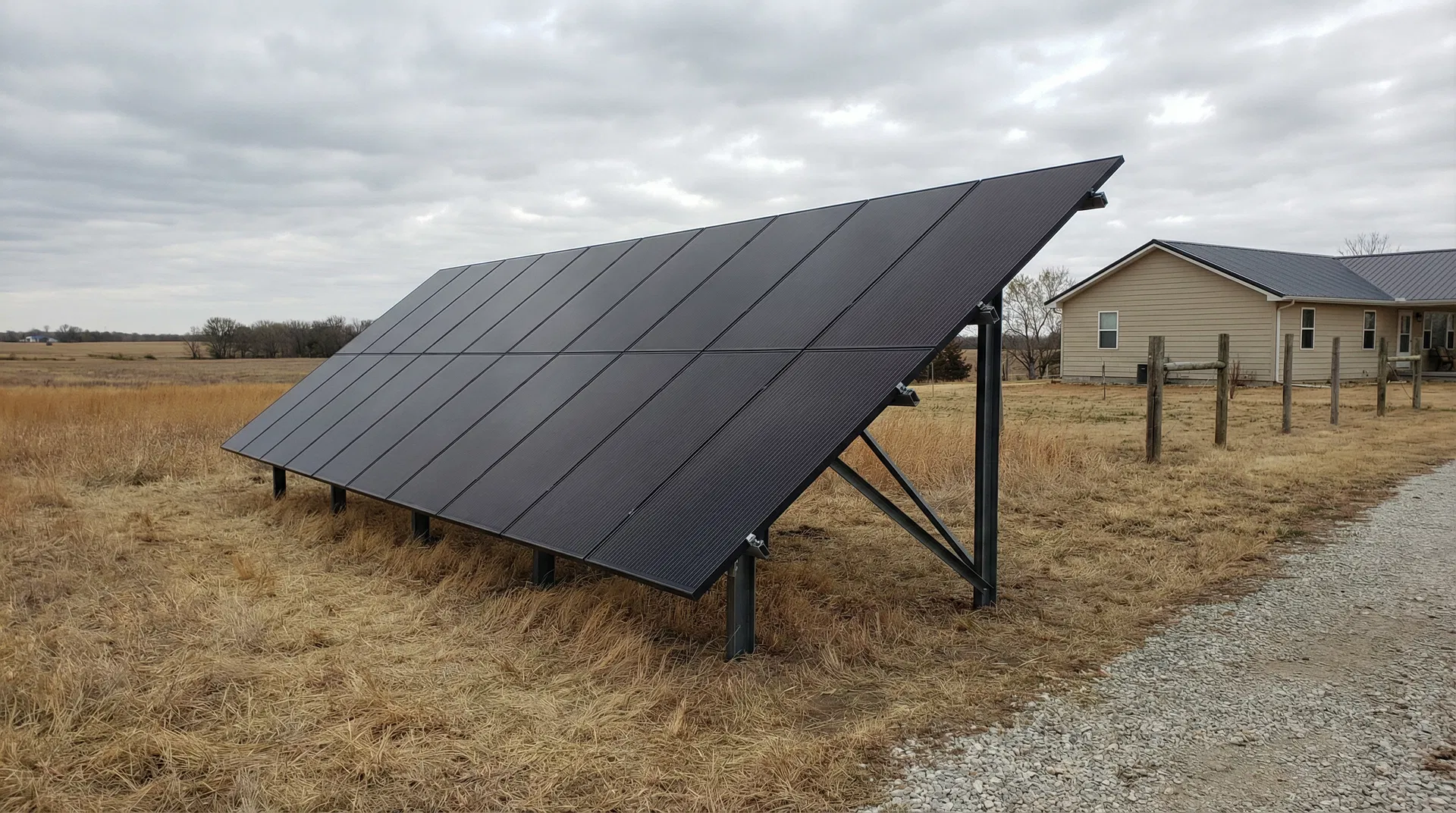
Solar battery storage High River Alberta installs pair lithium battery banks with hybrid inverters and LONGi solar panels. The hybrid inverter is the core of the system. Unlike a standard string inverter, a hybrid inverter manages power flow between your panels, your battery, your home, and the grid in real time. When your panels are producing more than you're using, the surplus charges the battery instead of going back to the grid at wholesale credit rates. When production drops or the grid fails, the battery picks up the load. For residential properties in High River, a common configuration runs between 8 and 12 kW of solar paired with battery capacity sized to the loads you want covered. Larger properties with shops or multiple outbuildings may need systems toward the 16 to 20 kW end of the range, sometimes with additional battery banks. We use LONGi panels because they hold up well in Alberta conditions and carry strong production warranties. The hybrid inverters we specify are matched to the battery chemistry and the load profile we've confirmed from your site review. Nothing gets spec'd until we've looked at your actual setup. Battery storage also changes how you interact with the grid. Instead of exporting all of your excess generation, you can capture more of what your panels produce and use it when it's worth more to you, during evening hours when the panels are off. Your FortisAlberta connection still governs how the system interacts with the grid, and we handle the interconnection application as part of the install.
Solar Planning for High River Properties
High River properties sit on FortisAlberta's distribution network. That matters for battery storage planning because the grid here, like much of rural Alberta, can experience outages that leave homes and shops without power for extended periods. A battery system paired with solar panels doesn't just store excess generation for later. It gives you a backup source when the grid goes down, which is a different value proposition than solar alone. Properties in and around High River vary quite a bit. Some are residential lots in town. Others are larger parcels with shops, irrigation equipment, or outbuildings drawing their own loads. Battery sizing depends entirely on what you want to back up and for how long. A system sized to keep lights and a fridge running overnight is a very different design than one built to carry a heated shop or a sump pump through a multi-day outage. We don't quote battery systems off a rule of thumb. We look at your actual load, your roof or ground-mount conditions, and your most recent power bill before we recommend a system size. That's what produces an honest design, not a generic package that may or may not fit what's happening on your property.
Electrical Site Review for High River Properties
Voltage Rise
Voltage rise happens when solar generation pushes voltage on the distribution line above acceptable limits. On FortisAlberta's rural lines, the distance between properties and the transformer can make voltage rise more pronounced than it is in a dense urban grid. If voltage rise is a factor on your service, it can cause the inverter to clip output or shut down to stay within allowable voltage bands, which affects system sizing decisions and how we configure export limits.
Single-Phase vs Three-Phase
Properties in and around High River may have single-phase or three-phase electrical service depending on their size and history of use. Single-phase is common for residential lots, while larger acreages and farm operations often have three-phase service to run motors and larger equipment. The phase configuration of your service entrance determines which inverter models are compatible and can affect the total system capacity we're able to install.
Panel Infrastructure
Older electrical panels on rural properties often have breaker capacity that wasn't designed with a solar system in mind. We assess the panel age, the main breaker rating, and the available breaker slots before finalizing a design. If the panel can't safely support the solar and battery system, a panel upgrade gets scoped into the project before the FortisAlberta application is submitted.
Service Entrance Review
The service entrance and meter base condition are reviewed as part of every install we do on FortisAlberta's network. FortisAlberta inspects the meter base as part of their micro-generation application review, and a base that doesn't meet their current standards will need to be upgraded before the application is approved. We identify meter base issues during the site review so they're resolved before the paperwork goes in, not after.
Right-Sizing Solar for High River Properties
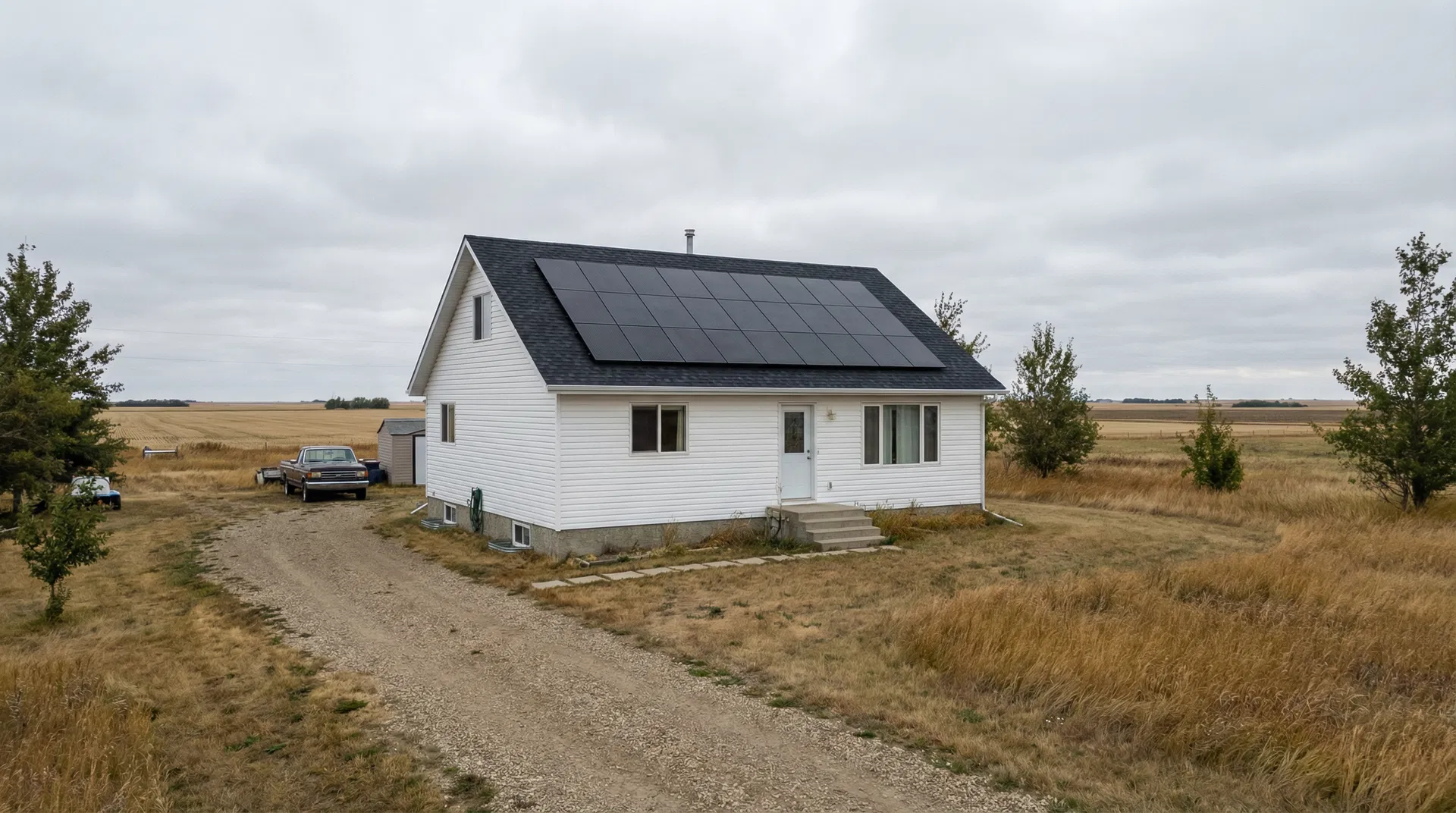
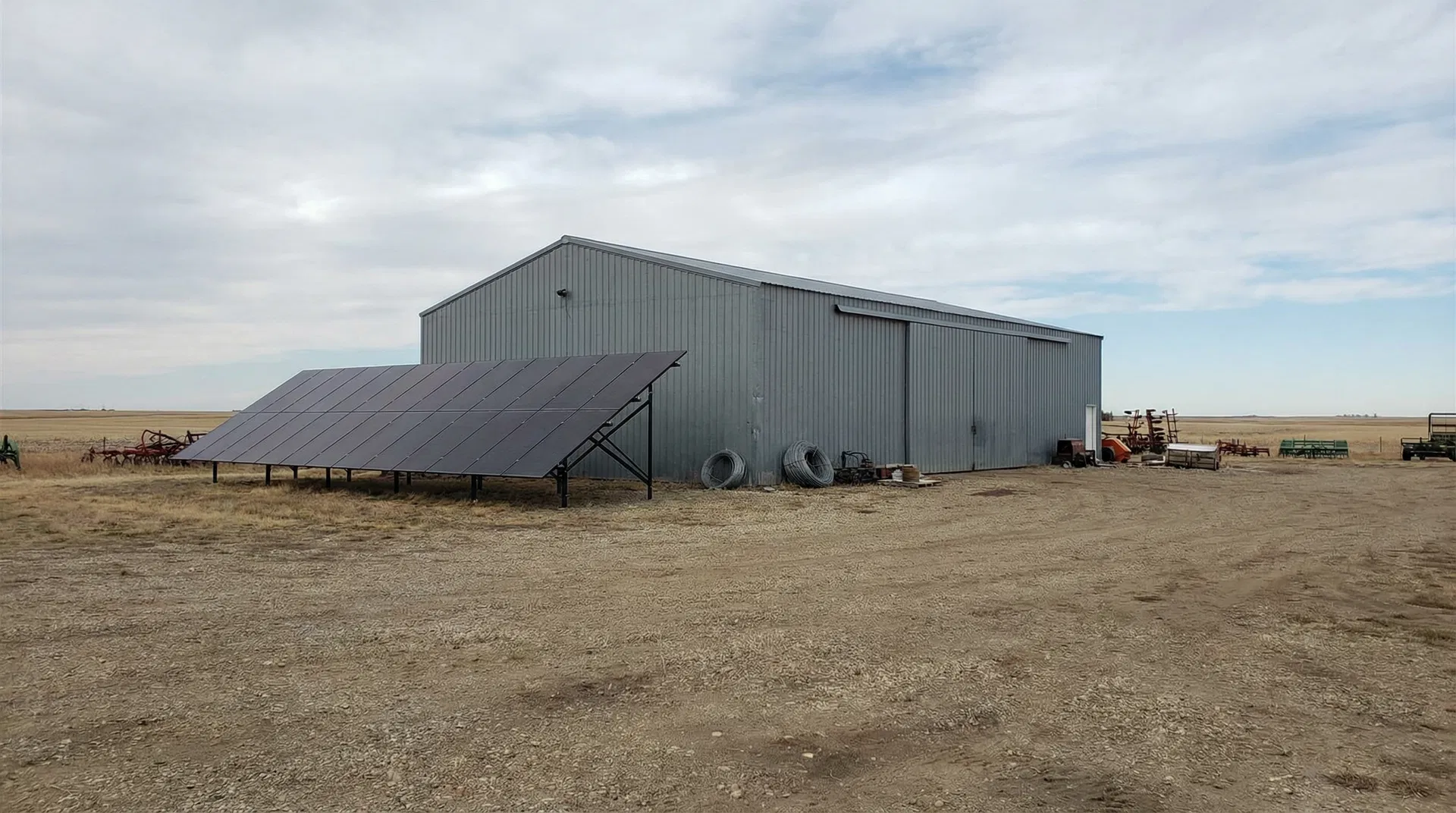
Rural Alberta properties typically run more load than a standard city home. A property outside High River might have a heated shop drawing power through winter, a well pump running daily, a second residence or suite, and grain handling equipment that pulls hard during harvest. Each of those loads shows up on the power bill, and that bill is what we use to size the system, not a rule of thumb based on square footage. Your most recent power bill includes a 12-month usage graph. That graph shows us your peak months, your off-season baseline, and whether your load spikes seasonally. That's the data we design from. It's far more useful than asking you to estimate your usage from memory. On the physical side, we look at whether a roof mount or a ground mount makes more sense for your property. Roof mounts work well when the roof pitch and orientation are good and there's no significant shading from trees or adjacent buildings. Ground mounts are often the better call on acreages with available yard space, spread-out outbuildings, or a roofline that doesn't face the right direction. Ground-mounted arrays can also be positioned to avoid shading from shops or shelterbelts that can't be moved. For systems in the 8 to 20 kW range we install here, the difference between an 8 kW system and a 20 kW system is almost always explained by load. We don't upsell capacity that your bill doesn't justify, and we don't undersize a system to hit a lower sticker price.
Typical Load Profiles We Design For Near High River
Home Plus Heated Shop
A home and a heated shop running off the same meter is one of the most common configurations we see on High River area properties. The shop heating load in winter, combined with lighting, tools, and compressors, can push monthly consumption well above a typical residential household. We size the solar and battery system from the 12-month usage graph on your most recent power bill, which captures the full seasonal range of both loads in one place.
Acreage With Well Pump and Outbuildings
Properties with a well pump, a detached garage, and one or two outbuildings often have a load profile that looks modest on paper but runs continuously. The well pump cycles throughout the day and year, and outbuilding lighting or plug-in heaters add a steady baseline draw. A battery system on this type of property is particularly useful for backup during outages, since losing grid power means losing water until it's restored.
Hobby Farm With Seasonal Equipment
Smaller hobby farms near High River often run irrigation in summer and heat tape or livestock waterers in winter, with seasonal spikes that show up clearly on the 12-month usage graph. Those peak months are what drive system sizing decisions. A 12 kW solar and storage system is a common fit for this profile, but the actual number depends on what the bill shows and how the site is configured.
FortisAlberta Interconnection in High River
FortisAlberta is the wire service for High River. Any solar or battery storage system that connects to the grid here goes through FortisAlberta's micro-generation application process. That process covers the technical review of your system design, the meter base, and the service entrance before the system can be energized. We handle the FortisAlberta interconnection application for every install we do in the area. That includes preparing the design package, the single-line diagram, and the equipment documentation that FortisAlberta requires. You don't need to coordinate with them directly. For battery storage systems, the hybrid inverter configuration needs to be documented accurately in the application. FortisAlberta reviews the export settings and the inverter specs as part of their technical approval. We've done this before and know what the package needs to include. If your meter base or service entrance needs an upgrade to support the system, we identify that during the site review before the application is submitted, not after. Getting the design right before the paperwork goes in keeps the process moving and avoids surprises.
Project Economics and Design Review
| System Size | Annual Production | Year 1 Savings | Payback Period |
|---|---|---|---|
| 8-20 kW range, 12 kW typical |
Production, savings, and payback figures require a property-specific design and your most recent power bill before any estimate can be prepared.
How We Work in High River
Bill and Load Review
We review your power bill to understand your energy use in High River and size the system to your actual consumption, not a generic estimate.
Site Assessment
We assess your roof or ground area, south-facing exposure, electrical service, and utility interconnection requirements specific to your property.
Design and Utility Application
We produce a system layout, production estimate, and cost summary, then submit your micro-generation application to your utility on your behalf.
Installation and Commissioning
Our crew installs racking, panels, inverter, and electrical connections. All work is performed by licensed electricians. We commission and test before handoff.
Current Program and Interconnection Review
Utility connection review
FortisAlberta reviews the grid connection application for every solar and battery storage system installed in High River. Range Road Solar prepares the full design package and submits the application on your behalf. You don't need to coordinate with FortisAlberta directly at any point in the process.
Current program review
Residential, farm, and commercial properties may be eligible for programs or incentives that apply to solar and battery storage installs. Eligibility and program rules change, so we review what's current at the time of your design review rather than quoting you on rules that may no longer apply.
Frequently Asked Questions
Get a Solar Assessment for High River
Submit a recent power bill and we will review your consumption and provide an honest assessment for your High River property. No obligation.
(587) 330-7502 Book a CallMore Solar Services in High River