Foothills County · Acreage solar systems
Solar Panels for High River Acreage Properties
Range Road Solar designs and installs 12-18 kW acreage systems for rural properties near High River, AB. Rooftop and ground-mount options, FortisAlberta interconnection handled.
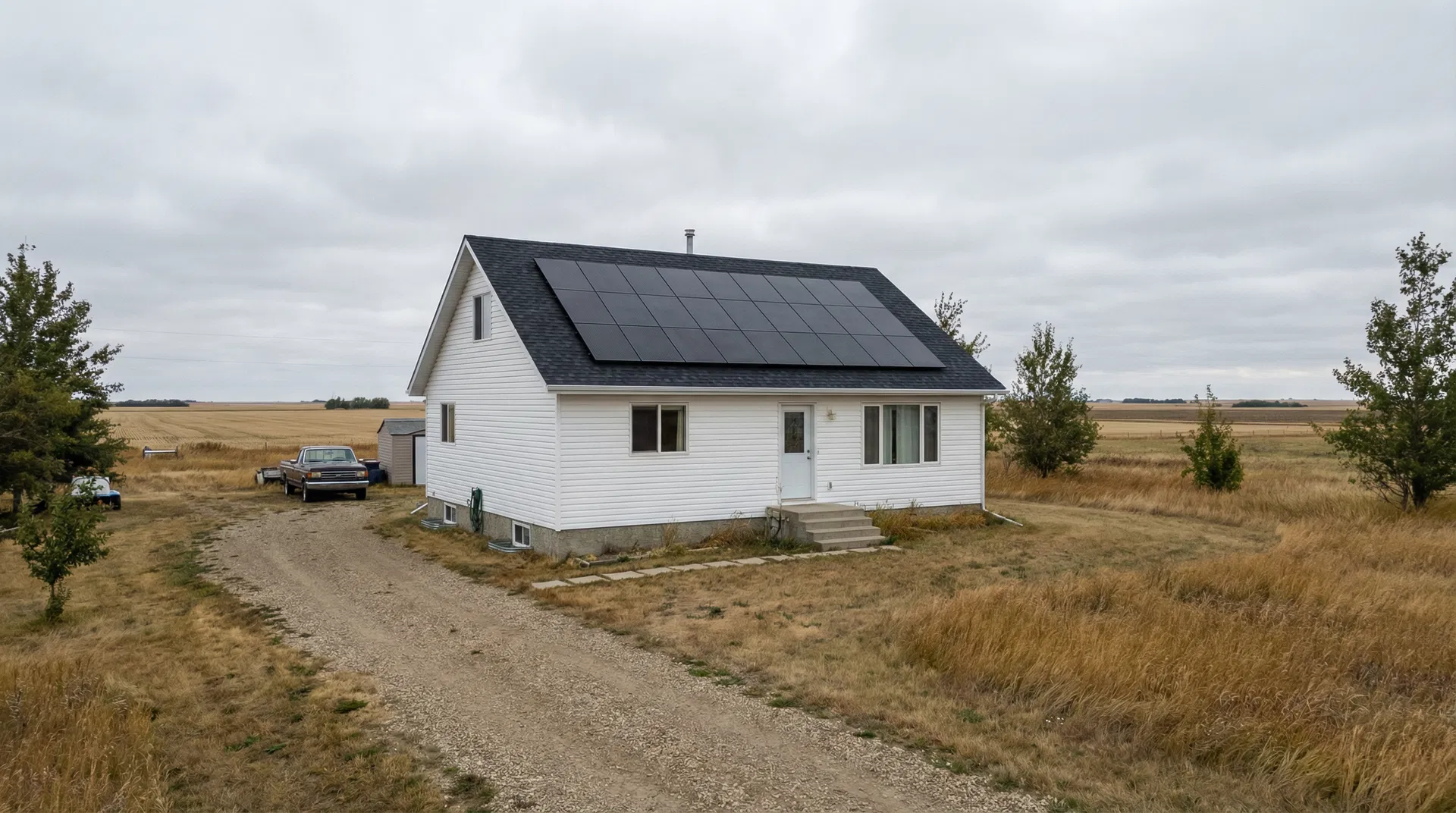
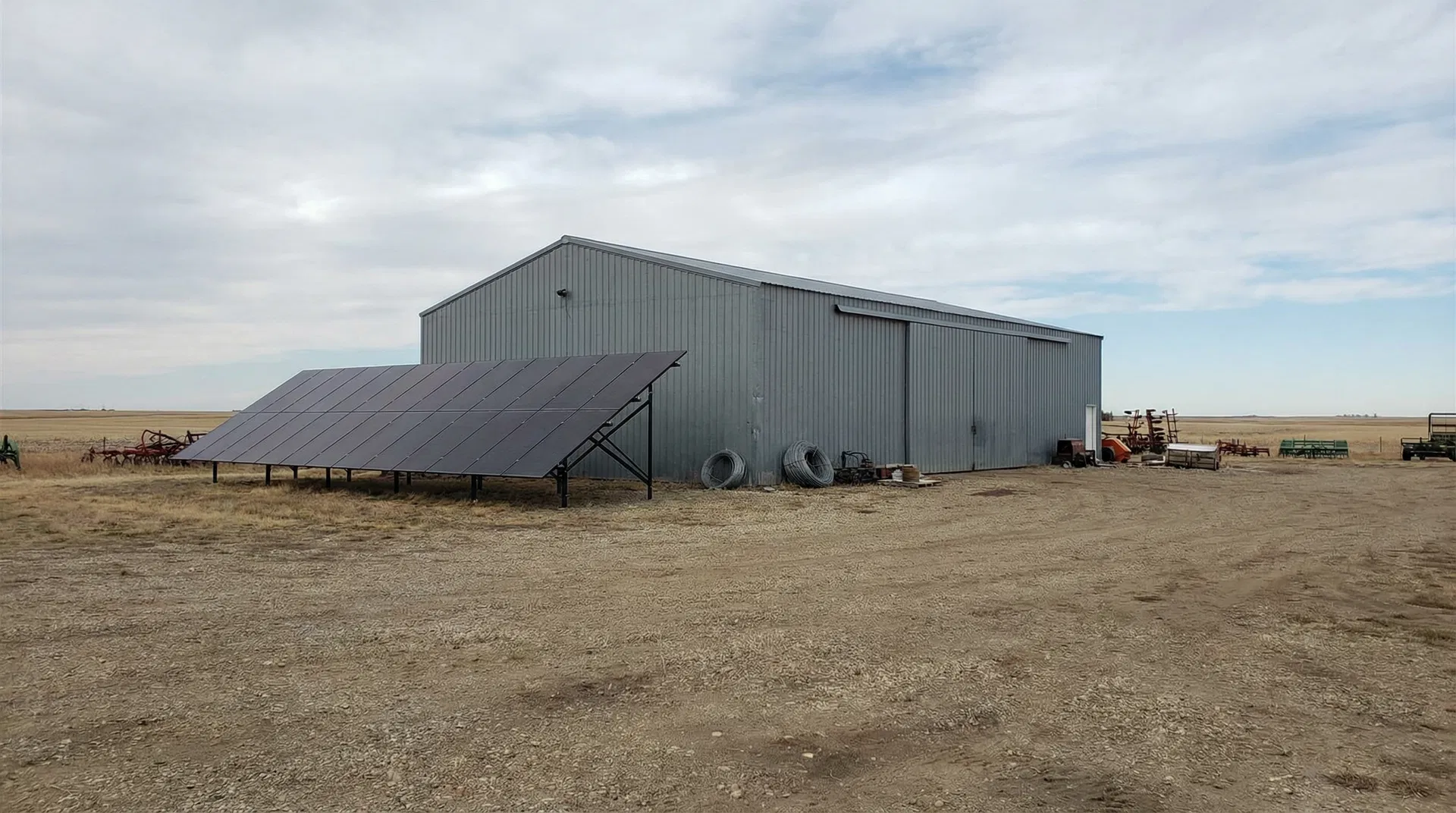
Solar panels high river acreage inquiries almost always come from property owners who've noticed how fast electrical costs compound when you're running multiple loads year-round. We install LONGi solar panels paired with APsystems microinverters on acreage properties across this area, sizing systems in the 12-18 kW range depending on what the property actually uses. LONGi panels are workhorses. They hold up on rural roofs, handle variable weather without drama, and don't require a fragile string inverter that takes the whole system offline if one panel has a problem. APsystems microinverters handle that at the panel level, which matters on acreage roofs where a chimney shadow or a roofline angle can affect output on part of the array without dragging down the rest. For properties where the roof isn't the right fit, we design ground-mount systems. A lot of acreages in this part of Alberta have the land available, and a ground mount can be oriented and tilted exactly right without being constrained by the existing roof pitch or direction. It's also easier to clear snow from a properly designed ground mount. We handle the structural design, electrical design, FortisAlberta interconnection application, and installation. We're not a sales organization that hands you off to a subcontractor. The team that designs your system installs it.
Solar Planning for High River Properties
Acreages near High River tend to carry electrical loads that most urban solar designs never account for. You're not just powering a house. You're running a heated shop, outbuildings, well pumps, and sometimes irrigation or grain handling equipment on the same service. That changes how a system needs to be sized and where it needs to go. FortisAlberta is the wire service for this area, and their micro-generation program governs how your system connects to the grid and how surplus generation is handled. We work within that framework on every install. The starting point for any design here is your most recent power bill. Alberta utility bills include a 12-month usage graph, and that graph tells us far more than a rule-of-thumb estimate ever could. From there, we factor in your roof orientation, available ground space, shading from trees or buildings, and the condition of your electrical infrastructure. Acreage properties in this part of Alberta often have older panels or service equipment that needs to be assessed before a system goes in. We don't skip that step. The goal is a system that actually performs as designed, not one that looks good on paper and underdelivers in the field.
Electrical Site Review for High River Properties
Voltage Rise
Voltage rise happens when a solar system pushes current back through distribution lines that weren't designed with generation in mind. On rural properties served by longer line runs, local distribution conditions can make voltage rise more pronounced, which causes inverters to throttle output or clip to stay within allowable voltage limits. We factor this into system sizing so you're not left with a system that underperforms because it's fighting voltage conditions on the line.
Single-Phase vs Three-Phase
Rural properties in Alberta can be served by either single-phase or three-phase electrical service, and the difference matters when we're selecting inverters and sizing a system. Three-phase service opens up different inverter configurations and can support higher system capacity without the same voltage rise constraints you'd see on a single-phase rural service. We confirm your service type during the site review and design the system accordingly.
Panel Infrastructure
Older electrical panels on rural properties often have breaker capacity that won't support the backfeed requirements of a modern solar system. We assess the panel age, breaker count, and available capacity during the site review to confirm whether the existing infrastructure can support the system we're designing. If an upgrade is required, we scope that work as part of the overall project so there are no surprises once installation starts.
Service Entrance Review
The meter base and service entrance condition are reviewed as part of every FortisAlberta interconnection application, and a meter base that doesn't meet current standards can hold up or complicate that process. We check the service entrance during our site visit to confirm it's compatible with the micro-generation meter FortisAlberta requires. If an upgrade is needed, we flag it early so it can be planned and quoted before the application is submitted.
Right-Sizing Solar for High River Properties
Acreage solar systems near High River need to be sized for what's actually on the property, not for what a typical suburban house uses. A property running a house, a heated shop, a water treatment system, and a few outbuildings is drawing from multiple loads that run at different times across the year. That's why acreage systems in the 12-18 kW range are common here, while a similar-sized house in the city might be fine with 8-10 kW. The roof versus ground-mount decision usually comes down to the site itself. If the house roof is well-oriented, unshaded, and has decent pitch, a rooftop system works well. But a lot of acreages have barn roofs that face the wrong direction, trees that shadow the house in the afternoon, or older roofing that isn't worth putting panels on. When that's the case, a ground mount on open land nearby is often the better answer. You get optimal tilt, ideal orientation, and easier access without being constrained by whatever the original builder decided about the house. We size every system from the 12-month usage graph on your most recent power bill, not from a square footage estimate or a general assumption about rural usage. That graph shows us your highest-demand months, your baseline load, and any seasonal spikes from irrigation or heating equipment. It's the only honest starting point for a system that actually fits the property.
Typical Load Profiles We Design For Near High River
Home Plus Heated Shop
Properties with a house and a year-round heated shop carry two distinct load centres that both need to be accounted for in the design. Shop heating in Alberta winters draws significant power, and that load sits on top of the household base, often pushing annual consumption well above what the house alone would use. We size these systems by reading the 12-month usage graph on your most recent power bill, which captures both loads together and shows us exactly when demand peaks.
Acreage with Well Pump and Water Treatment
Properties on well water add a continuous background load from the pump and any UV or filtration equipment that runs whenever water is drawn. These loads aren't huge individually, but they're always there, and they contribute to a baseline that a system needs to cover consistently. A 13-15 kW system is a common starting point for this profile, though your actual power bill will tell us whether that's right for your property.
Home, Shop, and Seasonal Irrigation
Properties with irrigation equipment see significant seasonal load spikes during growing months, which can push summer consumption well above the rest of the year. That spike matters in system design because it shifts where the offset opportunity is largest. We look at the full 12-month usage graph to understand the seasonal pattern before recommending a system size, so the design reflects your actual usage curve rather than a flat annual average.
FortisAlberta Interconnection in High River
FortisAlberta is the wire service for High River and the surrounding rural properties we install on in this area. That means any solar system you put on a FortisAlberta-served property needs to go through their micro-generation interconnection process before it can operate grid-tied. We handle that application. We prepare the technical design package, submit it to FortisAlberta on your behalf, and coordinate any follow-up they require. You don't need to manage the utility relationship yourself. What we can't do is guarantee approval timelines, because those are controlled by FortisAlberta's queue and internal review process. We also don't make claims about how surplus generation credits are calculated or settled, because those rules are set by the utility and your retailer, and they can change. What we tell every client is this: we'll build you a system that's designed correctly for the FortisAlberta interconnection requirements from the first submission, which avoids the back-and-forth that comes from an incomplete or undersized application package.
Project Economics and Design Review
| System Size | Annual Production | Year 1 Savings | Payback Period |
|---|---|---|---|
| 12-18 kW range, 15 kW typical |
Production, savings, and payback estimates require a property-specific design and your most recent power bill.
How We Work in High River
Bill and Load Review
We review your power bill to understand your energy use in High River and size the system to your actual consumption — not a generic estimate.
Site Assessment
We assess your roof or ground area, south-facing exposure, electrical service, and utility interconnection requirements specific to your property.
Design and Utility Application
We produce a system layout, production estimate, and cost summary, then submit your micro-generation application to your utility on your behalf.
Installation and Commissioning
Our crew installs racking, panels, inverter, and electrical connections. All work is performed by licensed electricians. We commission and test before handoff.
Current Program and Interconnection Review
Utility connection review
FortisAlberta reviews grid connection applications for all solar systems installed on their distribution network, including acreage properties near High River. Range Road Solar prepares and submits the full interconnection design package on your behalf. We don't ask you to manage the utility paperwork yourself.
Current program review
Residential, farm, and small commercial properties may qualify for federal or provincial programs depending on current rules and property eligibility. We review what applies to your specific situation at the time of your design, because eligibility rules and program availability change. We don't promise programs that may no longer be active.
Frequently Asked Questions
Get a Solar Assessment for High River
Submit a recent power bill and we will review your consumption and provide an honest assessment for your High River property. No obligation.
(587) 330-7502 Book a CallRelated Resources
More Solar Services in High River