Lethbridge County · Free solar consultation
Free Solar Consultation in Lethbridge, Alberta
No sales pressure. No guesswork. We design an 8 to 25 kW system around your actual power bill and property layout, then walk you through every line of it.
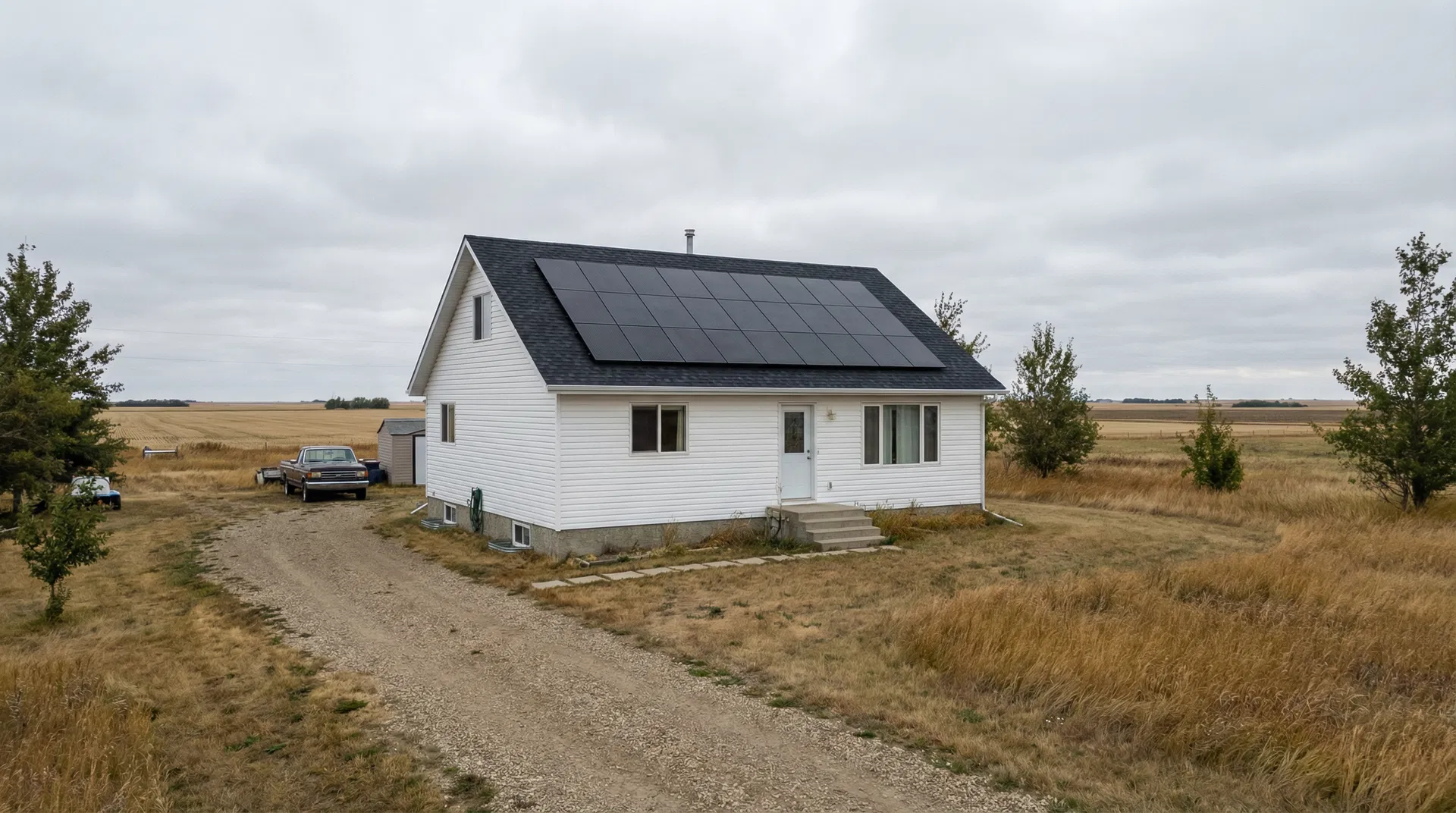
The solar consultation Lethbridge Alberta property owners get from Range Road Solar is a working design session, not a brochure drop. We pull your 12-month usage graph from your most recent power bill, map it against your roof pitch, orientation, and available ground space, and build a preliminary system design that actually fits your property. For residential properties, that typically means an 8 to 12 kW system on a south-facing roof using LONGi panels and APsystems microinverters. Microinverters matter on Lethbridge rooflines because they handle panel-level shading independently. If one section of your roof catches shade from a chimney or dormer, the rest of the array keeps producing without dragging the whole system down. For larger properties, commercial buildings, or mixed-use acreages, we size in the 12 to 25 kW range and look hard at whether a ground-mount array makes more sense than a roof installation. Lethbridge agricultural properties often have multiple loads across multiple structures, and a single roof rarely tells the whole story. Every consultation includes a review of City of Lethbridge interconnection requirements, current program eligibility at the time of design, and a clear layout of what the project involves from application through commissioning. You'll leave the consultation knowing what you're looking at, not just feeling good about solar in general.
Solar Planning for Lethbridge Properties
Lethbridge properties range from in-town residential to quarter-section agricultural operations, and the right solar system looks very different depending on which one you're on. A consultation isn't a sales call. It's a design session where we work through your actual electricity consumption, your roof or yard layout, and the City of Lethbridge interconnection requirements that apply to your property. We don't quote systems from the hip. Before we put a number in front of you, we want to see your most recent power bill. Alberta utility bills include a 12-month usage graph on the back, and that graph tells us far more than any rule-of-thumb estimate. It shows seasonal swing, load patterns, and the true baseline your system needs to offset. Properties in and around Lethbridge can run single-phase residential service, three-phase farm service, or a mix of both across multiple meters. Getting that detail right at the start avoids redesigns later. That's what the consultation is for: honest numbers, grounded in your site, before you spend a dollar.
Electrical Site Review for Lethbridge Properties
Voltage Rise
Voltage rise happens when solar generation pushes electricity back toward the grid and the local distribution line voltage climbs as a result. If voltage rise at the point of interconnection exceeds the limits set by the wire service, the inverters throttle output to stay within compliance, a condition called clipping. We check local line conditions and design the system to stay within the City of Lethbridge's allowable voltage rise limits so clipping doesn't quietly reduce your system's output after commissioning.
Single-Phase vs Three-Phase
Properties in and around Lethbridge can be served by single-phase residential service or three-phase service, which is more common on agricultural and commercial sites. The phase configuration at your meter determines which inverters are compatible and how much capacity can be installed without a service upgrade. We confirm phase type during the electrical review so inverter selection and system sizing reflect your actual service, not a default assumption.
Panel Infrastructure
Older electrical panels sometimes don't have the breaker capacity to accept a solar back-feed breaker at the size the system requires. We assess the panel's rated amperage, available space, and age as part of every site review. If the existing panel can't support the system, we scope a panel upgrade alongside the solar installation so both pieces are coordinated from the start.
Service Entrance Review
The meter base and service entrance are reviewed as part of the interconnection design package submitted to the City of Lethbridge. The city's utility department checks the meter base condition before approving the micro-generation connection, and a non-compliant base can delay the application. If the meter base needs upgrading, we identify that before submission so it doesn't become a surprise at the inspection stage.
Right-Sizing Solar for Lethbridge Properties
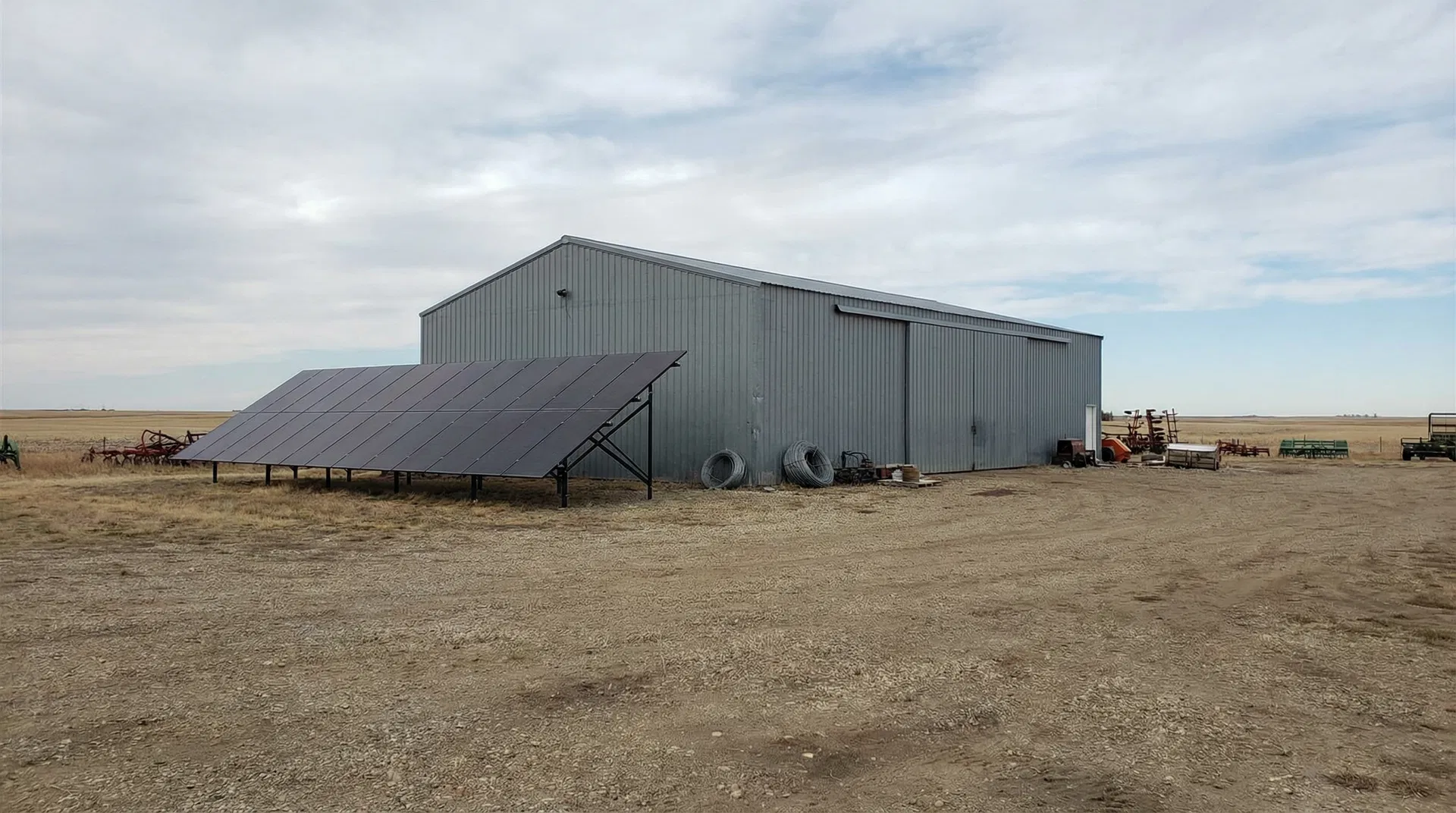
Urban residential installs are usually straightforward: one household, one meter, one roof. Properties around Lethbridge are often more layered. A home with a heated shop, a grain handling setup, or outbuildings on a separate meter can carry significantly more load than the house alone, and sizing from just the house bill leaves money on the table. We size systems from the 12-month usage graph on your most recent power bill, not from a square-footage guess or a provincial average. That graph shows us your summer peak, your winter baseline, and every swing in between. It's the only honest starting point for a design that actually fits your consumption. Roof versus ground mount comes down to what the property gives us to work with. If your roof is well-oriented, unshaded, and structurally sound, a rooftop array is usually the simpler path. But on a Lethbridge acreage with mature shelter belts, low-pitch shop roofs, or buildings oriented for function rather than solar gain, a ground mount in an open area of the yard often delivers a better result. We look at both options during the consultation and recommend based on your specific layout, not a default preference. For systems in the 18 to 25 kW range, we're typically looking at properties with multiple significant loads: irrigation, grain drying, shop heating, or a combination. Getting the load breakdown right before design starts is what keeps the final system from being undersized a year after commissioning. We don't guess. We design from what your bill and your site actually show us.
Typical Load Profiles We Design For Near Lethbridge
Home Plus Heated Shop
A residential property with a heated, attached or detached shop carries two meaningful loads: household consumption plus the shop's lighting, plug loads, and electric heat if it's in use year-round. The shop alone can shift a property from a 10 kW system into the 14 to 18 kW range depending on how intensively it's used. We pull both meters into the design if they're separate, or work from the combined bill if they share a service.
Irrigation and Grain Handling Operation
Agricultural properties with irrigation pumps and grain handling equipment see large seasonal spikes that a simple residential-style system won't fully offset. These loads often justify systems in the 18 to 25 kW range, and the seasonal production pattern needs to be matched against when those loads actually run. Your most recent power bill and a conversation about your operation calendar are both part of how we size this correctly.
Commercial Building or Mixed-Use Property
Commercial properties in Lethbridge, whether a standalone building or a mixed-use site with office and warehouse under one roof, tend to run consistent daytime loads that align well with solar production hours. System sizing in the 15 to 25 kW range is common for these properties, and three-phase service is more frequent at commercial meters, which affects inverter configuration. We review the commercial utility account and building layout together before finalizing a design.
City of Lethbridge Interconnection
The wire service for Lethbridge is the City of Lethbridge, which operates its own municipal distribution system. That's distinct from most Alberta communities, where FortisAlberta or ATCO handle wire service. Because the City of Lethbridge manages its own grid, interconnection applications go through the city's utility department rather than a provincial wire service. Range Road Solar handles the interconnection application as part of every installation. We prepare the design package, submit it to the City of Lethbridge on your behalf, and coordinate any technical review the utility requires before commissioning. You don't need to navigate that process yourself. If your property sits just outside Lethbridge, the wire service may differ. We confirm the correct utility and application process during the consultation, before design work begins. Getting that detail right at the start keeps the project on track.
Project Economics and Design Review
| System Size | Annual Production | Year 1 Savings | Payback Period |
|---|---|---|---|
| 8-25 kW range, 10 kW typical |
Production, savings, and payback estimates require a property-specific design and your most recent power bill before any figure is confirmed.
How We Work in Lethbridge
Bill and Load Review
We review your power bill to understand your energy use in Lethbridge and size the system to your actual consumption — not a generic estimate.
Site Assessment
We assess your roof or ground area, south-facing exposure, electrical service, and utility interconnection requirements specific to your property.
Design and Utility Application
We produce a system layout, production estimate, and cost summary, then submit your micro-generation application to your utility on your behalf.
Installation and Commissioning
Our crew installs racking, panels, inverter, and electrical connections. All work is performed by licensed electricians. We commission and test before handoff.
Current Program and Interconnection Review
Utility connection review
The City of Lethbridge reviews grid connection applications for properties on its municipal distribution system. Range Road Solar prepares the full design package required for that application and submits it on your behalf. We don't hand you a pile of forms and wish you luck.
Current program review
Commercial, agricultural, and residential properties may be eligible for provincial or federal programs depending on property type and ownership structure. We review current eligibility against the rules in place at the time of your design, not rules that applied to a project we finished two years ago. What's available changes, and we check at design time.
Frequently Asked Questions
Get a Solar Assessment for Lethbridge
Submit a recent power bill and we will review your consumption and provide an honest assessment for your Lethbridge property. No obligation.
(587) 330-7502 Book a CallRelated Resources
More Solar Services in Lethbridge