Lethbridge County · Solar rebates and incentives
Solar Rebates in Lethbridge, Alberta
Current solar rebates and incentives for Lethbridge properties, including micro-generation credits and the federal Clean Technology ITC for farms and businesses. We handle the paperwork.
When people search for solar rebates Lethbridge Alberta, they're usually asking one of two things: what's available right now, and will it actually apply to my property. Both are fair questions, and both depend on details that a general web search won't answer for you. Alberta's micro-generation regulation lets grid-tied solar systems send excess generation back to the distribution system. The credits that result depend on your retailer agreement and the current rules from your wire service. For farms and incorporated businesses, the federal Clean Technology Investment Tax Credit is worth understanding at design time, because eligibility and claim mechanics have conditions that affect project planning. We're not accountants, but we flag it early so you can loop in your tax advisor before the project closes, not after. On the equipment side, we install LONGi solar panels and APsystems microinverters on residential and commercial projects in the area. APsystems microinverters are a practical fit for properties where shading from trees, adjacent buildings, or roofline features would otherwise drag down a string-inverter system. Each panel operates independently, so a shadow on one panel doesn't clip the output of the rest. System sizes for this service typically run between 8 and 15 kW, with 10 kW being a common residential starting point before we've seen the actual usage data. What you qualify for, and what makes financial sense, gets confirmed through the design review.
Solar Planning for Lethbridge Properties
Rebates and incentives don't mean much if the system underneath them isn't sized correctly. That's the core of how we approach every project here. Lethbridge properties run the full spectrum: older infill homes with steep roofs, newer suburban builds, acreages on the outskirts, and commercial operations with serious electrical demand. Each one has a different load profile, a different roof condition, and a different relationship with the grid. The incentive picture can shift year to year. Programs that exist today may have different eligibility rules next season, and the interconnection requirements from the City of Lethbridge can affect what gets approved and when. We review all of that at design time, not after the panels are on the roof. You don't need to research which programs apply to you. Bring your most recent power bill, and we'll work through your 12-month usage graph, your site conditions, and the current incentive landscape together. The result is a design built around your actual consumption, not a brochure estimate.
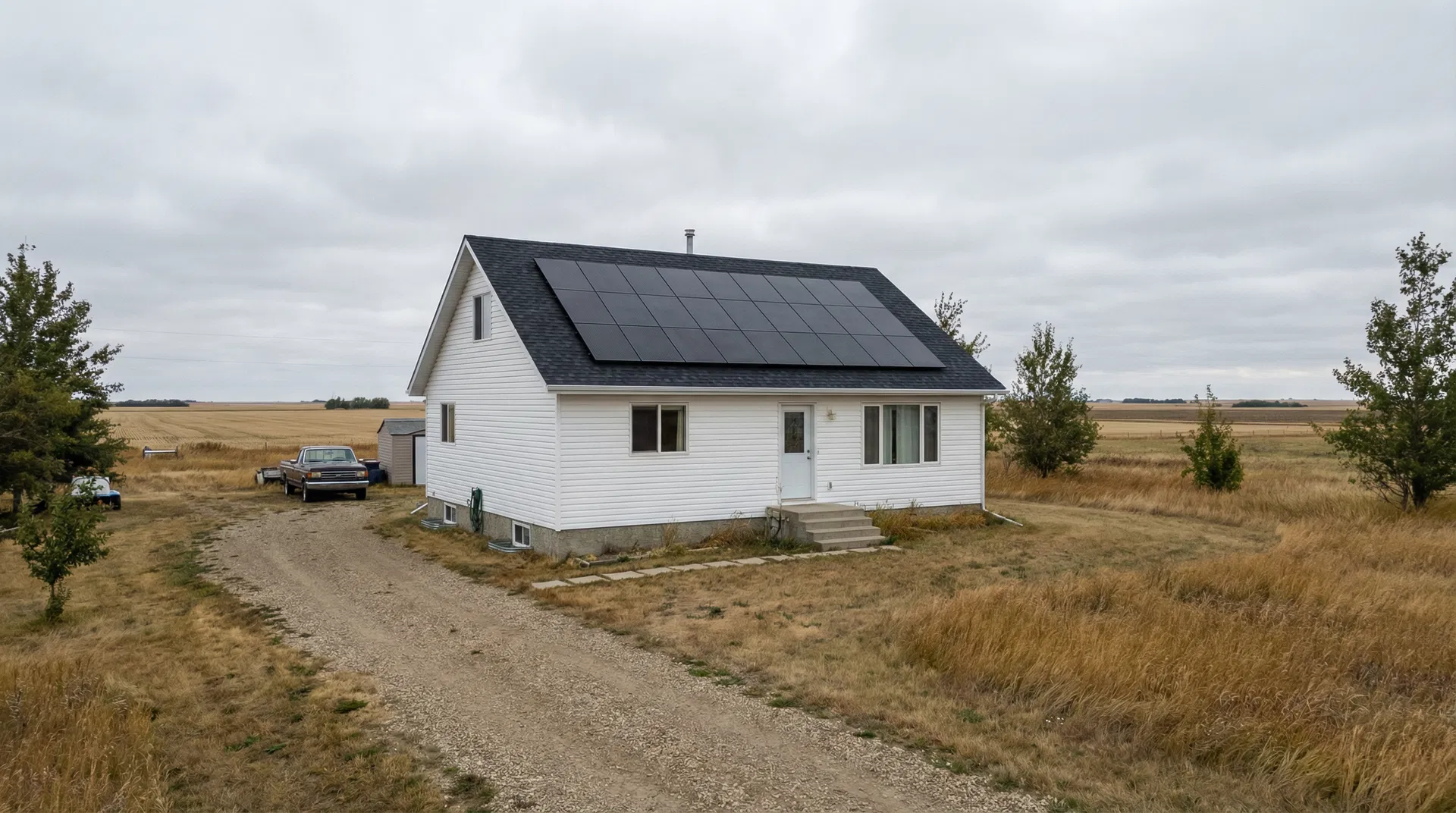
Electrical Site Review for Lethbridge Properties
Voltage Rise
Voltage rise happens when a solar system exports power into the local distribution network and the voltage at the meter climbs above the acceptable operating band. Distribution line characteristics, transformer sizing, and the number of other loads on the same segment all affect how much rise occurs. If voltage rise is too high, the inverter will throttle output or shut down, which cuts into the system's useful generation.
Single-Phase vs Three-Phase
Properties in the area can be served by single-phase or three-phase electrical service depending on when they were built and what loads they were designed to support. This matters for solar because inverter selection and maximum system capacity are both tied to service type. A property with three-phase service has more flexibility for larger systems, while single-phase service may require careful sizing to stay within the allowable export limits.
Panel Infrastructure
Older electrical panels may not have the breaker capacity to support a solar system without an upgrade. We check the panel age, the available breaker slots, and the main breaker rating as part of the site assessment. If the panel can't safely support the system as designed, we scope the upgrade as part of the project so there are no surprises once installation starts.
Service Entrance Review
The service entrance and meter base are what the City of Lethbridge reviews as part of the micro-generation interconnection application. We check the meter base condition, the weatherhead, and the service conductors to confirm they meet current requirements. If an upgrade is required, we identify it before submitting the application so the review process isn't delayed by a condition we could have caught earlier.
Right-Sizing Solar for Lethbridge Properties
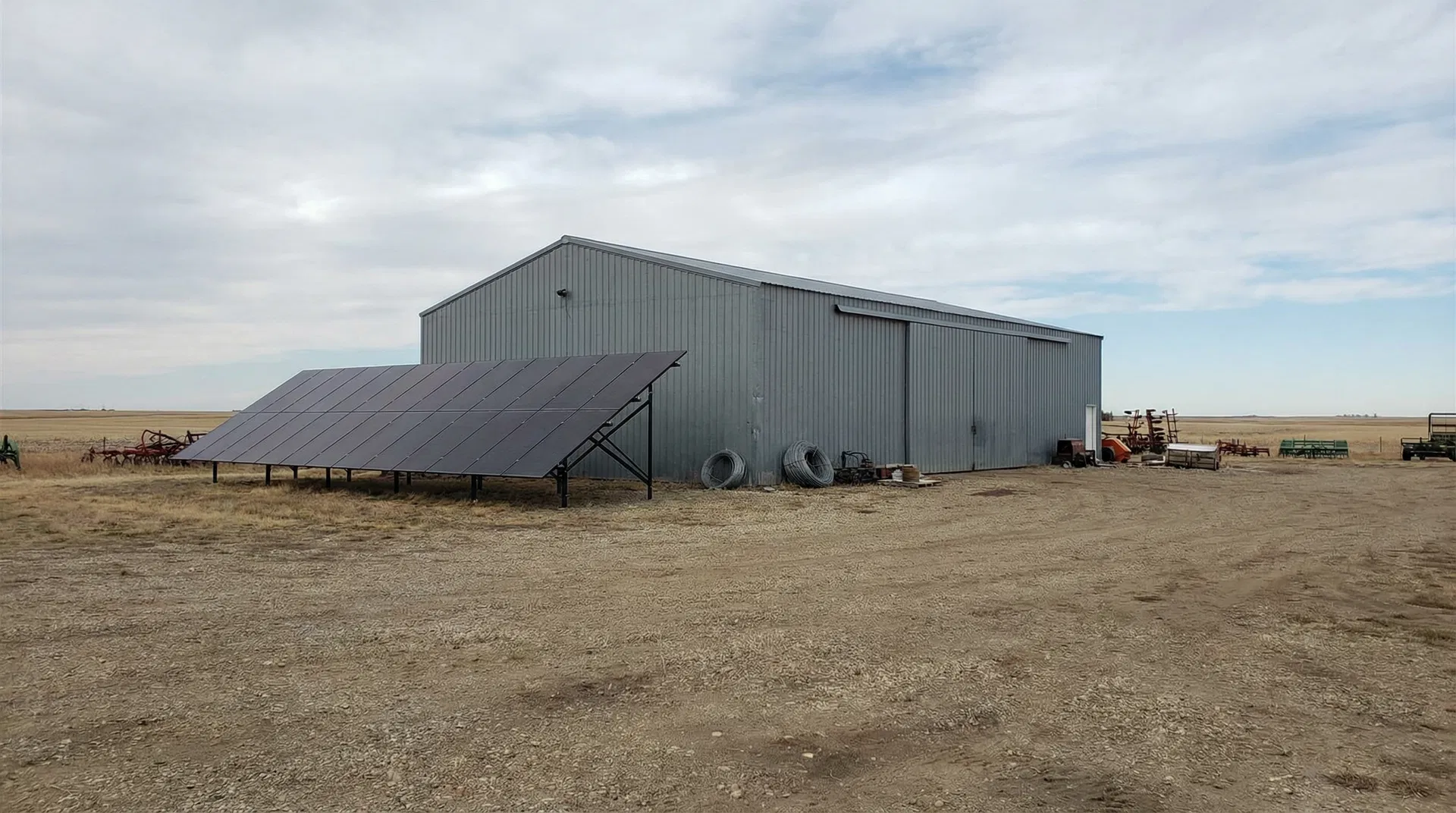
Urban residential systems are often sized around a single household load. Properties on the edges of Lethbridge, and across the surrounding area, frequently run multiple loads at once: the house, a heated shop, an outbuilding, irrigation equipment, or grain handling infrastructure if it's a farm property. That combination of loads can push consumption well beyond what a typical 10 kW residential system would offset, which is why we don't start with a rule-of-thumb number. We start with the 12-month usage graph on your most recent power bill. Alberta utility bills include that graph by default. It shows us how consumption shifts through the year, whether there's a winter heating spike, a summer irrigation draw, or a flat baseline that suggests most loads are constant. From there, we can size a system that's actually matched to what the property uses. Roof versus ground mount is another decision that often gets made too early. Some Lethbridge properties have roofs that work well: good pitch, south or west facing, minimal shading. Others have older roof sections that aren't worth mounting on, or trees and neighbouring structures that shade the best faces through part of the day. Ground mount gives us full control over orientation and tilt, and on properties with available yard or field space, it's often the cleaner engineering choice. We don't default to one or the other. We look at the site and make the call based on what the property actually offers.
Typical Load Profiles We Design For Near Lethbridge
Home and Heated Attached Garage
A house with an attached heated garage runs a second heating load through the winter that shows up clearly on the 12-month usage graph. We design for both loads together, not just the house square footage. The garage heater's draw often pushes the recommended system size up by 2 to 3 kW compared to a house-only assessment.
Commercial or Light Industrial Building
Commercial properties with rooftop HVAC, interior lighting, and equipment loads have consumption patterns that are spread through business hours rather than concentrated in evenings. A 12 to 15 kW system is a common starting point for smaller commercial buildings, but the actual design depends on the 12-month usage data and whether three-phase service is available on site.
Acreage with Shop and Outbuildings
Acreage properties running a house, a detached heated shop, and one or more outbuildings often see their highest consumption in January and February when every building's heat is running. That winter peak is what drives system sizing on these properties. Ground mount is frequently the right call when the shop roof faces the wrong direction or the yard has clear south-facing land available.
City of Lethbridge Interconnection
Lethbridge is served by the City of Lethbridge as the local wire service. That matters because grid interconnection applications go to the City of Lethbridge directly, not to FortisAlberta or another distributor. The process has its own technical requirements, and the application package needs to reflect the specifics of your property's service entrance, panel infrastructure, and proposed system design. We handle the interconnection application on your behalf. That includes preparing the technical documentation, coordinating with the City of Lethbridge on any questions that come up during review, and making sure the system design we've submitted matches what gets installed. We don't hand you a stack of forms and wish you luck. If your service entrance or meter base needs to be upgraded before the application can proceed, we identify that during the site review and walk you through what's involved before any work begins.
Project Economics and Design Review
| System Size | Annual Production | Year 1 Savings | Payback Period |
|---|---|---|---|
| 8-15 kW range, 10 kW typical |
Production, savings, and payback estimates require a property-specific design and your most recent power bill before any figures can be confirmed.
How We Work in Lethbridge
Bill and Load Review
We review your power bill to understand your energy use in Lethbridge and size the system to your actual consumption — not a generic estimate.
Site Assessment
We assess your roof or ground area, south-facing exposure, electrical service, and utility interconnection requirements specific to your property.
Design and Utility Application
We produce a system layout, production estimate, and cost summary, then submit your micro-generation application to your utility on your behalf.
Installation and Commissioning
Our crew installs racking, panels, inverter, and electrical connections. All work is performed by licensed electricians. We commission and test before handoff.
Current Program and Interconnection Review
Utility connection review
The City of Lethbridge reviews grid connection applications for solar systems installed within its service territory. Range Road Solar prepares the full design package required for that submission, including the single-line diagram, equipment specifications, and site documentation. We don't ask you to navigate the interconnection process on your own.
Current program review
Eligibility for available solar incentives depends on property type, ownership structure, system size, and the rules in effect at the time of application. We review your situation against the current incentive landscape during the design process. Commercial, farm, and residential properties often qualify under different programs, and the rules aren't always straightforward.
Frequently Asked Questions
Get a Solar Assessment for Lethbridge
Submit a recent power bill and we will review your consumption and provide an honest assessment for your Lethbridge property. No obligation.
(587) 330-7502 Book a CallRelated Resources
More Solar Services in Lethbridge