Lethbridge County · Farm and agricultural solar
Farm Solar in Lethbridge, Alberta for Agricultural Operations
Ground-mount and rooftop systems sized from 20 to 50 kW for farms, grain operations, and rural properties in and around Lethbridge.
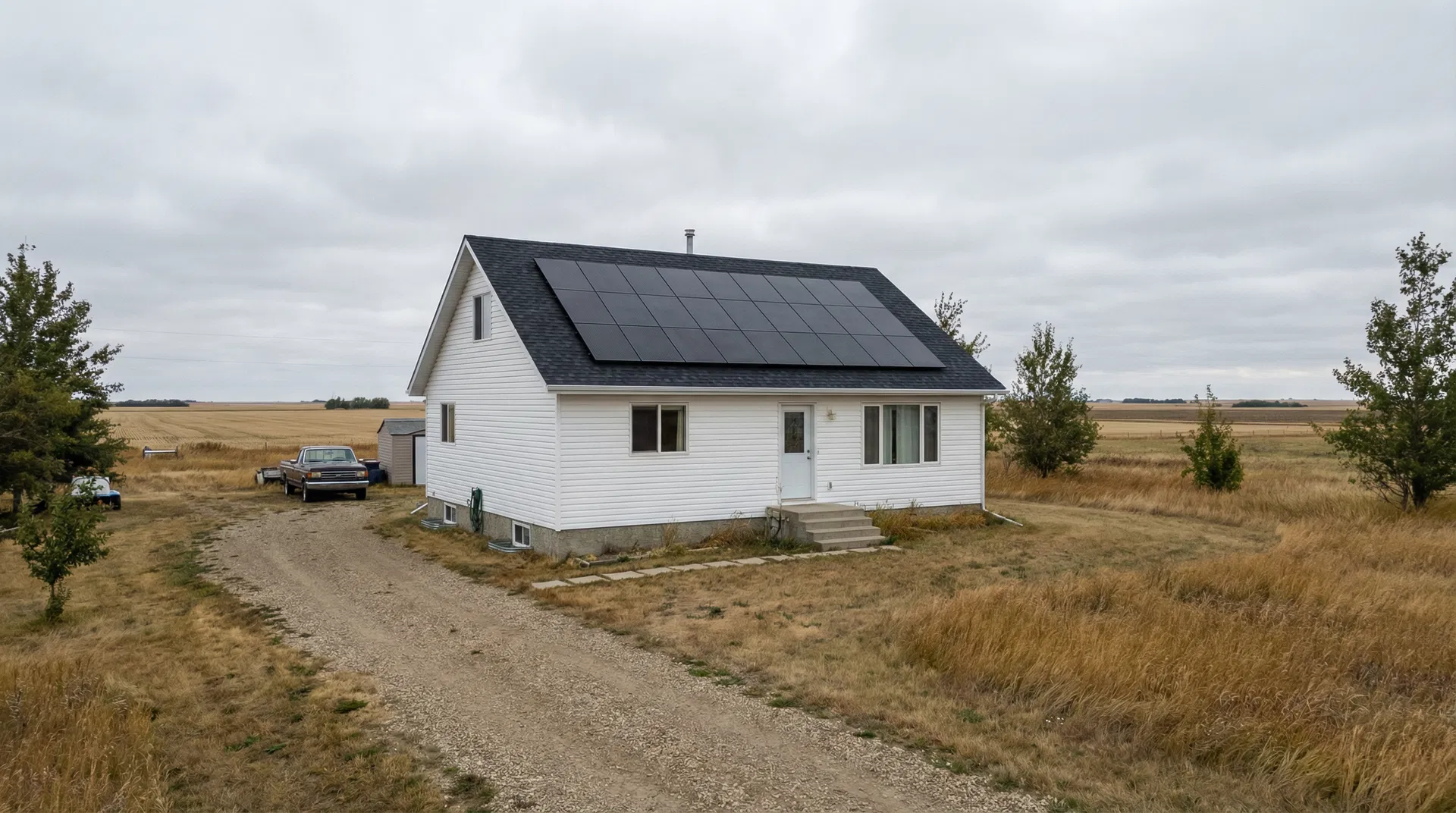
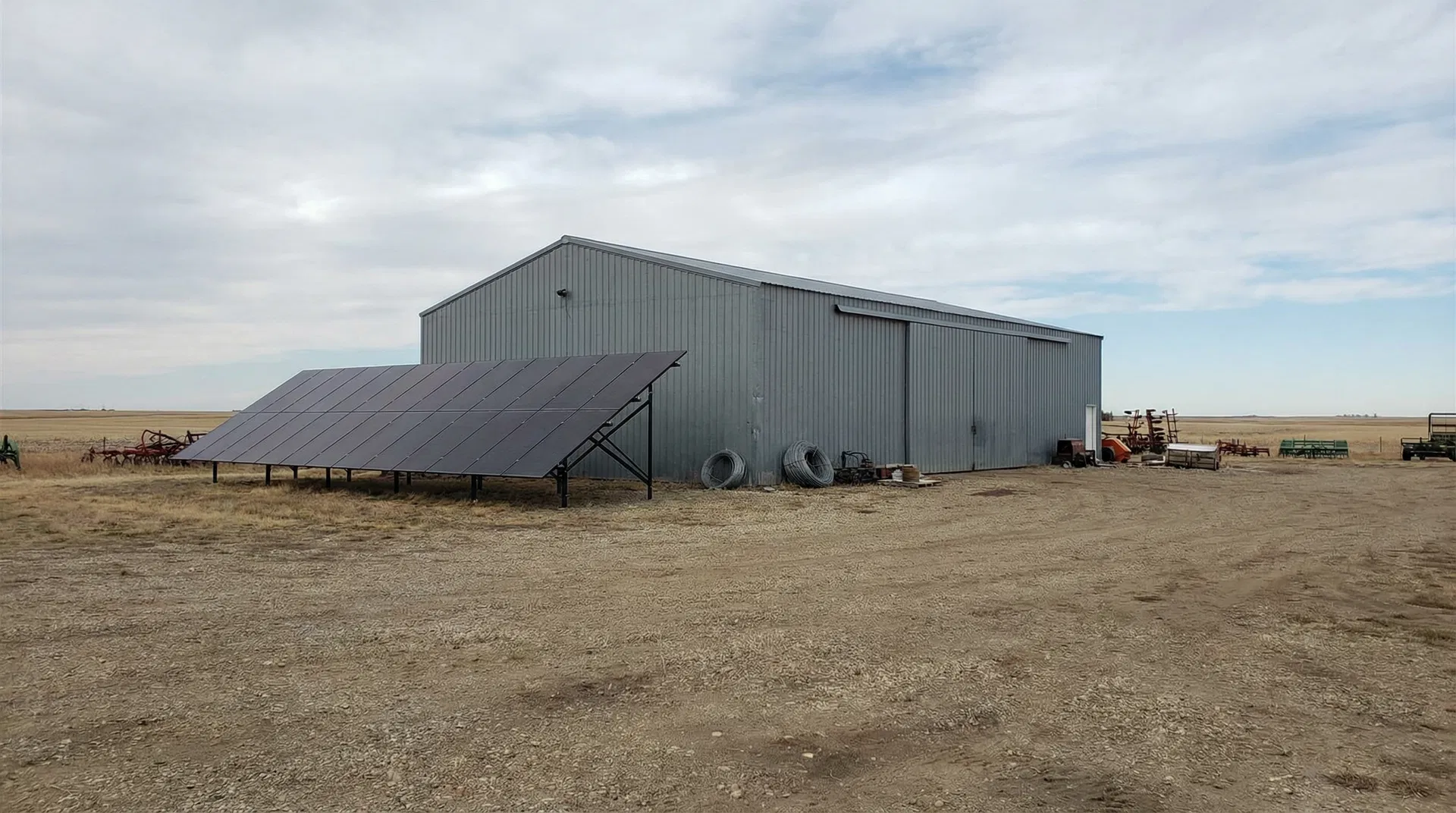
Solar farm and solar Lethbridge Alberta projects at the agricultural scale start with a proper load analysis, not a panel count. We look at what the property draws across the full year, which buildings are connected, and whether irrigation or grain handling creates seasonal demand spikes that need to be factored into the design. For most farm operations, ground-mount is the preferred installation method. It lets us orient panels at the optimal angle without being constrained by an existing roof pitch, and it keeps the system accessible for maintenance without putting anyone on a building roof. We use LONGi panels for ground-mount farm systems. They're reliable, widely supported, and hold up well in the open-yard conditions typical of agricultural properties. For shops or outbuildings where a rooftop mount makes more practical sense, we assess the roof structure, pitch, and shading before recommending it. Older metal or wood-framed agricultural roofs sometimes need an evaluation before we'd put a 20 to 50 kW system on them. APsystems microinverters are our default inverter selection. On a farm system, that matters because microinverters handle partial shading better than a single string inverter would. If one section of panels is shaded by a grain bin or adjacent building at a certain time of day, the rest of the array keeps producing at full capacity. Every system we install in this area is engineered to the City of Lethbridge interconnection requirements, with a design package built for their review process. We don't hand you paperwork and walk away.
Solar Planning for Lethbridge Properties
Agricultural operations in and around Lethbridge carry real electrical loads. Grain handling, irrigation pumps, heated shops, livestock buildings, and the farmhouse itself don't all draw power at the same time, but they add up fast on a monthly bill. A 20 to 50 kW solar system is sized to offset a meaningful portion of that combined load, not just the house. Farm properties here tend to have exactly what a ground-mount system needs: open yard space with good southern exposure, clear of tree lines and buildings. That's not a guarantee on every property, but it's a common starting point on the agricultural parcels we assess in this area. City of Lethbridge is the wire service for properties inside Lethbridge. That means your micro-generation application goes through their interconnection review process, not a rural distribution cooperative. The rules and application requirements are specific to that service territory, and we handle the design package and submission on your behalf. We size every system from your actual usage data, not a rule-of-thumb estimate. The 12-month usage graph on your most recent power bill tells us what your operation actually draws across seasons, and that's the foundation of every design we build.
Electrical Site Review for Lethbridge Properties
Voltage Rise
Voltage rise happens when solar generation pushes voltage above the utility's allowable threshold at the point of connection. On longer distribution runs or on sections of the grid with lower capacity, this can limit how much power a system is allowed to export before the inverters clip back output. We assess voltage rise conditions at the service entrance as part of the design review, and it directly informs system sizing decisions.
Single-Phase vs Three-Phase
Rural and agricultural properties in Alberta may be served by single-phase or three-phase electrical service, and the distinction affects inverter selection and the maximum system capacity the service can support. Three-phase service is more common on larger farm operations with significant motor loads, while smaller properties often run single-phase. We confirm your service type during the site review and select APsystems microinverters configured appropriately for the phase arrangement.
Panel Infrastructure
Older main panels on farm properties don't always have the breaker capacity to accommodate a 20 to 50 kW solar system without an upgrade. We assess the panel's rated capacity, breaker slots, and age as part of every site review. If the existing panel can't safely support the system, we include the panel upgrade in the project scope before we finalize the design.
Service Entrance Review
The service entrance and meter base are reviewed as part of the City of Lethbridge interconnection application process. We check the meter base condition, weatherhead, and service conductor rating to confirm they meet utility requirements before submitting the design package. If an upgrade is required, we identify it during the site review so there are no surprises after the application is submitted.
Right-Sizing Solar for Lethbridge Properties
Farm and agricultural properties don't have one load. They've got several running off the same meter, or sometimes two meters on the same yard. The farmhouse, a heated shop, a grain handling setup, and an irrigation pump all draw power independently, and they don't all peak at the same time of day or the same season. That's why a farm system at 20 to 50 kW is a very different design problem than a residential rooftop in a subdivision. We size every system from the 12-month usage graph on your most recent power bill. That graph shows us what your operation actually consumed across seasons, not what we'd guess based on square footage or the number of buildings on the property. We won't design to a round number if your usage data says something different. The roof vs ground-mount decision comes down to site conditions. If the shop roof has the right pitch, faces the right direction, and isn't shaded by grain bins or adjacent buildings, a rooftop mount can work well. But on a lot of farm properties, the available yard space is better suited to a ground-mount array. Ground-mount lets us set the tilt and orientation independently of whatever the existing roof gives us, and it's generally easier to access and maintain. When a roof has poor pitch, shading from trees or neighbouring structures, or an older framing system that wasn't built for this kind of load, ground-mount is the right call. We don't recommend rooftop just because it's familiar. The goal is a system that performs based on your actual usage and your actual site, not a design that looks good on paper.
Typical Load Profiles We Design For Near Lethbridge
Home + Heated Shop + Grain Handling
This is one of the most common profiles we see on larger agricultural parcels: a farmhouse, a heated and wired shop, and grain augers or conveyors that run seasonally at high draw. The combined load typically justifies a system in the 30 to 50 kW range, and the 12-month usage graph from the most recent power bill will show the seasonal spikes that define how the system needs to be sized. Ground-mount is almost always the right configuration for this profile.
Irrigation Operation
Irrigation pumps draw significant power during the growing season, then drop off almost entirely in winter. A system designed for this profile has to balance a large summer demand against a much lower off-season baseline. We pull the 12-month usage graph from the most recent power bill to map that seasonal curve, then size the array so it offsets the high-demand period without being dramatically oversized for the rest of the year.
Livestock Operation with Climate-Controlled Housing
Hog barns, poultry facilities, and cattle operations with heated or ventilated housing draw power year-round, often with a flatter load curve than crop operations. Ventilation fans, heat lamps, waterers, and feed systems all run continuously, making this profile a good candidate for solar because the load is predictable and consistent. System sizing is still based on the 12-month usage graph from the most recent power bill, but the design tends to be more straightforward than a highly seasonal operation.
City of Lethbridge Interconnection for Farm Solar
City of Lethbridge is the wire service for properties within Lethbridge. When you install a solar system here, the micro-generation interconnection application goes to City of Lethbridge, not to a rural distribution cooperative or a provincial transmission authority. That distinction matters for the design package. City of Lethbridge has its own application process, technical requirements, and review steps. We prepare the full interconnection design package to their specifications and submit it on your behalf. You don't need to navigate that process yourself. We won't quote you approval timelines, credit settlement terms, or what happens to surplus generation after the meter, because those details are confirmed through the City of Lethbridge process and can change. What we can tell you is that we've handled these applications before, we know what the submission needs to include, and we follow up with the utility during the review. If your property requires any meter base or service entrance upgrades to meet interconnection requirements, we identify those during the site review and include them in the project scope before you commit to anything.
Project Economics and Design Review
| System Size | Annual Production | Year 1 Savings | Payback Period |
|---|---|---|---|
| 20-50 kW range, 25 kW typical |
Production, savings, and payback estimates require a property-specific design and the most recent power bill.
How We Work in Lethbridge
Bill and Load Review
We review your power bill to understand your energy use in Lethbridge and size the system to your actual consumption — not a generic estimate.
Site Assessment
We assess your roof or ground area, south-facing exposure, electrical service, and utility interconnection requirements specific to your property.
Design and Utility Application
We produce a system layout, production estimate, and cost summary, then submit your micro-generation application to your utility on your behalf.
Installation and Commissioning
Our crew installs racking, panels, inverter, and electrical connections. All work is performed by licensed electricians. We commission and test before handoff.
Current Program and Interconnection Review
Utility connection review
City of Lethbridge reviews all micro-generation grid connection applications for properties in their service territory. Range Road Solar prepares the full design package to City of Lethbridge specifications and handles the submission. We don't hand you a form and leave you to figure out what the utility needs.
Current program review
Commercial and agricultural solar eligibility for available programs, incentives, and funding opportunities is reviewed against current rules at the time of your design. Program details and eligibility criteria change, so we confirm what applies to your specific operation during the design review rather than publishing generic program descriptions that may be out of date.
Frequently Asked Questions
Get a Solar Assessment for Lethbridge
Submit a recent power bill and we will review your consumption and provide an honest assessment for your Lethbridge property. No obligation.
(587) 330-7502 Book a CallRelated Resources
More Solar Services in Lethbridge