Lethbridge County · Solar installers
Solar Installers for Lethbridge, Alberta Homes and Properties
Range Road Solar installs LONGi panels and APsystems microinverters on residential and acreage properties here. We handle everything from site design through City interconnection.
When you're searching for solar installers in Lethbridge, Alberta, you'll find a mix of national franchises and locally operated contractors. Range Road Solar is independently owned and Alberta-based. We've built our install process around the specific requirements of the wire service territory here, and we don't farm out design, installation, or the interconnection application to subcontractors. Every system we install uses LONGi panels. They're a consistent, well-documented product with predictable long-term performance data, and they've become the standard across our residential and acreage installs. We pair them with APsystems microinverters, which operate at the panel level rather than converting at a central point. On roofs with any shading or irregular layout, that means one underperforming panel won't pull down the output of the rest of the array. We handle design, engineering drawings, permit coordination, installation, commissioning, and the City of Lethbridge micro-generation interconnection application. That's one team managing the full process. Residential systems in this service territory typically fall in the 8-15 kW range, with 10 kW being a common design point for homes with standard loads. Properties with multiple structures or elevated seasonal consumption often push toward the upper end of that range or beyond, depending on what the usage graph shows.
Solar Planning for Lethbridge Properties
Properties here carry a wider range of loads than a standard urban install. A home with a heated garage, a second outbuilding, or an irrigation pump on the same meter looks completely different on the grid than a house with just a furnace and appliances. That difference drives system size, and it's why the design work matters before any conversation about panels or pricing. The wire service for properties in this area is the City of Lethbridge. That matters because the interconnection process, the technical requirements, and the application pathway are specific to the City's micro-generation program. We've worked through that application process before and know what the documentation package needs to look like. We don't use industry averages or rule-of-thumb estimates to size a system. We pull the 12-month usage graph from your most recent power bill and build the production model from your actual consumption profile. That's the only honest way to design a system that fits what you're actually running.
Electrical Site Review for Lethbridge Properties
Voltage Rise
Voltage rise happens when a solar system pushes power back onto the local distribution network and the voltage at the point of connection climbs above acceptable limits. Distribution conditions vary by circuit and location, and on some sections of the grid a larger system can push voltage high enough that the inverters throttle back output to stay within tolerance. We assess voltage rise conditions during the design phase to make sure the proposed system size won't cause clipping that reduces what the array actually delivers.
Single-Phase vs Three-Phase
Most residential properties in Alberta run on single-phase power, but some acreages, larger rural properties, and commercial operations are served by three-phase. The phase configuration at your meter base determines which inverter models work and how capacity is distributed across the service. We confirm the service type during the site review and select APsystems microinverter configurations that match what's already at the property.
Panel Infrastructure
Older main electrical panels may not have the breaker capacity or available slots to support a solar interconnection without an upgrade. We check the panel's rated capacity, the condition of the bussing, and the number of available breaker positions during the site visit. If the panel can't support the system as designed, we'll identify what an upgrade involves and include it in the project scope before you make any commitments.
Service Entrance Review
The meter base and service entrance are reviewed as part of every design package we submit to the City. The City's micro-generation application requires the meter base to meet current standards, and if the existing meter base is outdated or in poor condition, an upgrade is typically required before the interconnection can proceed. We flag these issues early in the process so they don't surface as surprises during the application review.
Right-Sizing Solar for Lethbridge Properties
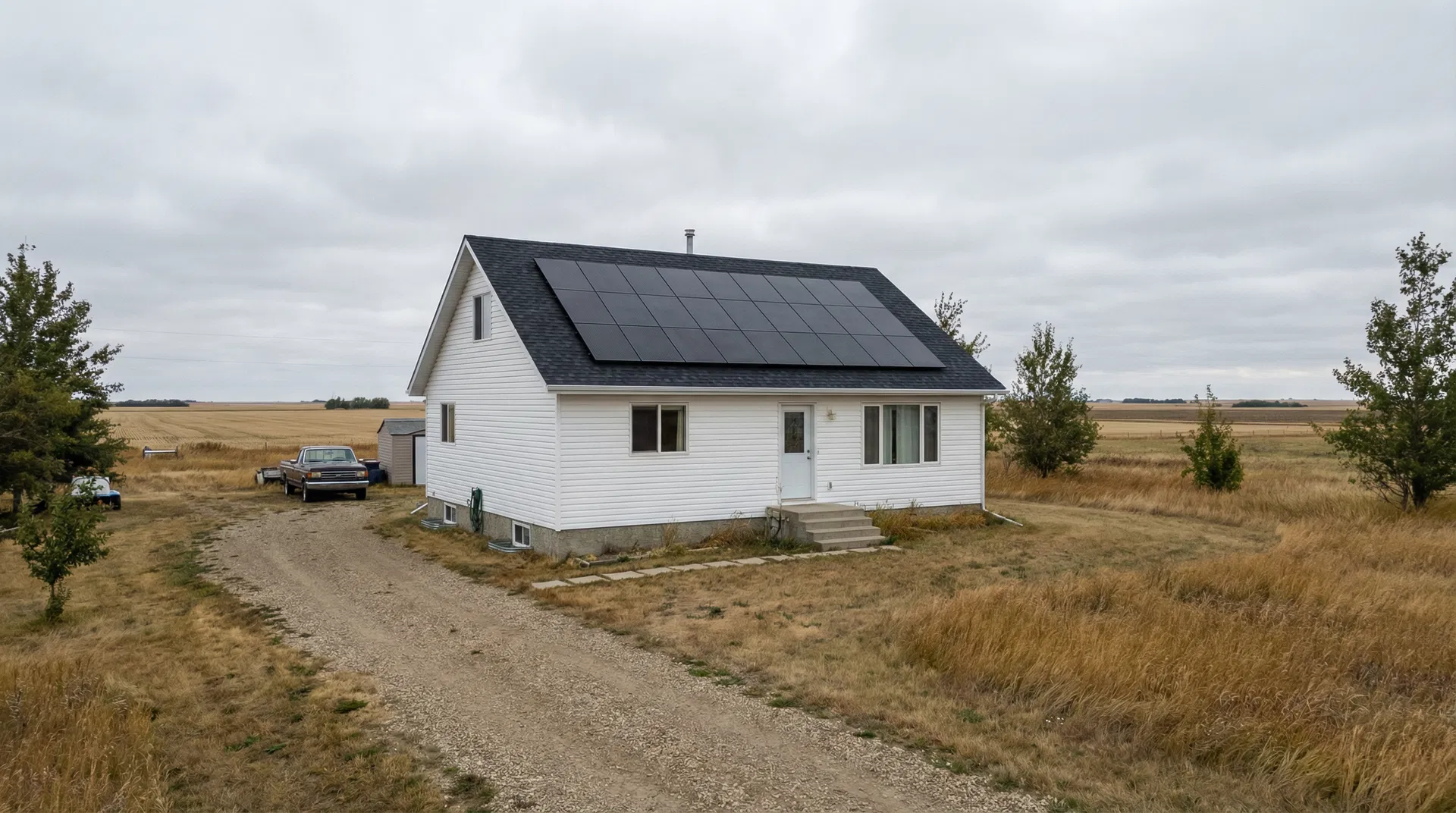
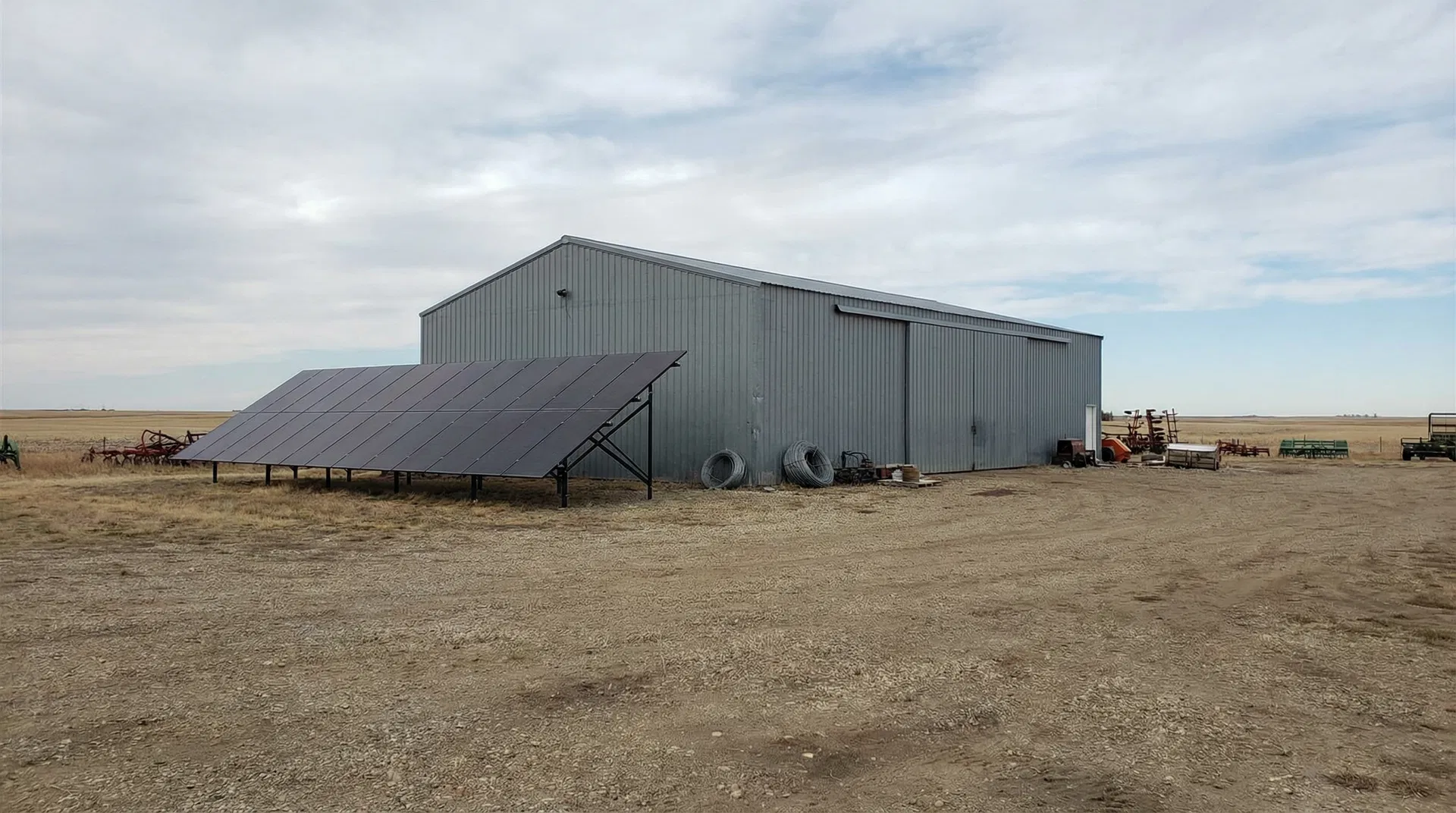
A house on a standard lot and a property with a heated shop plus an outbuilding look completely different on a power bill, even if the homes themselves are the same size. Multiple structures on a single meter are common here, and each additional load, whether it's a heated garage, an irrigation pump, or a secondary building, changes what an appropriate system size looks like. For properties carrying multiple loads, we look at the combined consumption before settling on a system size. A 10 kW system sized for a house alone may be undersized the moment you account for a heated shop running through winter. That's the kind of mismatch that leads to a system that disappoints on the bill. We size every system from the 12-month usage graph on your most recent power bill. That single document shows seasonal swings, baseline loads, and peak months. We build the production model from there, layering in roof orientation, available panel area, shading conditions, and the question of whether a roof mount or a ground mount is the right call for the site. Roof mounts work well when the home has a well-oriented roof section with strong exposure and minimal shading. Ground mounts are worth considering when the roof faces the wrong direction, trees or neighbouring structures create shading problems, or the property has usable land with better sun access than the roofline. We don't default to one or the other. The site conditions decide it.
Typical Load Profiles We Design For Near Lethbridge
Home with Heated Double Garage
A heated double garage on its own circuit adds meaningful electrical load, particularly through winter. A unit heater, lighting, and plug loads from tools, a chest freezer, or a second fridge can push combined household consumption well above what a house-only estimate would suggest. We pull the garage's contribution out of the usage graph on your most recent power bill before confirming a system size.
Residential Property with Irrigation
Properties running irrigation pumps carry a concentrated summer load that shifts the annual usage curve significantly compared to a home without irrigation. The pump's draw and run hours during peak growing season affect how we think about system capacity across the year. We confirm whether the design should be weighted toward that summer peak or balanced across annual consumption, based on what your power bill shows.
Home Plus Shop or Secondary Building
When a heated shop shares a meter with the main residence, the combined load often drives system size into the 12-15 kW range. A 30x40 heated shop with 100-amp service, welding equipment, and year-round use is a fundamentally different load profile than a house alone. We review the full 12-month usage graph for both structures together and design a system sized to what's actually being drawn, not just the house.
City of Lethbridge Interconnection
The City of Lethbridge operates the electrical distribution system for properties in its service territory. Micro-generation interconnection applications go through the City directly, not FortisAlberta or ATCO. That distinction affects the forms, technical standards, and review process your project goes through. Range Road Solar prepares the full application package. That includes engineering drawings, inverter documentation, panel layout specifications, and any metering or meter base information the City requires. We submit the application and coordinate any follow-up with the City's electrical review team. You won't be navigating that process on your own. We don't promise a specific approval timeline. The City sets that schedule, not us. What we do is make sure the application package is complete and correct the first time, which avoids back-and-forth that slows things down. Once the interconnection is approved, we finish commissioning and walk you through how the system shows up on your bill.
Project Economics and Design Review
| System Size | Annual Production | Year 1 Savings | Payback Period |
|---|---|---|---|
| 8-15 kW range, 10 kW typical |
Production, savings, and payback estimates require a property-specific design and your most recent power bill.
How We Work in Lethbridge
Bill and Load Review
We review your power bill to understand your energy use in Lethbridge and size the system to your actual consumption — not a generic estimate.
Site Assessment
We assess your roof or ground area, south-facing exposure, electrical service, and utility interconnection requirements specific to your property.
Design and Utility Application
We produce a system layout, production estimate, and cost summary, then submit your micro-generation application to your utility on your behalf.
Installation and Commissioning
Our crew installs racking, panels, inverter, and electrical connections. All work is performed by licensed electricians. We commission and test before handoff.
Current Program and Interconnection Review
Utility connection review
The City reviews micro-generation interconnection applications for properties in its service territory. Range Road Solar prepares the full application package, including engineering documentation, inverter specifications, and panel layout drawings, so you're not navigating the technical requirements on your own. We submit and coordinate directly with the City's electrical department through the review process.
Current program review
Eligibility for residential, farm, and commercial programs is reviewed against the rules in effect at the time of the design. Programs and available incentives change, and what applied last year may not apply today. We confirm current eligibility and applicable rules during the design review so you're working from accurate information, not assumptions.
Frequently Asked Questions
Get a Solar Assessment for Lethbridge
Submit a recent power bill and we will review your consumption and provide an honest assessment for your Lethbridge property. No obligation.
(587) 330-7502 Book a CallMore Solar Services in Lethbridge