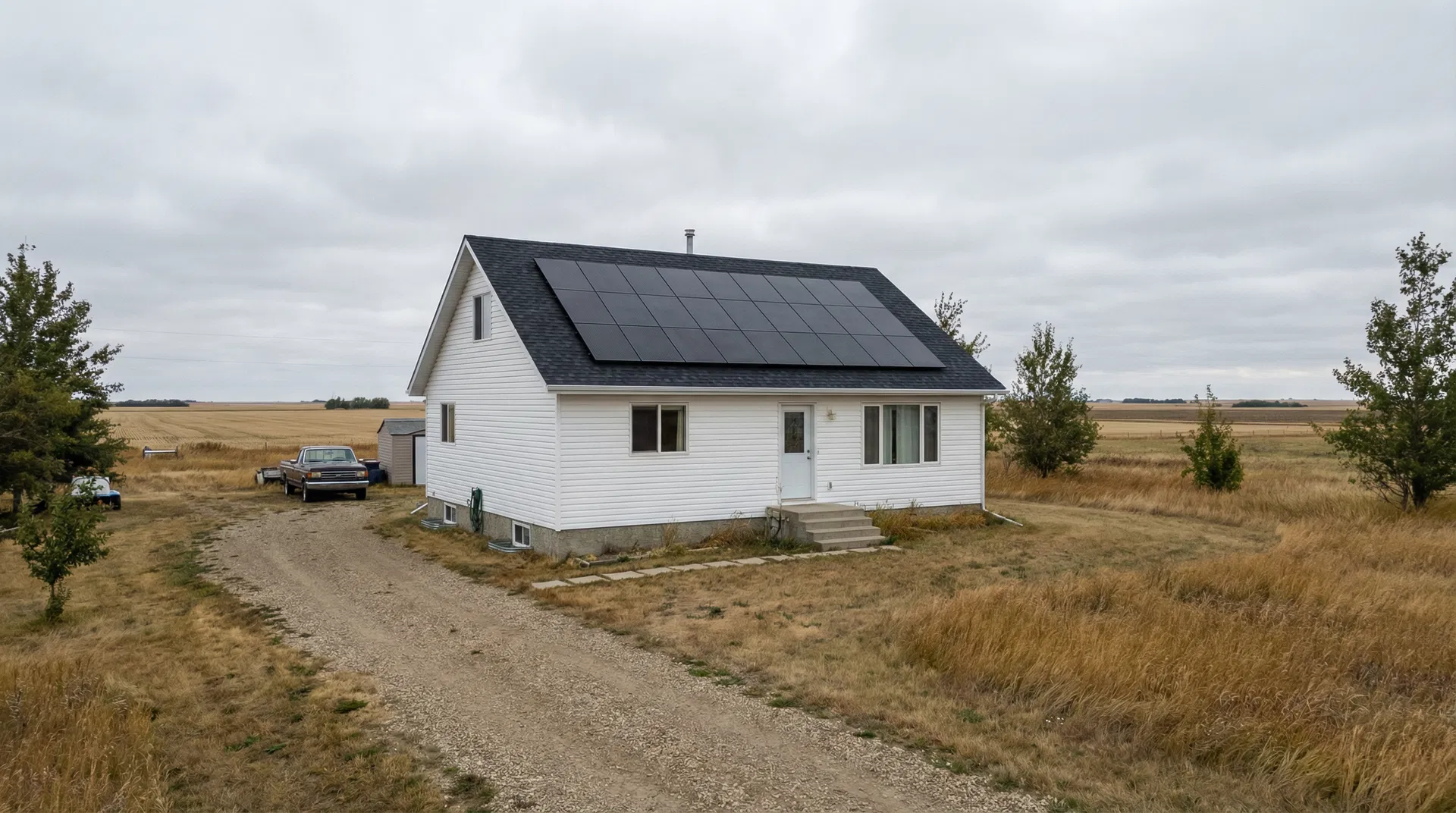
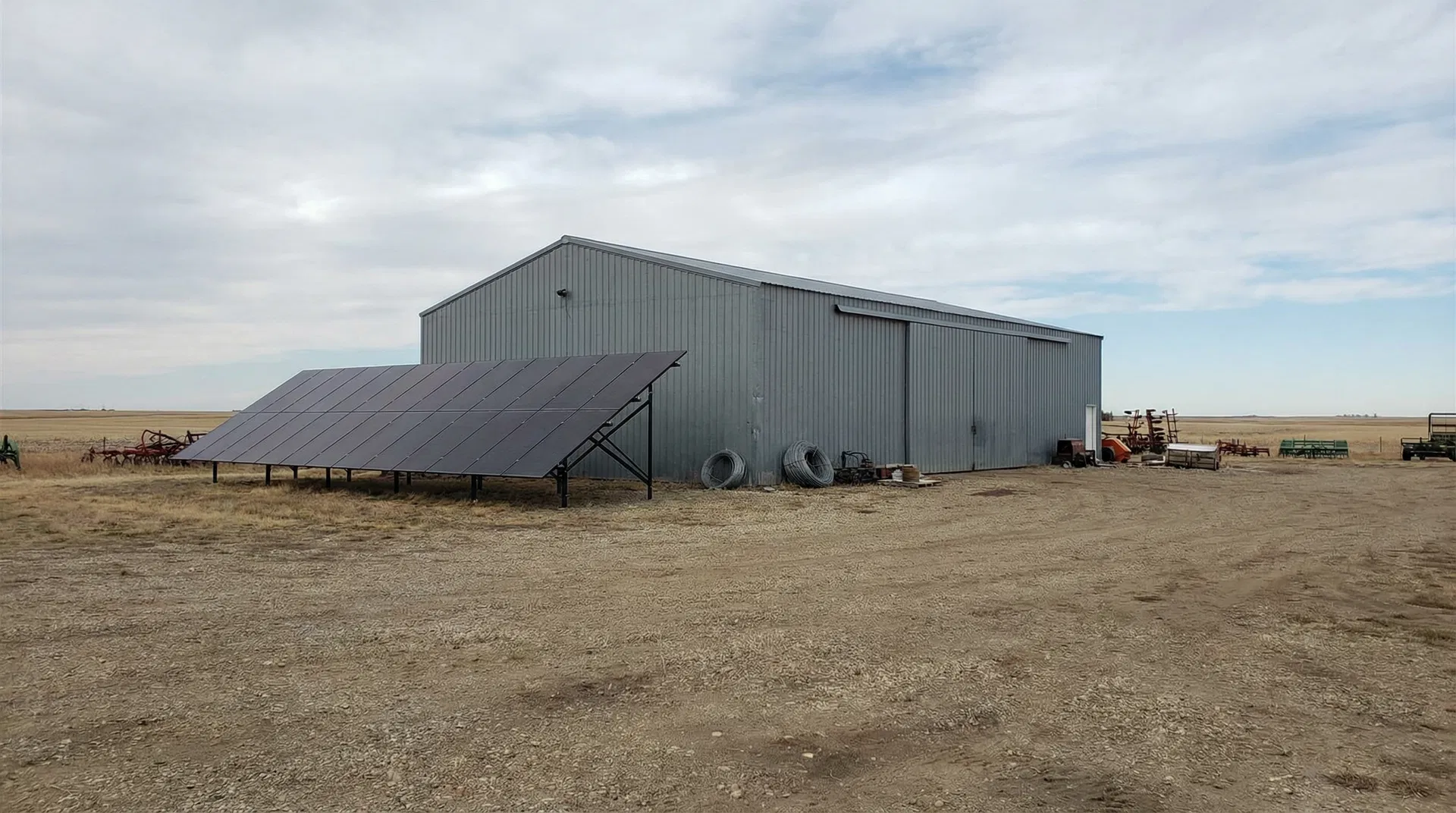
Solar Claresholm projects run through Range Road Solar start to finish, from the first site visit to the final FortisAlberta sign-off, and most of what we install here lands in the 8 to 15 kW range depending on the property. We install LONGi panels paired with APsystems microinverters on both roof-mount and ground-mount arrays, which gives us flexibility on properties where the house roof is shaded, pitched wrong, or just too small for the load the owner wants to offset. Around here that covers a lot of ground: in-town bungalows with simple gable roofs, acreages with a house plus a heated shop, and working properties where the array has to clear equipment traffic and dust from nearby fields. APsystems microinverters are a deliberate choice for mixed-shading sites, since each panel operates independently instead of dragging a whole string down when one section is in shadow from a bin, a tree line, or a neighboring building. Every install starts with a site review: roof or ground conditions, existing panel capacity, service type, and your most recent power bill. From there we build a design package, submit the interconnection application to FortisAlberta, and handle the inspection and commissioning steps so the system is actually producing before we consider the job done. We also size for future load, like a shop addition or an EV charger, when a property owner tells us that's coming.
Solar Planning for Claresholm Properties
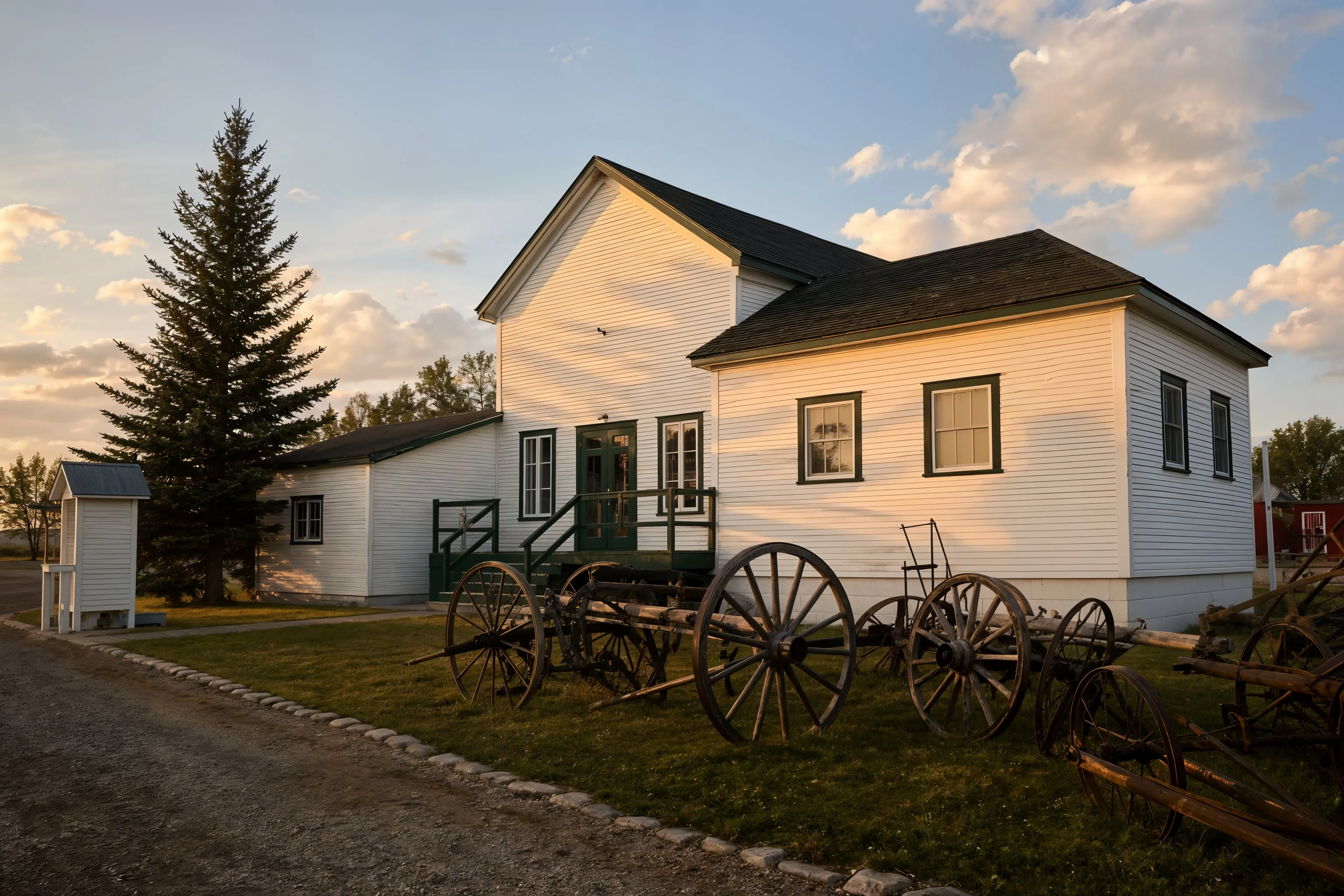
Claresholm was incorporated on August 31, 1905, and the agricultural base that grew up around it still shapes how properties here are wired and used today. Statistics Canada counted 3,804 residents at the last census, up from 3,790 the count before that, and the properties we work on range from in-town lots to quarter sections with a shop, a well, and a mix of single-phase and three-phase service. That variety matters more to a system design than anything else. We don't start from a postcard. We start with your most recent power bill and a walk-through of the site, because a farmyard running a grain dryer has a different load shape than a house with a detached garage near the Claresholm & District Museum. Environment Canada's annual bright sunshine normals list 2,300.6 hours for this part of southern Alberta, which is useful background, not a production number. The actual output depends on your roof pitch, tree lines, panel orientation, and breaker capacity, all of which get checked during design. Whether the property sits in town or out on the grid past the edge of the built-up area, we size the system off your usage pattern and site conditions, not a rule of thumb pulled from a brochure.
Electrical Site Review for Claresholm Properties
Voltage Rise
Voltage rise happens when the voltage at a solar inverter runs higher than at the utility transformer, and it's more likely on longer rural distribution runs. If it climbs too high, the inverter can clip output or shut down to protect itself, which limits how much of the system's capacity actually gets used. We check line conditions and conductor length during the site review so the inverter and system size we pick won't run into that ceiling.
Single-Phase vs Three-Phase
Properties around Claresholm run on either single-phase or three-phase electrical service, and which one you have changes what inverter equipment fits and how much system capacity the service can support. A shop or outbuilding with larger motor loads is more likely to be on three-phase, while a standard house service is usually single-phase. We confirm the service type on site before finalizing equipment selection, since the wrong assumption here means a redesign later.
Panel Infrastructure
Older rural properties often have electrical panels with limited breaker space or capacity that predates the loads a modern solar system adds. We check the panel's age, rated capacity, and available breaker positions as part of every site visit. If the existing panel can't support the new solar breaker safely, the fix is a panel upgrade or a load center addition, which we'll scope and quote as part of the design before any installation work starts.
Service Entrance Review
We inspect the service entrance and meter base condition on every property, since FortisAlberta's micro-generation application requires the metering equipment to be in good working order before they'll approve a grid-tied system. A worn, undersized, or outdated meter base can hold up that approval. When an upgrade is needed, we identify it during the design review and coordinate the work so it doesn't become a surprise mid-project.
Right-Sizing Solar for Claresholm Properties
Rural systems around here almost always run bigger than a typical in-town residential install, because the load isn't just a house. It's a house plus a shop, plus a well pump, plus maybe a grain dryer or irrigation equipment running seasonally. Stacking those loads together is why an acreage or farm system often lands well above what a standalone urban home would need. Roof versus ground mount comes down to what the property actually offers. A roof with heavy tree shading, a steep or broken pitch, or just not enough usable south-facing area pushes the decision toward a ground-mount array instead, especially on a property with open yard space to work with. Neither option is automatically better. It's a site-specific call. We don't size a system off a square-footage guess or a flat panels-per-kW rule of thumb. We pull the 12-month usage graph off your most recent power bill, which shows how your load shifts month to month, including seasonal spikes from heating, grain drying, or irrigation pumps. That graph, combined with a site visit covering roof or ground conditions, shading, and orientation, is what actually drives the system size we recommend. Two properties with the same square footage can need very different systems once we look at how each one actually uses power.
Typical Load Profiles We Design For Near Claresholm
Home Plus Heated Shop
This is the most common rural pairing we see: a house plus a detached shop with heat, lighting, and tool or equipment circuits running at different times of day. The shop's load often spikes independently of the house, which changes the shape of the usage graph. We size off your most recent power bill rather than treating the shop as an afterthought bolted onto a house-only system.
Farm Operation With Seasonal Equipment
Grain handling and drying equipment, irrigation pumps, or livestock infrastructure create sharp seasonal spikes rather than steady year-round draw. A system sized only on an average monthly bill misses that pattern entirely. We look at the full usage graph on your most recent bill to see when those spikes happen and design around them, not around an annual average.
In-Town Residential With Future Load
A standard in-town property is more predictable, but we still check for planned additions like an EV charger, a hot tub, or a future garage before finalizing system size. Building in that headroom now is more practical than undersizing and reworking the array later. This still comes back to your most recent power bill and a conversation about what's coming.
FortisAlberta Interconnection in Claresholm
FortisAlberta is the wire service provider for Claresholm, which means every grid-connected solar system here goes through their micro-generation application and inspection process before it's allowed to operate in parallel with the grid. Range Road Solar handles that entire application on your behalf: the technical design package, the single-line diagram, the equipment specifications for the LONGi panels and APsystems microinverters, and the coordination with FortisAlberta's engineering review. We also schedule the required meter work and final inspection. We don't control how long FortisAlberta takes to process an application or what their current metering and credit policies look like in detail, and we're not going to guess at numbers we can't verify. What we can tell you is that we've built the paperwork and design package to their current standards, and we track the application through to approval so you're not the one following up on it.
Project Economics and Design Review
| System Size | Annual Production | Year 1 Savings | Payback Period |
|---|---|---|---|
| 8-15 kW range, 10 kW typical |
Production, savings, and payback figures require a property-specific design review using your most recent power bill, not a generic estimate.
How We Work in Claresholm
Bill and Load Review
We review your power bill to understand your energy use in Claresholm and size the system to your actual consumption, not a generic estimate.
Site Assessment
We assess your roof or ground area, south-facing exposure, electrical service, and utility interconnection requirements specific to your property.
Design and Utility Application
We produce a system layout, production estimate, and cost summary, then submit your micro-generation application to your utility on your behalf.
Installation and Commissioning
Our crew installs racking, panels, inverter, and electrical connections. All work is performed by licensed electricians. We commission and test before handoff.
Current Program and Interconnection Review
Utility connection review
FortisAlberta reviews every grid-connection application for a new solar system before it's allowed to operate. Range Road Solar prepares and submits that full design package on your behalf, including the equipment specifications and single-line diagram. We don't guess at FortisAlberta's processing timelines or current metering policies; we work from what's confirmed at the time of your application.
Current program review
Residential, farm, and commercial properties can fall under different eligibility rules depending on what's active at the time of design. We check current program and tax rules against your specific property type as part of the design review rather than assuming last year's rules still apply. If something applies to your project, we'll walk you through it with the actual source, not a guess.
Frequently Asked Questions
Get a Solar Assessment for Claresholm
Submit a recent power bill and we will review your consumption and provide an honest assessment for your Claresholm property. No obligation.
(587) 330-7502 Book a Call