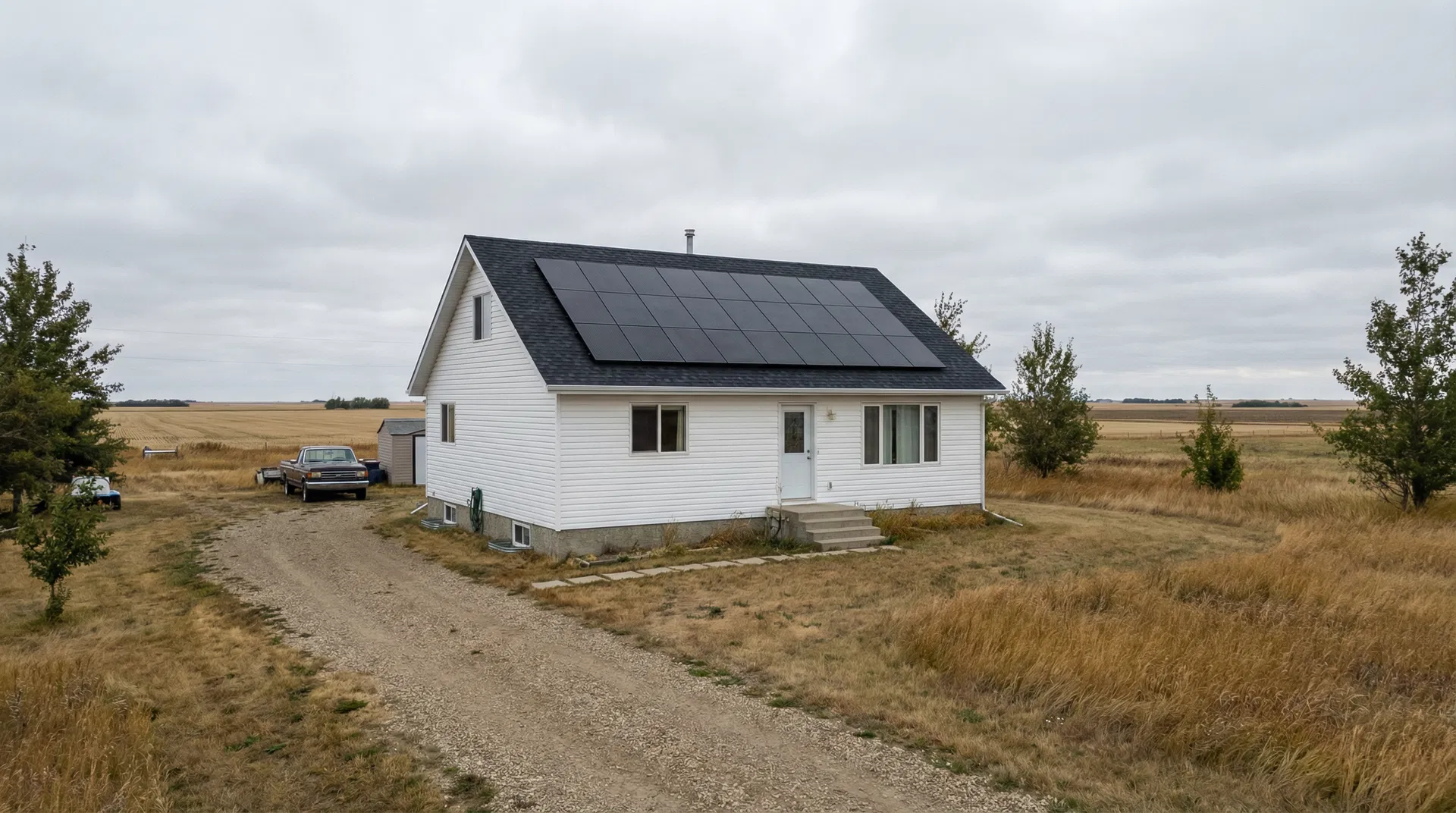
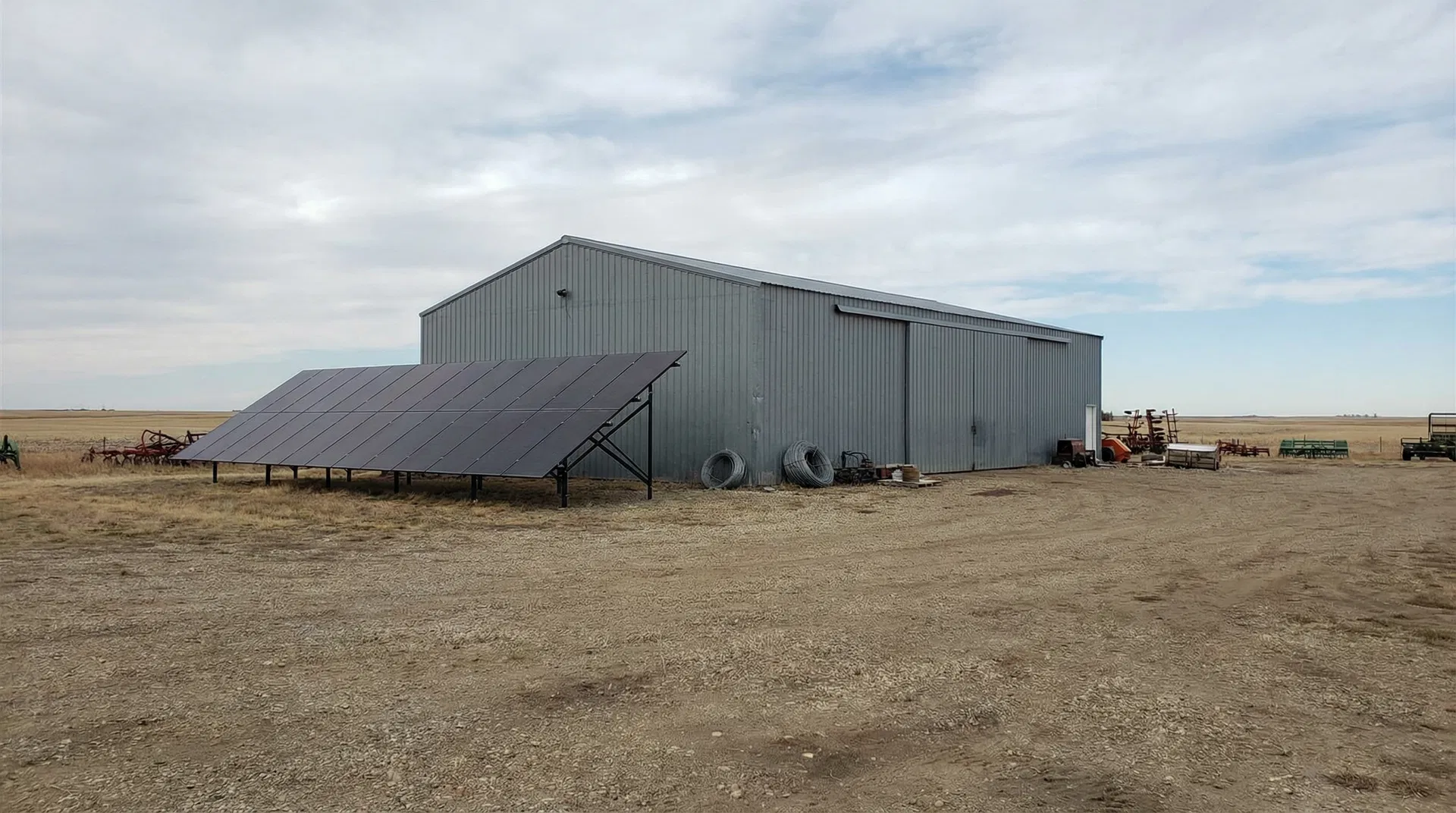
Acreage solar in Claresholm starts with a property walk-through, not a catalog pick. Rural properties around here typically carry more than a house load, so we design 12-18 kW systems as the norm, with 15 kW being the typical middle ground once a shop, well pump, or grain-handling equipment gets added into the mix. Every system we install uses LONGi panels paired with APsystems microinverters. APsystems' module-level design means one panel in partial shade or one snow-covered corner doesn't drag the output of the whole array down, which matters on acreages where a shelterbelt or outbuilding can shade part of a roof or ground-mount array at different times of day. Roof-mount makes sense on plenty of properties in the area with a clean south or west-facing slope, but we ground-mount just as often out here. When a roof is shaded by trees or a shop, pitched wrong for solar, or there's simply open yard space to work with, a ground-mount array lets us set panel angle and orientation exactly where we want it instead of working around an existing roofline. Either way, the array gets tied into your existing service, and the microinverter setup lets us add capacity in stages later on if your loads grow, without redesigning the whole system. We spec every acreage job around what the property actually needs. Not a generic package.
Solar Planning for Claresholm Properties
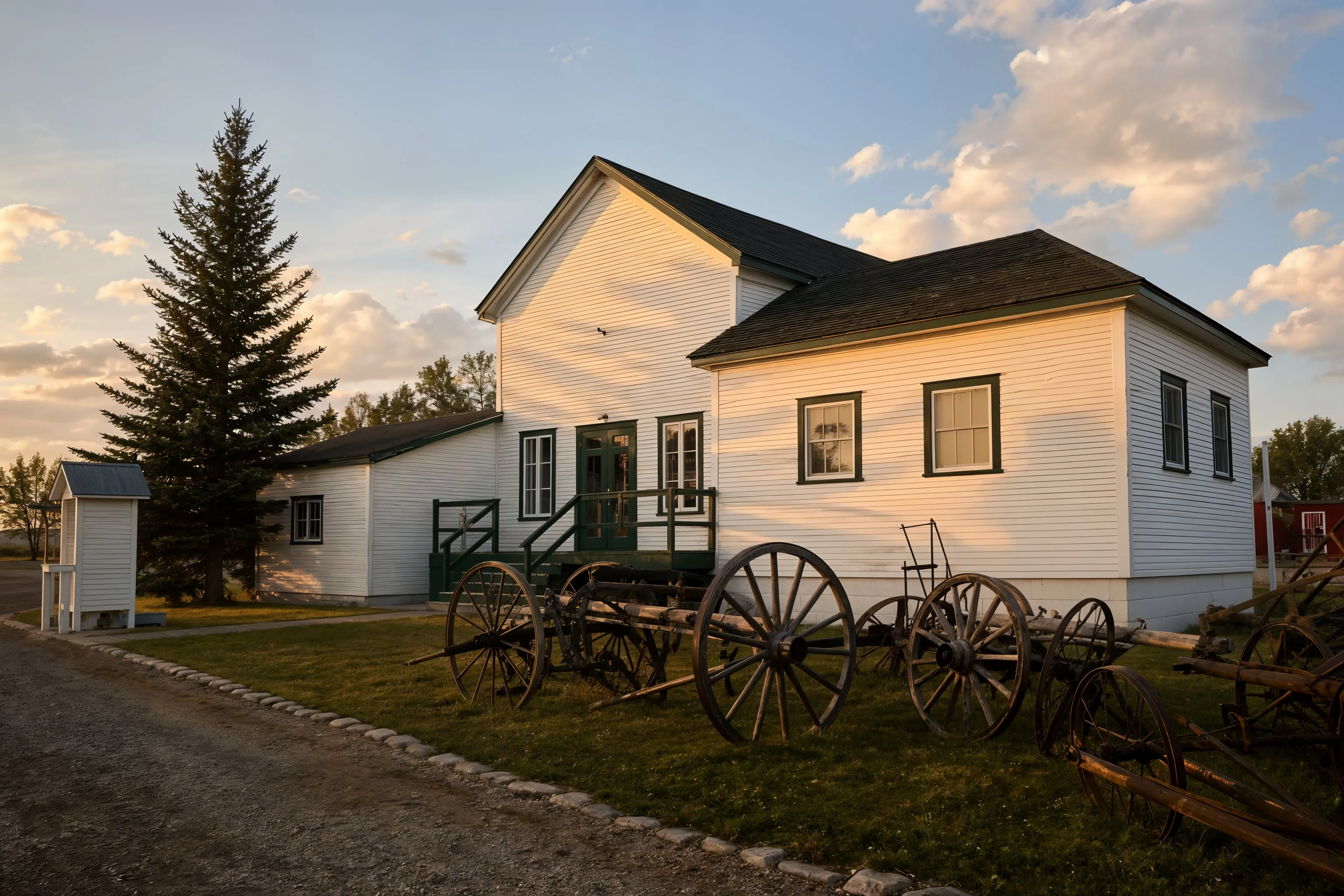
Claresholm, Alberta incorporated on August 31, 1905, and today the community sits within the Municipal District of Willow Creek No. 26, Alberta. Statistics Canada's 2021 census counted 3,804 residents, up from 3,790 in the prior count, a small but steady base of acreage and farm properties spread around the built-up core. That's the kind of property mix we design for: homes with shops, grain bins, irrigation pumps, or livestock operations layered onto a single power bill. Agriculture remains the area's main economic anchor, and a lot of the acreage systems we spec out here have to account for loads well beyond what a standard house draws. We don't guess at system size from a drive-by. Every acreage design starts with your most recent power bill and its 12-month usage graph, plus a look at your roof orientation, shading, and available ground space if a ground mount makes more sense. FortisAlberta is the wire service for the area, and any grid-tied system needs their interconnection application filed and approved before it's energized. Range Road Solar handles that paperwork as part of the design package, so you're not the one chasing down forms. Whether you're near the Claresholm & District Museum or out on a quarter section outside town, the process is the same: site review first, numbers second.
Electrical Site Review for Claresholm Properties
Voltage Rise
Voltage rise happens when power travels a long distance from the nearest transformer to your property, which is common on rural feeders serving spread-out acreages. Higher voltage rise can push an inverter into clipping mode sooner than expected, cutting into the output you'd otherwise get from the array. We measure the actual conditions at your service before finalizing inverter count and system size, rather than assuming a standard suburban connection.
Single-Phase vs Three-Phase
Some acreages in the area run on single-phase service, while others, especially those with larger shops or three-phase motors already installed, have three-phase power. The service type available at your property affects which microinverter configuration we can use and how much total capacity the system can support. We confirm your service type early in the design process so the inverter plan matches what's actually feeding your property.
Panel Infrastructure
A lot of rural properties around here still run on older electrical panels that weren't sized with solar or added shop loads in mind. We check breaker capacity, panel age, and available slots before finalizing a design, since an undersized or outdated panel can limit how much solar capacity you can safely add. If the panel can't support the system, an upgrade gets scoped and quoted as part of the project, not discovered after installation.
Service Entrance Review
We review the service entrance and meter base condition on every property as part of the site visit, since FortisAlberta requires that equipment to meet current standards before approving a micro-generation connection. A worn or outdated meter base can hold up the interconnection application even if the rest of the system is ready to go. When an upgrade is needed, we scope it into the project plan upfront so it doesn't surprise you partway through.
Right-Sizing Solar for Claresholm Properties
Rural systems tend to run bigger than a typical in-town rooftop setup, and that's not an accident. An acreage in this area often has more than one load to cover: the house, a heated shop, a well pump, maybe grain-handling equipment or livestock waterers running through winter. Stack those together and a 12-18 kW system is a more realistic starting point than the 6-8 kW range you'd see on an average in-town home. The roof-versus-ground-mount call comes down to what the property actually looks like. A clean, unshaded roof with good south or west exposure is often the simplest option. But if trees or a shelterbelt shade part of the roof, if the pitch or orientation isn't ideal, or if there's open yard space that's easier to work with than a roofline, ground mount is usually the better call. Some properties end up with a mix of both. We size every system from the 12-month usage graph on your most recent power bill, not a rule-of-thumb number based on square footage or guesswork. That graph shows us your actual seasonal load pattern, which we combine with a site design covering shading, orientation, and available space. The result is a system sized for what your property really uses, not a generic package.
Typical Load Profiles for Rural Acreage Properties
Home + Heated Shop
This is one of the most common load profiles we see on acreages in the area: a main house plus a heated shop used for equipment storage, welding, or a home-based trade. The shop's heat and any power tools add a load pattern that a standard house-only estimate would miss entirely. We size for this combined load using your most recent power bill's usage graph, plus a walk-through of what runs in the shop and when.
Home + Well Pump + Irrigation
Properties with their own well and any irrigation, whether it's a garden system or pivot-fed pasture watering, carry seasonal load spikes that a flat annual average won't capture. Pump motors can also affect the phase and capacity requirements we plan around. We look at how these loads show up across the year on your power bill before finalizing system size.
Home + Grain Handling or Livestock Operation
Grain dryers, augers, and livestock waterers running through cold months put a different shape on a property's load profile than a straightforward residential setup. These loads often cluster around harvest or winter, which shows up clearly on the usage graph from your most recent bill. We factor that seasonal pattern into both system size and inverter configuration.
FortisAlberta Interconnection in Claresholm
FortisAlberta is the wire service here, covering Claresholm and the surrounding rural area. Any grid-tied solar system needs a micro-generation interconnection application filed with FortisAlberta before it can be energized, and that application has to match your actual system design: panel count, inverter model, and site electrical details all get submitted together. Range Road Solar prepares and files that application as part of your project, working from the same site review and design documents we use to size your system. We coordinate directly with FortisAlberta on the technical requirements so you're not stuck decoding utility paperwork on your own. Every property's service entrance and metering setup gets reviewed as part of that process too, since FortisAlberta needs to confirm the physical connection can support a micro-generation system before sign-off. We keep you updated as the application moves through their process, but the interconnection timeline and specific requirements are set by FortisAlberta, not us.
Project Economics and Design Review
| System Size | Annual Production | Year 1 Savings | Payback Period |
|---|---|---|---|
| 12-18 kW range, 15 kW typical |
Production, savings, and payback figures are specific to your property and require a design review along with your most recent power bill.
How We Work in Claresholm
Bill and Load Review
We review your power bill to understand your energy use in Claresholm and size the system to your actual consumption, not a generic estimate.
Site Assessment
We assess your roof or ground area, south-facing exposure, electrical service, and utility interconnection requirements specific to your property.
Design and Utility Application
We produce a system layout, production estimate, and cost summary, then submit your micro-generation application to your utility on your behalf.
Installation and Commissioning
Our crew installs racking, panels, inverter, and electrical connections. All work is performed by licensed electricians. We commission and test before handoff.
Current Program and Interconnection Review
Utility connection review
FortisAlberta reviews every grid-tied interconnection application against their current technical requirements before approving a connection. Range Road Solar puts together the full design package, including the application, panel and inverter specifications, and site documentation, and handles the submission on your behalf.
Current program review
Eligibility for any commercial, farm, or residential program tied to your solar project can change from year to year, so we review current rules against your specific property and use case as part of the design process. That review happens before your project is finalized, using the requirements in place at the time.
Frequently Asked Questions
Get a Solar Assessment for Claresholm
Submit a recent power bill and we will review your consumption and provide an honest assessment for your Claresholm property. No obligation.
(587) 330-7502 Book a CallRelated Resources