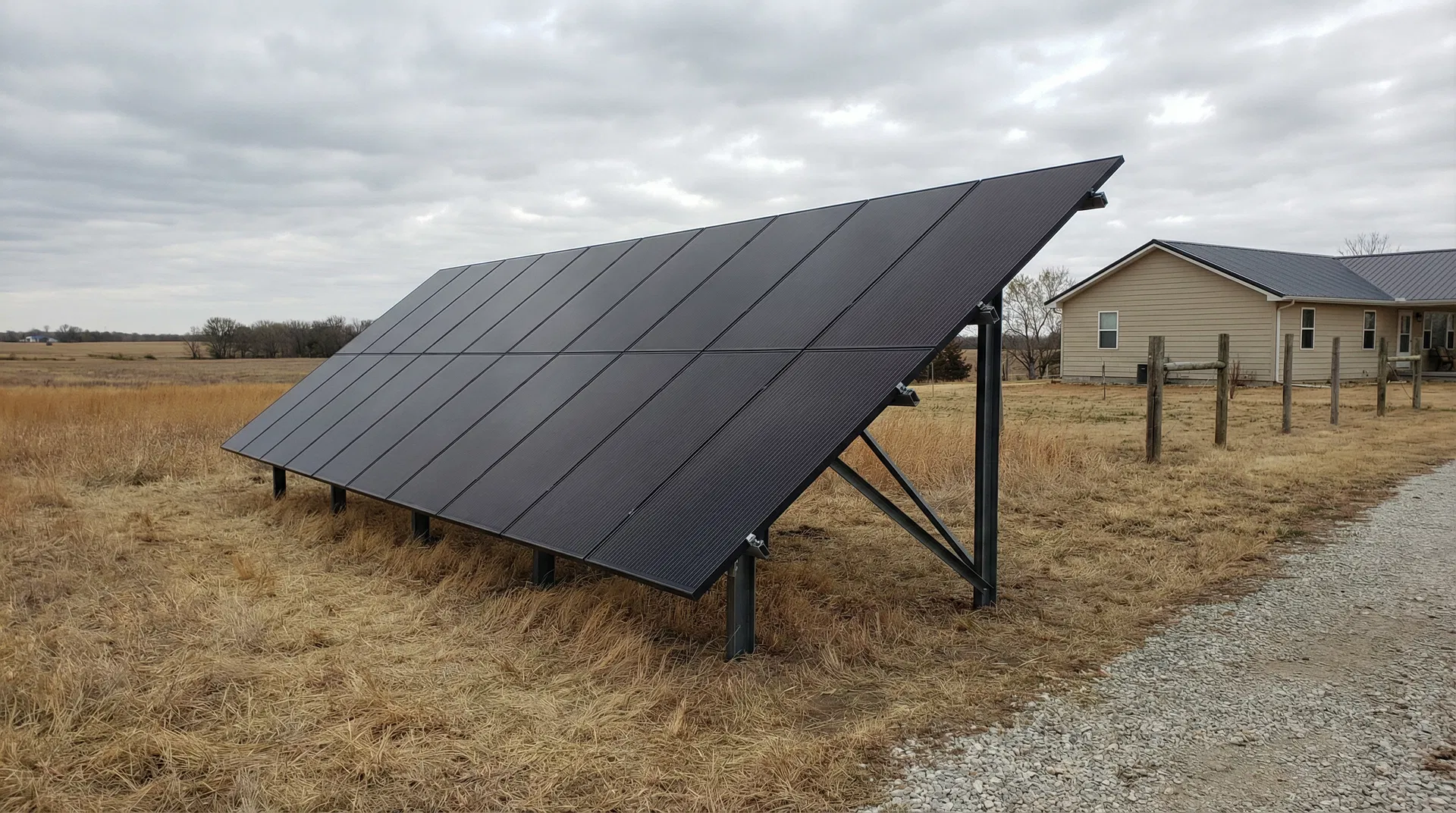
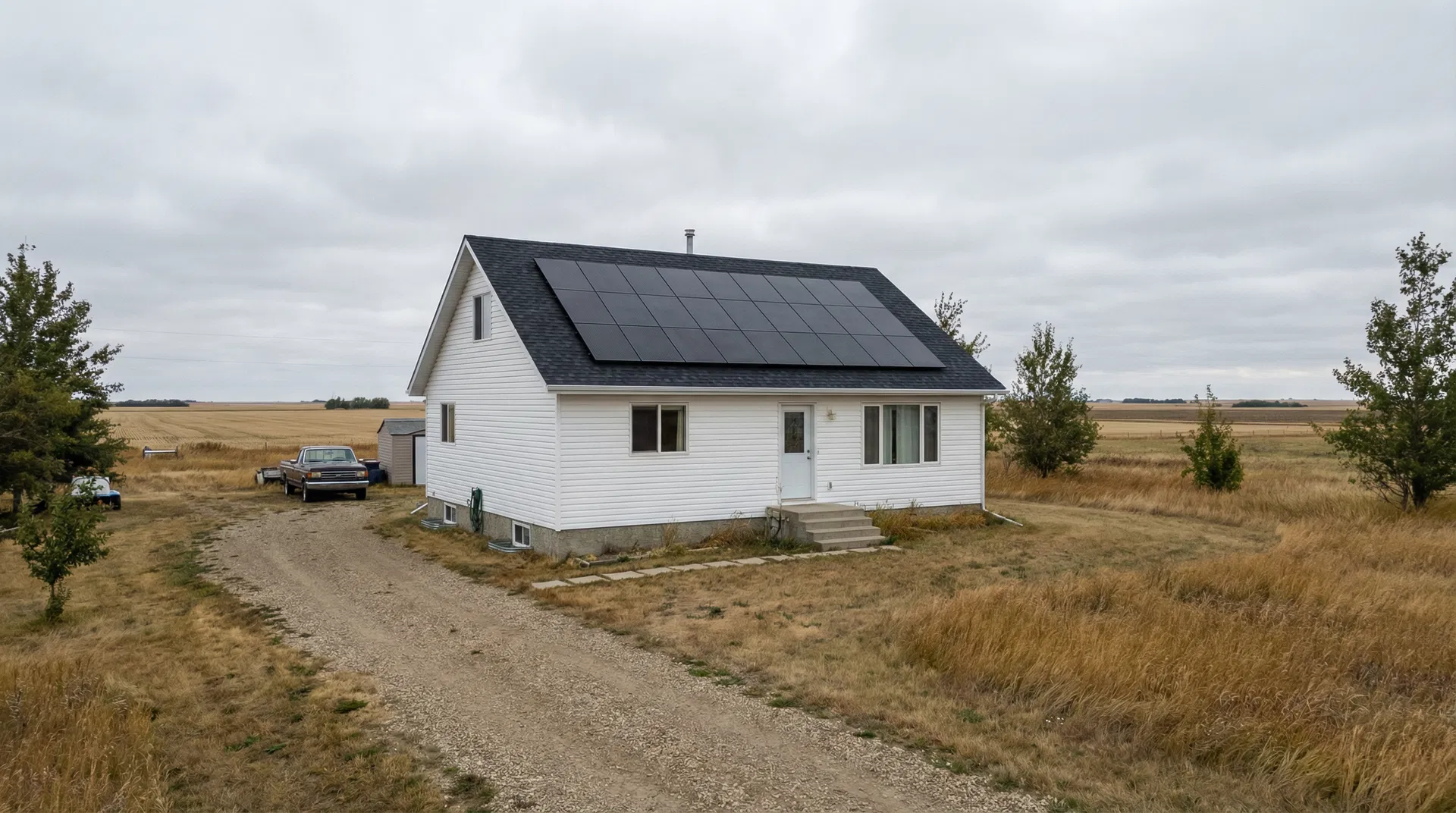
Acreage solar nanton inquiries usually start with the same question: rooftop or ground mount? The answer depends on what the site actually has to work with. A well-oriented metal roof with minimal shading is often the most cost-effective foundation for a system in this size range. A yard with spread-out buildings, mature trees near the house, or a shop roof at a poor pitch might steer the design toward a ground-mounted array instead. We install LONGi panels across both rooftop and ground-mount configurations. For most acreage systems, APsystems microinverters are the preferred inverter architecture. Each panel operates independently, so shading from a chimney, a vent stack, or a neighbouring building affects only that panel, not the entire array. On a property where part of the roof catches shade in the afternoon, that distinction in production is real. System sizes for acreage properties around Nanton typically fall between 12 kW and 18 kW, with 15 kW being a common outcome for a home-plus-shop combination. Larger loads, like grain handling or significant irrigation, can push that figure higher. We don't quote a system size until we've reviewed the 12-month usage graph on your most recent power bill and assessed the physical site conditions. That step keeps the design honest and keeps the interconnection application clean for FortisAlberta review.
Solar Planning for Nanton Properties
Acreage properties around Nanton carry electrical loads that most urban installations never see. A heated shop, a water well pump, an irrigation system, or a grain dryer can each add meaningful draw on top of a standard household load. That combination is exactly what pushes rural systems into the 12-18 kW range and makes accurate sizing critical before anything gets ordered or installed. FortisAlberta is the wire service for this area, and acreage properties connect to their grid under the micro-generation framework. That process involves a formal application, a design package, and an approval step before the system energizes. It's not complicated, but it does require accurate documentation. We design every system from the 12-month usage graph on your most recent power bill. That graph shows the seasonal swing in your consumption, which matters because a shop that runs heavy loads in winter looks very different from one used only in summer. A design built on real data produces a more honest output estimate than one built on averages. We provide honest production estimates based on your actual power bills and site conditions, not inflated projections.
Electrical Site Review for Nanton Properties
Voltage Rise
Voltage rise occurs when a solar system pushes power back onto the local distribution line and raises the voltage at the point of connection. Rural distribution lines in areas like Nanton can be long and carry fewer loads than urban feeders, which can make voltage rise more pronounced. If voltage rise exceeds the utility's threshold, the inverters will clip or shut down to protect the grid, reducing system output, so it's a design factor we assess before finalizing system size.
Single-Phase vs Three-Phase
Acreage properties in rural Alberta can be served by either single-phase or three-phase electrical service, and the distinction affects both inverter selection and the maximum system capacity the service can support. Three-phase service is common on properties with large motor loads like grain handling or commercial-grade irrigation, while many residential acreages run single-phase. We confirm the service type during the site review because it directly shapes the inverter configuration and the interconnection application.
Panel Infrastructure
Older acreage properties sometimes have electrical panels that weren't sized with a solar system in mind, and a panel that's already loaded close to its breaker capacity may need an upgrade before the solar connection can be made safely. We assess the breaker capacity, the age of the panel, and the available space for a solar breaker during the site review. If an upgrade is required, we include that in the project scope so there are no surprises after installation begins.
Service Entrance Review
The service entrance and meter base are the physical connection point between the property's wiring and FortisAlberta's distribution system, and their condition matters during the micro-generation application review. We inspect the meter base for compliance with current utility standards, because FortisAlberta may require an upgrade before they approve the interconnection if the existing installation doesn't meet their requirements. If an upgrade is needed, we document it early so it can be resolved as part of the overall project rather than discovered mid-application.
Right-Sizing Solar for Nanton Properties
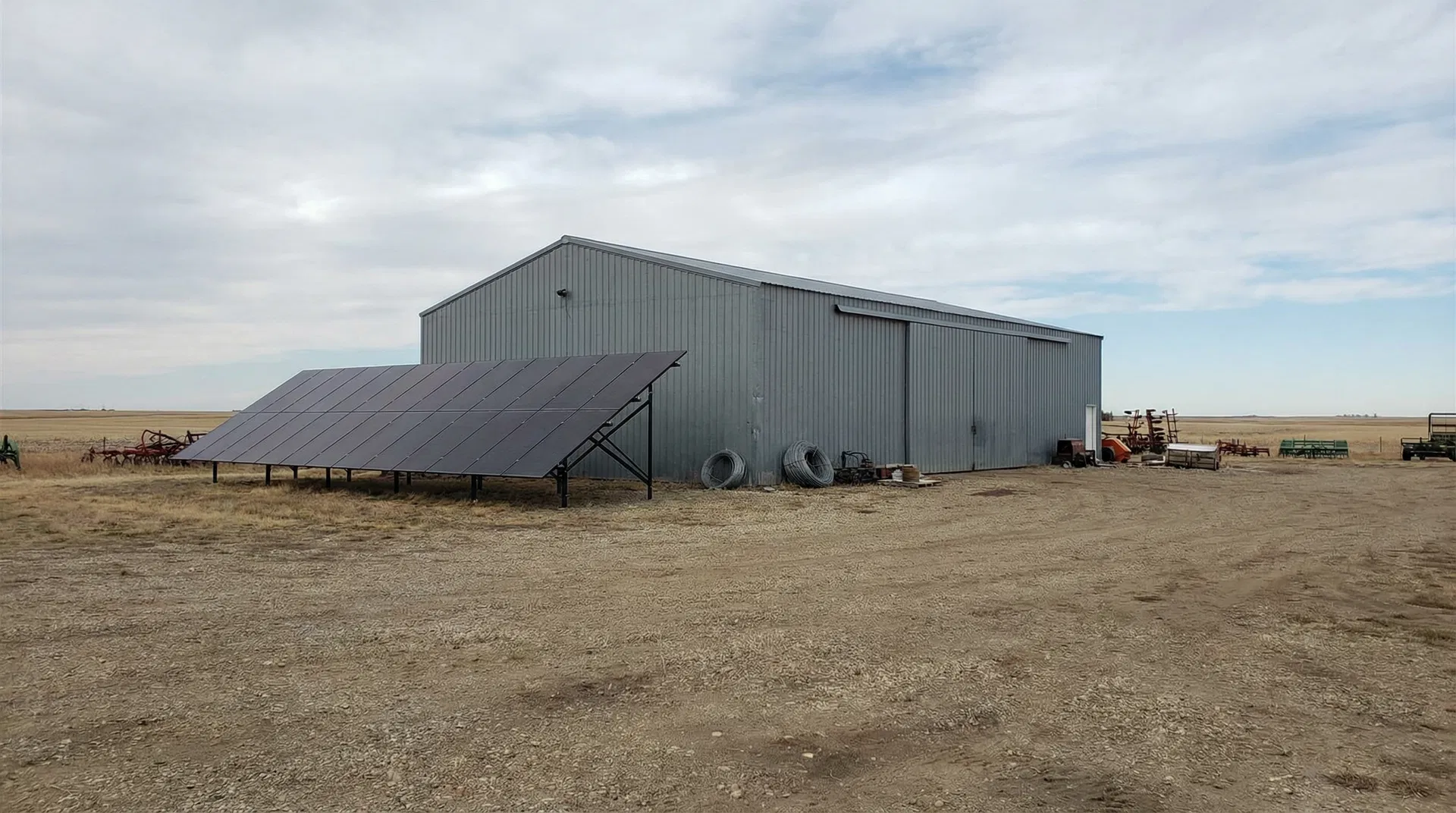
Rural acreage systems are almost always larger than what you'd see on a suburban house, and it's not just because the house is bigger. It's because the loads are different. A typical acreage near Nanton might include the home itself, a heated shop running a compressor and welder, a water well pump running year-round, and seasonal loads like a grain dryer or irrigation pump. Stack those together and you're looking at annual consumption that a 6 kW residential system doesn't come close to covering. That's why acreage systems in this area typically fall in the 12-18 kW range. But the right number for any specific property comes from one place: the 12-month usage graph on your most recent power bill. That graph shows how your consumption rises and falls across the seasons, and it's far more accurate than any rule-of-thumb estimate based on square footage or number of bedrooms. Roof mount vs ground mount is the other key decision. If the shop or house roof has the right orientation, minimal shading, and a usable pitch, rooftop is usually the cleaner option. But if the roof is shaded by a shelter belt, faces the wrong direction, or is split across multiple small building footprints, a ground-mounted array in an open area of the yard often makes more sense. We don't have a preference between the two. We have a preference for whatever the site actually supports.
Typical Load Profiles We Design For Near Nanton
Home + Heated Shop
A home with a heated attached or detached shop is one of the most common load profiles we see on acreage properties near Nanton. The shop typically adds heating, lighting, and intermittent power tool or compressor loads on top of the residential baseline. We pull the combined usage from the 12-month graph on the most recent power bill and size the array to cover the full annual consumption across both structures, not just the house.
Home + Well Pump + Irrigation
Properties with a water well and seasonal irrigation carry a consumption profile that swings significantly between summer and winter, with irrigation loads peaking in the growing season. A 15 kW to 18 kW system is a common design outcome when irrigation is a significant portion of the annual draw, because the summer production window aligns well with when that load is heaviest. The 12-month usage graph on your most recent power bill is essential for confirming that seasonal shape before we finalize array size.
Hobby Farm + Multiple Outbuildings
A hobby farm with several outbuildings, barn lighting, a tack room heater, and small equipment charging adds up to a more complex load profile than a single-structure property. Each building's contribution to total consumption needs to be accounted for in the design, and the physical layout of the property influences whether a single rooftop array covers the generation need or whether a ground mount positioned centrally on the yard is the better option. We assess both the load data and the site layout before recommending a configuration.
FortisAlberta Interconnection in Nanton
FortisAlberta is the wire service for Nanton and the surrounding area. Any acreage solar system that connects to the grid here goes through FortisAlberta's micro-generation interconnection process. That means a formal application, a technical design package, and a review by the utility before the system can be energized. Range Road Solar handles the interconnection application on your behalf. We prepare the design documentation, submit it to FortisAlberta, and coordinate the technical review. You don't need to manage the paperwork or understand the utility's internal process. What we do need from you before any of that starts is your most recent power bill. FortisAlberta bills include a 12-month usage graph, and that data shapes both the system design and the application package. Getting the design right the first time avoids back-and-forth with the utility during the review process. We don't submit applications we aren't confident in.
Project Economics and Design Review
| System Size | Annual Production | Year 1 Savings | Payback Period |
|---|---|---|---|
| 12-18 kW range, 15 kW typical |
Production, savings, and payback estimates require a property-specific system design and your most recent power bill before any figures can be confirmed.
How We Work in Nanton
Bill and Load Review
We review your power bill to understand your energy use in Nanton and size the system to your actual consumption, not a generic estimate.
Site Assessment
We assess your roof or ground area, south-facing exposure, electrical service, and utility interconnection requirements specific to your property.
Design and Utility Application
We produce a system layout, production estimate, and cost summary, then submit your micro-generation application to your utility on your behalf.
Installation and Commissioning
Our crew installs racking, panels, inverter, and electrical connections. All work is performed by licensed electricians. We commission and test before handoff.
Current Program and Interconnection Review
Utility connection review
FortisAlberta reviews all micro-generation interconnection applications for properties in its service area, including acreage systems near Nanton. Range Road Solar prepares the full design package and submits the application on your behalf, so the technical documentation is handled without you needing to navigate the utility's process directly.
Current program review
Residential, farm, and acreage solar installations may qualify under various provincial or federal programs, and eligibility rules change. We review what's currently available and applicable to your property type at the time of the design review, so you're working with current information rather than outdated program summaries.
Frequently Asked Questions
Get a Solar Assessment for Nanton
Submit a recent power bill and we will review your consumption and provide an honest assessment for your Nanton property. No obligation.
(587) 330-7502 Book a CallRelated Resources