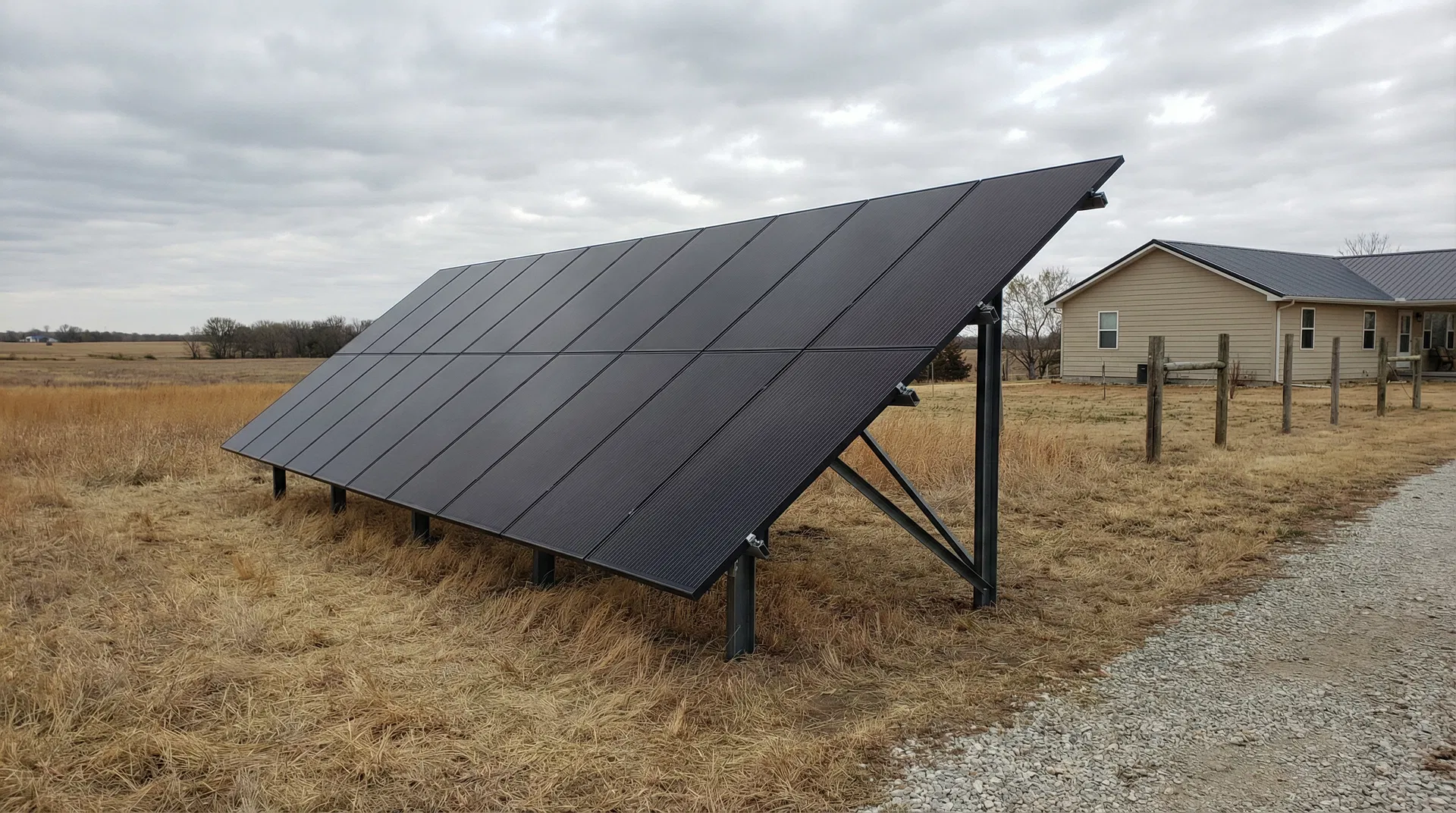
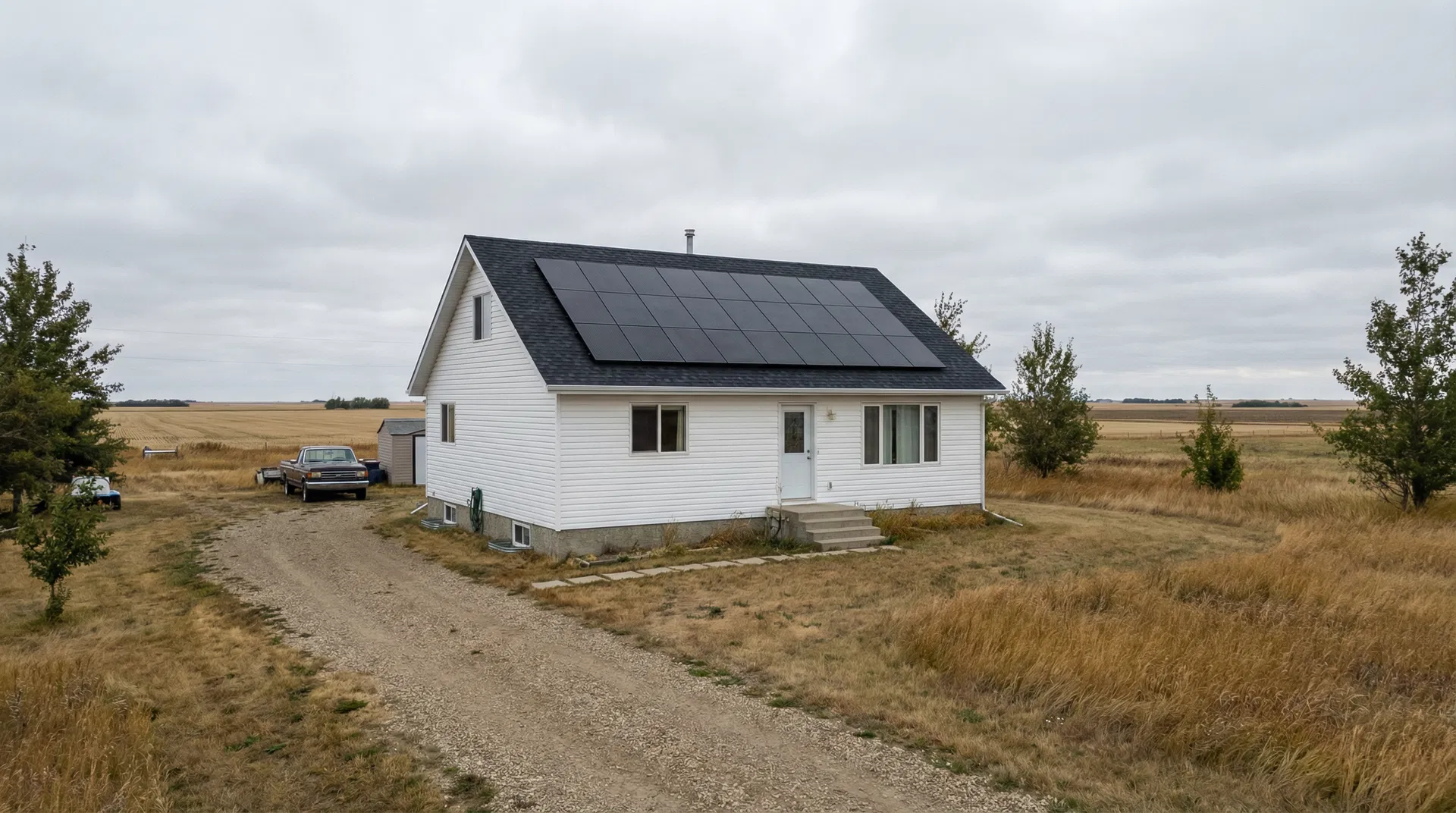
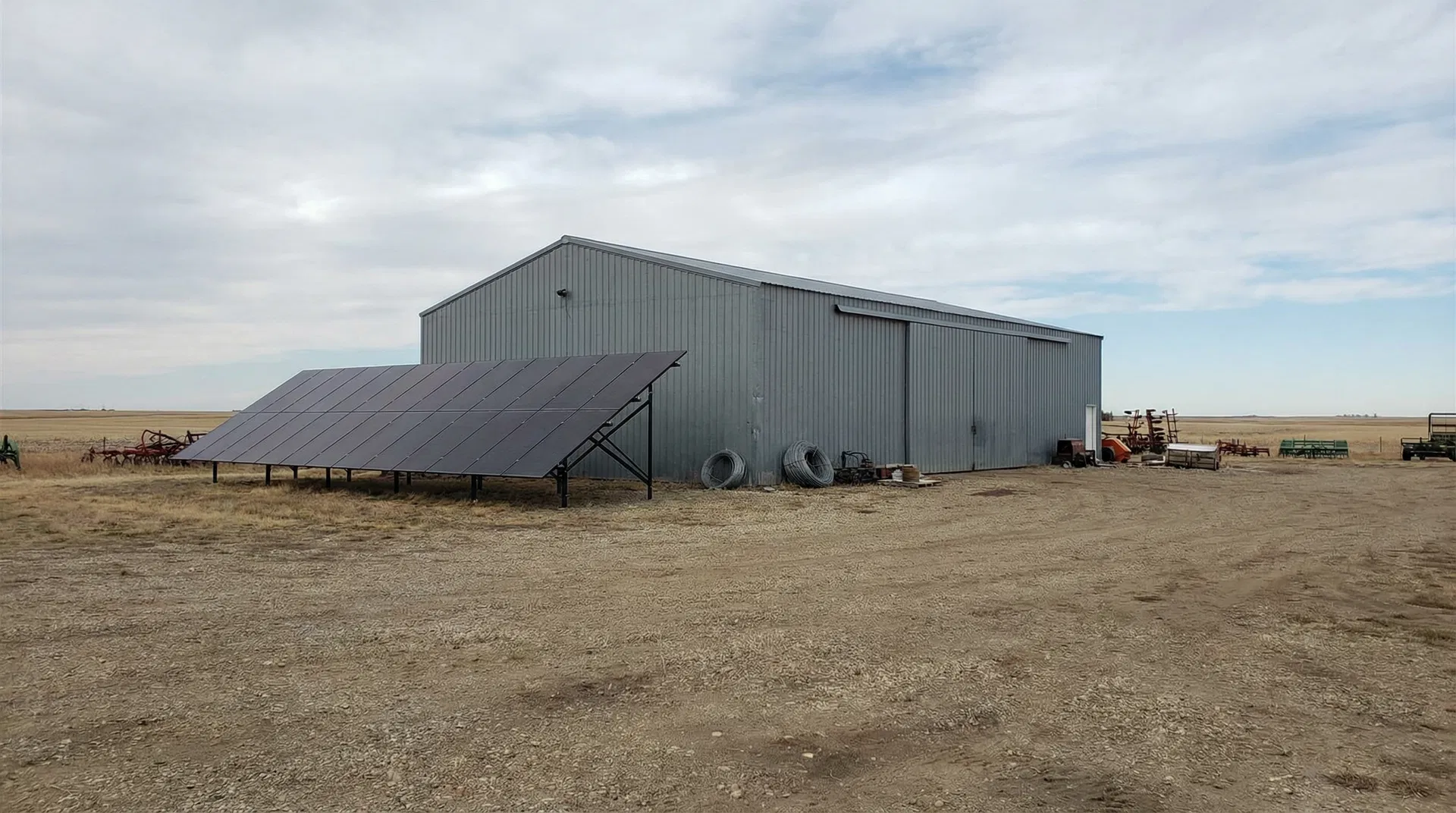
Commercial solar nanton projects run from 15 kW up to 100 kW depending on the load profile. A small agri-business or retail operation might land around 20-30 kW. A larger processing facility, feedlot support building, or multi-tenant commercial property could push toward the upper end of that range. We don't guess at system size. We pull the 12-month usage graph from your most recent power bill and build the design from that data. Every commercial installation we do uses LONGi solar panels. They're reliable, well-warranted, and widely used across Canadian agricultural and commercial applications. For inverter selection, we use APsystems microinverters on smaller commercial systems where panel-level output and monitoring matter. On larger installations, string inverters are typically the more practical choice given array size and wiring runs. The right inverter architecture depends on your roof or ground-mount layout, shading conditions, and service configuration, and we'll specify that during the design review. Roof-mounted systems work well for flat commercial roofs and metal agricultural buildings with the right orientation. Ground-mount racking is often the better call when roof access is limited, the pitch isn't optimal, or there's open yard space close to the main service entrance. We assess both options before making a recommendation. Properties near Nanton sometimes have older electrical infrastructure, so we include a service entrance and panel review as part of the design process. If upgrades are needed to support the system, we tell you upfront.
Solar Planning for Nanton Properties
Commercial properties in and around Nanton carry real electrical loads. Grain handling equipment, shop heating, refrigeration, and irrigation can all stack up on the same meter, and that billing pattern is exactly what a well-designed solar system is built to address. We start with your most recent power bill, not a rule-of-thumb estimate, because the 12-month usage graph on that bill tells us how your consumption shifts through the seasons. That's the information we need to size a system that actually performs for your operation, not one that looks good in a proposal and underdelivers in February. Commercial systems in this size range also tend to qualify for the Canada Revenue Agency's Class 43.2 capital cost allowance, which affects how the project economics look on paper. We confirm program eligibility at design time, because rules change. If you're operating a business or farm property near Nanton and your electrical bill has been climbing, a design review is the right place to start. We'll show you what a system sized to your actual load would look like, what it costs, and what the interconnection process involves with FortisAlberta.
Electrical Site Review for Nanton Properties
Voltage Rise
Voltage rise happens when solar generation pushes voltage on the distribution line above the allowable limit at the point of connection. In rural areas served by longer distribution runs, this condition can appear more readily than in dense urban grids. When voltage rise is a factor, it can cause inverters to throttle output or shut down, which directly affects how much of the system's rated capacity actually produces energy. We assess voltage rise conditions during the design phase so the system is sized and configured to operate within FortisAlberta's limits.
Single-Phase vs Three-Phase
Commercial and agricultural properties in rural Alberta may have single-phase or three-phase electrical service, and the distinction matters for how a solar system is designed. Three-phase service supports larger inverter configurations and higher total system capacity without the balancing constraints that apply to single-phase connections. We confirm your service type early in the design process because it directly affects inverter selection, array configuration, and the maximum system size that makes sense for your property.
Panel Infrastructure
Older commercial and agricultural buildings sometimes have electrical panels that weren't sized with a solar connection in mind. We assess the main breaker capacity, the available bus space, and the overall condition of the panel before finalizing the system design. If the existing panel can't safely support the solar connection, we'll identify what an upgrade involves and include that in the project scope so there are no surprises at installation time.
Service Entrance Review
The meter base and service entrance are the physical connection point between your property and FortisAlberta's grid, and their condition is part of what FortisAlberta reviews during the micro-generation application process. We inspect the meter base for weathering, capacity, and compatibility with bi-directional metering requirements before the application goes in. If an upgrade is required, we identify it during the site review so it can be addressed before the application is submitted, rather than after.
Right-Sizing Solar for Nanton Properties
Commercial and agricultural properties carry more electrical load than a typical residential home, and the sizing approach has to reflect that. A business property might be running HVAC, refrigeration, shop equipment, and office loads all on the same meter. A farm operation could add grain handling, bin aeration, water pumps, and heated outbuildings on top of a house. Those loads don't behave the same way month to month, and that variation is exactly why we size from data, not assumptions. The 12-month usage graph on your most recent power bill shows us how your consumption moves through the year. That graph tells us whether you're a summer-heavy operation, a winter-heavy one, or relatively flat year-round. A system sized without that information is likely to be wrong in one direction or the other. We also look at where to put the array. Roof-mounted systems work well on metal commercial buildings with good south-facing exposure and no major shading. But on properties where the roof isn't ideal, where there's tree cover, where outbuildings block the southern pitch, or where there's simply more usable ground than roof, a ground-mount installation is often the better answer. It gives us full control over orientation and tilt, and it keeps the system accessible for cleaning and inspection. We'll recommend the right approach after we've seen the site and reviewed your power bill. We don't use rule-of-thumb sizing because it doesn't account for what's actually happening at your property.
Typical Load Profiles We Design For Near Nanton
Agri-Business with Shop and Office
Operations that combine a working shop with office or retail space have load that runs across multiple circuits and varies significantly by season. Shop heating, compressors, lighting, and office HVAC can produce a load profile that justifies a system in the 25-40 kW range. We size from the 12-month usage graph on your most recent power bill and confirm the right system size through a site-specific design.
Grain and Crop Storage Facility
Bin aeration fans, grain dryers, auger motors, and handling equipment create concentrated electrical demand that often runs hardest in fall during harvest. A facility with multiple bins and a dryer can support a 40-75 kW system depending on the load profile and available roof or ground-mount space. Your most recent power bill and a site assessment are what we use to confirm the right configuration.
Commercial Building or Light Industrial
Light industrial and commercial buildings with consistent year-round loads, including HVAC, lighting, process equipment, and refrigeration, are often well-suited to solar because the load is predictable and substantial. Systems in the 20-60 kW range are common for this property type. We review your actual usage data and site conditions before specifying any system size.
FortisAlberta Interconnection in Nanton
FortisAlberta is the wire service for Nanton, which means your micro-generation application goes through FortisAlberta's interconnection process. We handle the full application package on your behalf. That includes the system design documentation, single-line diagrams, equipment specifications, and any site information FortisAlberta requires to review the connection. What we can't control is FortisAlberta's internal review timeline, and we don't quote one. Approval timelines depend on FortisAlberta's current queue and the specifics of your service entrance. What we can tell you is that submitting a complete, accurate application package is the best way to avoid back-and-forth that slows things down. We've done this enough times that we know what FortisAlberta expects to see. Once the application is approved and the system is commissioned, FortisAlberta meters the generation. How that credit is settled depends on your retail electricity arrangement and current utility rules, which we'll review with you during the design process. We don't make assumptions about credit carryover or payout rules. We confirm the current terms and explain what they mean for your specific setup.
Project Economics and Design Review
| System Size | Annual Production | Year 1 Savings | Payback Period |
|---|---|---|---|
| 15-100 kW range, 30 kW typical |
Production, savings, and payback estimates require a property-specific design and your most recent power bill.
How We Work in Nanton
Bill and Load Review
We review your power bill to understand your energy use in Nanton and size the system to your actual consumption, not a generic estimate.
Site Assessment
We assess your roof or ground area, south-facing exposure, electrical service, and utility interconnection requirements specific to your property.
Design and Utility Application
We produce a system layout, production estimate, and cost summary, then submit your micro-generation application to your utility on your behalf.
Installation and Commissioning
Our crew installs racking, panels, inverter, and electrical connections. All work is performed by licensed electricians. We commission and test before handoff.
Current Program and Interconnection Review
Utility connection review
FortisAlberta reviews grid connection applications for commercial solar installations in Nanton as part of their micro-generation program. Range Road Solar prepares and submits the full design package, including single-line diagrams, equipment specs, and site documentation. We handle the application so you don't have to navigate the process on your own.
Current program review
Commercial and agricultural solar installations may be eligible for federal tax treatment under current Canada Revenue Agency rules, and other programs may apply depending on your business structure and how the project is financed. We review current eligibility against your specific situation at design time, because program rules and thresholds change. We don't apply outdated information to your project.
Frequently Asked Questions
Get a Solar Assessment for Nanton
Submit a recent power bill and we will review your consumption and provide an honest assessment for your Nanton property. No obligation.
(587) 330-7502 Book a Call