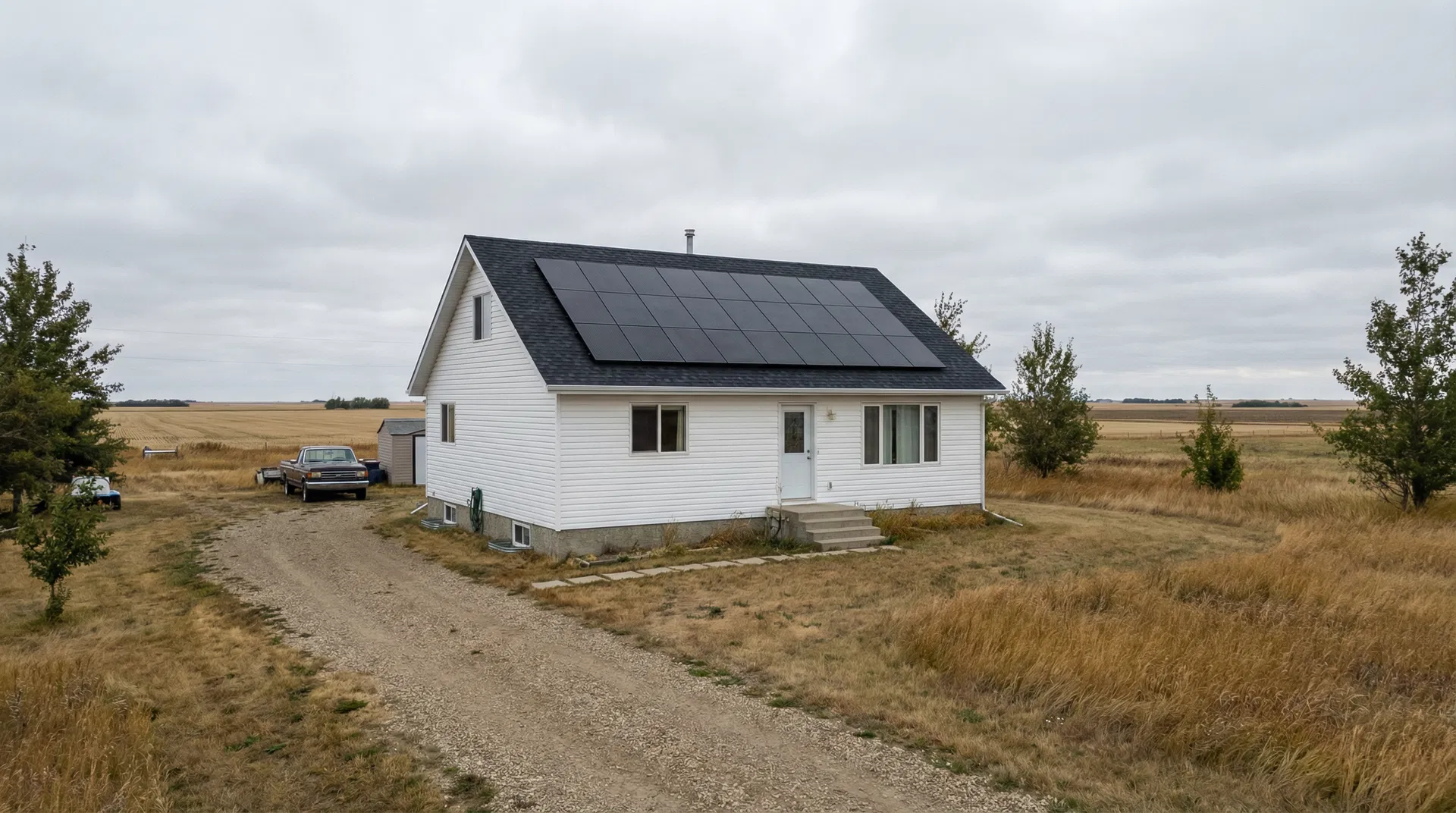
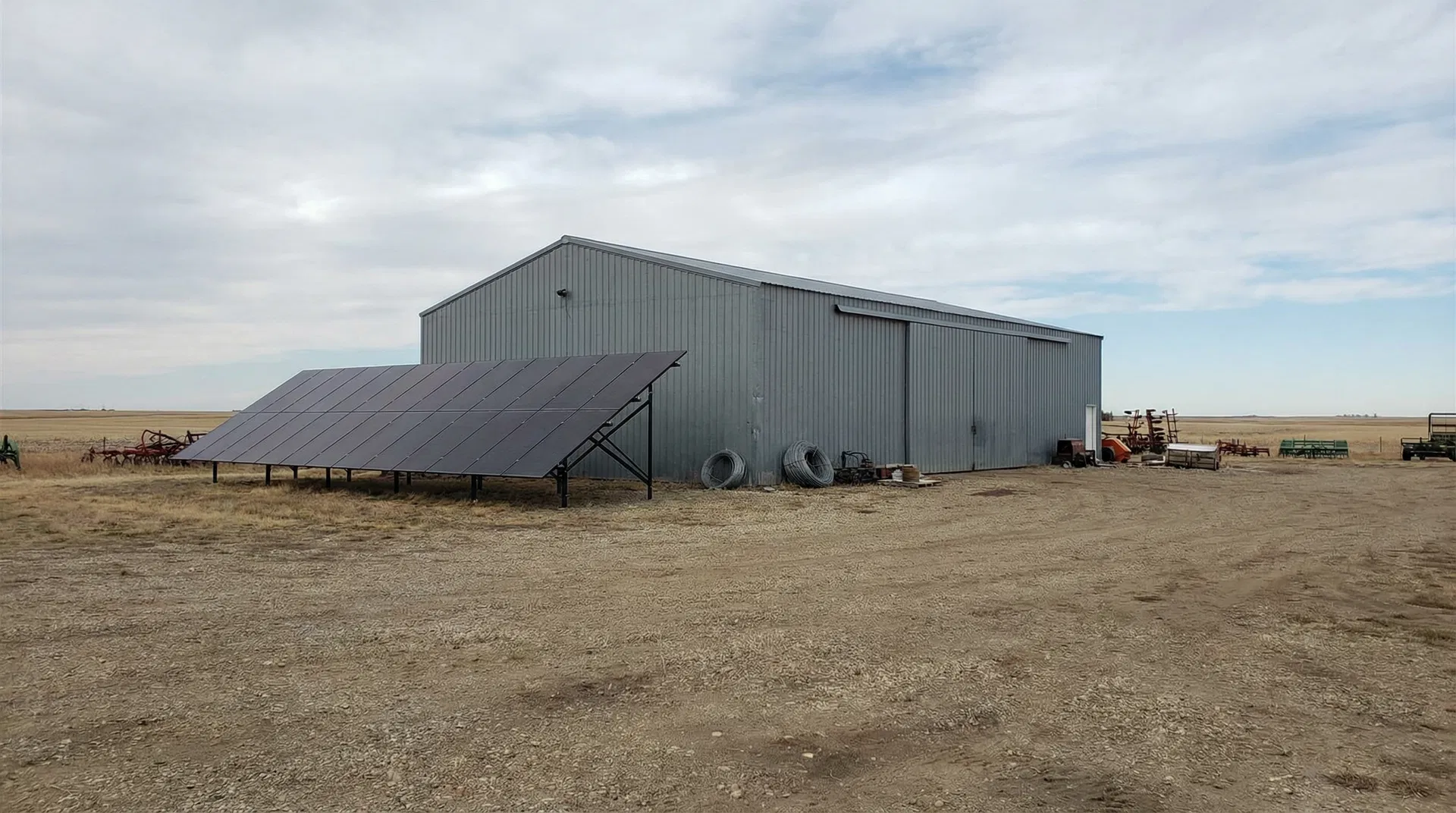
Solar installation in Nanton starts the same way for every property: a review of your roof or ground-mount site, your electrical service, and the usage graph on your most recent power bill. From there we design a grid-tied system sized to your actual load, typically in the 8 to 12 kW range for a residential rooftop, with 10 kW being the size we see most often. We build these systems around LONGi panels and APsystems microinverters. LONGi's panels give us a strong watt-per-dollar baseline for the panel counts we're laying out on in-town roofs and acreage builds alike, and APsystems microinverters let each panel operate independently, which matters on roofs with dormers, chimneys, or partial tree shade from established yards. Module-level monitoring also means if one panel underperforms, it doesn't drag down the whole array, and you can see it in the app rather than guessing. Mounting depends on the property. Homes on standard asphalt shingle roofs usually get a standard rail-mounted rooftop array. Acreage properties sometimes make more sense as a ground mount, especially where the roof has a poor pitch or orientation, or where trees block the south-facing slope but there's open land to work with. We walk the site before we recommend either option. Every installation includes the engineering package and the paperwork for the FortisAlberta interconnection application, so you're not the one filling out utility forms or chasing down a micro-generation approval. We handle design, permitting support, and the utility application as part of the project, not as an add-on.
Solar Planning for Nanton Properties
Nanton, Alberta is home to about 2,167 people, per the 2021 census, a slight dip from 2,181 in the previous count. That's a small enough property base that we don't run a cookie-cutter design: every system we propose starts with the actual roof or yard in front of us, not an estimate pulled from a template. Visitors come through for the Bomber Command Museum of Canada and the Canadian Grain Elevator Discovery Centre, and we've walked plenty of roofs within sight of both. Nanton's heraldic emblem is a Wyvern, a detail most people notice on local signage long before they ever think about kilowatts. Environment Canada's climate normals put the nearest long-term station, Calgary Int'l A, at 2,396.3 bright sunshine hours a year, and NRCan's photovoltaic maps list a specific yield of 1,330 kWh per kW of installed capacity for this part of the province. Those are regional reference numbers, not a promise for any particular roof. What a system here actually produces depends on orientation, shading, tilt, and the inverter configuration we choose, which is why we confirm output with a site design and your most recent power bill before we quote anything.
Electrical Site Review for Nanton Properties
Voltage Rise
Voltage rise happens when the distance and wire gauge between your inverter and the utility connection point cause voltage to climb higher than the grid's normal range, and rural distribution lines are more prone to it than short urban runs. If voltage rise pushes too high, grid-tied inverters are designed to cut back output or shut down to protect the system, a response called clipping. We check feeder distance and conductor sizing during the site visit so we size and place equipment to avoid running into that limit.
Single-Phase vs Three-Phase
Properties in this area can have either single-phase or three-phase electrical service, depending on when the property was built and what it was originally wired to run. That distinction affects which inverter models we can use and how much total system capacity the service can support, since three-phase connections generally allow for larger systems than single-phase. We confirm which service type your property has before finalizing equipment selection.
Panel Infrastructure
Rural properties around here often have electrical panels that are decades old, and an older panel may not have the breaker capacity or busbar rating to add a solar backfeed breaker safely. We check the panel's age, amperage rating, and available breaker space as part of the site review. If the existing panel can't support the new system, an upgrade to the panel or a new breaker configuration becomes part of the project scope before installation.
Service Entrance Review
We inspect the service entrance and meter base condition on every site visit, since FortisAlberta's micro-generation application requires the meter base to meet current standards before it can host a generation source. A worn or outdated meter base can hold up the interconnection application even after the solar system itself is ready to go. When an upgrade is needed, we identify it early and fold it into the project timeline and scope rather than discovering it after installation.
Right-Sizing Solar for Nanton Properties
Rural Alberta properties typically need a bigger system than a comparable house in a city subdivision, because the electrical load usually isn't just the house. A property near Nanton might be running a home plus a heated shop, a well pump, grain handling equipment, or irrigation, and each of those adds to the load a system has to be sized around. That's a different sizing problem than a single-family urban rooftop. Roof versus ground mount comes down to what the property actually offers. If the roof has good south or west exposure and enough unshaded area, a rooftop array is usually the simpler and more cost-effective build. If mature trees shade the roof, the pitch or orientation works against solar, or the yard is spread out with open land available, a ground-mounted array can make more sense, even though it's a different foundation and wiring scope than a rooftop job. Either way, we don't size off a rule of thumb like watts per square foot of house. We pull the 12-month usage graph off your most recent power bill and size the system against your actual monthly consumption pattern, then confirm that against the site conditions we find during the walk-through. That combination, your real usage history plus the physical site, is what determines the final system size, not a generic formula.
Typical Load Profiles We Design For Near Nanton
Home + Heated Shop
This is one of the most common profiles we design around on acreages in this area: a house plus a detached shop with electric heat, which can meaningfully increase the property's annual load compared to the house alone. We size the system from the usage pattern on your most recent power bill rather than estimating shop heat loads separately. If the shop also runs power tools or a welder, that shows up in the usage graph too, and we size around it.
Grain Handling and Irrigation
Farm properties with grain bins, augers, or an irrigation pivot have load spikes that look very different from steady household use, often short bursts of high draw during specific seasons. A system sized only for average daily use would undersize for these properties. We look at the full 12-month usage graph on your power bill specifically to catch those seasonal spikes before we finalize a system size.
In-Town Home, Standard Load
A standard in-town Nanton property, house only, with no shop or farm equipment, has the most predictable load profile we design for. These typically land toward the smaller end of the 8 to 12 kW residential range, though the actual number still comes from your power bill's usage graph and the roof's available space and orientation, not an assumption based on home size alone.
FortisAlberta Interconnection in Nanton
Nanton properties are served by FortisAlberta for electricity distribution, which means any grid-tied solar system here goes through FortisAlberta's micro-generation interconnection process before it can be switched on. We handle that application as part of your project: the single-line diagram, equipment specifications for the LONGi panels and APsystems microinverters, and the paperwork FortisAlberta requires to review a new generation source on their lines. We don't control how FortisAlberta schedules or reviews applications, and we're not going to guess at a timeline here. What we can tell you is that we prepare the application correctly the first time, which is the single biggest factor in avoiding back-and-forth delays. Your retailer, not FortisAlberta, handles how production credits show up on your bill, and the specifics depend on which retailer you're with and the current rules at the time your system is energized. We'll walk you through what applies to your account during the design review.
Project Economics and Design Review
| System Size | Annual Production | Year 1 Savings | Payback Period |
|---|---|---|---|
| 8-12 kW range, 10 kW typical |
Production, savings, and payback figures are only accurate once we've completed a property-specific design using your most recent power bill.
How We Work in Nanton
Bill and Load Review
We review your power bill to understand your energy use in Nanton and size the system to your actual consumption, not a generic estimate.
Site Assessment
We assess your roof or ground area, south-facing exposure, electrical service, and utility interconnection requirements specific to your property.
Design and Utility Application
We produce a system layout, production estimate, and cost summary, then submit your micro-generation application to your utility on your behalf.
Installation and Commissioning
Our crew installs racking, panels, inverter, and electrical connections. All work is performed by licensed electricians. We commission and test before handoff.
Current Program and Interconnection Review
Utility connection review
FortisAlberta reviews every new grid-tied solar system in this area through its micro-generation interconnection process before it's allowed to operate. Range Road Solar prepares and submits the full design package, including equipment specs for the LONGi panels and APsystems microinverters, so you're not navigating that application yourself.
Current program review
Whether a property qualifies for farm, commercial, or residential treatment under current utility and program rules can depend on how the property is used and how it's connected. We review that eligibility against the rules in place at the time of your design, rather than assuming your property fits the same category as the one down the road.
Frequently Asked Questions
Get a Solar Assessment for Nanton
Submit a recent power bill and we will review your consumption and provide an honest assessment for your Nanton property. No obligation.
(587) 330-7502 Book a CallRelated Resources