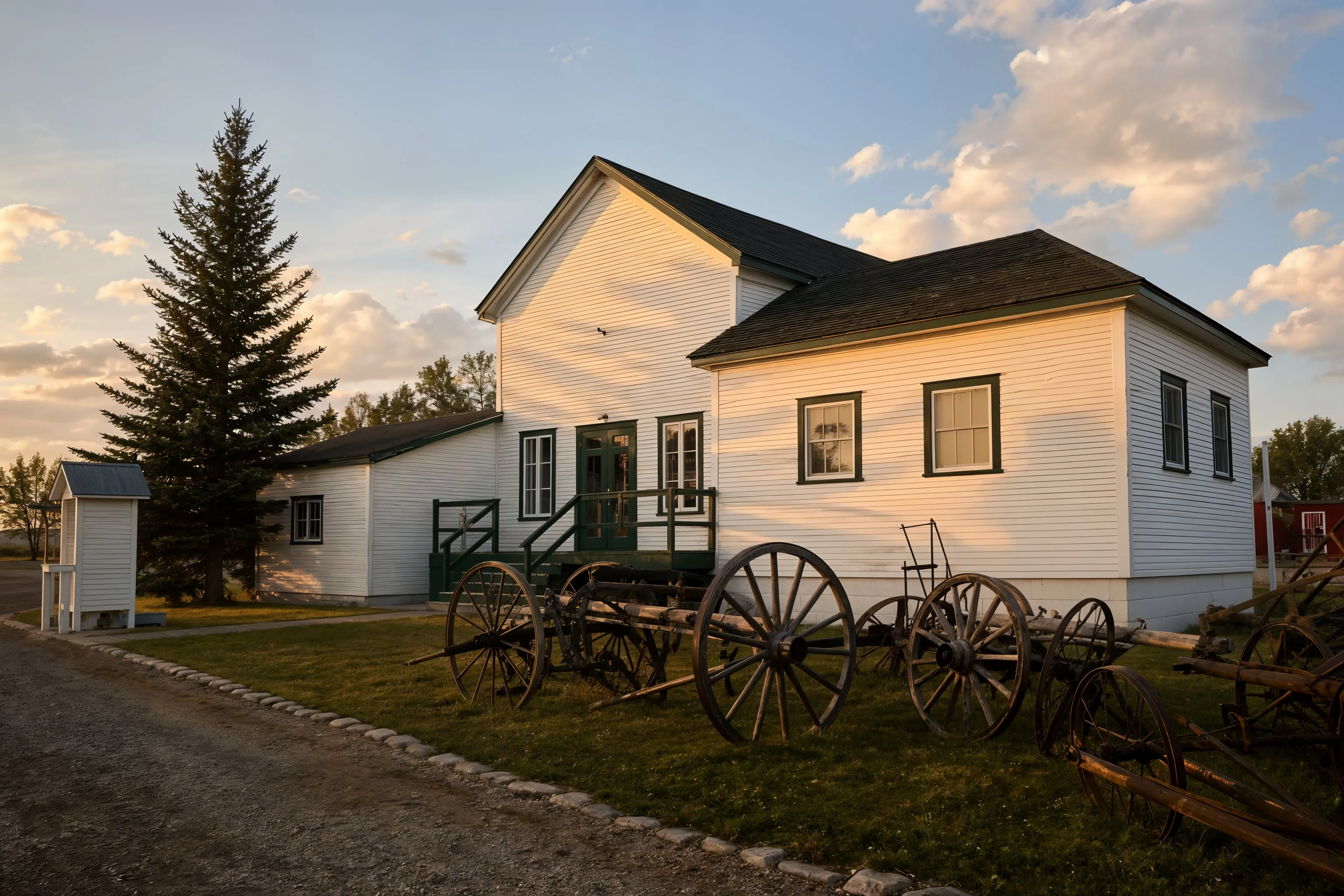
Farm solar Claresholm installations start with the load, not the roof. Grain operations, cattle operations, and mixed farms around the area typically run several big draws at once: bin dryers, augers, waterers, shop heat, and sometimes irrigation pumps, and that's before you count the house. We size systems in the 20 to 50 kW range for these properties, with 25 kW as a common starting point once we've walked the site and reviewed your most recent power bill. Ground mount arrays are our default for larger farm systems because they let us place panels where the sun and the yard layout actually line up, clear of shelterbelts, grain bins, and machine traffic, rather than forcing a system onto a roof that wasn't built with solar in mind. Every system uses LONGi panels paired with APsystems microinverters. Microinverters make sense on farm properties because each panel operates independently: if one string gets shaded by a bin or a tree line for part of the day, the rest of the array keeps producing instead of the whole string dropping with it. That matters on acreages where shading patterns change throughout the year. For rooftop installs on shops or outbuildings with good south or west exposure and a sound roof structure, we'll lay out panel strings to match the usable area and the building's electrical service. Whether it's ground mount or rooftop, the design comes from a walk of the property and a look at your actual usage, not a generic farm template.
Solar Planning for Claresholm Properties
Claresholm has grown steadily, with population climbing to 3,804 residents in the most recent census count, and agriculture remains the economic anchor for the area around it. Incorporated on August 31, 1905, the area's long history as a farming community shows up in the kind of properties we design for: grain operations, cattle operations, and mixed farms spread across sections of land rather than a single residential lot. Environment Canada's annual bright sunshine normals put the area at 2,300.6 hours of bright sunshine a year, a figure we mention for context only, not as a production estimate. What a specific system actually produces depends on roof or ground mount orientation, shading from shelterbelts and outbuildings, and the loads a property is running, not a regional average. Farm solar planning here starts differently than a standard house plan. We're sizing around grain dryers, livestock waterers, shop heat, and irrigation pumps, not just a furnace and a hot water tank. Every design we bring to a property here starts with a site visit and your most recent power bill, because that's where the real numbers live.

Electrical Site Review for Claresholm Properties
Voltage Rise
Voltage rise happens when power pushes back onto a long rural distribution line, and the farther a property sits from the transformer, the more it can matter. On agricultural properties with long service runs to a shop, bin yard, or second meter, we check for this during the site review because it affects how the inverter responds under load. We factor voltage rise into inverter selection and system sizing so the array doesn't trip or clip once it's in service.
Single-Phase vs Three-Phase
Rural Alberta properties can have single phase or three phase electrical service, and farms in this area are no exception, grain and livestock operations sometimes run three phase for motors and augers while the house stays single phase. Which one you have determines which inverters we can use and how much capacity the system can carry. We confirm your service type on site before finalizing equipment, not after.
Panel Infrastructure
Older farm properties often have electrical panels that were sized decades ago for a house and a yard light, not a grain dryer and a solar array. We check breaker capacity, panel age, and available slots as part of every site visit. If the panel can't support the added system, an upgrade to the panel or a subpanel is scoped into the project before installation, not discovered partway through.
Service Entrance Review
We review the service entrance and meter base condition on every property because FortisAlberta's micro-generation application requires that equipment to be in good working order. On farm sites with older or weather-worn meter bases, that review catches issues before they hold up the application. If an upgrade is needed, we scope it into the project plan so it's accounted for up front rather than becoming a surprise during inspection.
Right-Sizing Solar for Claresholm Properties
Farm systems run bigger than a house system for a simple reason: there's more load. A property with a home, a heated shop, grain handling equipment, and maybe an irrigation pump isn't drawing power like a single-family house in town, it's running several separate operations off the same service. That's part of why the size range for farm solar sits at 20 to 50 kW, well above a typical residential system. Roof or ground mount is the next decision, and it comes down to the property itself. If the roof has good south or west exposure, decent pitch, and isn't shaded by trees or neighboring buildings, a rooftop array on the shop or barn can work well. If the roof is shaded, poorly pitched, or the layout just doesn't offer enough usable area, and there's open yard space available, ground mount usually wins out, especially for larger arrays where panel count matters more than rooftop space. Either way, we don't size a system off a rule of thumb like a flat number of panels per acre or per building. We size it from the 12-month usage graph on your most recent power bill, which shows how your loads move through the year, combined with a site design that accounts for shading, orientation, and available space. That combination, your actual usage and the physical site, is what determines the final system size, not a generic farm formula.
Typical Load Profiles We Design For Near Claresholm
Home Plus Heated Shop
This is a common setup on smaller acreages: a house plus a heated workshop used for equipment storage and repairs. The shop's heat load and any welding or compressor equipment add a steady draw on top of the house. We size the system from the usage pattern on your most recent power bill rather than guessing at shop hours.
Grain Operation with Bin Drying
Grain drying is seasonal but heavy, bin fans and dryers can pull a lot of power for a concentrated stretch of the year rather than a steady year-round load. That kind of spike shows up clearly on the usage graph from your most recent power bill, and we size around it rather than around an average month.
Livestock Operation with Water and Feed Systems
Livestock properties often run continuous loads year round: water pumps and heated waterers, feed equipment, and barn ventilation or lighting. That steadier baseline load, read off your most recent power bill, shapes a different system size and layout than a seasonal grain operation would.
FortisAlberta Interconnection in Claresholm
FortisAlberta is the wire service for properties in and around Claresholm, and any grid-tied solar system here goes through their micro-generation interconnection process. Range Road Solar handles that application from start to finish: the technical drawings, the equipment specifications for your LONGi panels and APsystems microinverters, and the paperwork FortisAlberta requires to review a farm-sized system. Agricultural properties often have different service configurations than a standard lot, single phase or three phase, older service entrances, or multiple meters across a yard site, and we account for that in the application rather than treating every farm the same. We don't make claims here about how long FortisAlberta's review will take or how credits settle on your account. Those are questions FortisAlberta and your electricity retailer answer directly, and the answers can change. What we control is submitting a complete, accurate application the first time, sized correctly for your property, so the review isn't held up by something on our end.
Project Economics and Design Review
| System Size | Annual Production | Year 1 Savings | Payback Period |
|---|---|---|---|
| 20-50 kW range, 25 kW typical |
Production, savings, and payback figures require a property-specific design using your most recent power bill and are provided only after that review.
How We Work in Claresholm
Bill and Load Review
We review your power bill to understand your energy use in Claresholm and size the system to your actual consumption, not a generic estimate.
Site Assessment
We assess your roof or ground area, south-facing exposure, electrical service, and utility interconnection requirements specific to your property.
Design and Utility Application
We produce a system layout, production estimate, and cost summary, then submit your micro-generation application to your utility on your behalf.
Installation and Commissioning
Our crew installs racking, panels, inverter, and electrical connections. All work is performed by licensed electricians. We commission and test before handoff.
Current Program and Interconnection Review
Utility connection review
FortisAlberta reviews every grid connection application for a new solar system in this area, including the agricultural and commercial installs we design. Range Road Solar prepares and submits the full design package on your behalf, equipment specifications, drawings, and the required forms. We don't guess at what FortisAlberta will approve; we submit a complete application and work through their process directly.
Current program review
Eligibility for commercial, farm, and residential solar programs changes, and we review what currently applies to your property type and project scope at the time we design your system. That review happens before we finalize a proposal, not after. We don't rely on outdated program information, we check what's actually in effect when your project is designed.

Frequently Asked Questions
Get a Solar Assessment for Claresholm
Submit a recent power bill and we will review your consumption and provide an honest assessment for your Claresholm property. No obligation.
(587) 330-7502 Book a CallRelated Resources