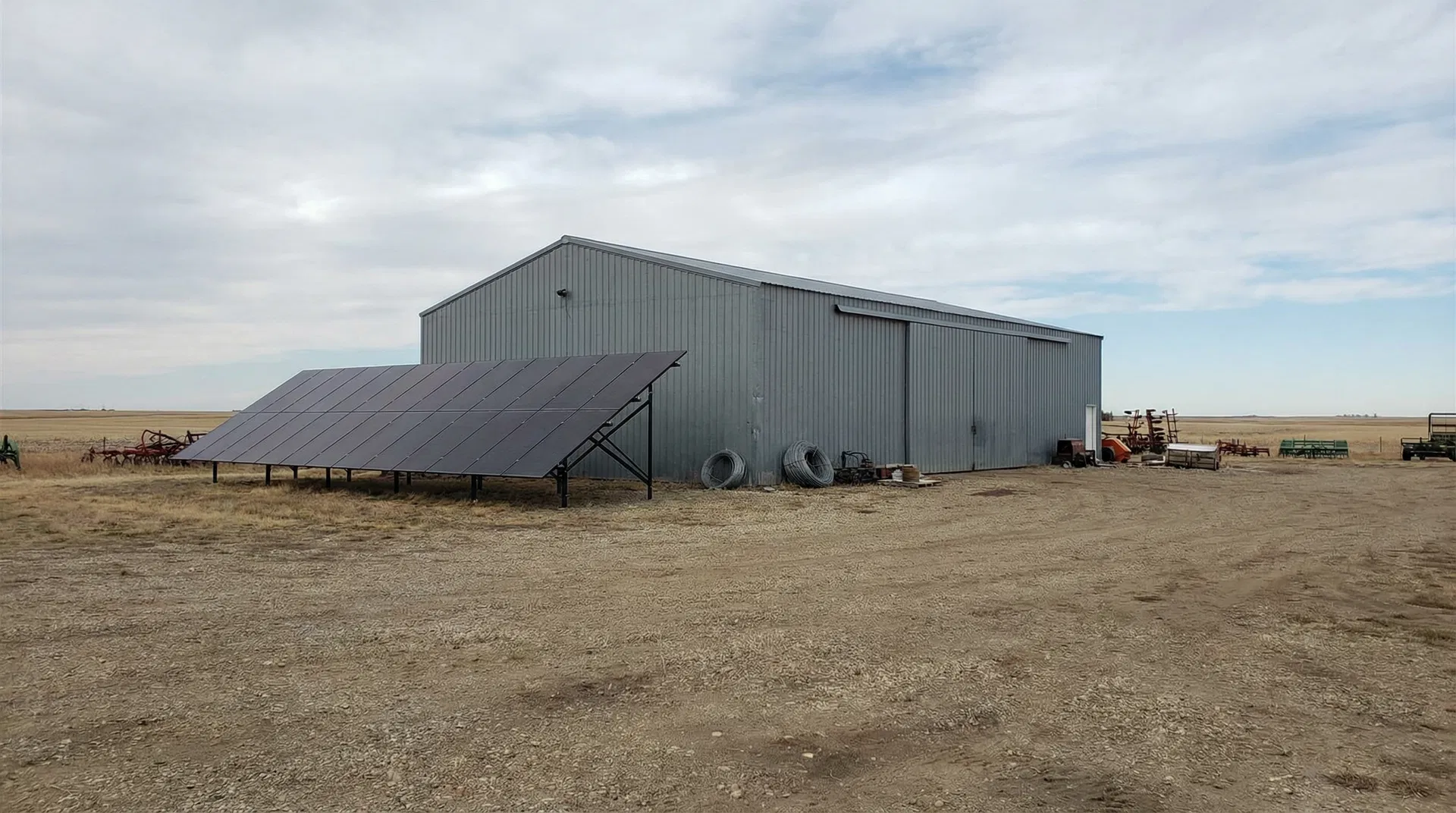
Farm solar in Vulcan, Alberta starts with the load, not a standard rooftop package. Grain operations and cattle operations around here run grain dryers, augers, livestock waterers, and shop tools, often on the same service as the house, and a system sized for a typical home doesn't come close to covering that. Range Road Solar designs for the 20 to 50 kW range this kind of property needs, with 25 kW as a common starting point before we size up or down based on your actual loads. We install LONGi panels paired with APsystems microinverters on these systems. For most farm sites we prefer ground-mount: a shop roof might be the wrong pitch, an outbuilding might throw shade across half the array, or there's simply open yard space that makes ground-mount easier to service and expand later. Microinverters let us mix panel orientations across a ground-mount array without one shaded string dragging down the whole system, which matters on a property with grain bins, machine sheds, and shelterbelts all competing for sun angles. Every design starts with a site walk and your most recent power bill. We look at where the service enters the yard, how the panel is fed, and what the 12-month usage graph on that bill tells us about peak draw from irrigation pumps or grain handling equipment. From there we build a system sized to the operation, not a number pulled from a brochure.
Solar Planning for Vulcan Properties
Vulcan, Alberta sits in grain and cattle country, and that shapes how a farm solar system gets designed here. The town was incorporated on June 15, 1921, and agriculture has anchored the local economy ever since, with regional data still listing agriculture as the leading economic driver for the area. With a population of 1,769, this isn't a dense urban grid: properties here often run a home, a shop, grain handling equipment, and irrigation off the same service, and FortisAlberta is the wire service that reviews the interconnection application for any system we design. Range Road Solar doesn't start with a generic size. We start with your most recent power bill and the 12-month usage graph it carries, then walk the property to look at roof pitch, shading, and whether ground-mount makes more sense for a spread-out yard. We design to the loads this property actually runs, not a rule-of-thumb number, and we confirm production and payback figures only after that site-specific review is done.
Electrical Site Review for Vulcan Properties
Voltage Rise
Voltage rise happens when the distance and wire gauge between a solar inverter and the point of connection cause voltage to climb higher than the grid expects, and long rural feeders make this more likely than a short urban hookup. On a farm property with a service run spread across a yard, we check feeder length and conductor size before finalizing inverter placement. Where voltage rise is a factor, it can affect how hard we can run an inverter before it clips output, which feeds directly into how we size the system.
Single-Phase vs Three-Phase
Rural Alberta properties run on either single-phase or three-phase service, and which one you have changes what inverter equipment fits. A shop or grain-handling setup with larger motors is more likely to run three-phase, while a house-only service is often single-phase. We confirm which service type is on site early, because it shapes both inverter selection and how much capacity we can safely add.
Panel Infrastructure
Older rural properties sometimes carry an electrical panel that was sized decades before anyone thought about adding solar, so we check breaker capacity and panel age as part of every site review. We're looking for available breaker space, the panel's rated bus capacity, and any signs of wear on the panel itself. If the panel can't support the added system, an upgrade means a new panel or a supplemental load center sized to handle both the existing service and the solar interconnection.
Service Entrance Review
We also check the service entrance and meter base, since the meter base has to be in good condition and correctly rated before FortisAlberta will approve a micro-generation application. That means confirming the meter socket, the entrance conductors, and the grounding are all up to current code. If the service entrance needs work, that upgrade happens before the solar installation so the interconnection application isn't delayed by an avoidable equipment issue.
Right-Sizing Solar for Vulcan Properties
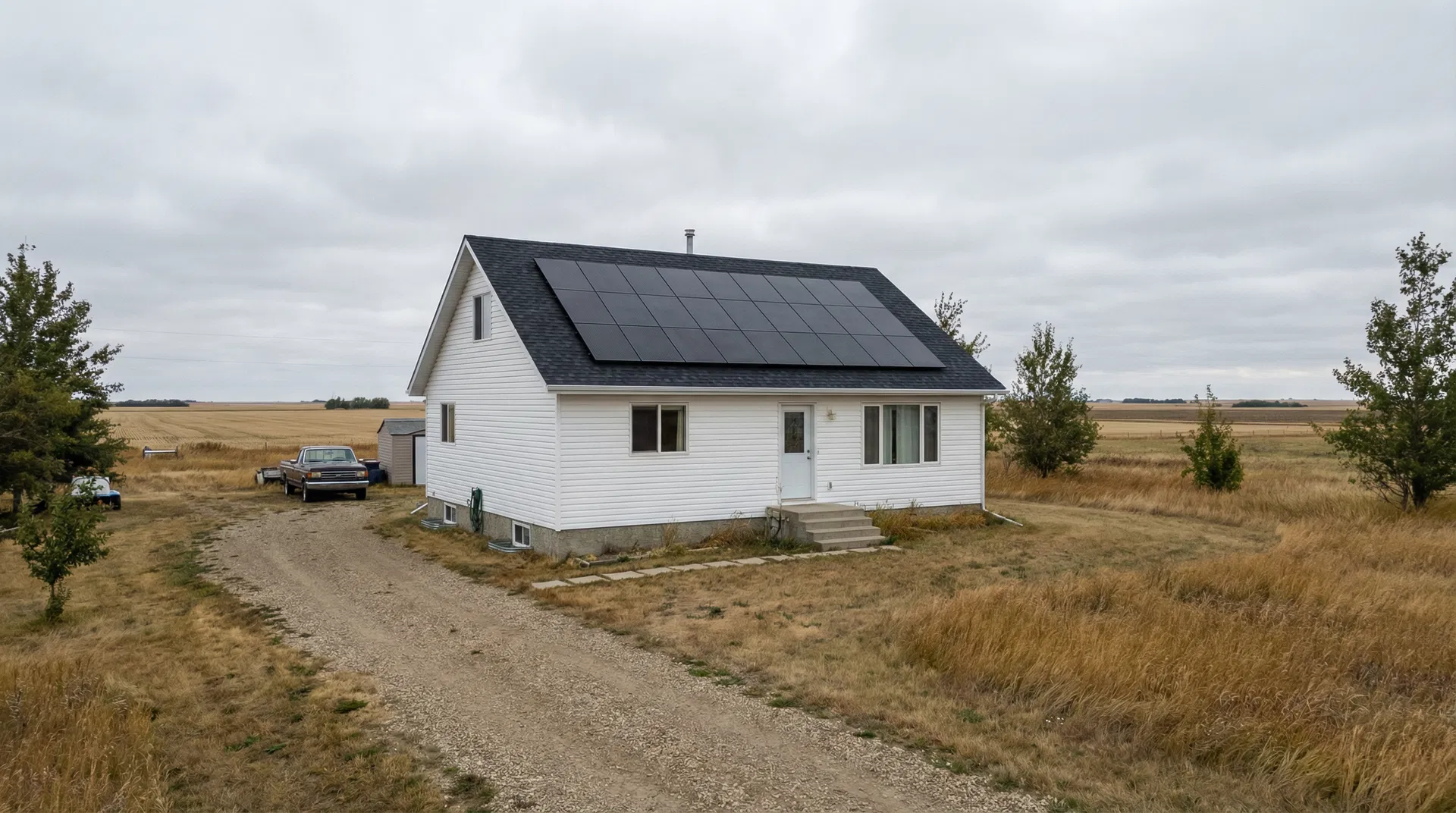
Rural properties almost always need a bigger system than a comparable house in town, because there's rarely just one load to cover. A home might sit on the same service as a heated shop, a grain dryer, an irrigation pump, or livestock waterers, and all of those draw power the standard residential sizing rules never account for. That's why farm systems in this size class run in the 20 to 50 kW range instead of the smaller systems typical of an in-town house. Roof versus ground-mount comes down to what the property actually looks like. A roof with good southern exposure and no nearby shade can work fine, but a lot of farmyards have shelterbelts, grain bins, or machine sheds throwing shadows across part of the day, and a steep or oddly pitched roof isn't always usable either. When that's the case, or when there's simply open yard space that makes sense to use, ground-mount is usually the better call: it's easier to orient for full sun and easier to expand later if the operation grows. None of that sizing happens from a rule of thumb. We size every system from the 12-month usage graph on your most recent power bill, matched against the site walk, so the design reflects what the property actually draws rather than a generic per-square-foot estimate.
Typical Load Profiles We Design For Near Vulcan
Home + Heated Shop
A lot of properties here run the house and a heated shop off the same service, with the shop pulling significant power in winter for heat and tools. We size for both loads together using the 12-month usage graph on your most recent power bill, not a home-only estimate. That usually pushes the system toward the higher end of a typical range rather than a standard rooftop size.
Grain Handling + Dryer Season
Grain operations add a seasonal spike: dryers, augers, and conveying equipment that draw hard for a few weeks and sit idle the rest of the year. A system sized only for average draw misses that spike entirely, so we look at the peak periods on your bill's usage graph, not just the annual average. Ground-mount is common here since grain bins often shade a nearby roof.
Livestock + Irrigation
Cattle operations with waterers, feed equipment, and pivot or pump irrigation have a different draw pattern again, often running loads around the clock rather than in daytime bursts. We design around when those loads actually hit, using your bill's usage graph to separate baseline draw from peak draw. That shapes both the system size and whether battery backup is worth discussing.
FortisAlberta Interconnection in Vulcan
FortisAlberta is the wire service for properties in this area, which means any grid-tied farm solar system here goes through FortisAlberta's micro-generation application process before it's energized. Range Road Solar prepares and submits that application package as part of the design process: single-line diagrams, equipment specifications for the LONGi panels and APsystems microinverters, and the site-specific details FortisAlberta requires to review the interconnection. We don't make claims about how long that review takes or what happens to credits on your account, because those rules sit with FortisAlberta and the retailer on your bill, not with us. What we do is make sure the paperwork is accurate and complete the first time, so the application isn't sent back for corrections. If the property also carries ATCO Gas service, that's a separate utility account and doesn't factor into the solar interconnection application at all.
Project Economics and Design Review
| System Size | Annual Production | Year 1 Savings | Payback Period |
|---|---|---|---|
| 20-50 kW range, 25 kW typical |
Production, savings, and payback figures are provided only after a property-specific design review that includes your most recent power bill.
How We Work in Vulcan
Bill and Load Review
We review your power bill to understand your energy use in Vulcan and size the system to your actual consumption, not a generic estimate.
Site Assessment
We assess your roof or ground area, south-facing exposure, electrical service, and utility interconnection requirements specific to your property.
Design and Utility Application
We produce a system layout, production estimate, and cost summary, then submit your micro-generation application to your utility on your behalf.
Installation and Commissioning
Our crew installs racking, panels, inverter, and electrical connections. All work is performed by licensed electricians. We commission and test before handoff.
Current Program and Interconnection Review
Utility connection review
FortisAlberta reviews every grid-tied solar connection application before a system is energized. Range Road Solar prepares the full design package, including equipment specs and single-line diagrams, and submits it on your behalf as part of the installation process.
Current program review
Eligibility rules for farm, commercial, and residential solar projects change, so we check your property against whatever rules are current at the time of your design review rather than assuming last year's terms still apply. This applies whether the system is covering a house, a shop, or a full farm operation.
Frequently Asked Questions
Get a Solar Assessment for Vulcan
Submit a recent power bill and we will review your consumption and provide an honest assessment for your Vulcan property. No obligation.
(587) 330-7502 Book a CallRelated Resources