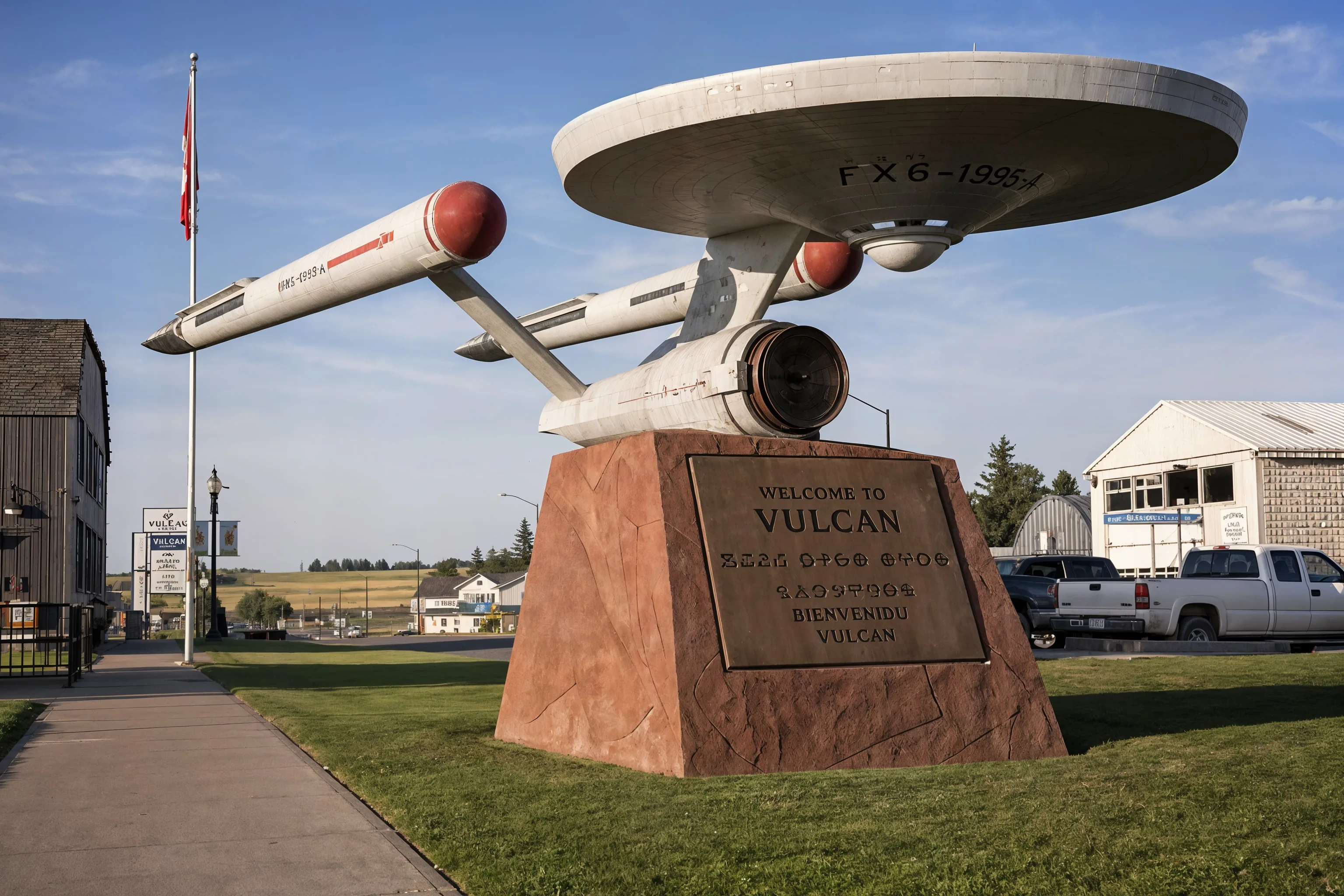
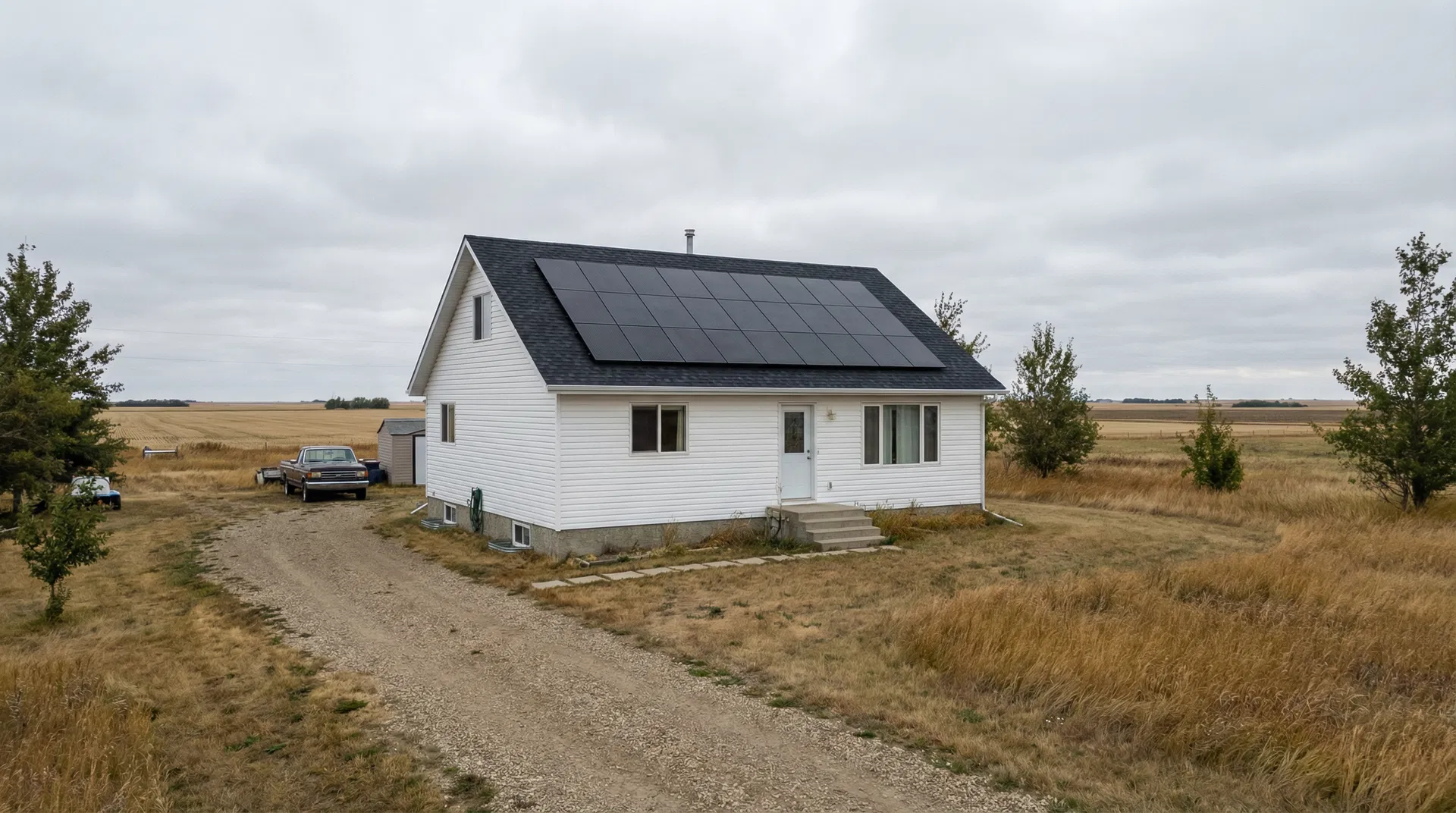
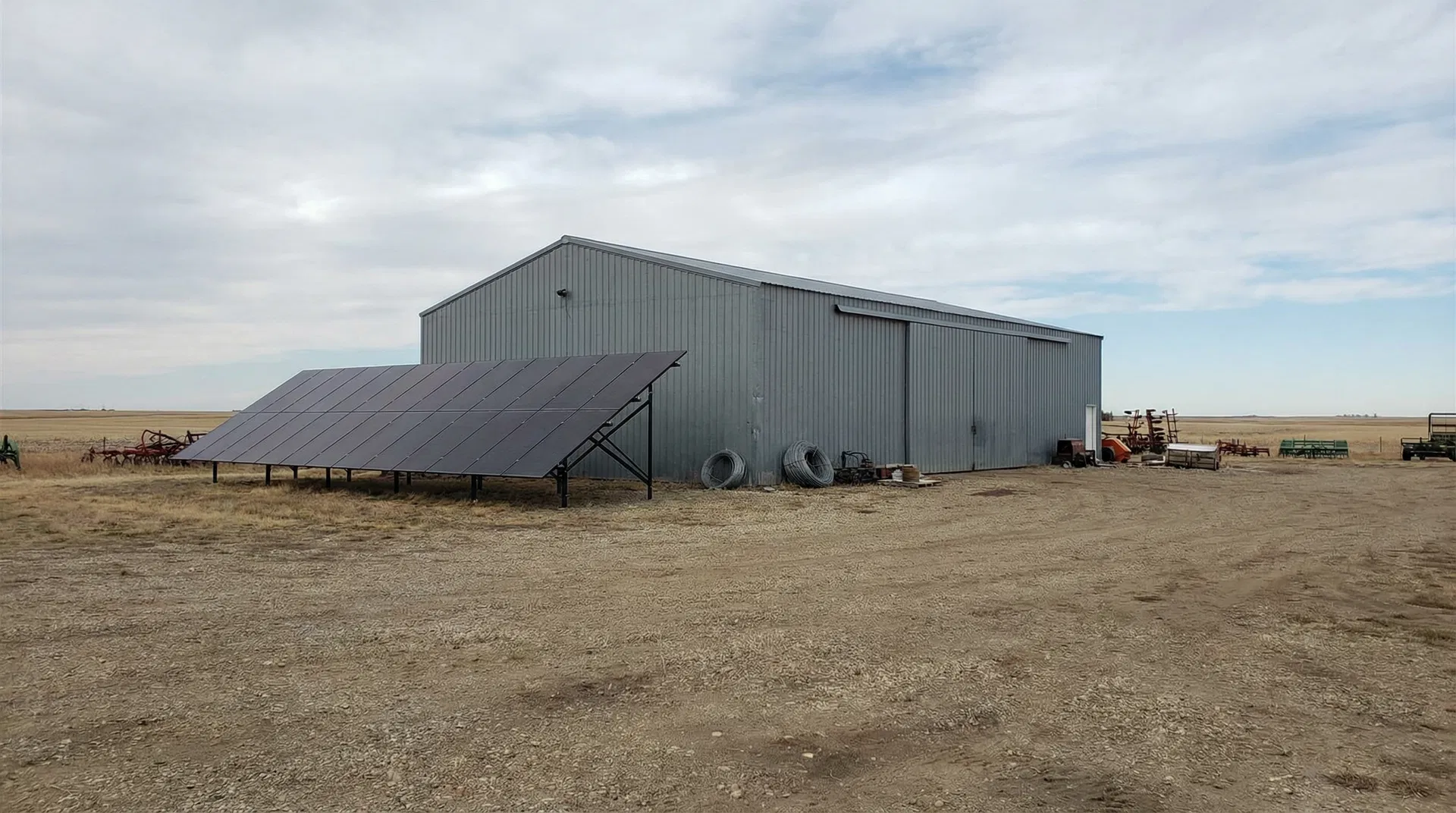
Solar installation in Vulcan starts with an assessment of your roof, your panel, and your most recent power bill, not a generic package deal. We install grid-tied systems in the 8-12 kW range for most residential properties here, with 10 kW being typical for a single-family home with average usage. Every system we design uses LONGi panels paired with APsystems microinverters, so each panel operates independently instead of being tied to a single string inverter. That matters on properties with any shading from trees, outbuildings, or a shop roof nearby, since one shaded panel won't drag down the output of the whole array. We see a mix of property types here: in-town lots with straightforward roof mounts, and acreages on the edge of town where a ground mount sometimes makes more sense than the roof. Either way, our design process is the same. We pull your most recent power bill, which includes a 12-month usage graph, and use that alongside a site visit to size the system to your actual consumption pattern rather than a rule-of-thumb number. We handle the engineering, the permitting, and the FortisAlberta interconnection application as part of the project, so you're not coordinating between multiple contractors. Racking is chosen for the specific roof material and pitch on your property, or for ground conditions if that's the better fit.
Solar Planning for Vulcan Properties
This area is shaped by agriculture, and that economic backbone shows up in the kind of properties we design for here: family acreages, in-town homes, and working yards with a shop or grain bins nearby. The population sat at 1,769 at the last census, down from 1,917 the census before, and that kind of small, stable community means we're not designing off a generic template. We look at your actual lot, your roofline or open yard space, and your FortisAlberta service before we talk numbers. For homeowners, local context matters less than the specifics of your property: orientation, shading, panel age in your electrical service, and what your most recent power bill actually shows about your usage pattern. We reference Environment Canada's regional bright sunshine normal of 2,544.3 hours (Medicine Hat A) only as general context, never as a substitute for a site-specific design. Every recommendation we make for a property here starts with a walk of the site and a look at your bill, not a rule of thumb.
Electrical Site Review for Vulcan Properties
Voltage Rise
Voltage rise happens when a property sits farther out on a distribution line, and the voltage at your service can run higher than what's typical closer to the substation. On rural feeders this is common enough that it factors into how we size a system and select inverters, since higher line voltage can cause an inverter to clip output or trip offline if it isn't accounted for. We check your service voltage as part of the site review so the equipment we spec is a good match for your actual conditions.
Single-Phase vs Three-Phase
Rural properties can have either single-phase or three-phase electrical service, and that distinction changes which inverter equipment fits and how much system capacity a property can support. A single-phase service has different capacity limits than a three-phase service, which matters most for larger systems or properties with a shop or irrigation load added into the mix. We confirm which service type your property has before finalizing equipment selection.
Panel Infrastructure
Older rural properties sometimes have an electrical panel that's undersized or dated for the breaker capacity a solar system needs to interconnect safely. We check the panel's age, its rated capacity, and how much room is left for a solar breaker as part of every site review. If the panel can't support the system as designed, an upgrade to the panel is scoped into the project before installation moves forward.
Service Entrance Review
We also review the service entrance and meter base condition, since FortisAlberta's micro-generation application requires the metering equipment to meet current standards before a system can be interconnected. A worn or outdated meter base can hold up an application even if the solar system itself is ready to go. If an upgrade is needed, we scope it into the project so it doesn't become a surprise later.
Right-Sizing Solar for Vulcan Properties
Rural properties typically need a bigger system than a comparable house in the city, and it's rarely about the house alone. A property might be running a home plus a heated shop, a well pump, or grain-handling equipment, and each of those loads adds to the total system size we design around. That's one reason the 8-12 kW range we typically install for residential properties here often lands toward the higher end. Roof versus ground mount comes down to the specific site. If a roof has good south or west-facing exposure with no shading, a roof mount is usually the simplest and most cost-effective option. But if trees or outbuildings shade the roof, if the pitch or orientation isn't ideal, or if there's open yard space that isn't being used for anything else, a ground mount can make more sense, even at added structural cost. We walk the property to make that call rather than defaulting to one option. Either way, we size the system from the 12-month usage graph on your most recent power bill, not a rule-of-thumb calculation based on square footage or a flat per-home number. That graph shows your actual seasonal usage pattern, and combined with a site visit, it's what drives the final system size we recommend.
Typical Load Profiles We Design For Near Vulcan
Home Plus Heated Shop
Many properties in the area run a house and a heated shop off the same service, and the shop's heating and equipment load can add substantially to total consumption, especially through winter months. We pull the usage graph from your most recent power bill to see how much of that load is shop versus house before sizing the system. A shop with a welder, compressor, or block heaters draws differently than a house alone, and the design reflects that.
Home Plus Well Pump or Irrigation
Properties with a well pump or irrigation equipment have a load profile that's different from a standard in-town home, often with short bursts of higher draw rather than a steady baseline. We look at how that shows up on your most recent power bill's usage graph to understand the pattern before recommending a system size. This kind of load can also factor into whether single-phase or three-phase equipment is the right call.
In-Town Home, Standard Residential Load
A straightforward in-town home without a shop or major secondary load usually has the most predictable usage pattern, which makes sizing more direct. We still pull the most recent power bill's usage graph rather than assuming a flat number, since even similar-looking homes can have very different consumption depending on heating type, household size, or added appliances. This is typically where a system toward the lower end of the 8-12 kW range fits.
FortisAlberta Interconnection in Vulcan
FortisAlberta is the wire service for properties in the area, and any grid-tied solar system has to go through their micro-generation interconnection process before it can be turned on. Range Road Solar handles that application as part of your project: we prepare the technical package, submit it to FortisAlberta, and coordinate the site requirements they ask for. We don't quote approval timelines or promise a specific turnaround, because that's set by FortisAlberta's own review process, not by us. What we can tell you is that we build the paperwork and the design package around what their interconnection process actually asks for, so nothing gets held up because of a missing spec sheet or an incomplete single-line diagram. Whether a property has three-phase service or a straightforward single-phase residential connection, that gets factored into the application and the equipment we select. Every FortisAlberta submission is prepared specifically for your property, not copied from a template.
Project Economics and Design Review
| System Size | Annual Production | Year 1 Savings | Payback Period |
|---|---|---|---|
| 8-12 kW range, 10 kW typical |
Production, savings, and payback figures require a property-specific design review using your most recent power bill, not a generic estimate.
How We Work in Vulcan
Bill and Load Review
We review your power bill to understand your energy use in Vulcan and size the system to your actual consumption, not a generic estimate.
Site Assessment
We assess your roof or ground area, south-facing exposure, electrical service, and utility interconnection requirements specific to your property.
Design and Utility Application
We produce a system layout, production estimate, and cost summary, then submit your micro-generation application to your utility on your behalf.
Installation and Commissioning
Our crew installs racking, panels, inverter, and electrical connections. All work is performed by licensed electricians. We commission and test before handoff.
Current Program and Interconnection Review
Utility connection review
FortisAlberta reviews every grid-tied micro-generation application before a system can be interconnected, and Range Road Solar prepares that design package on your behalf. We handle the technical submission and coordinate any site requirements FortisAlberta asks for as part of the project.
Current program review
Eligibility for any current commercial, farm, or residential program is reviewed against the rules in place at the time of your design, since those rules can change. We check what applies to your specific property and project during the design review rather than assuming a blanket answer.
Frequently Asked Questions
Get a Solar Assessment for Vulcan
Submit a recent power bill and we will review your consumption and provide an honest assessment for your Vulcan property. No obligation.
(587) 330-7502 Book a CallRelated Resources