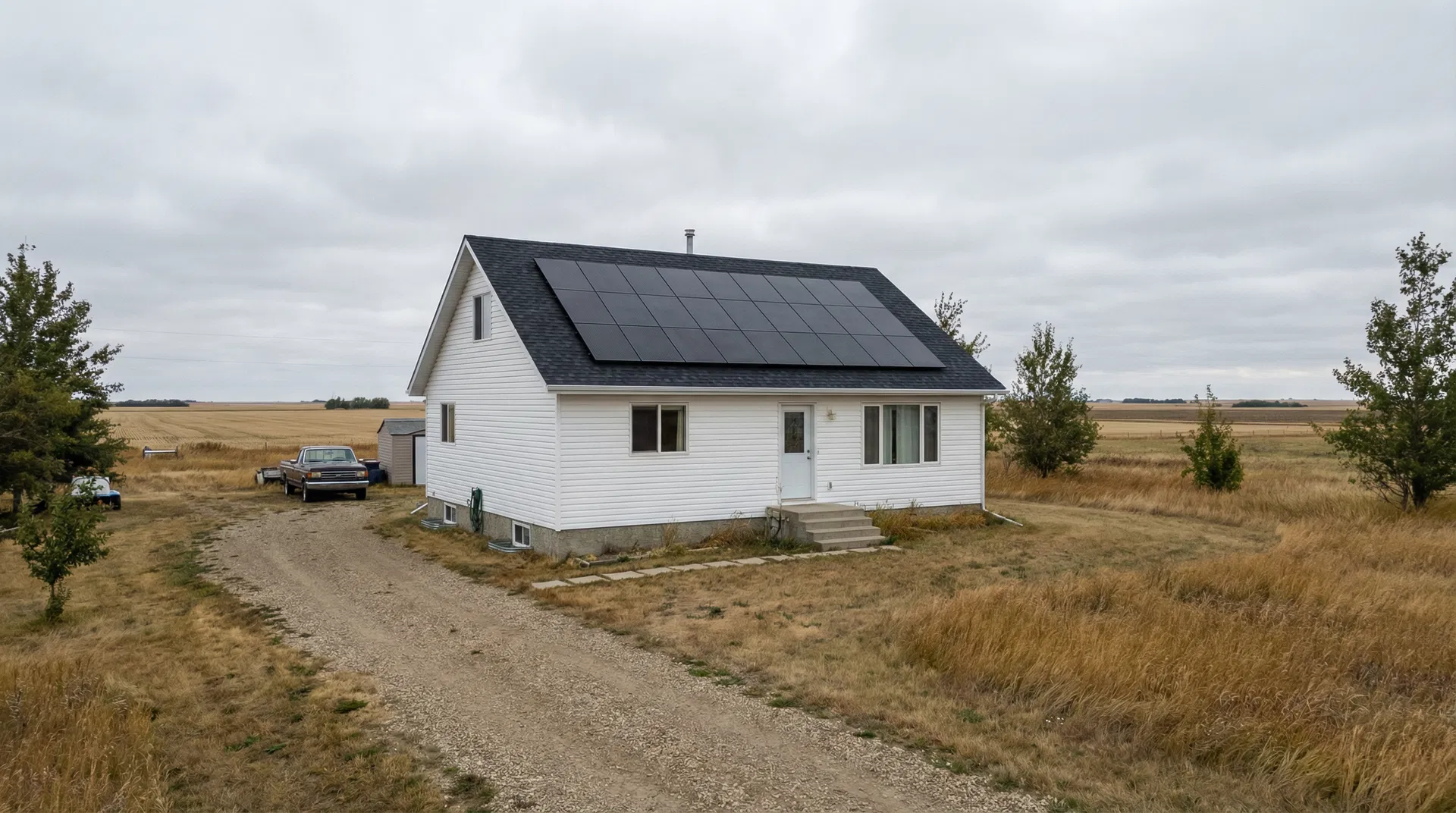
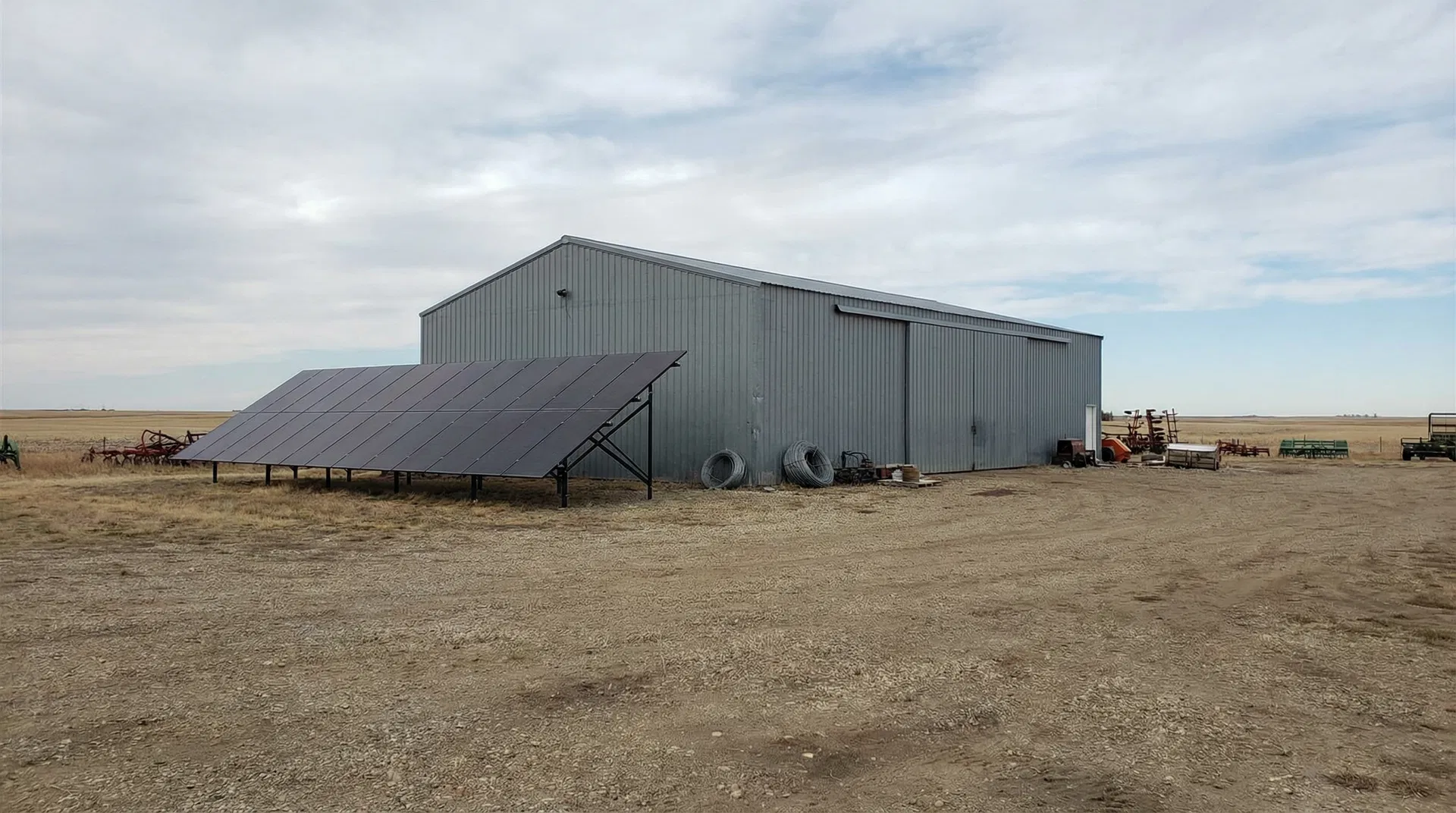
Commercial solar in Vulcan means sizing a system for a real business load, not a rooftop average. We install systems from 15 kW up to 100 kW here, with 30 kW being a common starting point for a mid-size operation. Every system uses LONGi panels, chosen for their commercial-grade output warranty and availability, paired with APsystems microinverters on smaller roofs with mixed shading or string inverters once a system moves toward the larger end of that range on a single clean, unshaded array. The mounting approach depends on the building: standing-seam metal roofs common on shops and warehouses in the area take a different racking system than a flat membrane roof or a ground-mount array on open yard space next to a grain operation. We also review the property against current eligibility for the federal Clean Technology Investment Tax Credit (ITC) as part of the design package, since commercial and farm-classified properties are assessed differently than residential ones. Before we quote a number, we walk the electrical room, check the service size and available breaker capacity, and look at how the load moves across the day and across seasons on your most recent power bill. A business running compressors and refrigeration around the clock needs a different inverter and array layout than one that's mostly a daytime office and retail load. That's the design work behind every commercial quote here: right-sized equipment for the actual building and the actual load, not a generic package sized off square footage alone.
Solar Planning for Vulcan Properties
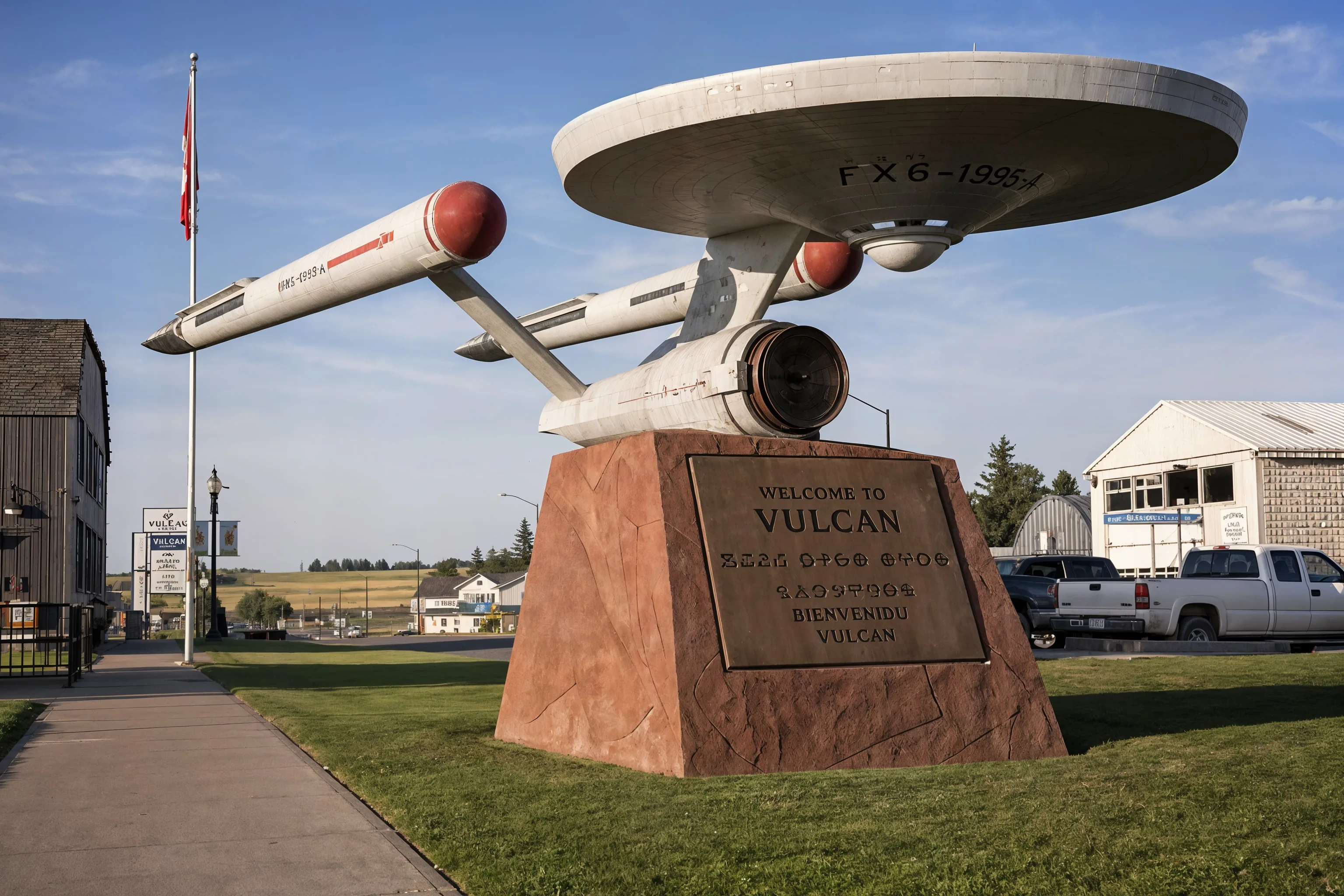
Vulcan, Alberta traces its formal incorporation back to June 15, 1921, and today the community counts roughly 1,769 residents, per the 2021 census, built around agriculture as the backbone of the local economy. Grain operations, cattle yards, and ag-service businesses in the area carry the kind of daytime electrical loads that make commercial solar pencil out differently than a typical retail storefront: irrigation pumps, grain dryers, shop compressors, and refrigeration all draw hard during the hours the sun is up. The community is also home to the Vulcan Solar Park, so solar generation at scale isn't a new idea here, it's already part of the local landscape. When we plan a commercial system for a property in the area, we start with the building's roof or available yard space, the service size coming into the building, and the load pattern on your most recent power bill. Flat commercial roofs, pole barns, and Quonset structures each carry different mounting and structural considerations, and a farm-adjacent business often has three-phase service where a small retail unit doesn't. Range Road Solar confirms system size, mounting method, and interconnection requirements through a site visit and a review of your actual billing data, not a one-size-fits-all package.
Electrical Site Review for Vulcan Properties
Voltage Rise
Voltage rise happens when the distance and wire gauge between a solar inverter and the utility connection point cause voltage to climb higher than the grid expects, and rural distribution lines can run longer than a typical in-town circuit. If voltage rise pushes past the inverter's threshold, the inverter clips output or shuts down to protect itself and the grid. We measure the actual distribution conditions at your service before sizing the array and inverter, so the system doesn't lose output to a problem we could have designed around.
Single-Phase vs Three-Phase
Commercial and farm properties in this area can have either single-phase or three-phase electrical service, depending on the building's age and what the service was originally sized for. Three-phase service generally supports a larger inverter and a higher system capacity than single-phase, so the phase configuration directly shapes which inverter model and how much array we can connect. We confirm your service phase before finalizing equipment, since ordering the wrong inverter for the phase on site means a return trip and a delay.
Panel Infrastructure
Older electrical panels on commercial and farm buildings weren't built with solar breaker space in mind, so we check the panel's rated capacity, its age, and its available breaker slots before finalizing a design. We're looking for whether the panel can safely add a solar backfeed breaker under current code, or whether the busbar is already maxed out. If the existing panel can't support the system, an upgrade means a new panel or a supplemental load center sized to the array, which we scope and quote as part of the project.
Service Entrance Review
We check the condition of the service entrance and the meter base as part of every site review, since a worn or outdated meter base can hold up the micro-generation application to FortisAlberta. FortisAlberta reviews meter base condition as part of that interconnection process, so a damaged or non-compliant base needs to be addressed before the system can be approved to connect. When an upgrade is required, we identify it during the site visit and build it into the project scope and quote up front, rather than as a surprise mid-project.
Right-Sizing Commercial Solar for Vulcan Properties
Commercial and farm-adjacent properties in this area typically carry more than one electrical load under a single service: the main building, a shop, grain handling equipment, irrigation, or refrigeration can all draw from the same panel. That's part of why a system sized for a business here often lands well above what a simple retail storefront would need. One of the first design questions is roof versus ground mount. A standing-seam shop roof with a clean south or west exposure and no shading can be an efficient, low-cost mounting surface. But if the roof is shaded by nearby trees or an adjacent structure, has a poor pitch or orientation, or if the property has open yard space that isn't otherwise in use, a ground-mount array is often the better call, since it lets us set the tilt and orientation for the array instead of working around a roof plane. Either way, we don't size a system off a rule-of-thumb number like square footage or panel count guesses. We size it off the 12-month usage graph on your most recent power bill, which shows how your load actually moves through the year, month to month and season to season. Combined with a site visit to confirm roof or ground conditions, that usage data is what turns into an actual kW recommendation for your property, not a generic estimate.
Typical Load Profiles We Design For Near Vulcan
Shop + Grain Handling
This profile covers a main building alongside a heated shop and grain handling equipment like augers, dryers, or aeration fans that draw hard during harvest season. Because these loads spike seasonally rather than staying flat, we lean on the load curve on your most recent power bill to size around the actual peak, not just an average month.
Retail or Office + Refrigeration
A retail unit or office paired with walk-in refrigeration or cold storage runs a steadier daytime load with a refrigeration compressor cycling around the clock. That combination changes both the inverter sizing and, often, the phase configuration we design around, since refrigeration equipment is frequently three-phase.
Multi-Building Commercial Yard
Some commercial properties in the area run several structures, an office, a shop, and storage, on one service. We review the panel and service size for the whole yard together, since a system sized for just the main building would miss a meaningful share of the property's actual draw.
FortisAlberta Interconnection in Vulcan
Vulcan properties are served by FortisAlberta for electricity distribution. Any commercial solar system connecting to the grid here goes through FortisAlberta's micro-generation interconnection process, and that application has to match the equipment, the one-line diagram, and the site details exactly or it gets kicked back for revisions. Range Road Solar prepares and submits that full application package for every commercial project here: the engineering documents, the equipment specifications for the LONGi panels and inverters, and the electrical drawings FortisAlberta requires to review a system before it's allowed to connect. We coordinate directly with FortisAlberta through the review process and keep you updated as it moves, so you're not the one chasing down paperwork or decoding utility correspondence. Every commercial property has its own service size, transformer setup, and load profile, so we review your specific connection point rather than assuming a standard residential setup applies. We don't quote or promise a specific review timeline here, since that's set by FortisAlberta's current process, not by us, and it can vary project to project.
Project Economics and Design Review
| System Size | Annual Production | Year 1 Savings | Payback Period |
|---|---|---|---|
| 15-100 kW range, 30 kW typical |
Production, savings, and payback figures are provided only after a property-specific design review using your most recent power bill and site conditions.
How We Work in Vulcan
Bill and Load Review
We review your power bill to understand your energy use in Vulcan and size the system to your actual consumption, not a generic estimate.
Site Assessment
We assess your roof or ground area, south-facing exposure, electrical service, and utility interconnection requirements specific to your property.
Design and Utility Application
We produce a system layout, production estimate, and cost summary, then submit your micro-generation application to your utility on your behalf.
Installation and Commissioning
Our crew installs racking, panels, inverter, and electrical connections. All work is performed by licensed electricians. We commission and test before handoff.
Current Program and Interconnection Review
Utility connection review
FortisAlberta reviews every micro-generation grid connection application for the equipment, service size, and site details before a system is approved to connect. Range Road Solar prepares and submits the full design package, engineering documents, and equipment specifications on your behalf, and coordinates with FortisAlberta through that review.
Current program review
Commercial, farm, and residential properties can qualify differently depending on current program rules at the time a project is designed. We review your property's eligibility against whatever rules are in effect when we build your design package, rather than relying on outdated program information.
Frequently Asked Questions
Get a Solar Assessment for Vulcan
Submit a recent power bill and we will review your consumption and provide an honest assessment for your Vulcan property. No obligation.
(587) 330-7502 Book a Call