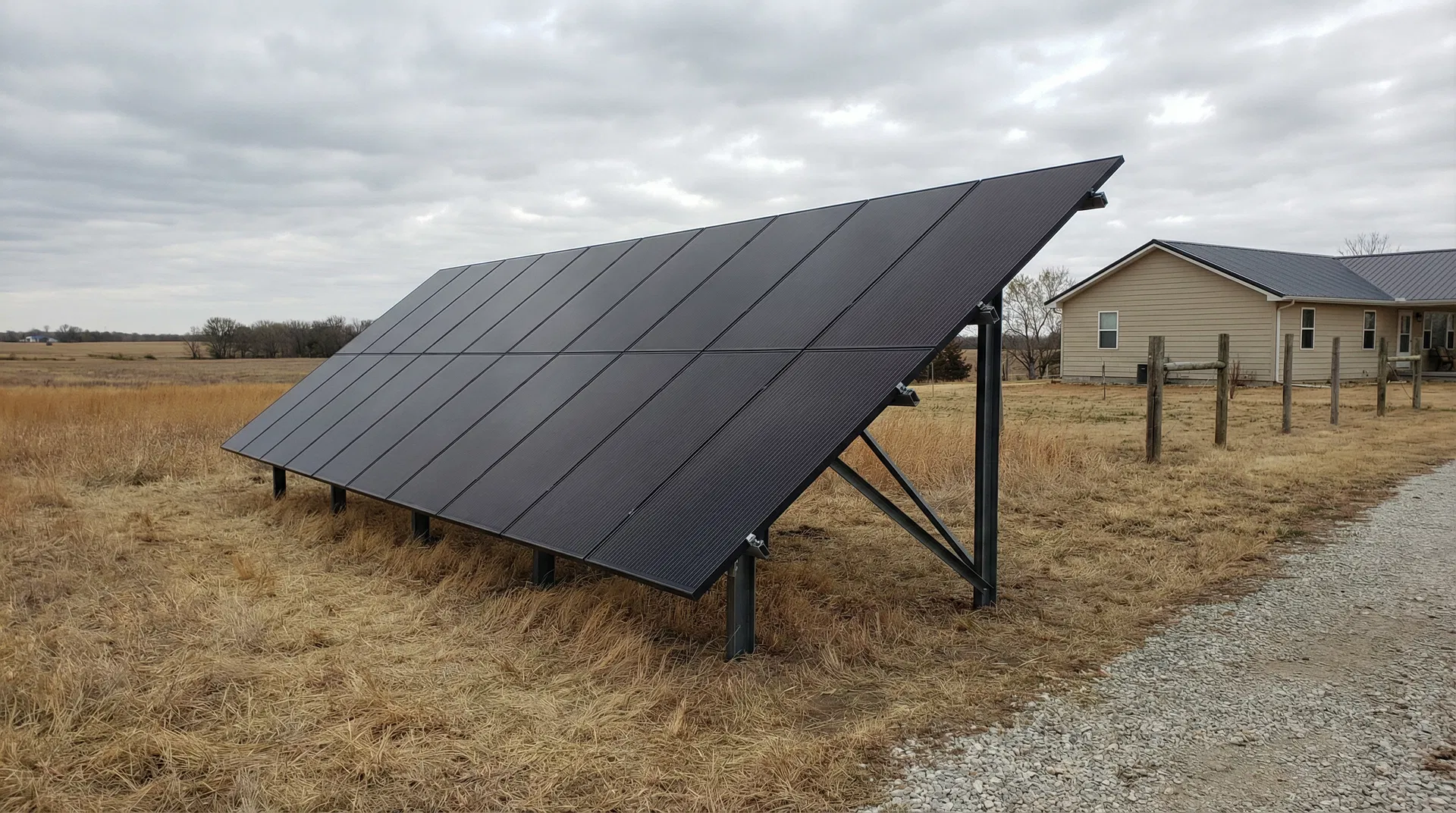
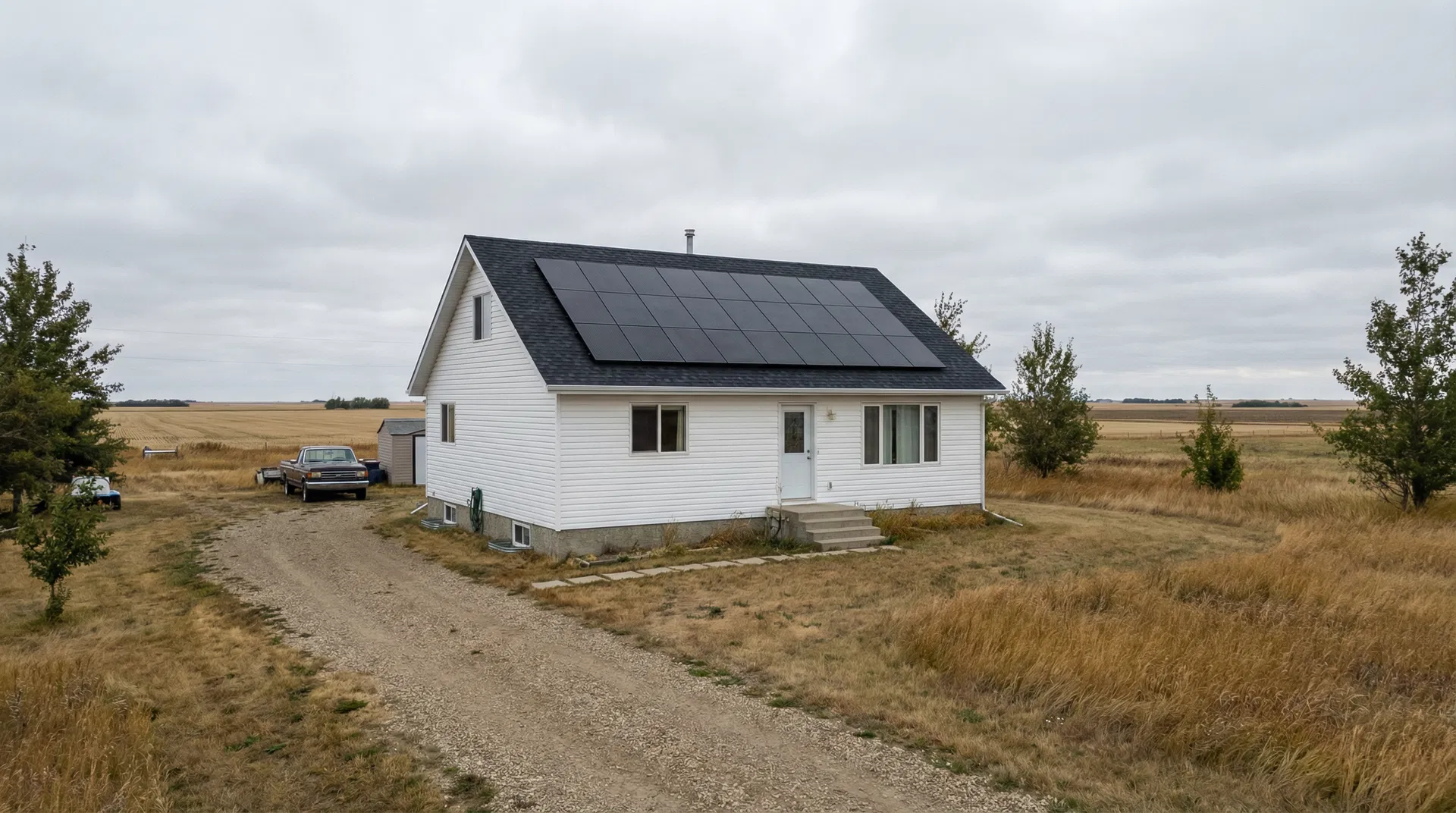
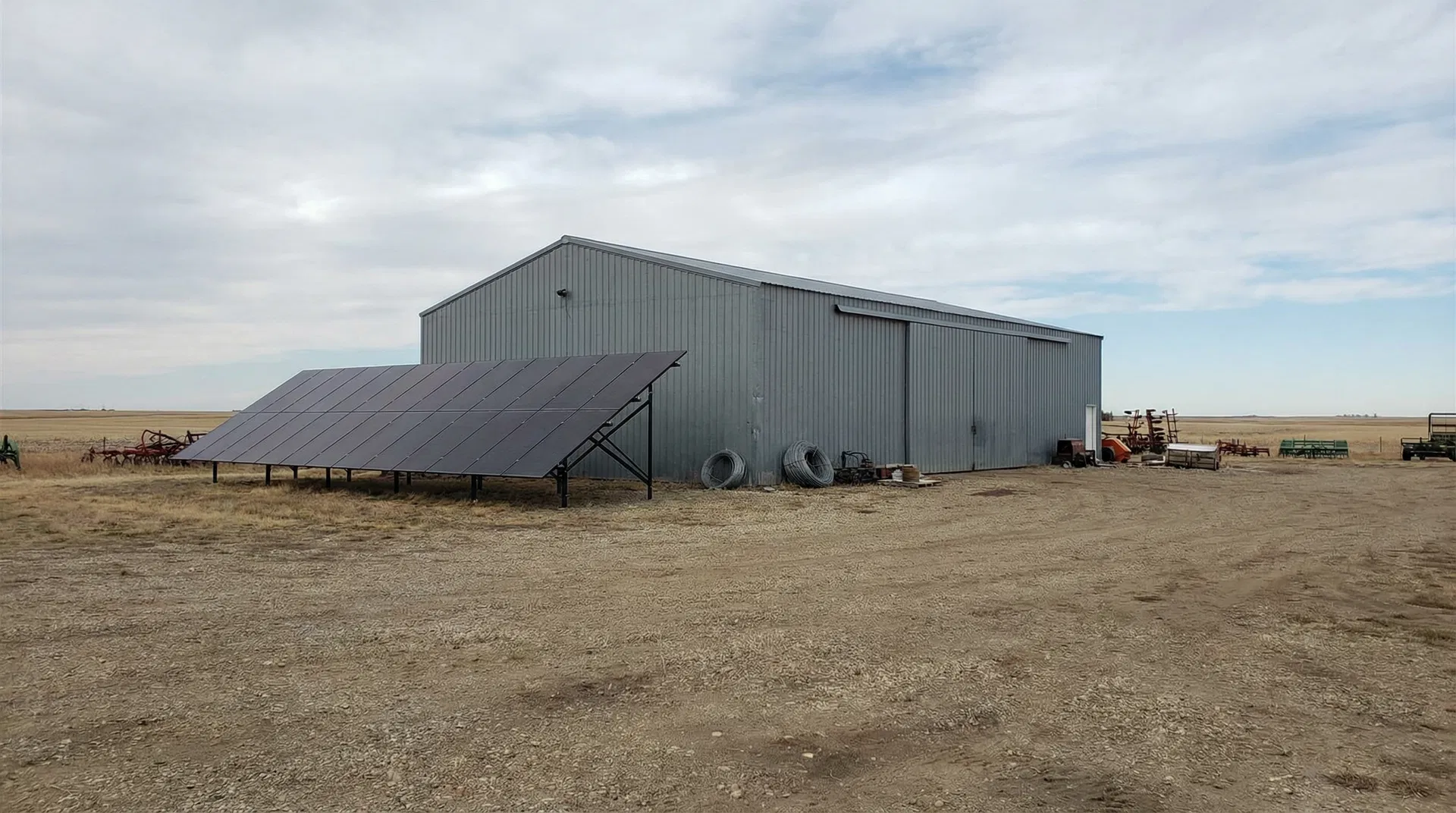
When someone searches acreage solar vulcan, they're usually dealing with a property that has more going on electrically than a standard residential install. We design and install rooftop and ground-mount solar systems in the 12-18 kW range for rural residential properties in this area, with 15 kW being a common outcome when we account for home, shop, and outbuilding loads together. LONGi panels are our standard panel. They're a proven, bankable product used on commercial and residential projects across Alberta, not a budget option and not an overpriced brand name. For inverters, we use APsystems microinverters. On an acreage system, microinverters matter more than on a simple urban rooftop install. If part of the array gets shaded by a tree, an antenna, or an outbuilding, the rest of the system keeps producing at full capacity. That's not the case with a string inverter, where partial shading pulls down the whole string. Ground-mount systems are common on acreage properties when the roof isn't the right fit. Flat or low-pitch roofs, east-west orientations, heavy shading from shelterbelts, and roofs on older machine sheds that aren't worth loading all point toward a ground-mount design. We build ground-mount racking to handle Alberta wind and snow loads, and the tilt angle is set during design to match the site. Whether it's roof, ground, or a combination of both, the system design comes from your actual property layout and usage history, not a template.
Solar Planning for Vulcan Properties
Acreages near Vulcan run bigger electrical loads than a typical suburban house. A heated shop, well pump, outbuildings, and the main residence all draw from the same meter, and that adds up fast. A system sized only for household use won't make much of a dent on a property like that. We start by looking at the full picture, not just the house. FortisAlberta serves this area as the wire service, and the interconnection process runs through them for any micro-generation application. That process has specific design requirements, and we build the application package as part of our standard scope. The properties around Vulcan vary a fair bit: some have good south-facing roof space, some are shaded by mature shelterbelts or outbuildings, and others have open yard space that makes a ground-mount system worth considering. Every site is different, which is why we don't quote a system size or estimate output until we've reviewed your most recent power bill and looked at the property layout. We provide honest production estimates based on your actual power bills and site conditions, not inflated projections.
Electrical Site Review for Vulcan Properties
Voltage Rise
Voltage rise happens when a solar system pushes power back toward the grid and the local distribution line can't absorb it without the voltage climbing above acceptable limits. On rural distribution lines, which are often longer and thinner than urban circuits, this condition can be more pronounced. If voltage rise is too high, the inverters clip or disconnect to protect the grid, which reduces the system's actual output and may affect how large a system FortisAlberta will approve.
Single-Phase vs Three-Phase
Rural properties near Vulcan may be served by single-phase or three-phase power, depending on what FortisAlberta has run to that location. Three-phase service is more common on properties with large motors, grain handling equipment, or irrigation systems. The phase configuration matters because it affects how inverters are selected and wired, and it sets a practical ceiling on how much solar capacity can be balanced across the service.
Panel Infrastructure
Older acreage properties sometimes have electrical panels that predate modern solar-ready designs. We check the breaker capacity, panel age, and available space before finalizing a system design, because a solar interconnection adds dedicated breakers that the panel has to accommodate safely. If the panel can't support the system without being overloaded, an upgrade is scoped into the project before installation begins.
Service Entrance Review
The meter base and service entrance are the point where FortisAlberta's infrastructure meets the property's wiring, and the condition of both matters for the micro-generation application. We check the meter base for compatibility with the interconnection requirements before submitting anything to FortisAlberta. If the meter base needs to be updated to meet program requirements, that work is identified during the design phase so there are no surprises during installation.
Right-Sizing Solar for Vulcan Properties
Acreage systems in this part of Alberta are almost always larger than what you'd put on a house in town, and for good reason. A rural property typically runs the main residence, a heated shop or garage, a well pump, and sometimes additional outbuildings or a grain handling setup all from the same service. If you only size the system for the house, you're leaving most of the usage unaddressed. We size systems to reflect the full load, which is why 12-18 kW is the working range for acreage installs, not a single number that gets applied to every property. The roof vs. ground-mount decision comes down to the site. A well-oriented, unshaded roof with adequate pitch is often the simplest installation. But if the available roof space is limited, the orientation is off, or mature shelterbelts or outbuildings are throwing shade across the array for part of the day, a ground-mount system gives us full control over tilt and orientation and sidesteps the shading problem entirely. Some properties end up with both: rooftop panels on the house and a ground-mount array in a clear area of the yard. We don't use rule-of-thumb sizing. The 12-month usage graph on your most recent power bill is the baseline for every system we design. It shows seasonal peaks, whether you're running more power in winter than summer, and where the biggest loads are concentrated. That's what drives the design, not an average kW-per-bedroom estimate.
Typical Load Profiles We Design For Near Vulcan
Home Plus Heated Shop
This is the most common profile we see on acreages in this area: a full residence combined with a shop that runs electric heat through the winter and powers tools, compressors, or welders year-round. The shop load alone can double or triple total usage compared to a house-only property. System sizing for this combination typically lands in the upper portion of the 12-18 kW range, and the design is confirmed from the 12-month usage graph on the most recent power bill.
Acreage with Irrigation or Grain Handling
Properties running irrigation pumps or grain auger motors have seasonal load spikes that look very different from a typical residential usage curve. A summer irrigation season can push consumption significantly higher for those months, which changes how the system should be sized and what the production model needs to account for. We review the full 12-month usage history from your most recent power bill before confirming a design for this type of property.
Hobby Farm with Multiple Outbuildings
Hobby farms often spread their electrical load across several structures, including a barn, a small processing area, lighting circuits across the yard, and the main house. The total load is real, but it's distributed in a way that can make roof-mount options complicated if the best roof space isn't on the highest-usage building. For these properties, a ground-mount array positioned to serve the whole property from one generation point is often the cleaner design.
FortisAlberta Interconnection in Vulcan
FortisAlberta is the wire service for Vulcan and the surrounding rural properties in this part of Alberta. Any solar system connected to the grid here goes through a FortisAlberta micro-generation application, and that process has technical requirements that have to be addressed in the design package before anything gets submitted. We handle the full application on your behalf. That includes the single-line diagram, equipment specifications, and any site documentation FortisAlberta requires to review the connection. We don't hand you a folder of paperwork and leave you to figure it out. Once the application is submitted, FortisAlberta reviews it on their end. We stay in contact throughout that process and follow up as needed. What we don't do is promise a specific approval timeline, because that's FortisAlberta's process to run, not ours. What we can tell you is that a clean, complete application package moves through the process faster than one that gets sent back for missing information. That's why the design phase matters.
Project Economics and Design Review
| System Size | Annual Production | Year 1 Savings | Payback Period |
|---|---|---|---|
| 12-18 kW range, 15 kW typical |
Production, savings, and payback figures require a property-specific design and your most recent power bill before any estimates are confirmed.
How We Work in Vulcan
Bill and Load Review
We review your power bill to understand your energy use in Vulcan and size the system to your actual consumption, not a generic estimate.
Site Assessment
We assess your roof or ground area, south-facing exposure, electrical service, and utility interconnection requirements specific to your property.
Design and Utility Application
We produce a system layout, production estimate, and cost summary, then submit your micro-generation application to your utility on your behalf.
Installation and Commissioning
Our crew installs racking, panels, inverter, and electrical connections. All work is performed by licensed electricians. We commission and test before handoff.
Current Program and Interconnection Review
Utility connection review
FortisAlberta reviews all grid connection applications for properties in this service area, including micro-generation systems up to the program's capacity limits. Range Road Solar prepares the full design package required for submission, including equipment documentation and the single-line diagram. We handle the application process so you're not navigating FortisAlberta's requirements on your own.
Current program review
Farm, rural residential, and commercial properties may each have different eligibility pathways depending on how the property is classified and what programs are active at the time of installation. We review current rules at the design stage rather than applying information that may have changed since a page was last updated. Program details are confirmed during the design review, not assumed in advance.
Frequently Asked Questions
Get a Solar Assessment for Vulcan
Submit a recent power bill and we will review your consumption and provide an honest assessment for your Vulcan property. No obligation.
(587) 330-7502 Book a Call