Lethbridge County · Off-grid solar
Off-Grid Solar in Lethbridge, Alberta
For properties near Lethbridge where a utility hookup costs more than independence, we design off-grid solar systems sized to your actual loads and site conditions.
Solar off-grid solar in Lethbridge, Alberta starts with understanding that off-grid means fully independent. No net metering. No utility credits. Just a system that generates, stores, and delivers power on its own. We install LONGi solar panels paired with hybrid inverters and lithium battery storage. LONGi panels are well-suited to off-grid applications because they maintain reliable output across a wide range of conditions. The hybrid inverter manages the relationship between the panels, the battery bank, and your loads, prioritizing solar generation first, drawing from storage when generation is low, and recharging from a backup generator input if one is connected. Lithium battery storage is the backbone of the off-grid setup. The bank needs to be sized to cover your overnight draw and any back-to-back low-generation days your site might see. We calculate storage depth based on your usage profile, not a rule-of-thumb number. Our systems in the 5 to 15 kW range cover a wide spread of property types around Lethbridge. A smaller 5 to 6 kW system with a modest battery bank might suit a seasonal cabin or a remote pump station. An 8 kW system is our typical starting point for a year-round residence. Properties with shops, heated outbuildings, or irrigation loads often push toward the 12 to 15 kW end of that range. We confirm the right size through the design review, not upfront assumptions.
Solar Planning for Lethbridge Properties
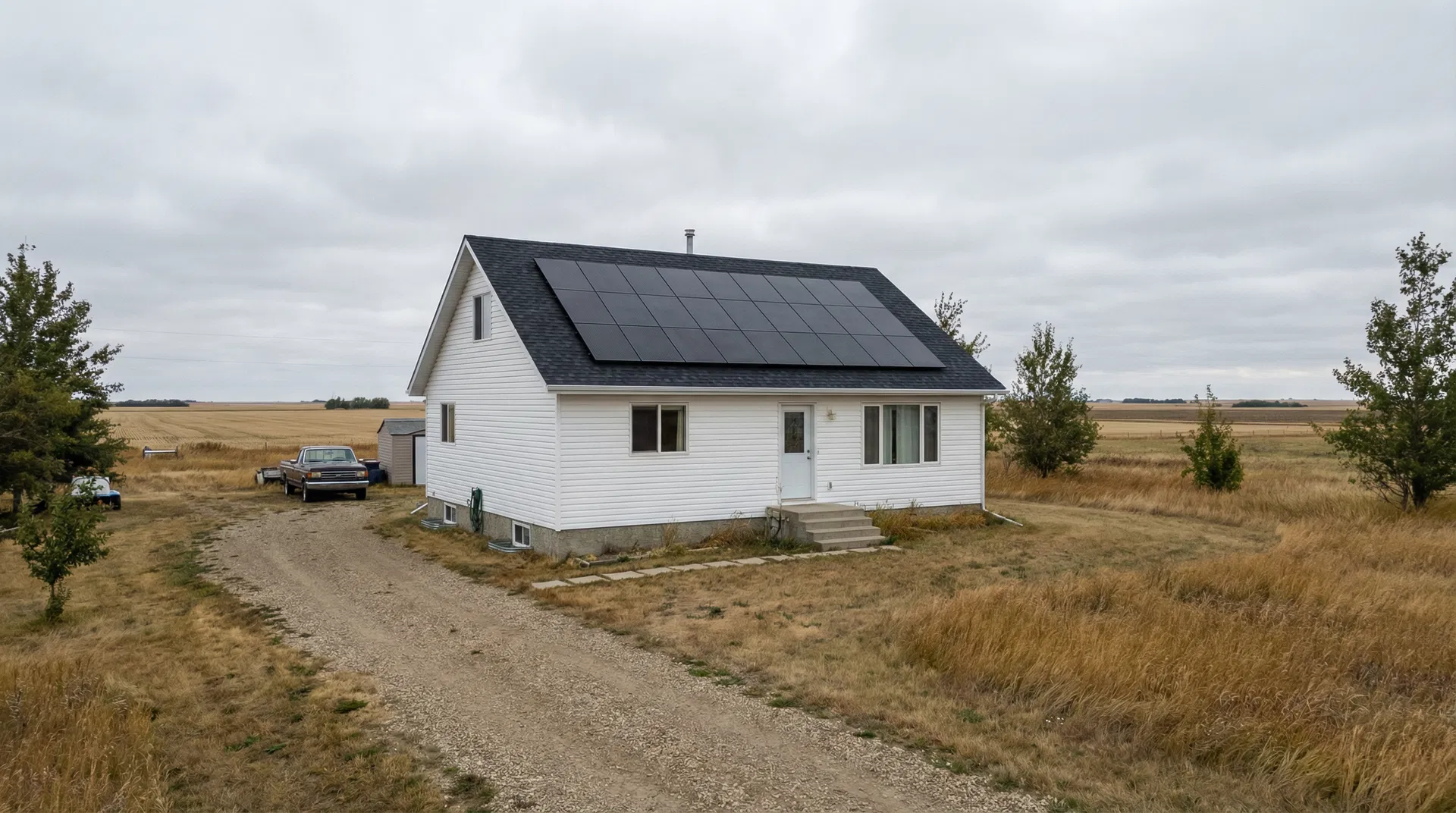
Not every property near Lethbridge has a utility connection waiting at the road. Acreages, remote outbuildings, irrigation pump sites, and rural retreats often face a simple calculation: pay to extend the grid, or build your own power supply. When the extension quote comes back high, off-grid solar becomes the straightforward option. Off-grid design is different from a standard grid-tied system. You're not just reducing a bill. You're replacing a utility entirely, which means every load matters, battery capacity has to match your overnight and cloudy-day draw, and the system has to be sized correctly the first time. There's no grid to lean on if the math is short. We start every off-grid project with your most recent power bill and a site review. The 12-month usage graph on that bill tells us your peak months and your low months. The site review tells us what shading, orientation, and mounting options are available. From there, we build a system that matches your actual consumption, not a generic package. Properties near Lethbridge vary a lot in load profile and site layout, so the design has to reflect your specific situation.
Electrical Site Review for Lethbridge Properties
Voltage Rise
Voltage rise occurs when solar generation pushes voltage on a distribution line above acceptable limits. In off-grid systems, this isn't a grid interconnection concern, but for hybrid systems that stay connected to the City of Lethbridge network, distribution conditions on the local line can affect how the inverter behaves under high-generation scenarios. We account for this in inverter selection and sizing decisions during the design review.
Single-Phase vs Three-Phase
Rural and semi-rural properties around Lethbridge can be served by either single-phase or three-phase electrical service, depending on what's at the road and what the property was originally built for. This matters for off-grid design because the inverter configuration has to match the service type and accommodate the largest loads on the property. We confirm service type during the site review so the inverter selection is right for your setup.
Panel Infrastructure
Older electrical panels on rural properties sometimes don't have the breaker capacity or bus rating to support a solar system without an upgrade. We assess panel age, available breaker slots, and bus ampacity during the site review. If the existing panel can't safely support the system, we include a panel upgrade in the project scope rather than finding out after the equipment arrives.
Service Entrance Review
The service entrance and meter base condition matters when a hybrid system requires a City of Lethbridge micro-generation application. A degraded or undersized meter base can hold up the application or require a utility-side upgrade before approval. We check the service entrance during the site review so any required work is identified and scoped before the project starts.
Right-Sizing Solar for Lethbridge Properties
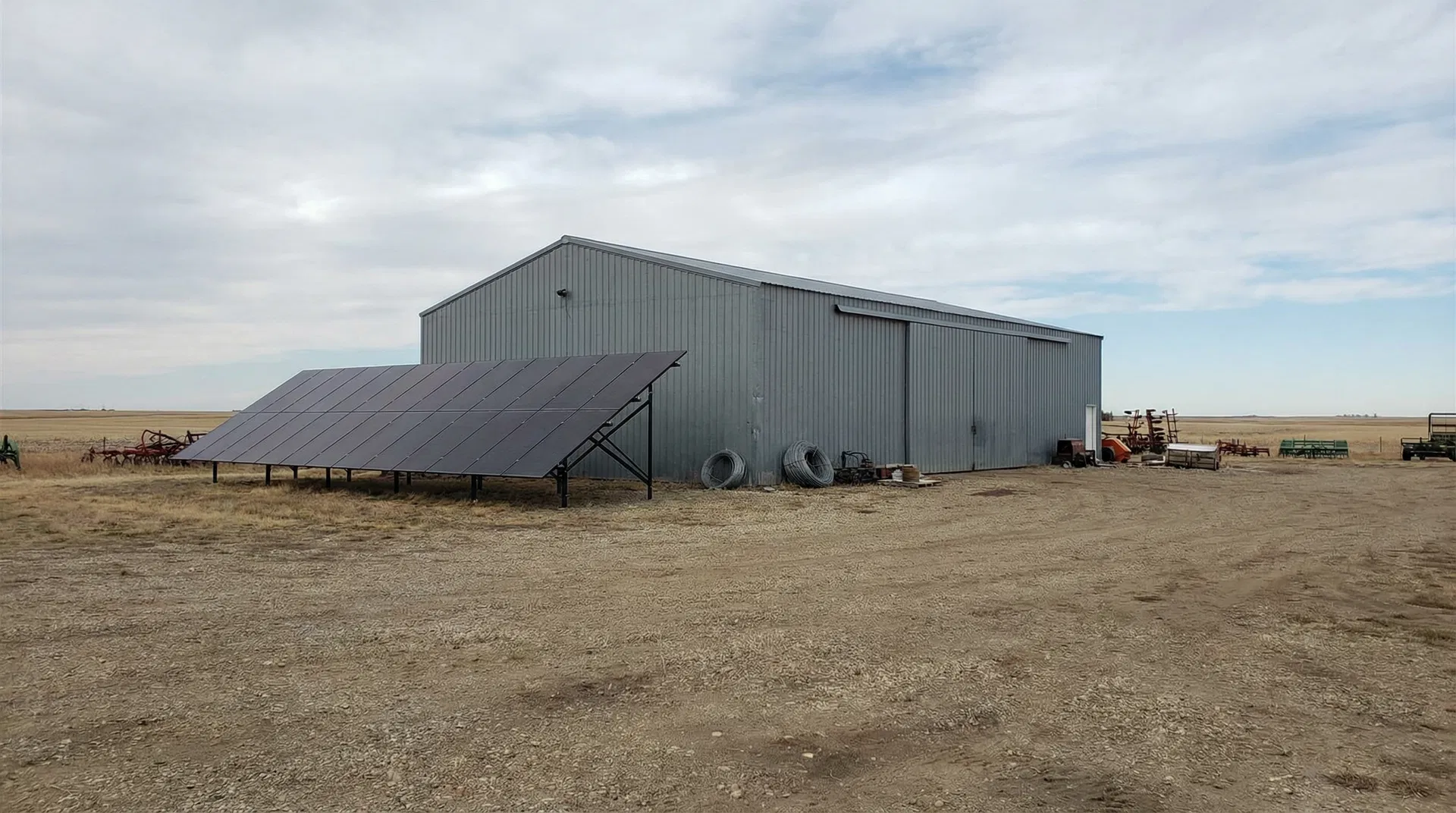
Properties near Lethbridge that go off-grid typically carry more load than a standard urban home. You're not just running a house. You might be running a house, a heated shop, a wellhead, an outbuilding, and seasonal irrigation equipment. Each of those loads has to be accounted for in the battery bank and panel capacity, because there's no grid to fill the gap when generation is short. Roof versus ground mount is a real decision on acreage and farm layouts. Some properties have a good south-facing roof with no shading issues and plenty of space. Others have a shop roof that faces the wrong direction, tree cover on the house, or a yard layout where a ground-mount array 50 metres from the building makes more sense. We don't default to one or the other. We look at the site and recommend what actually works. We size every system from the 12-month usage graph on your most recent power bill. That graph shows your highest-consumption months and your lowest, which tells us how much storage you need to carry through low-generation periods and how large the array needs to be to keep the bank healthy through shoulder seasons. Rule-of-thumb numbers don't account for a heated shop that pulls hard in January or irrigation loads that spike in July. Your bill does. We provide honest production estimates based on your actual power bills and site conditions, not inflated projections.
Typical Load Profiles We Design For Near Lethbridge
Year-Round Residence with Heated Shop
A full-time home combined with a heated shop is one of the most common off-grid load profiles we see on rural properties near Lethbridge. The shop typically adds significant winter draw through heating elements, compressors, and lighting, which means the battery bank has to be sized to cover overnight and multi-day low-generation periods in the coldest months. We pull the 12-month graph from your most recent power bill to identify the peak months and size the system around them, not the average.
Seasonal Cabin with Water Pump and Lighting
A seasonal cabin with a water pump, basic lighting, and small appliances sits at the lower end of our 5 to 15 kW service range. A 5 to 6 kW array with a modest lithium battery bank is often enough for a property that's used heavily in summer and lightly or not at all in winter. The design still requires a proper load inventory and shading assessment, because a system that's undersized for a peak weekend of use is as frustrating as one that's oversized and expensive.
Irrigation Pump Station
Remote irrigation pump stations near Lethbridge are a strong fit for off-grid solar because the load is predictable and seasonal. The pump runs hard during the growing season and sits idle the rest of the year, which shapes the storage and array sizing differently than a year-round residence. We size these systems for the peak pumping load and daily runtime, with enough battery capacity to handle overnight demand without a generator running every morning.
City of Lethbridge Interconnection in Lethbridge
For grid-tied solar in Lethbridge, the City of Lethbridge is the wire service that reviews and approves micro-generation applications. That's a different path than most rural Alberta properties, which fall under a rural wire service. For off-grid systems, the City of Lethbridge interconnection process doesn't apply in the same way, because an off-grid system doesn't connect to the distribution grid. There's no micro-generation application, no export agreement, and no meter to configure for two-way flow. The system operates independently of the utility. That said, some properties near Lethbridge want a hybrid approach: a battery-backed solar system that can island during an outage but also stays connected to the grid. If that's the scenario, City of Lethbridge interconnection rules do apply, and we handle the application package on your behalf. We design to meet the utility's technical requirements and work through the approval process so you don't have to.
Project Economics and Design Review
| System Size | Annual Production | Year 1 Savings | Payback Period |
|---|---|---|---|
| 5-15 kW range, 8 kW typical |
Production, savings, and payback figures require a property-specific design and your most recent power bill before any numbers can be confirmed.
How We Work in Lethbridge
Bill and Load Review
We review your power bill to understand your energy use in Lethbridge and size the system to your actual consumption — not a generic estimate.
Site Assessment
We assess your roof or ground area, south-facing exposure, electrical service, and utility interconnection requirements specific to your property.
Design and Utility Application
We produce a system layout, production estimate, and cost summary, then submit your micro-generation application to your utility on your behalf.
Installation and Commissioning
Our crew installs racking, panels, inverter, and electrical connections. All work is performed by licensed electricians. We commission and test before handoff.
Current Program and Interconnection Review
Utility connection review
For hybrid systems that connect to the grid, the City of Lethbridge reviews micro-generation applications for properties within their service territory. Range Road Solar prepares the design package and submits the application on your behalf. For fully off-grid systems, no utility interconnection application is required.
Current program review
Commercial, farm, and residential off-grid projects may have eligibility for current provincial or federal programs, depending on property type and system configuration. We review current rules at design time, because eligibility criteria and program availability change. We don't apply outdated program information to a new project.
Frequently Asked Questions
Get a Solar Assessment for Lethbridge
Submit a recent power bill and we will review your consumption and provide an honest assessment for your Lethbridge property. No obligation.
(587) 330-7502 Book a CallMore Solar Services in Lethbridge