
Off-grid solar in Strathmore, Alberta means building a system that works completely on its own, independent of any FortisAlberta line. We use LONGi panels on every off-grid install we do in this area, the same panel we spec for grid-tied jobs, because the module itself doesn't change based on whether a property stays on the grid. What changes is everything behind the panels. Off-grid systems need a hybrid inverter and a lithium battery bank to form their own power, so we don't run the APsystems microinverters we use on grid-tied homes nearby. A microinverter needs the grid, or a compatible battery system, to sync against; an off-grid property needs an inverter that can create its own sine wave from a standing start, every morning. We see two common property types in this area: the seasonal cabin or hunting camp where a modest battery bank covers lights, a fridge, and maybe a water pump, and the year-round acreage home where the system has to carry a well pump, a shop, and winter heating loads without a grid to lean on. The system size range for off-grid work here runs from 5 to 15 kW, with an 8 kW system typical for a mid-size home. Where that number lands for your property depends on your load list and how much battery capacity you want between charges, which is exactly what we work out in the design review before we order equipment.
Solar Planning for Strathmore Properties
Strathmore, Alberta incorporated as a town in 1911, and the area has grown from 13,756 residents to 14,339 today. That growth has pushed homes and acreages further out past the edge of town, onto properties where running a FortisAlberta line isn't always the cheapest option. Off-grid solar is the path we design for those properties: a system sized to carry the home, and sometimes a shop or outbuilding, without ever touching the grid. We don't guess at system size from a sunshine chart. Environment Canada's climate normals for the Calgary Int'l A station put this area around 2,396 hours of bright sunshine a year, which is useful context, but it's not how we size a system. What actually drives the numbers is your most recent power bill and the loads on the property: a cabin near Kinsmen Park with a small fridge and lights needs a different battery bank than a year-round home running a well pump and a shop heater through an Alberta winter. Off-grid work out here means no interconnection paperwork and no FortisAlberta application, because the system never ties into their lines. It also means the design has to be right the first time: no grid backup if the battery runs low. We confirm every sizing decision through a site visit and a load review before we spec the panels, inverter, and battery bank.
Electrical Site Review for Strathmore Properties
Voltage Rise
Voltage rise occurs when a distribution feeder runs a long way out from the substation, and rural properties on the outer edge of FortisAlberta's network can see voltage sit higher than near town. For a grid-tied inverter, that matters because the inverter has to curtail or clip output once voltage climbs past its safe threshold. Off-grid systems don't contend with feeder voltage rise the same way since they aren't tied to the line, but we still confirm the inverter's input and output voltage windows match the battery bank and load, for the same underlying reason: keep the system working inside its rated range.
Single-Phase vs Three-Phase
Most residential properties in this area run single-phase service, but some farmsteads and shops run three-phase, especially where there's a grain dryer or a larger motor load. For an off-grid system, phase matters because the inverter has to match the loads it's carrying: a single-phase hybrid inverter can't run three-phase equipment, so a property with mixed loads may need multiple inverters or a different inverter class entirely. We confirm what's actually on the property, circuit by circuit, before we spec inverter count and capacity.
Panel Infrastructure
Rural properties nearby often have an electrical panel that's older than the rest of the build, especially on acreages where the house has been added onto over the years. We check breaker capacity and panel age before finalizing a design, because an off-grid system's main panel still has to safely carry everything the inverter feeds into the house. If the existing panel can't support the added circuits or doesn't have room for a backup breaker, an upgrade becomes part of the project before installation starts.
Service Entrance Review
We review the service entrance and any existing meter base on the property as part of every off-grid design, even though the system itself won't connect to the grid. That review tells us whether there's a prior service we're replacing or working alongside, and whether its condition affects where we can safely terminate the new system's wiring. If an upgrade to the entrance equipment is needed to support the off-grid system safely, we scope that work into the project plan up front.
Right-Sizing Solar for Strathmore Properties
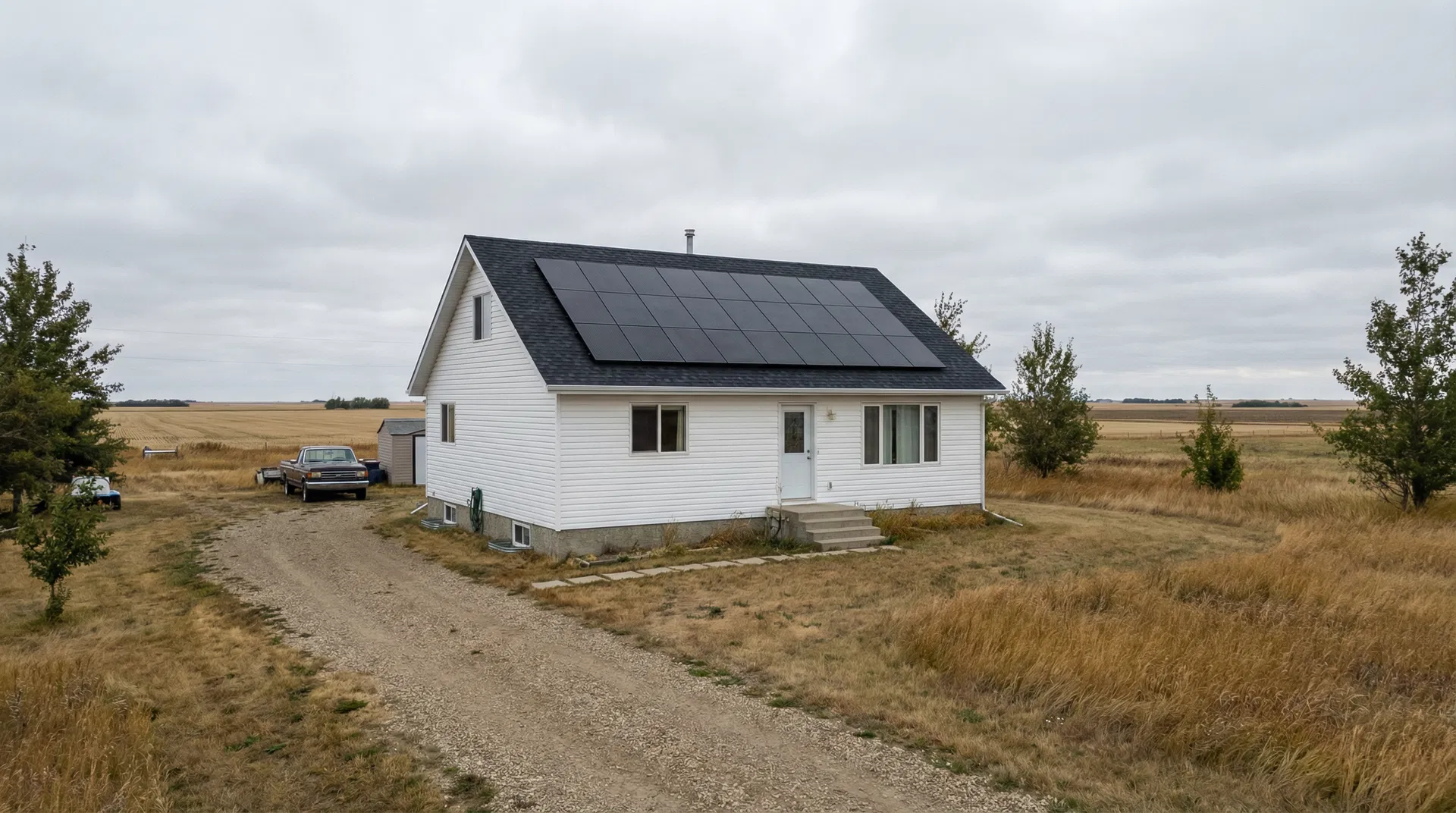
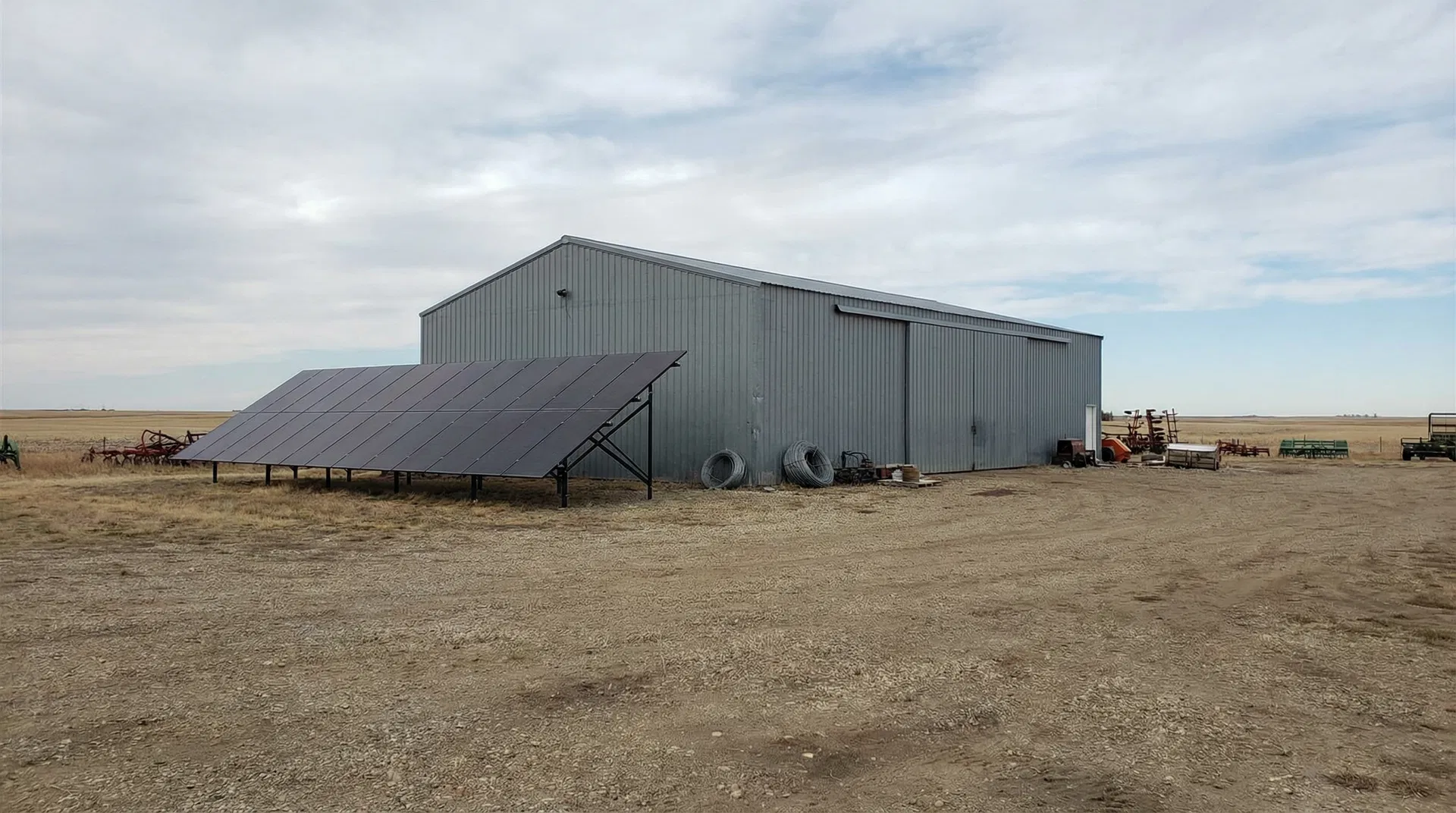
Off-grid systems in this area tend to run bigger than a typical in-town grid-tied home, because there's no grid to lean on when the load list grows. A property might need to carry a house, a shop, a well pump, and maybe a grain bin aerator or two, all from the same battery bank, which pushes the design toward the top of the 5 to 15 kW range rather than the bottom. Roof versus ground mount comes down to what the property actually looks like. A roof with a clean southern exposure and no nearby trees or outbuildings casting shade is often the simpler, cheaper mount. Ground mount becomes the right call when the roof is shaded, pitched wrong, or when the yard is spread out with open land available. For a lot of acreages nearby, ground mount also puts the array closer to the battery and inverter shed, which keeps wire runs shorter. We size every system from the 12-month usage graph on your most recent power bill where one exists, not a rule-of-thumb number per square foot or per occupant. That graph shows us the seasonal swing, winter heating loads against summer baseline, which tells us how much battery capacity and panel output the property actually needs. Where there's no existing bill because the site has never had power, we build the load list from what's going to run on the property and size from there.
Typical Load Profiles We Design For Near Strathmore
Cabin or Camp
A seasonal cabin or hunting camp in this area usually has the simplest load list we design for: lights, a fridge, maybe a water pump and a few outlets. These are the lowest-draw off-grid systems we build, often sitting toward the lower end of the 5 to 15 kW range, with a battery bank sized for a few cloudy days rather than a full Alberta winter of continuous use.
Year-Round Acreage Home
A year-round home on an acreage nearby carries a different load entirely: a well pump, a furnace blower or in-floor heat circulator, a fridge and freezer, and normal household electronics running every day of the year. These systems sit toward the middle to upper end of our 5 to 15 kW range, with a battery bank sized to carry the house overnight and through stretches of low sun.
Home Plus Shop
Where a property adds a heated shop, a welder, or farm equipment charging to the house load, the system has to size for two buildings instead of one. We look at whether the shop runs occasionally or daily, because a welder used a few times a week draws very differently than a shop heater running continuously through winter, and that distinction changes both panel count and battery capacity.
FortisAlberta and Off-Grid Systems in Strathmore
FortisAlberta is the wire service across this area, but an off-grid system is built specifically not to interconnect with it. There's no micro-generation application to file and no meter to swap, because the system never ties into FortisAlberta's lines in the first place. That's the whole point of going off-grid: independence from the grid, not a modified connection to it. We still ask about the property's existing service, if there is one, because it tells us whether we're designing a new standalone system or replacing a grid tie that's already in place. If a property later wants to add a limited grid connection alongside the off-grid system, that's a separate FortisAlberta application, and we'd handle that design and paperwork at that time. For now, off-grid systems here are sized, wired, and permitted as self-contained power systems, confirmed through a site review rather than a utility interconnection process.
Project Economics and Design Review
| System Size | Annual Production | Year 1 Savings | Payback Period |
|---|---|---|---|
| 5-15 kW range, 8 kW typical |
Production, savings, and payback numbers are only provided after a property-specific design review that includes your most recent power bill and site conditions.
How We Work in Strathmore
Bill and Load Review
We review your power bill to understand your energy use in Strathmore and size the system to your actual consumption, not a generic estimate.
Site Assessment
We assess your roof or ground area, south-facing exposure, electrical service, and utility interconnection requirements specific to your property.
Design and Utility Application
We produce a system layout, production estimate, and cost summary, then submit your micro-generation application to your utility on your behalf.
Installation and Commissioning
Our crew installs racking, panels, inverter, and electrical connections. All work is performed by licensed electricians. We commission and test before handoff.
Current Program and Interconnection Review
Utility connection review
An off-grid system doesn't connect to FortisAlberta's lines, so there's no micro-generation application for us to file on your behalf. If a property keeps or adds a separate grid-tied service alongside the off-grid system, FortisAlberta reviews that connection application, and we handle the design package for it.
Current program review
Commercial, farm, and residential eligibility for any current program is reviewed against the rules in place at the time of your design, whether the property is a cabin, a working farm, or a full-time home. We check this during the design review rather than assuming a rate or rule applies.
Frequently Asked Questions
Get a Solar Assessment for Strathmore
Submit a recent power bill and we will review your consumption and provide an honest assessment for your Strathmore property. No obligation.
(587) 330-7502 Book a CallMore Solar Services in Strathmore