
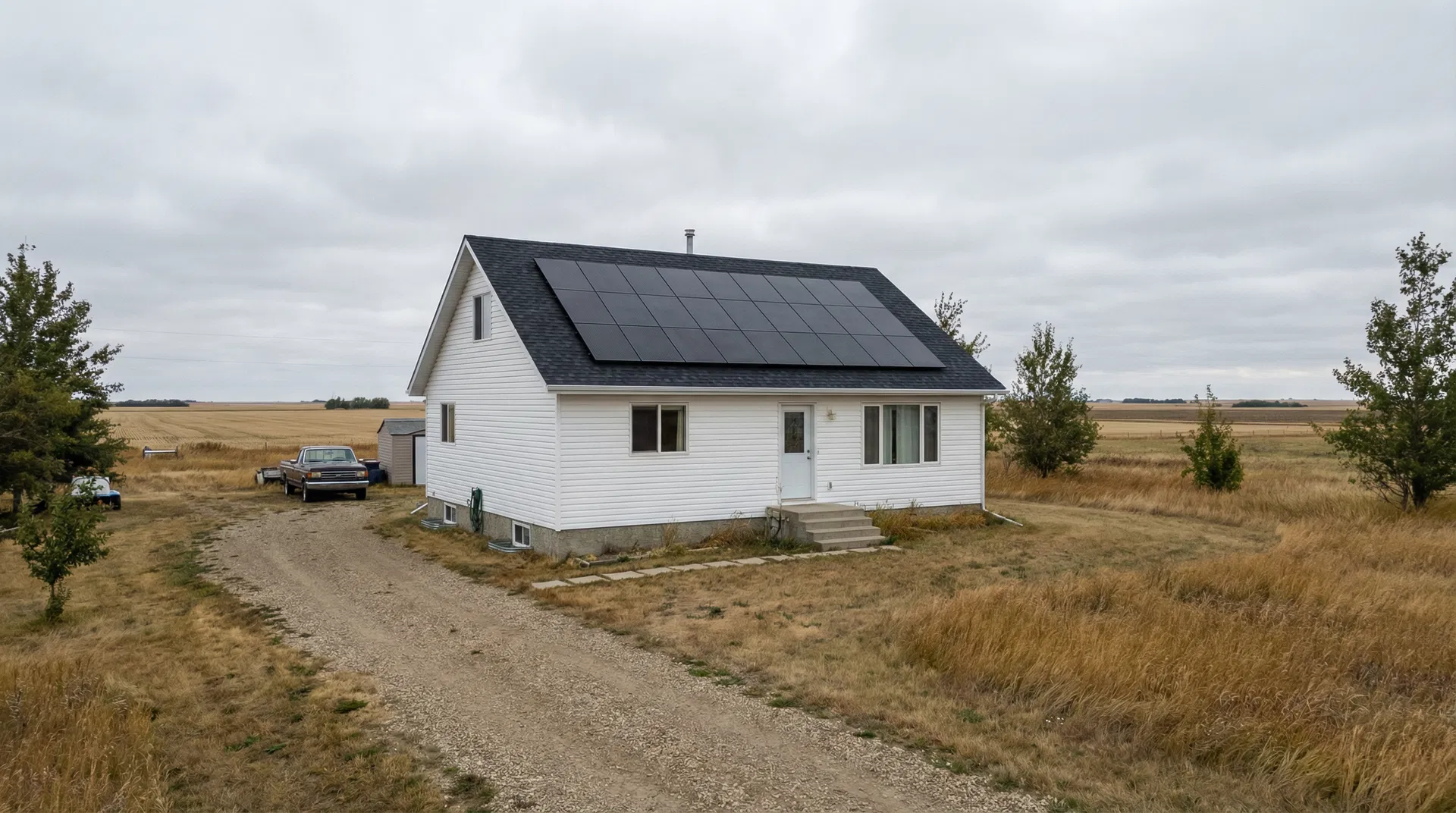
Solar cost in Strathmore, Alberta is built from a handful of line items you can check yourself: panels, microinverters, racking, electrical work, and labour. Our residential systems here run from 8 to 15 kW, with 10 kW as the typical starting point, and every system uses LONGi panels paired with APsystems microinverters. The microinverters sit on the panels themselves, so shade on one section of the roof doesn't drag down the whole array. That matters on acreage roofs where a tree line, a yard light, or a neighbouring outbuilding throws shadow on part of the array at certain hours. A residential install is usually a roof mount on a house or detached garage, with the array sized to the roof space and to the load on your most recent power bill. Where the roof is steep, shaded, or too small for the system you need, we price a ground mount alongside it so you can compare the two. Farm and acreage properties often have a shop roof or an open yard, and each one gives us a different install path with its own racking, trenching, and wire run. Pricing moves with the racking, the trenching, and the length of wire between the array and your panel. Electrical work is often the swing item. A service upgrade or panel replacement adds cost, and we show it as its own line in the design so you can decide before you commit. Our design review covers roof pitch, shading, orientation, and the condition of your existing electrical service. If a quote doesn't show you those details, ask why.
Solar Planning for Strathmore Properties
Solar planning here starts with the property, not a catalogue. A home with a yard, a farmstead with a shop and grain bins, and a small acreage with a barn all need different answers about roof space, shading, and where the wires run. We look at what's actually on the ground before we talk about panels. Alberta's electricity market is deregulated, which means the company that bills you and the company that owns the poles and wires are often different businesses. The wire service for this area is FortisAlberta, the utility that reviews your grid connection, so it's the one we coordinate with on every system. The Strathmore Stampede is part of local life, and the Strathmore Golf Club and Kinsmen Park are landmarks most people here know. Those details matter less than the physical site, but they help us talk through the choices with you: a roof mount or a ground mount, and whether a shop roof can take a row of panels. We don't start with a generic kit. We start with your roof pitch, your tree line, your outbuildings, and your most recent power bill, then build the plan from there.
Electrical Site Review for Strathmore Properties
Voltage Rise
Voltage rise is the increase in local line voltage that can occur when a solar system pushes power back onto the distribution line. How much it climbs depends on the distribution conditions at your property, not only on the size of the array. When voltage gets high enough, the inverter may clip output or reduce production, so we factor that into how large a system the site can take.
Single-Phase vs Three-Phase
Rural properties can have single-phase or three-phase service, and the difference shapes which inverter fits and how much capacity the site can support. A single-phase service typically matches a standard residential inverter setup, while a three-phase service can take larger systems and three-phase equipment. We confirm which one you have before we select the inverter and set the array size.
Panel Infrastructure
Older electrical panels on rural properties may have been sized for a lighter load than a solar array plus a shop. We check the panel's rated amperage, the open breaker spaces, and the age and condition of the equipment. If the panel can't support the system, the upgrade usually means replacing the panel and adding the breakers the array needs, and we show that cost in your design before you commit.
Service Entrance Review
We review the service entrance and meter base as part of every design, because FortisAlberta looks at that equipment when it reviews a micro-generation application. We check the meter base condition, the service mast or weatherhead, and the rated size of the service. If the entrance needs an upgrade before the system can connect, we'll explain what that involves in the design package.
Right-Sizing Solar for Strathmore Properties
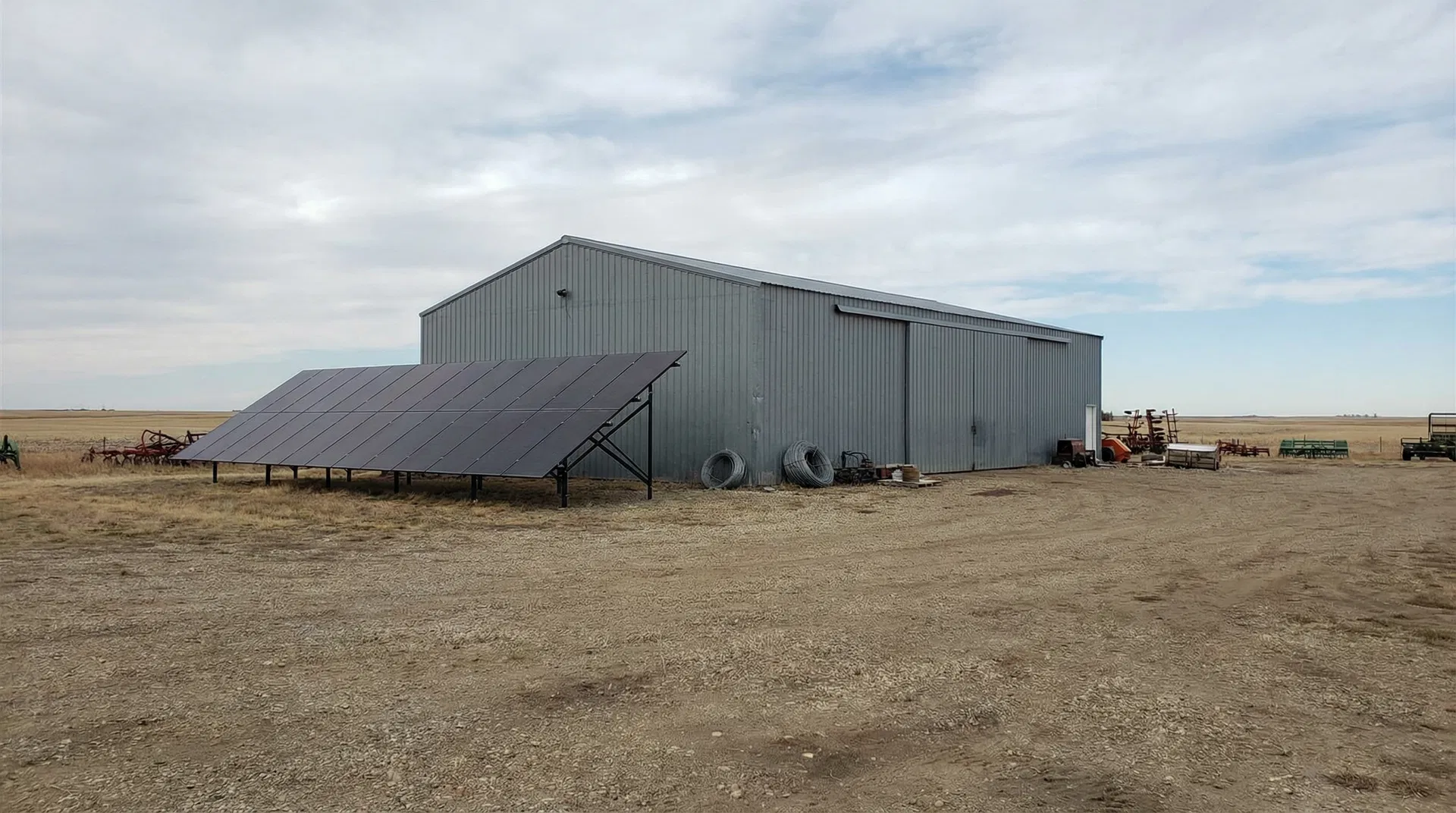
Rural properties rarely run on one load. The house is only part of the picture. A shop with a welder, a block heater on the yard plug, an irrigation pump, or grain handling equipment can each add a real share to what you use in a year. That's why a rural system is often larger than an urban rooftop install, and why we size for every load on the property, not just the kitchen and the furnace. The first decision is roof or ground mount. A roof mount is usually the simpler install when the roof is sound, faces a workable direction, and sits clear of trees and neighbouring buildings. A ground mount makes more sense when shade cuts into the roof, the pitch is poor, the roof is too small for the array you need, or the yard has open ground and you'd rather keep the roof for the shop. Acreage and farm layouts often have that open ground, so we price a ground mount side by side with the roof rather than assuming one. The sizing itself comes from your usage, not a rule of thumb. We read the 12-month usage graph on your most recent power bill, which shows how your load moves across the year. A shop that runs in bursts looks very different from a house that draws steady power all day, and the graph shows which pattern you have. We then match that pattern to the roof or ground space and the capacity of your service. Your power bill and the site design work together. The bill shows what you use, and the design shows what the property can physically hold. Where those two meet is where we land on system size, which for this service runs from 8 to 15 kW.
Typical Load Profiles We Design For Near Strathmore
Home + Heated Shop
A house with a heated shop puts two different daily patterns on one service. The house draws steady power through the day, while the shop heater and compressor run in short, heavy bursts. We read the 12-month usage graph on your most recent power bill to see how those loads overlap, then size the array to cover the steady base without chasing the spikes.
Home + Irrigation Pump
A home with a well pump and a 5 HP irrigation pump adds a load that can run for hours at a stretch when the field needs water. Those long runs show up as a distinct peak on the 12-month usage graph, and that peak tells us whether the pump is best covered by the array or handled on its own circuit. We confirm the pump's nameplate rating and starting current before we choose the inverter count.
Outbuildings + Grain Handling
This profile covers a home on a 200 amp service with two outbuildings and a 240 volt grain auger on its own circuit. The auger draws hard for short periods, so it matters for panel capacity more than for total daily use. We use the 12-month usage graph on your most recent power bill to see when those loads run and whether the service can take the array without an upgrade.
FortisAlberta Interconnection in Strathmore
Properties here are served for electricity distribution by FortisAlberta, which means every solar system connecting to the grid goes through a FortisAlberta micro-generation application. We handle that application for you. Our team prepares the design package, including the equipment details, the single line information, and the site information FortisAlberta needs to review the connection. You don't need to work out which forms apply or how they fit together. The one document we ask you for is your most recent power bill, which tells us how your site uses power and which service details we need to check. We don't promise a review timeline or a specific outcome, because FortisAlberta sets that process, not us. What we can promise is a complete package, checked before it goes in, so there are fewer questions back and forth. If the service entrance or meter base needs work before the connection can proceed, we'll flag it during design, not after the paperwork is filed.
Project Economics and Design Review
| System Size | Annual Production | Year 1 Savings | Payback Period |
|---|---|---|---|
| 8-15 kW range, 10 kW typical |
Production, savings, and payback require a property-specific design and your most recent power bill.
How We Work in Strathmore
Bill and Load Review
We review your power bill to understand your energy use in Strathmore and size the system to your actual consumption, not a generic estimate.
Site Assessment
We assess your roof or ground area, south-facing exposure, electrical service, and utility interconnection requirements specific to your property.
Design and Utility Application
We produce a system layout, production estimate, and cost summary, then submit your micro-generation application to your utility on your behalf.
Installation and Commissioning
Our crew installs racking, panels, inverter, and electrical connections. All work is performed by licensed electricians. We commission and test before handoff.
Current Program and Interconnection Review
Utility connection review
FortisAlberta reviews grid connection applications for properties in this area, and every system we design goes through that review. Range Road Solar prepares the design package and handles the application for you.
Current program review
Commercial, farm, and residential eligibility is checked against current rules at the design stage. We don't name or describe any specific program here, because eligibility depends on your property and your project type.
Frequently Asked Questions
Get a Solar Assessment for Strathmore
Submit a recent power bill and we will review your consumption and provide an honest assessment for your Strathmore property. No obligation.
(587) 330-7502 Book a CallRelated Resources
More Solar Services in Strathmore