
Commercial solar in Strathmore, Alberta covers a lot of ground: retail storefronts, ag-service operations, warehouses, and standalone commercial buildings, and we size every system to the load rather than a packaged offering. Systems for this service run from 15 kW up to 100 kW, with most projects here landing around 30 kW once we've reviewed the building's actual draw against its roof or yard space. We install LONGi panels across the array as our default, paired with APsystems microinverters on smaller commercial roofs where partial shading or multiple roof planes make panel-level monitoring worthwhile. On larger arrays, string inverters are often the better call: fewer components to service, simpler wiring runs, and a layout that suits a single open roof plane or a ground-mount field. Commercial buildings around here tend to have flatter roofs, membrane roofing, or standing-seam metal, and each of those needs a different mounting approach, from ballasted racking to standoff attachments. We also look at whether the property has room for a ground-mount array if the roof isn't a good candidate, whether that's shading from an adjacent structure, a roof nearing the end of its service life, or simply not enough square footage for the load the business needs to offset. Every system we quote gets tied back to your most recent power bill and a walkthrough of the site, not a generic per-square-foot estimate. That includes reviewing your panel capacity, your service size, and whether the building's electrical infrastructure needs any upgrades before an array gets tied in.
Solar Planning for Strathmore Properties
The population here has grown from 13,756 to 14,339 over the last census cycle, and that growth shows up in the mix of buildings Range Road Solar gets called out to: retail units, ag-service shops, and standalone commercial pads scattered around a town that was incorporated back in 1911. A lot of that commercial stock has been added onto, re-roofed, or re-wired over the decades, so no two buildings behave the same way once you start planning an array. Some properties see seasonal spikes tied to events like the Strathmore Stampede, others run steady year-round loads. Before we talk system size, we walk the roof or the yard, check the electrical service, and look at how the business actually draws power hour to hour, not just on paper. A storefront doesn't pull power the same way a shop running welders and compressors does, and a design that ignores that difference is a design that doesn't fit. That's why every commercial project starts with a site visit and your most recent power bill instead of a number lifted from a bigger city's case study. We're not interested in handing over a proposal that doesn't match the building it's for.
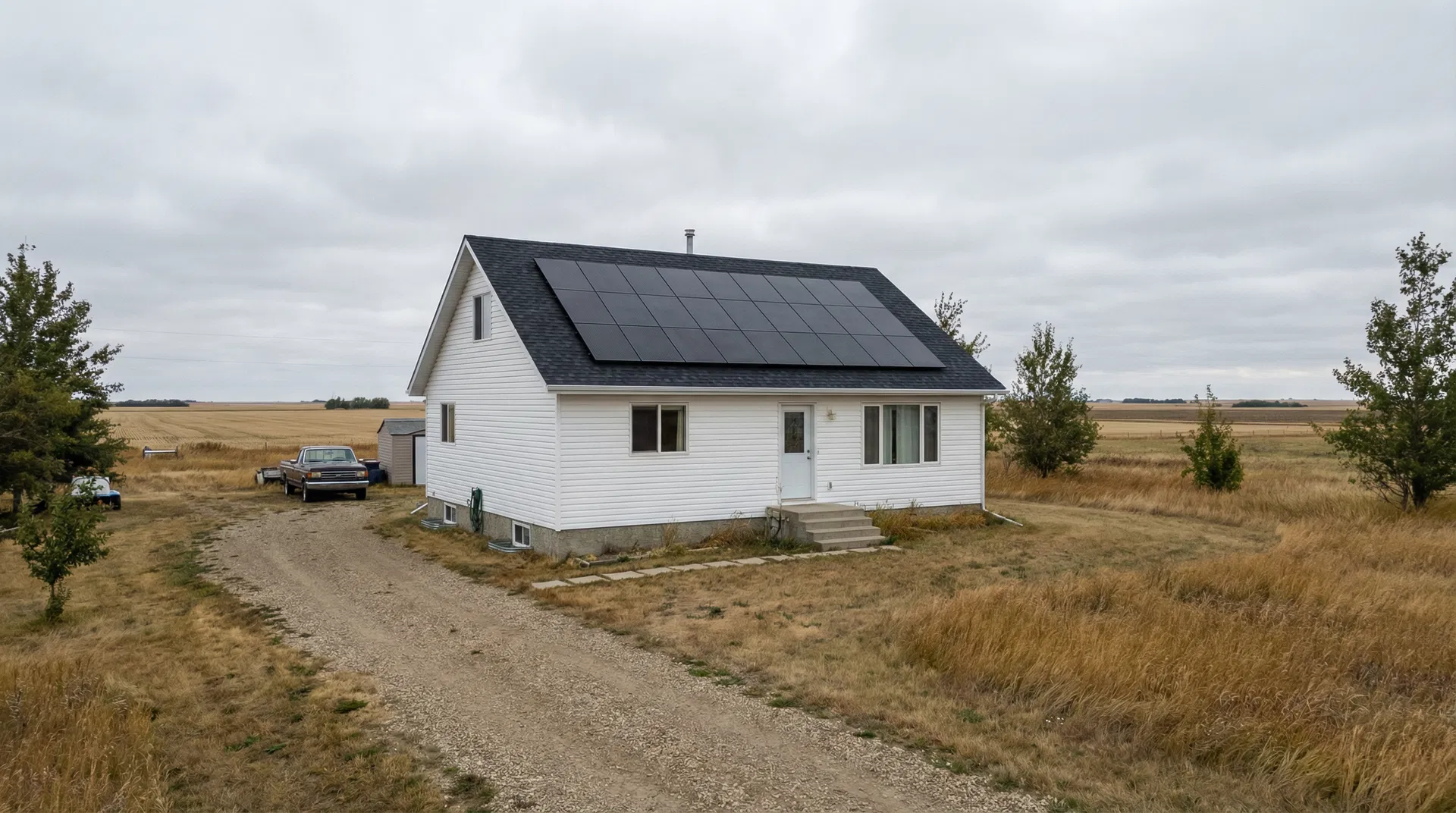
Electrical Site Review for Strathmore Properties
Voltage Rise
Voltage rise happens when the power a solar array pushes back onto a circuit raises the voltage at the point of connection, and it's more of a factor on longer distribution runs or older wiring. We measure conductor length and existing voltage conditions during the site review so inverter settings and system sizing account for it up front. Left unchecked, voltage rise can trigger inverter clipping or shutdowns exactly when the array is producing the most.
Single-Phase vs Three-Phase
Commercial buildings in this area run on either single-phase or three-phase service, and that split shapes which inverters we can spec and how much capacity the system can carry. Three-phase service generally opens up larger inverter options and more balanced loading across bigger arrays, while single-phase service caps what a single system can support. We confirm which service type a building has before we finalize equipment selection, not after.
Panel Infrastructure
Older commercial electrical panels don't always have the breaker capacity or physical space to accept a solar backfeed, so we check panel age, busbar rating, and available breaker slots as part of every site visit. We're looking for signs of an outdated or undersized panel that would bottleneck the system before it's even installed. If the panel can't support the array, an upgrade means a new panel sized to both the existing building load and the solar addition, done ahead of the solar install.
Service Entrance Review
We check the condition of the service entrance conductors and the meter base itself, since a worn or undersized meter base can hold up the whole project. The meter base condition matters directly for the micro-generation application to FortisAlberta, since the utility reviews the point of connection as part of that process. If an upgrade is required, we scope it as part of the project plan rather than discovering it mid-install.
Right-Sizing Solar for Strathmore Properties
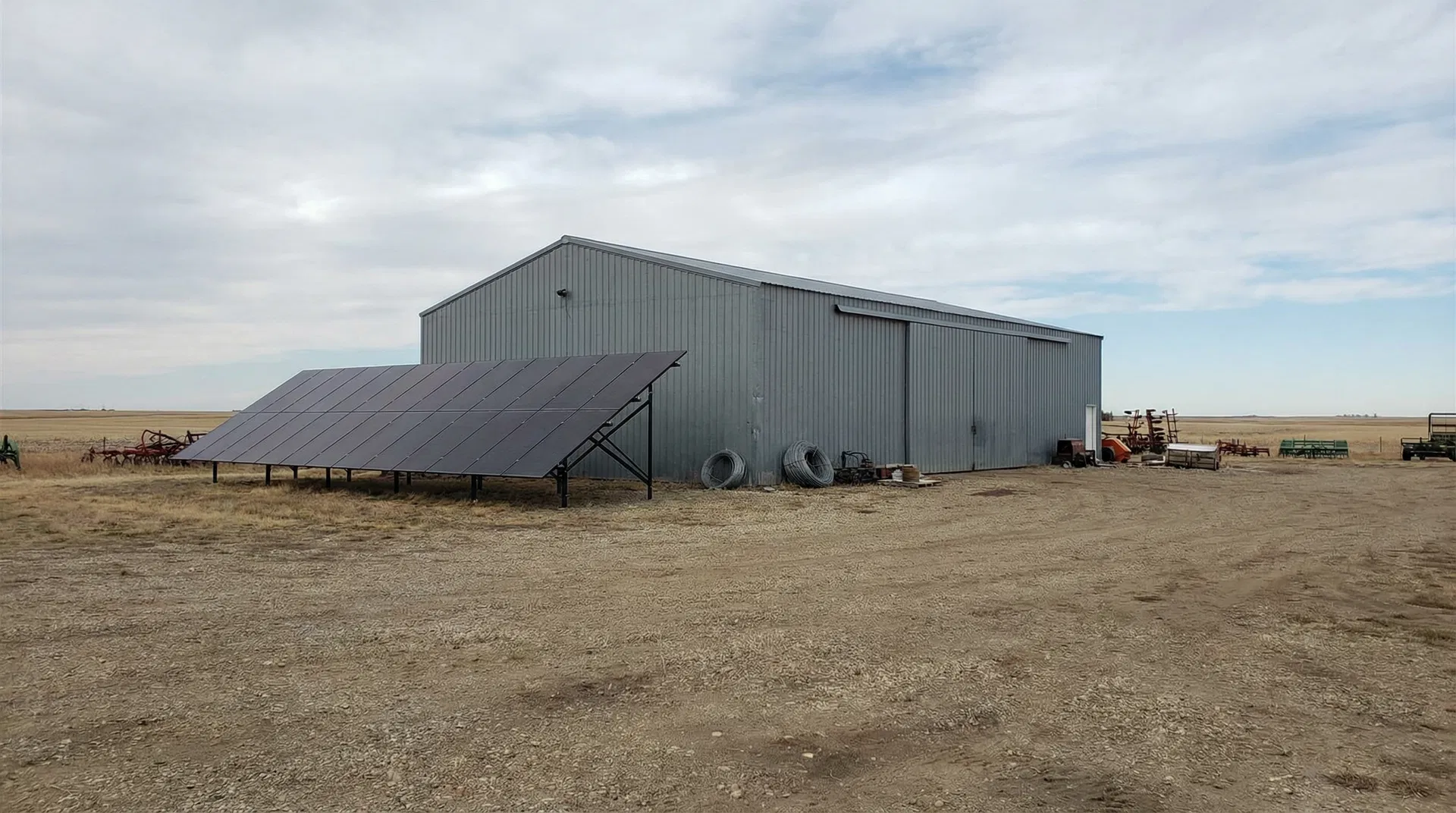
Commercial and rural Alberta properties tend to need bigger systems than a typical urban home, simply because there's more going on behind the meter: the main building, a shop, outbuildings, sometimes irrigation or grain-handling equipment all drawing from the same service. That's a different starting point than sizing a house, and it changes how we approach the roof-versus-ground-mount decision. A roof-mount makes sense when there's enough unshaded, structurally sound roof area to carry the array. Ground mount becomes the better call when trees or neighboring buildings shade the roof, when the roof pitch or orientation works against panel output, or when the property has open yard space that makes a ground array easier to install and service than fighting a bad roof. Either way, we don't size a system off a rule-of-thumb number per square foot or per building type. We pull the 12-month usage graph off your most recent power bill and size the array against the load pattern that graph actually shows, including seasonal swings in usage. Combined with a site walk covering shading, roof condition, and available space, that usage graph and your current bill are what drive the final system size, not a generic formula. We treat the current bill's usage graph as the starting point for every quote, not a formula pulled from a spec sheet.
Typical Load Profiles We Design For Near Strathmore
Retail Storefront
A retail or office storefront typically runs a steady daytime load: lighting, HVAC, point-of-sale systems, and small equipment, with usage that tracks fairly closely with business hours. We size these systems off the daytime portion of your most recent power bill's usage graph, since that's when the array is actually producing and offsetting the load directly.
Shop or Warehouse with Equipment Loads
Buildings running welders, compressors, or other heavy equipment see sharper, less predictable load spikes than a storefront does. We look at how those spikes show up on the usage graph and design around the building's real draw pattern, not just its average monthly total, so the system is sized for how the equipment actually runs.
Ag-Service or Seasonal Operation
Businesses tied to agricultural service work or seasonal traffic often see usage swing significantly between busy and slow periods over the year. Your most recent power bill's 12-month usage graph shows that swing directly, and we size the system against the full pattern rather than a single month's snapshot.
FortisAlberta Interconnection in Strathmore
Commercial properties here are served by FortisAlberta's distribution network. Any commercial solar system we design gets built around FortisAlberta's micro-generation application process from the start, not bolted on afterward. Range Road Solar prepares and submits the full interconnection package on your behalf: single-line diagrams, equipment specifications, site plans, and the technical details FortisAlberta needs to review the connection. We handle the back-and-forth with the utility directly so you're not the one chasing down paperwork or tracking a file number. Because interconnection requirements and review processes can change, we confirm the current FortisAlberta application steps at the time we design your system rather than relying on what applied to a project last year. If your property has an unusual service configuration, such as a secondary meter, a shared transformer, or a service upgrade already in progress, we flag that during the site review so it's accounted for in the application before anything gets submitted.
Project Economics and Design Review
| System Size | Annual Production | Year 1 Savings | Payback Period |
|---|---|---|---|
| 15-100 kW range, 30 kW typical |
Production, savings, and payback figures require a property-specific design and your most recent power bill before we can quote them.
How We Work in Strathmore
Bill and Load Review
We review your power bill to understand your energy use in Strathmore and size the system to your actual consumption, not a generic estimate.
Site Assessment
We assess your roof or ground area, south-facing exposure, electrical service, and utility interconnection requirements specific to your property.
Design and Utility Application
We produce a system layout, production estimate, and cost summary, then submit your micro-generation application to your utility on your behalf.
Installation and Commissioning
Our crew installs racking, panels, inverter, and electrical connections. All work is performed by licensed electricians. We commission and test before handoff.
Current Program and Interconnection Review
Utility connection review
FortisAlberta reviews the micro-generation application for any commercial system tied into its distribution network, and Range Road Solar prepares and submits that design package on your behalf. We handle the technical documentation the application requires so the connection review moves through the utility's process without missing details.
Current program review
Commercial, farm, and residential solar projects each get reviewed against whatever incentive rules and eligibility criteria are current at the time we design your system. Rules and programs change, so we check what applies to your specific project during the design review rather than assuming last year's terms still hold.
Frequently Asked Questions
Get a Solar Assessment for Strathmore
Submit a recent power bill and we will review your consumption and provide an honest assessment for your Strathmore property. No obligation.
(587) 330-7502 Book a CallRelated Resources
More Solar Services in Strathmore