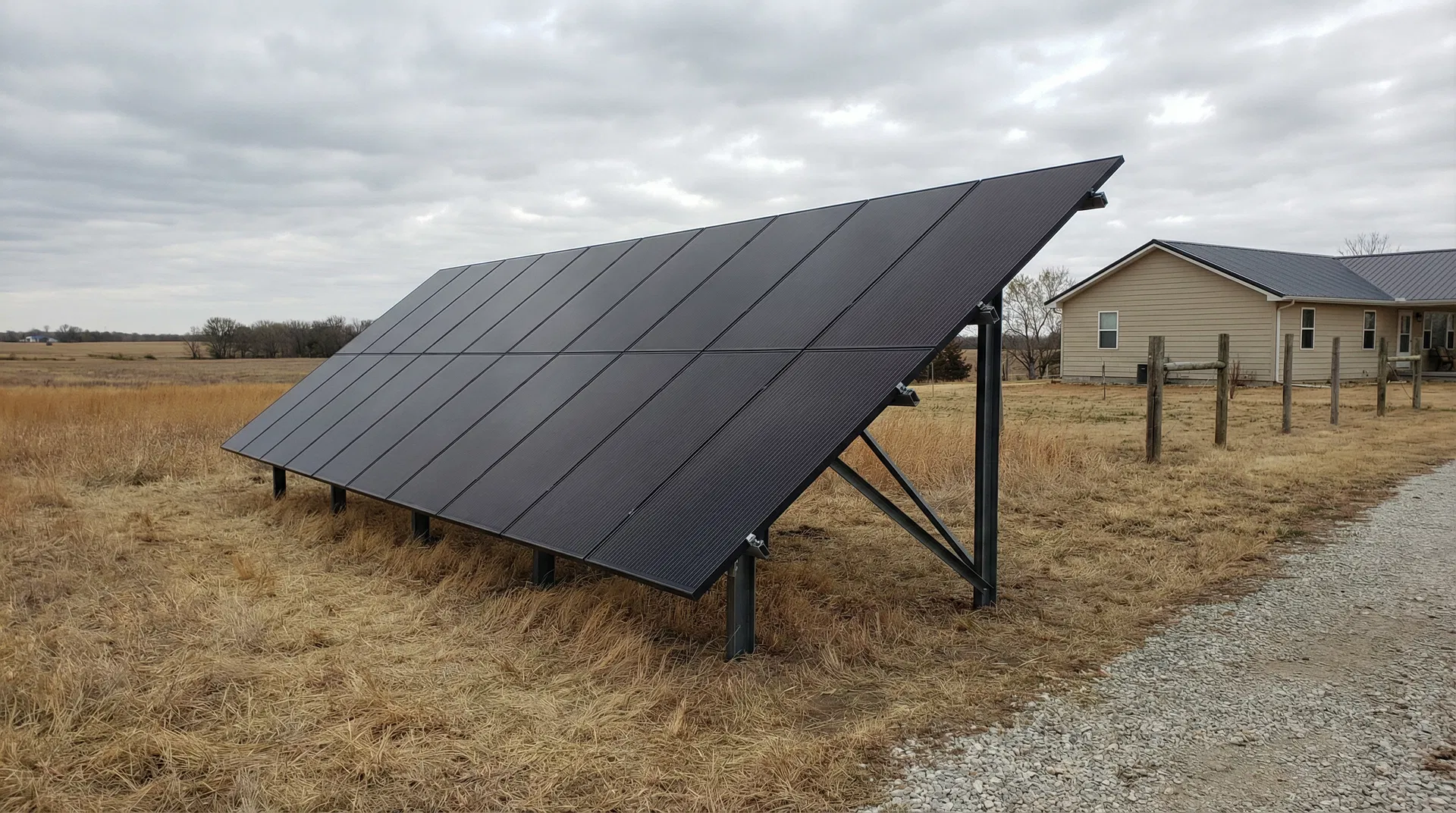
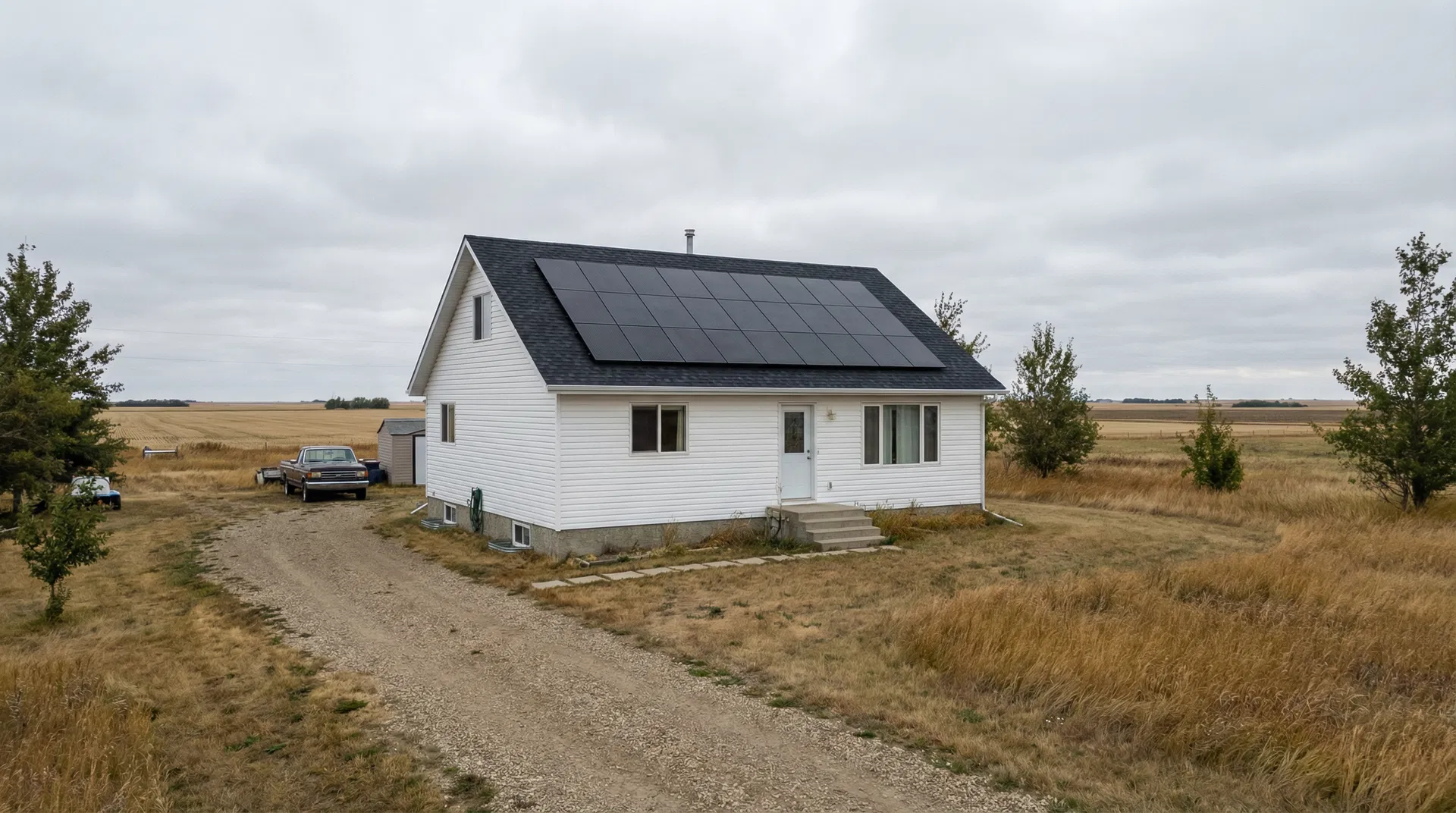
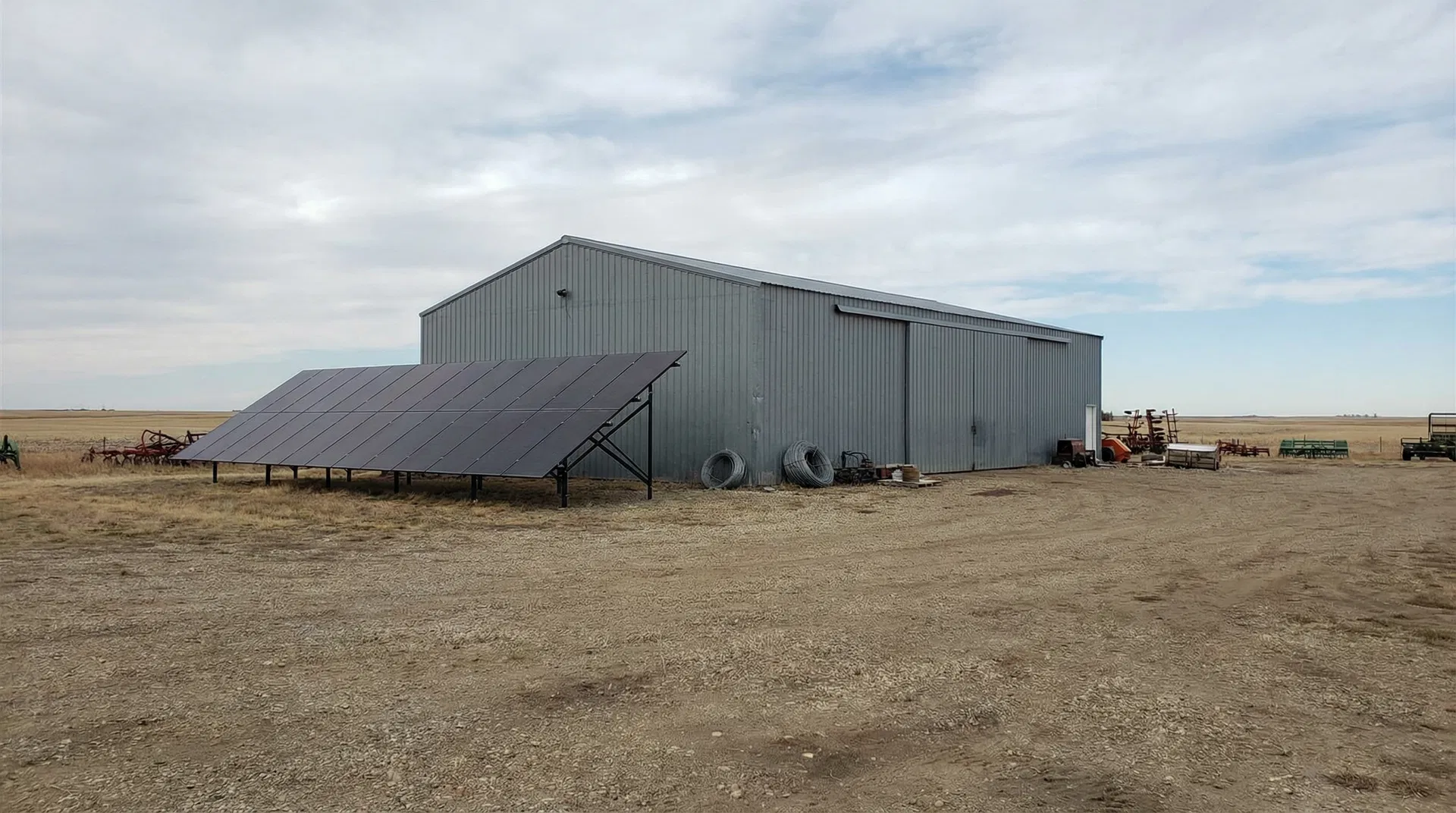
Farm solar strathmore alberta properties is exactly the kind of work Range Road Solar was built for. Agricultural systems in the 20-50 kW range sit in a category that most residential solar companies don't touch, and commercial-scale contractors often oversize for. We operate in that range every day. For most grain and mixed-use farm operations near Strathmore, we work with LONGi panels. They're a proven panel in production environments where durability matters and you don't want to be troubleshooting equipment a few years down the road. For inverters, we use APsystems microinverters on rooftop applications where per-panel monitoring and partial shading tolerance are a priority. On large ground-mount arrays, inverter selection is confirmed through the site design, because the right choice depends on your service type and the size of the array. Ground-mount is the default recommendation for farm systems in this size range. Most farms have available land that isn't doing much work, and a ground-mounted array isn't competing with roof pitch, obstructions, or the structural load limits of a shop roof that may have been built decades ago. Ground-mount also makes cleaning and maintenance easier when dust and chaff are part of the operating environment. That said, we install rooftop systems on farm buildings where the conditions support it. South-facing metal roofs with good pitch and no shading from bins or equipment sheds can carry a meaningful part of a farm's electrical load. We assess both options as part of the design review and recommend what actually makes sense for your yard layout.
Solar Planning for Strathmore Properties
Farms near Strathmore carry electrical loads that residential installers aren't used to working with. You've got the house, a heated shop, grain handling equipment, and sometimes irrigation all pulling from the same service. When you add those loads up over a full year, the case for a properly sized solar system gets a lot more straightforward than it does on a city lot. FortisAlberta is the wire service here, which means your micro-generation application goes through their process. We handle that paperwork, but your system has to be designed to meet their interconnection requirements from the start. Getting that right at the design stage keeps the application from stalling later. Farm properties in this area often have good options for ground mounting, which opens up system sizes that a shop roof alone can't support. Whether your setup calls for a rooftop array, a ground-mounted field array, or a combination of both, the right answer comes from your site layout and your most recent power bill. We don't quote a system size until we've looked at both.
Electrical Site Review for Strathmore Properties
Voltage Rise
Voltage rise happens when a solar system pushes power back toward the grid and raises the voltage at the point of connection above what the distribution line can handle. On rural distribution lines that run long distances between properties, the conditions that drive voltage rise can be more pronounced than on urban circuits. If voltage rise is a constraint on your property, it directly affects how aggressively your inverters can operate and how we size the system to stay within FortisAlberta's limits.
Single-Phase vs Three-Phase
Rural properties in Alberta are served by either single-phase or three-phase power depending on what the original service was built for. Farms with larger motors, grain handling equipment, or irrigation infrastructure are more likely to have three-phase service, while older or smaller acreages often have single-phase. The phase configuration of your service directly affects which inverter options work and what system capacity is practical without triggering a service upgrade.
Panel Infrastructure
Older farm properties often have electrical panels that weren't sized with a solar system in mind. We assess both the breaker capacity and the panel age during the site review, because a panel that's already at or near capacity can't support the new breaker a solar system requires without a service upgrade. If an upgrade is needed, we identify it early so it's part of the project scope from the start rather than a surprise mid-installation.
Service Entrance Review
The service entrance and meter base are reviewed as part of our site assessment because FortisAlberta's micro-generation application process requires that the meter base meet current standards. On older rural properties, the meter base can be outdated in ways that aren't obvious until you're preparing the interconnection package. If an upgrade is required, it needs to be coordinated with FortisAlberta before the application can move forward.
Right-Sizing Solar for Strathmore Properties
Farm systems near Strathmore don't size the same way residential systems do, and that's the first thing we tell people who call us after getting a quote from a residential installer. A house on an urban lot has one load profile. A farm property has several. The house, the heated shop, the grain dryer, the bin aeration fans, and any irrigation equipment can all be running off the same service, and they don't all run at the same time or in the same season. Because of that, we don't size from a square footage estimate or a rule-of-thumb kilowatt-per-acre number. We size from the 12-month usage graph on your most recent power bill. That graph shows us exactly how your loads shift across the year, which months are your heaviest consumption months, and how much generation capacity you actually need to make a meaningful offset against your real usage pattern. Roof versus ground mount is a real decision on farm properties, not a default. A south-facing metal shop roof with good pitch and no shading from bins or neighbouring buildings can carry a solid array. But if the roof is older, oriented the wrong direction, or shaded by grain bins in the afternoon, ground mount is usually the better call. Ground-mount also lets you size the array to your load rather than to whatever square footage happens to be available on the roofline. We look at both options on every property and recommend the configuration that matches your yard layout, your loads, and the interconnection requirements that apply to your service.
Typical Load Profiles We Design For Near Strathmore
Home + Heated Shop + Grain Handling
This is the most common farm profile we see in this part of Alberta: a house, a heated shop running through the winter, and grain handling equipment that draws heavily in the fall harvest window. The seasonal swing in consumption is significant, with fall and winter loads often doubling summer usage. We size the system from the 12-month usage graph on your most recent power bill so the array is matched to your full annual load pattern, not just your quietest months.
Grain Drying Operation
Operations with a grain dryer have a concentrated, high-draw load that runs intensively for a few weeks each fall. A 25-50 kW system won't fully offset a dryer in peak operation, but it can meaningfully reduce baseload consumption across the rest of the year while the dryer is idle. We'll show you exactly what a system in this size range offsets against your actual usage profile before you commit to anything.
Acreage Home + Outbuildings + Well Pump
Smaller mixed-use properties with a house, one or two outbuildings, and a well pump often land in the 20-30 kW system range depending on the shop heating setup and how much of the year the outbuildings are actively used. We pull the load profile from the 12-month usage graph on your most recent power bill and confirm the system size against your service capacity before finalizing the design.
FortisAlberta Interconnection in Strathmore
FortisAlberta is the wire service for properties in and around Strathmore. Any solar system you install here goes through FortisAlberta's micro-generation interconnection process before it can operate in parallel with the grid. That's not optional, and it's not a formality. Range Road Solar prepares and submits the full interconnection application package on your behalf. That includes the single-line diagram, equipment specifications, and any supporting documentation FortisAlberta requires for a system in the 20-50 kW range. Farm systems at this size get more scrutiny than a small residential install, so having the application package built correctly the first time matters. We don't promise approval timelines because we don't control them. What we can tell you is that a well-prepared application with the right documentation moves through the process more cleanly than one that needs revision requests. That's what we focus on. Your system won't be energized until the application is approved and FortisAlberta has completed their side of the process.
Project Economics and Design Review
| System Size | Annual Production | Year 1 Savings | Payback Period |
|---|---|---|---|
| 20-50 kW range, 25 kW typical |
Production, savings, and payback estimates require a property-specific design and the 12-month usage graph from your most recent power bill.
How We Work in Strathmore
Bill and Load Review
We review your power bill to understand your energy use in Strathmore and size the system to your actual consumption, not a generic estimate.
Site Assessment
We assess your roof or ground area, south-facing exposure, electrical service, and utility interconnection requirements specific to your property.
Design and Utility Application
We produce a system layout, production estimate, and cost summary, then submit your micro-generation application to your utility on your behalf.
Installation and Commissioning
Our crew installs racking, panels, inverter, and electrical connections. All work is performed by licensed electricians. We commission and test before handoff.
Current Program and Interconnection Review
Utility connection review
FortisAlberta reviews all micro-generation interconnection applications for properties in and around Strathmore. Range Road Solar prepares the full design package for submission, including equipment specs and the single-line diagram. We handle the application process so you're not navigating FortisAlberta's requirements on your own.
Current program review
Farm, commercial, and residential solar eligibility for available programs is reviewed against the rules that are in effect at the time of your design review. Program availability and eligibility criteria change, so we confirm what applies to your specific property and system size before you make any decisions. We don't want you counting on a program that no longer applies.
Frequently Asked Questions
Get a Solar Assessment for Strathmore
Submit a recent power bill and we will review your consumption and provide an honest assessment for your Strathmore property. No obligation.
(587) 330-7502 Book a CallRelated Resources
More Solar Services in Strathmore