
Solar rebates and incentives in Strathmore, Alberta shift depending on who owns the property and what the current rules say, so we review eligibility at design time rather than quoting a number off a brochure. For homeowners, that means checking what micro-generation credit structure FortisAlberta has in place right now. For farm and commercial properties, that means checking current federal programs like the Clean Technology Investment Tax Credit, which is built for exactly this kind of equipment purchase. Every system we design here uses LONGi panels and APsystems microinverters as the default equipment package. LONGi panels give us a reliable, well-documented module to work from when we're sizing a roof or ground-mount array, and APsystems microinverters let us monitor production at the panel level instead of guessing at whole-array performance. That panel-level visibility matters on properties with multiple roof faces or partial shading from trees or outbuildings, which we see often on acreage lots in this area. We size every system in the 8 to 15 kW range for this service, with most properties here landing around 10 kW once we've looked at the usage graph on your most recent power bill. A home with a detached shop or a property running irrigation equipment will usually need something closer to the top of that range. We don't lock in a system size, an equipment list, or a rebate eligibility claim until we've done that review. Current program rules change, and the only way to give you an honest answer is to check them against your specific property at the time we design your system.
Solar Planning for Strathmore Properties
This part of Alberta has grown in recent years. The most recent census count puts the population at 14,339, up from 13,756 the census before that, and that kind of growth means more rooftops and more acreage properties worth a second look for solar. The mix of housing here ranges from older farmhouses to newer subdivisions, and you'll find properties scattered from near Kinsmen Park out to acreages close to the Strathmore Stampede grounds. That mix matters for solar planning: roof age, orientation, and shading all vary property to property, and there's no single answer that works for every address. Range Road Solar starts every project here with a site visit and a look at your most recent power bill before talking numbers. We don't quote a system size off a drive-by guess. FortisAlberta serves the distribution wire in this area, and that shapes how the interconnection application gets filed, but it doesn't change the basics: we design around your actual usage and your roof or ground conditions, not a template. Whether you're close to Kinsmen Park or out on an acreage near the Stampede grounds, the questions are the same. How much usage do you actually have? What's your roof or site like? What's eligible right now? We answer those with a design review, not a sales pitch.
Electrical Site Review for Strathmore Properties
Voltage Rise
Voltage rise happens when a property sits further out on a distribution line, and the voltage at your service entrance drifts from what's at the substation. Properties on longer rural feeders here can see more of this than those closer to denser infrastructure. We check for it during the site review because it affects how hard an inverter can push output before it starts clipping, which feeds directly into how we size your system.
Single-Phase vs Three-Phase
Properties in this area can have either single-phase or three-phase electrical service, and which one you have changes what inverter equipment we can specify. Three-phase service generally opens up more capacity and different inverter configurations than single-phase. We confirm which one your property has before we finalize equipment selection, not after.
Panel Infrastructure
Older electrical panels, especially on properties built before modern breaker standards, sometimes can't support the additional breaker capacity a solar system needs. We check panel age, available breaker space, and overall condition as part of every site visit. If the panel can't support the system, an upgrade gets scoped and quoted as part of the project, not discovered partway through installation.
Service Entrance Review
We review the service entrance and meter base condition on every property we work on here because FortisAlberta requires the meter base to meet current standards before approving a micro-generation interconnection. A worn or outdated meter base can hold up that application. If an upgrade is needed, we scope it up front so it's part of the project plan rather than a surprise during the FortisAlberta review.
Right-Sizing Solar for Strathmore Properties
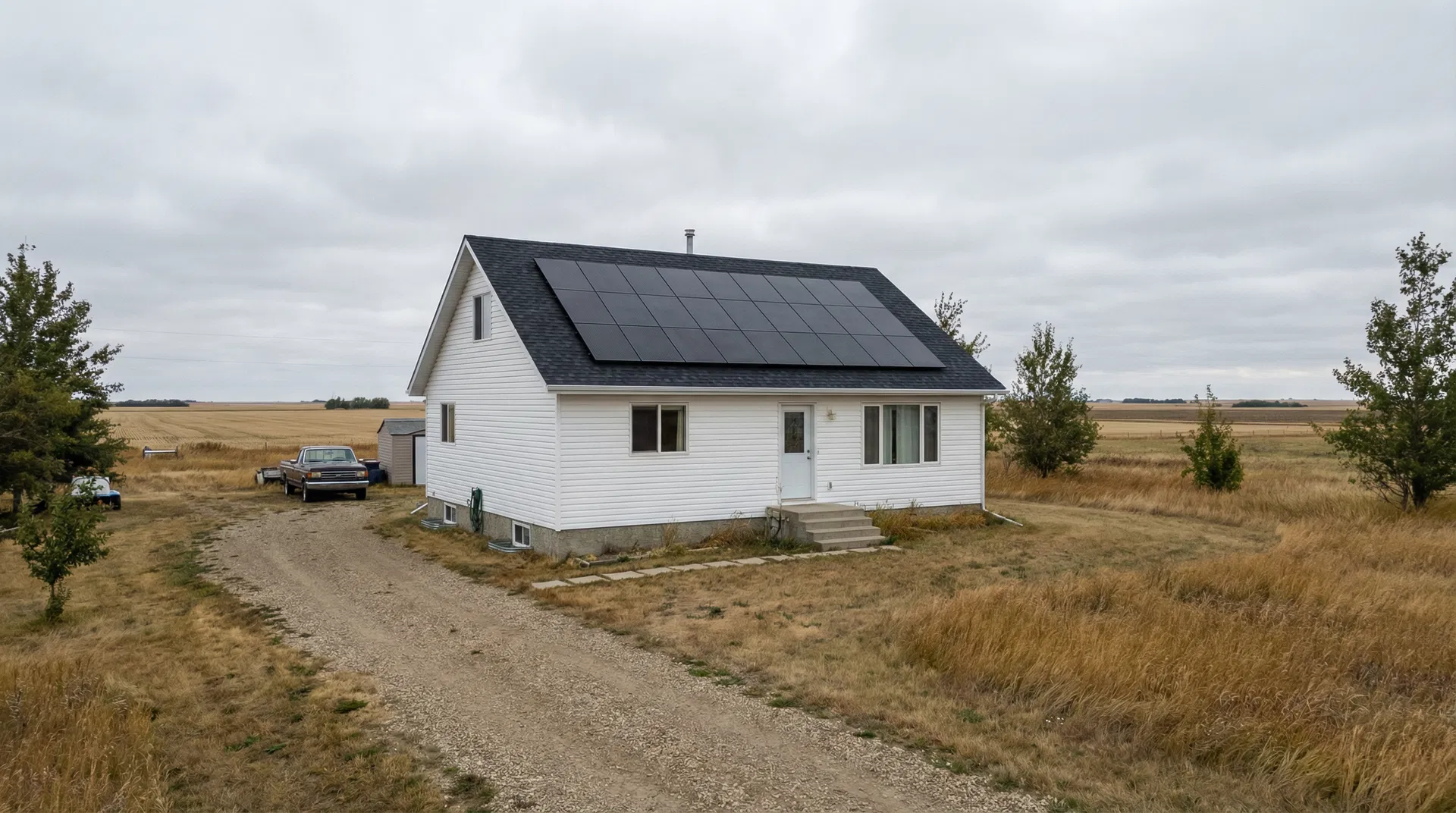
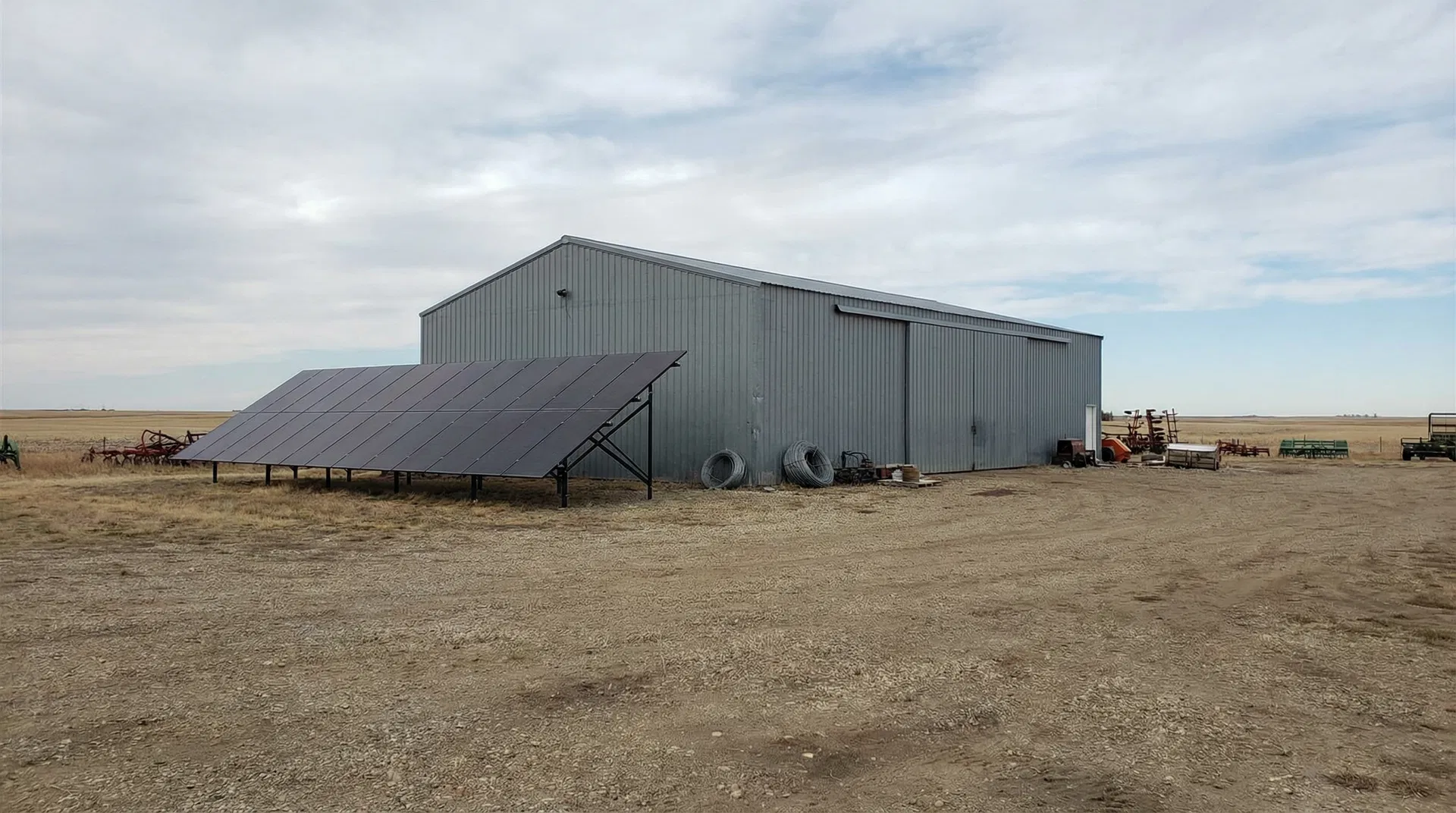
Rural Alberta properties typically need a bigger system than a comparable in-town house, and that's true in this area too. A home might also be running a detached shop, a well pump, or seasonal irrigation, and each of those loads adds to what the system needs to cover. We don't size for the house alone when there's more going on at the property. Roof versus ground mount comes down to what your site actually looks like. A roof with good southern exposure and no shading is often the simpler, cheaper build. But if trees or outbuildings shade the roof, if the pitch or orientation isn't workable, or if you've got open yard space that isn't doing anything else, ground mount can be the better call. Acreage and farm layouts around here often have the land for it, which opens up options a tighter in-town lot doesn't have. Either way, we size the system from the 12-month usage graph on your most recent power bill, not a rule-of-thumb number based on square footage or guesswork. That graph shows us your actual seasonal usage pattern, which tells us far more than a rough estimate ever could. Combined with a site visit to look at your roof or available ground space, that bill and that graph are what actually drive the system size we recommend, somewhere in the 8 to 15 kW range depending on what we find.
Typical Load Profiles We Design For Near Strathmore
Home + Heated Shop
This profile covers a primary residence plus a detached shop with heat and power tools running through the winter. We design around both loads together, pulling the shop's circuit demand into the same sizing conversation as the house. Your most recent power bill shows us how those two loads combine across the year, which is what actually sets the system size, not a guess at square footage.
Acreage with Well Pump and Irrigation
Properties with a well pump and seasonal irrigation see demand spike at specific times of year rather than staying flat. We look at how those spikes show up on the usage graph on your most recent power bill so the system accounts for the heavy months, not just an annual average. That seasonal pattern often pushes system size toward the upper end of the 8 to 15 kW range we design in.
Grain Handling and Farm Outbuildings
Grain dryers, augers, and other farm outbuildings add load that's concentrated in a short harvest window but can be significant while it's running. We size around that pattern using the usage graph on your bill rather than treating it the same as steady year-round demand. Properties with this kind of seasonal, equipment-heavy load often benefit from a ground-mount array if there's open yard space near the equipment.
FortisAlberta Interconnection in Strathmore
FortisAlberta is the wire service that distributes electricity in this part of Alberta, and that's the utility we file with for every micro-generation interconnection application here. Range Road Solar handles that paperwork directly: the application, the technical details FortisAlberta requires, and the back-and-forth that comes with getting a system approved for grid connection. We don't promise a specific approval timeline, a credit carryover structure, or a payout rate, because those details are set by FortisAlberta and the retailer you're signed up with, not by us, and they can change. What we do control is making sure your application is complete and accurate the first time, which is the biggest factor in how smoothly the process goes. Whether your property sits in town or out on an acreage nearby, the interconnection process runs through the same application path. We walk you through what's needed and handle the submission so you're not stuck figuring out utility paperwork on top of a construction project.
Project Economics and Design Review
| System Size | Annual Production | Year 1 Savings | Payback Period |
|---|---|---|---|
| 8-15 kW range, 10 kW typical |
Production, savings, and payback figures require a property-specific design review and your most recent power bill before we can give you real numbers.
How We Work in Strathmore
Bill and Load Review
We review your power bill to understand your energy use in Strathmore and size the system to your actual consumption, not a generic estimate.
Site Assessment
We assess your roof or ground area, south-facing exposure, electrical service, and utility interconnection requirements specific to your property.
Design and Utility Application
We produce a system layout, production estimate, and cost summary, then submit your micro-generation application to your utility on your behalf.
Installation and Commissioning
Our crew installs racking, panels, inverter, and electrical connections. All work is performed by licensed electricians. We commission and test before handoff.
Current Program and Interconnection Review
Utility connection review
FortisAlberta reviews every micro-generation grid connection application before a system goes live, and Range Road Solar puts together the design package that application is built on. We handle the technical documentation and submission so the process moves through FortisAlberta's review without back-and-forth delays caused by incomplete paperwork.
Current program review
Whether you're a homeowner, a farm operation, or a commercial property, what you're eligible for changes depending on current federal, provincial, and utility rules at the time you build. We check your specific situation against those rules during the design review rather than assuming last year's program still applies.
Frequently Asked Questions
Get a Solar Assessment for Strathmore
Submit a recent power bill and we will review your consumption and provide an honest assessment for your Strathmore property. No obligation.
(587) 330-7502 Book a CallRelated Resources
More Solar Services in Strathmore