
When you search for a solar installer Strathmore property owners actually trust, you're looking for straightforward answers about equipment, not sales pitches. We install LONGi monocrystalline panels paired with APsystems microinverters on every residential job in this area, whether that's a bungalow on a standard lot, a walkout on a larger in-town parcel, or a farmhouse with a detached shop and grain bins out back. APsystems microinverters work panel by panel instead of through one central string inverter, so a shadow from a grain leg, a shelterbelt, or a neighbor's shop roof knocks out production on just the affected panels, not the whole array. That matters here, where outbuildings and mature trees often sit close to the house. LONGi panels give us a dependable, widely available platform we can size anywhere from 8 to 15 kW for a typical residential install, with 10 kW landing in the middle for a lot of single-family homes we design for in this area. For acreages and small farm operations on the edge of things, we design around the home load plus a shop, a well pump, or seasonal grain handling equipment, not just the house meter. Every install includes the full package: layout, racking, electrical tie-in, and the paperwork for the FortisAlberta interconnection application. We don't quote a system size off a satellite photo. We size it from your most recent power bill and a site visit, then walk you through why that number makes sense for your roof or your yard.
Solar Planning for Local Properties
This stretch of Alberta prairie east of Calgary has been incorporated since 1911, and it's grown to roughly 14,339 people, up from 13,756 at the last census count. That growth means more rooftops, more acreages on the edge of the area, and more farm operations looking at what solar can realistically do for a property's electrical setup. We don't start any project with assumptions. Every design begins with your most recent power bill and a look at your roof or yard, whether that's a bungalow a few blocks from Kinsmen Park, a split-level on a quiet street, or a quarter section out past the grid where the Strathmore Stampede grounds anchor the community each summer. Environment Canada's climate normals for the region put annual bright sunshine at 2,396 hours, a figure we mention for context only, not a production promise. What actually matters is your roof pitch, shading, electrical service, and how FortisAlberta's interconnection rules apply to your specific property. We confirm real system output and payback with site design and your power bill, not a generic number pulled off a brochure.
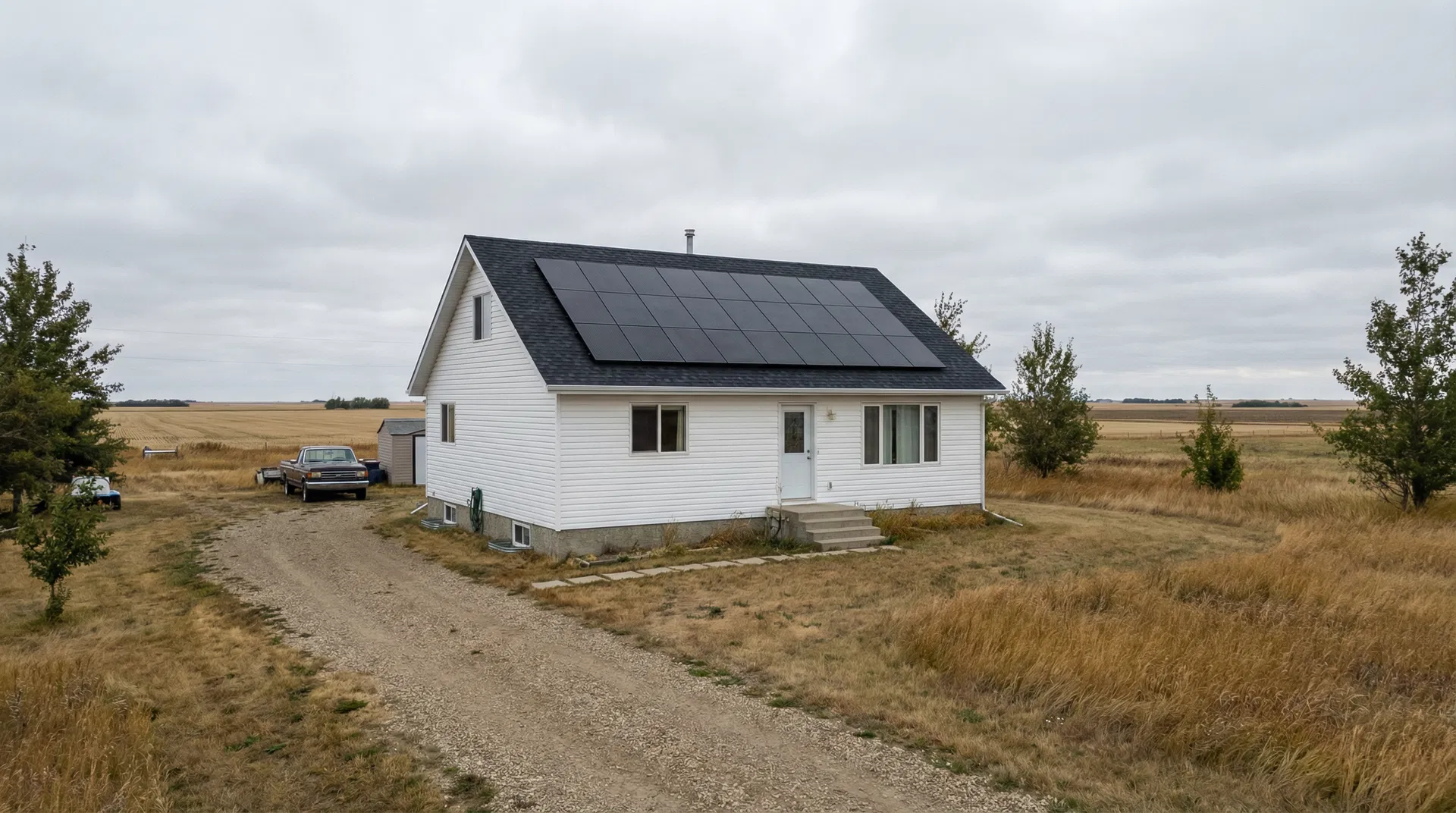
Electrical Site Review for Local Properties
Voltage Rise
Voltage rise happens when power pushes back onto the grid from the far end of a distribution line, and it tends to show up more on longer rural feeders than on tight in-town circuits. If voltage at your service point runs high before we even add solar, that limits how much inverter output we can safely export without tripping protective limits. We check this during the site review and size your inverters and any export limiting around what the line can actually handle.
Single-Phase vs Three-Phase
Rural properties in this area come in on both single-phase and three-phase service, and which one you have changes what inverter setup makes sense. A shop or irrigation pump running on three-phase power often needs a different microinverter configuration and system capacity than a straightforward single-phase home. We confirm your service type on-site before finalizing equipment, not after it's ordered.
Panel Infrastructure
Older rural properties sometimes carry a main panel from decades ago with limited breaker capacity, and that panel has to support both your existing loads and the new solar breaker. We check the panel's age, amperage rating, and available breaker space as part of every site visit. If the panel can't take the added circuit safely, an upgrade comes first, sized to handle both today's loads and the solar addition.
Service Entrance Review
We check the service entrance and meter base condition on every job, because FortisAlberta's micro-generation application requires equipment that meets their current standards. A worn or outdated meter base can hold up the application even if the rest of the system is ready to go. When an upgrade is needed, we scope it as part of the project so it doesn't become a surprise after your FortisAlberta paperwork is already submitted.
Right-Sizing Solar for Rural Alberta Properties
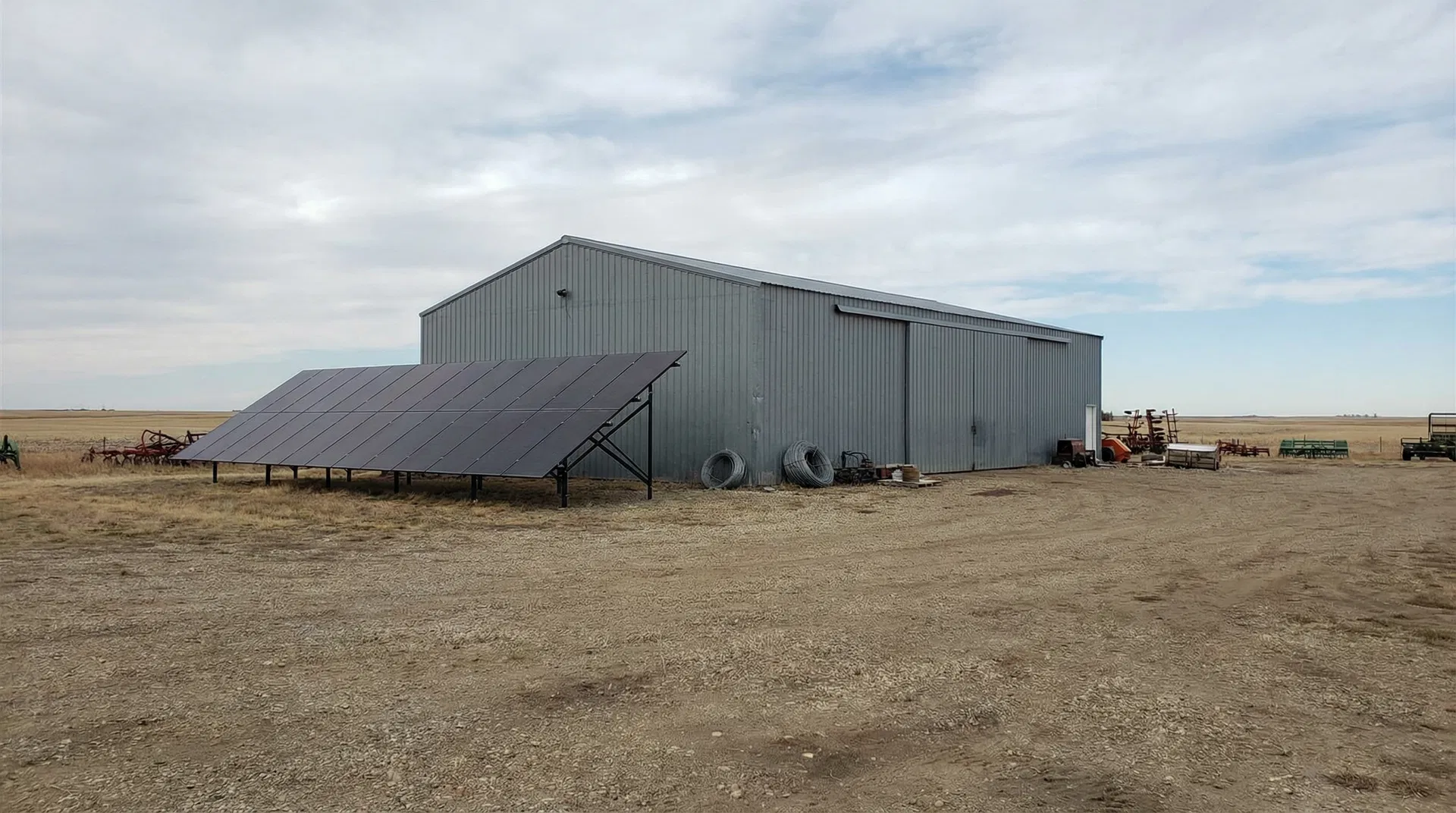
Rural properties in this area usually need more solar than a comparable house in a city subdivision, and the reason is simple: there's often more than one load to cover. A home might share a meter with a detached shop, a well pump, or seasonal grain handling equipment, and each of those adds up before we even start talking panel count. That's part of why the system sizes we design for here run from 8 kW up to 15 kW, with 10 kW landing as a common middle point, rather than one fixed number for every address. Roof versus ground mount is its own decision. A roof with a steep pitch, a good orientation, and no shade from trees or a nearby shop is often the simpler, cheaper build. But when a roof is shaded by shelterbelts or outbuildings, pitched wrong, or just too small for the load it needs to cover, a ground mount on open yard space is usually the better call, especially on acreages where land isn't the constraint. Either way, we don't size a system off a rule of thumb or a square-footage guess. We pull the 12-month usage graph right off your most recent power bill, look at how your usage moves through the year, and size panels and inverters to match that actual pattern, then confirm it against your roof or yard during the site visit.
Typical Load Profiles We Design For
Home Plus Heated Shop
This is a common setup in this area: a house plus a detached shop with heat, lighting, and the odd welder or compressor running. We size around both loads together, not just the house meter, using the usage graph on your most recent power bill to see how much the shop adds through the year.
Acreage With Well Pump and Outbuildings
A well pump cycles on and off outside normal house patterns, and outbuildings like a barn or machine shed add their own baseline draw. We look at how those loads show up on your power bill's usage graph and design the array and inverter setup to match, rather than guessing at a flat number.
In-Town Family Home
A standard single-family lot near Kinsmen Park or anywhere else nearby usually has one meter and a more predictable daily pattern: cooking, laundry, heating, and electronics. These jobs often land closer to the 8 to 10 kW end of our typical range, confirmed against your most recent power bill rather than assumed.
FortisAlberta Interconnection in Strathmore
FortisAlberta is the wire service for properties here, and every grid-tied solar install in the area goes through their micro-generation interconnection process. We handle that application as part of the project, not as an add-on: the single-line diagram, equipment specs for the LONGi panels and APsystems microinverters, and the paperwork FortisAlberta needs to review before a system goes live. We don't quote approval timelines or promise a specific turnaround, because that's set by FortisAlberta's review queue and the specifics of your service, not by us. What we can tell you is that our design package is built to their current submission requirements so your application isn't bounced back for missing information. If your property has an older service entrance or a panel that needs attention before interconnection can move forward, we flag that during the site review, not after permits are filed. The goal is one clean submission to FortisAlberta, not a back-and-forth that stalls your project.
Project Economics and Design Review
| System Size | Annual Production | Year 1 Savings | Payback Period |
|---|---|---|---|
| 8-15 kW range, 10 kW typical |
Production, savings, and payback numbers are only accurate once we've completed a property-specific design using your most recent power bill and a site visit.
How We Work in Strathmore
Bill and Load Review
We review your power bill to understand your energy use in Strathmore and size the system to your actual consumption, not a generic estimate.
Site Assessment
We assess your roof or ground area, south-facing exposure, electrical service, and utility interconnection requirements specific to your property.
Design and Utility Application
We produce a system layout, production estimate, and cost summary, then submit your micro-generation application to your utility on your behalf.
Installation and Commissioning
Our crew installs racking, panels, inverter, and electrical connections. All work is performed by licensed electricians. We commission and test before handoff.
Current Program and Interconnection Review
Utility connection review
FortisAlberta reviews every grid-tied solar application that comes out of this area through its micro-generation process, checking equipment specs and the single-line diagram before a system can go live. Range Road Solar prepares that full design package for you, including the LONGi panel and APsystems microinverter specs FortisAlberta needs to see. We submit the application as part of the project, not as a separate step you have to manage.
Current program review
Eligibility for commercial, farm, and residential solar projects depends on rules that can change, so we review current requirements against your specific property at design time rather than quoting old information. This applies whether you're a homeowner, a farm operation, or a small business in this area. We confirm what applies to your project before we finalize your design, not after.
Frequently Asked Questions
Get a Solar Assessment for Strathmore
Submit a recent power bill and we will review your consumption and provide an honest assessment for your Strathmore property. No obligation.
(587) 330-7502 Book a CallRelated Resources
More Solar Services in Strathmore