
Solar net-metering in Strathmore, Alberta starts with the system itself: LONGi panels paired with APsystems microinverters, sized for an 8 to 12 kW install depending on your roof or yard. APsystems microinverters work panel by panel, so partial shade from a tree line or a shop roof on one string doesn't drag down the whole array, which matters on acreages where outbuildings and mature trees often sit close to the house. LONGi panels give us a dependable, widely available module to build the system design around, whether that's a straightforward roof mount on a town lot near Kinsmen Park or a ground-mounted array on a larger parcel outside the core area. Once the system design is set, we handle the micro-generation registration and interconnection application with FortisAlberta on your behalf, including the technical package that documents your inverter specifications, one-line diagram, and metering setup. You don't fill out FortisAlberta's forms yourself or chase down the right contact. We also size the system so inverter output lines up with your actual panel capacity and service type, since an undersized panel or a single-phase service with a bigger farm or shop load can change which inverter configuration makes sense. For most properties here, that means a residential-scale 8 to 12 kW system built around one or two inverter strings. Larger loads, like a heated shop or grain-handling equipment, sometimes call for a bigger array or a different inverter layout, which is something we work out during the site visit rather than guessing from a form online.
Solar Planning for Strathmore Properties
This part of Alberta was incorporated as a town back in 1911, and the population has climbed from 13,756 in the prior census count to 14,339 today. That kind of growth means more rooflines, more acreages on the edge of town, and more homeowners asking what net metering actually buys them on a FortisAlberta-served property. The short answer: your system ties into FortisAlberta's grid, and surplus power you generate during the day gets credited against what you draw down at night. For a property in this area, that typically lands in an 8 to 12 kW range, with a 10 kW system being the most common install. We don't size a system off a postal code. We walk the roof or the yard, check orientation and shading, whether the property sits near Kinsmen Park or out past the fairgrounds where the Strathmore Stampede fills the grounds every summer, and look at the load the property actually carries. Environment Canada's climate normals put the Calgary International Airport station, the nearest long-term record, at 2,396 hours of annual bright sunshine; that's a regional reference point, not a promise of what your roof will produce. The real number comes from a site visit and your most recent power bill, which is the design process behind every net metering application we build here.
Electrical Site Review for Strathmore Properties
Voltage Rise
Voltage rise happens when the voltage at your point of connection runs higher than what the utility delivers at the transformer, usually because of distribution line length or loading on that particular feeder. On a rural feeder, voltage rise can push your inverter's output voltage toward its upper trip limit, which causes it to curtail or shut down during peak production rather than deliver full output. We check feeder voltage characteristics during the site review so the inverter and string sizing account for it instead of guessing and finding out after installation.
Single-Phase vs Three-Phase
Properties here can have single-phase or three-phase electrical service, and which one you've got changes what inverter hardware and system capacity actually work. Three-phase service generally supports a larger system and more flexible inverter configurations, while single-phase service caps how much capacity we can safely connect without additional equipment. We confirm your service type during the site visit rather than assuming based on property type or age.
Panel Infrastructure
Older rural properties sometimes still run a 100-amp panel, or a breaker panel that's full with no room for a new solar breaker. We check the panel's age, amperage rating, and available breaker space, since an undersized or outdated panel can limit how much solar capacity you can safely add. If the panel can't support the system, an upgrade means a new panel with adequate breaker space and capacity, installed before or alongside the solar install.
Service Entrance Review
We check the condition of your service entrance and meter base, including wiring, weatherproofing, and whether the meter base itself can accept the metering FortisAlberta requires for a micro-generation connection. The meter base condition matters because FortisAlberta won't approve a micro-generation application against hardware that doesn't meet current code. If an upgrade is required, we fold it into the project scope upfront so it isn't a surprise mid-install.
Right-Sizing Solar for Strathmore Properties
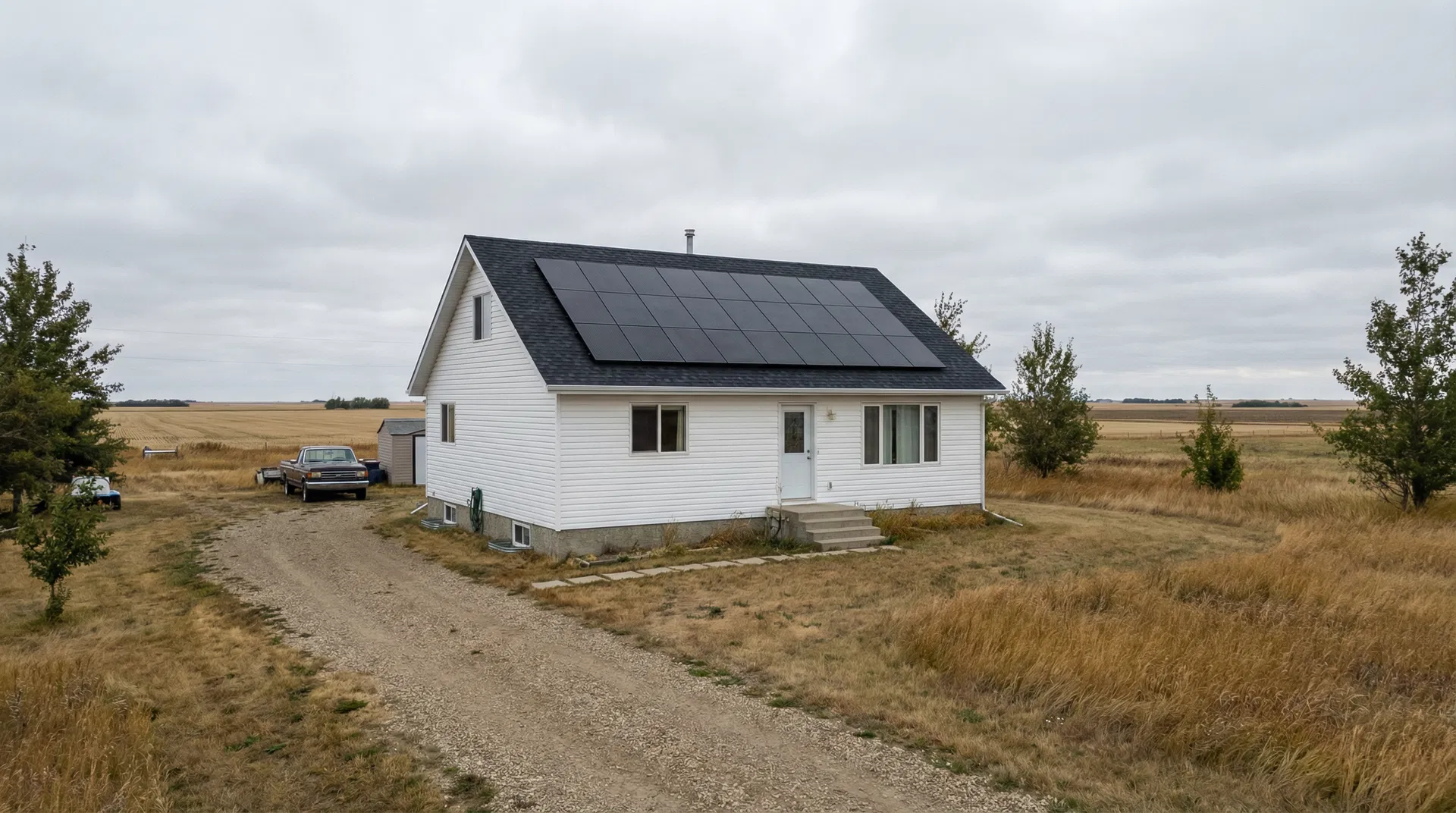
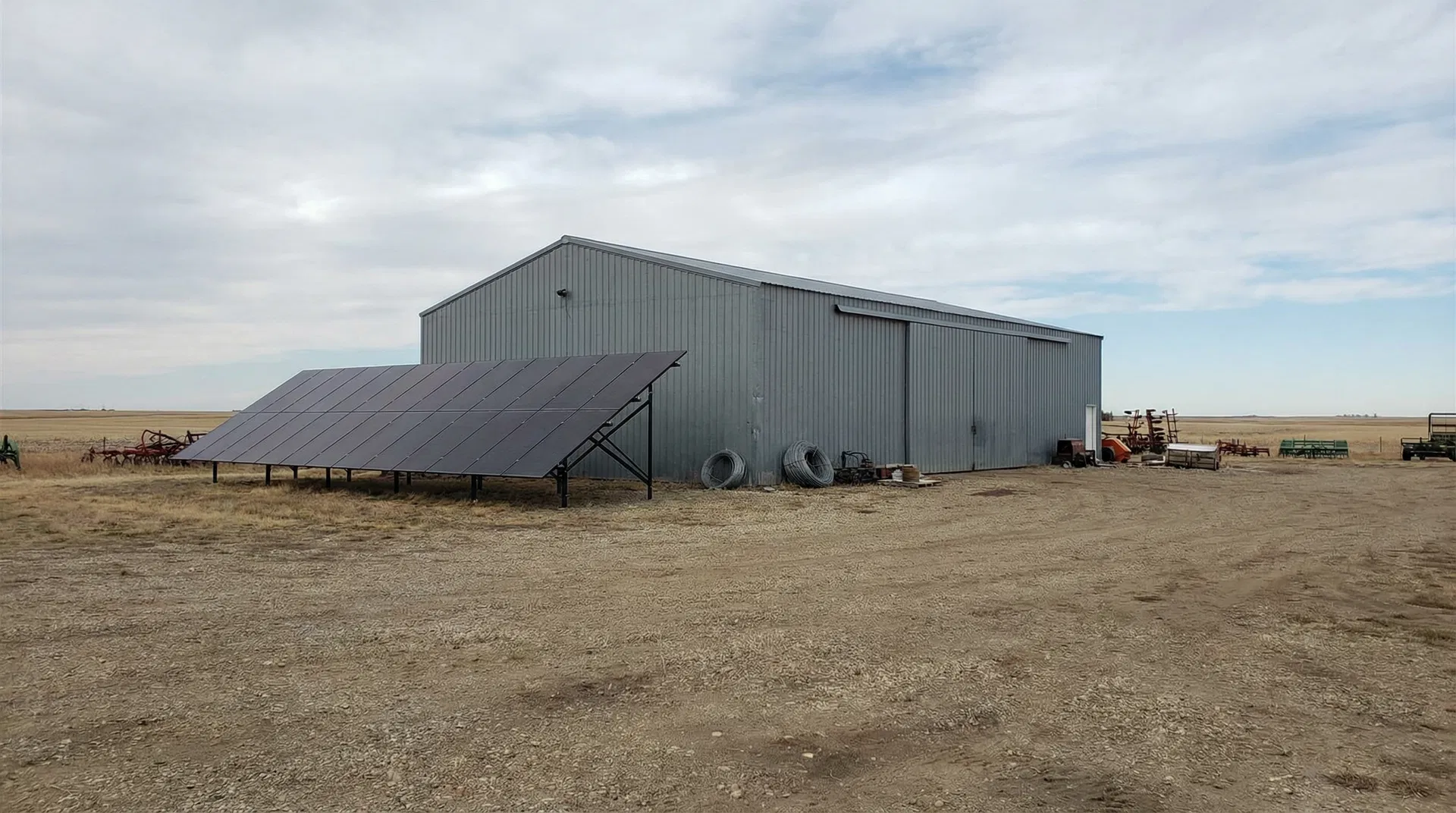
Rural Alberta systems usually run bigger than a typical town lot install, and it's not because rural homeowners use more power per room. It's because one property often carries multiple loads: the house, a heated shop, maybe a well pump or grain-handling equipment, all drawing off the same service. A system sized just for the house would miss most of what's actually on the meter. Roof mount works fine when you've got clear south or west-facing roof area without shade from trees or outbuildings. Ground mount becomes the better call when the roof is shaded, pitched wrong for solar, or just doesn't have enough usable area, and the yard has room to spare. On a lot with a shop and a house both needing power, we sometimes split the array across both roofs or run a single ground-mounted system to cover the combined load. Either way, we size the system off the 12-month usage graph on your most recent power bill, not a rule-of-thumb number per square foot or per occupant. That graph shows us your actual monthly draw across a full year, including any seasonal spikes from heating, irrigation, or shop use. Combined with a site visit to check roof or yard conditions, shading, and orientation, that's what tells us whether you need an 8 kW system or one pushing past 12 kW.
Typical Load Profiles We Design For Near Strathmore
Home Plus Heated Shop
This is the most common profile we size for: a house plus a detached shop with electric heat, often a sub-panel feeding the shop separately from the main service. The shop's heater and any power tools or equipment inside usually show up as a seasonal bump on the usage graph from your most recent power bill. We size the system around that combined load rather than the house alone, so the shop isn't left running off grid power while the array mostly offsets the house.
Acreage With Well Pump and Outbuildings
Acreages often carry a well pump, a secondary outbuilding or two, and sometimes a barn or livestock building with its own lighting and heat trace. None of these loads are huge on their own, but together they add up to a noticeably different usage pattern than a town lot. We look at how those loads show up across the year on your power bill before settling on system size, rather than treating the property like a standard single-family home.
Grain Handling and Farm Operations
Grain dryers, augers, and aeration fans create short, heavy load spikes rather than steady daily draw, and those spikes often fall outside peak sun hours during harvest season. We account for that pattern separately from the baseline household load when sizing the system and the inverter configuration, since a design built only around average daily use would undersize the system for harvest demand.
FortisAlberta Interconnection in Strathmore
FortisAlberta is the wire service here, which means any net metering or micro-generation application for your property goes through FortisAlberta's interconnection process, not a different utility's rules. We prepare and submit that application on your behalf: the technical package, the one-line diagram, inverter specification sheets, and the micro-generation agreement paperwork FortisAlberta requires before a system can be connected to the grid. We don't promise a specific approval timeline, a credit carryover rule, or a payout rate here, because those terms are set by FortisAlberta and the retailer on your account, not by us, and they can change. What we do control is making sure the application is complete and accurate the first time, so it isn't sitting in a queue waiting on a missing document. If FortisAlberta comes back with questions about the design, we handle that correspondence directly, so you're not stuck relaying technical details between an inspector and an installer.
Project Economics and Design Review
| System Size | Annual Production | Year 1 Savings | Payback Period |
|---|---|---|---|
| 8-12 kW range, 10 kW typical |
Production, savings, and payback figures are only meaningful once we've completed a property-specific design using your most recent power bill.
How We Work in Strathmore
Bill and Load Review
We review your power bill to understand your energy use in Strathmore and size the system to your actual consumption, not a generic estimate.
Site Assessment
We assess your roof or ground area, south-facing exposure, electrical service, and utility interconnection requirements specific to your property.
Design and Utility Application
We produce a system layout, production estimate, and cost summary, then submit your micro-generation application to your utility on your behalf.
Installation and Commissioning
Our crew installs racking, panels, inverter, and electrical connections. All work is performed by licensed electricians. We commission and test before handoff.
Current Program and Interconnection Review
Utility connection review
FortisAlberta reviews every micro-generation interconnection application against its current technical and administrative requirements before approving a grid connection. Range Road Solar prepares that full design package, including the one-line diagram and inverter specifications, so the application is ready to go the first time it's submitted.
Current program review
Residential, farm, and commercial properties are reviewed against whatever current eligibility rules apply at the time of your design, since those rules can shift. Rather than quoting a program that might not apply by the time your project is built, we check eligibility as part of the design review itself.
Frequently Asked Questions
Get a Solar Assessment for Strathmore
Submit a recent power bill and we will review your consumption and provide an honest assessment for your Strathmore property. No obligation.
(587) 330-7502 Book a CallRelated Resources
More Solar Services in Strathmore