
Solar battery storage in Strathmore, Alberta pairs a hybrid inverter with a lithium battery bank, installed alongside a LONGi panel array sized specifically to your property. Instead of running every panel through a standard grid-tie setup alone, the hybrid inverter routes a portion of your solar production into the battery first, so that energy is on hand when you need it rather than only when the sun is shining. For in-town homes, that usually means backing up a handful of circuits: fridge, furnace control board, well pump if you're on one, and a few outlets, so an outage doesn't mean losing groceries or heat. For acreage and farm properties nearby, the calculation changes. A shop with freezers, a livestock waterer, or a grain handling system that can't sit without power for long has different backup priorities than a house alone, and we size the battery bank and the circuits it covers around that reality, not a generic package. The system size range we work in for battery storage projects runs from 8 to 20 kW, with most properties landing around 12 kW once we've reviewed the site and the load. We use APsystems microinverters on projects where a microinverter topology fits the roof and panel layout better than a string hybrid inverter, and we'll tell you which approach fits your property and why, rather than defaulting to one setup for every job. Either way, the battery itself and the panels feeding it are specified after we've looked at your roof or ground-mount site, your main panel capacity, and what FortisAlberta's interconnection application requires for your specific setup.
Solar Planning for Strathmore Properties
Strathmore, Alberta was incorporated as a town in 1911, and it's grown into a community of 14,339 people who expect their infrastructure, including the power behind their home or shop, to keep up with that growth. Every August the town fills up for the Strathmore Stampede, and the properties we work on range from in-town bungalows to acreages on the edge of town with shops, barns, and livestock operations attached. Environment Canada's climate normals put the Calgary International Airport station, the nearest long-term weather record to the area, at 2,396 hours of bright sunshine a year, but that number alone doesn't size a system. What does is your roof or ground-mount layout, your panel orientation, shading from trees or outbuildings, and the actual load on your most recent power bill. Battery storage adds a second layer to that planning: how much of your daily draw you want backed up, and for how long, if FortisAlberta's lines go down. We walk every property through a site design and a review of that bill before we talk system size, because a shop with a bin dryer draws differently than a house with electric heat, and the battery that makes sense for one doesn't make sense for the other.
Electrical Site Review for Strathmore Properties
Voltage Rise
Voltage rise happens when power pushed back onto a distribution line raises voltage at the point of connection, and it tends to be more noticeable the farther a property sits from its nearest transformer. On rural and edge-of-town feeders, that distance can be longer than on a dense in-town subdivision, which is one of the things we check before finalizing inverter settings. If voltage rise is a factor on your line, it can affect when an inverter clips output or throttles back, which feeds directly into how we size your solar and battery system.
Single-Phase vs Three-Phase
Properties in this area come with either single-phase or three-phase electrical service, depending on when the property was built and what it was built to run. Three-phase service is more common on properties with larger motors, like certain shop equipment or grain handling systems, while most homes run single-phase. The inverter and battery hardware we spec has to match your phase configuration, since not every hybrid inverter is available in both, and that affects which system capacity options are on the table.
Panel Infrastructure
Older electrical panels, especially ones original to a property built decades ago, don't always have the breaker capacity or busbar rating to add a hybrid inverter and battery system safely. We check the panel's age, its amperage rating, and how much spare breaker space it has as part of every site review. If the panel can't support the added load, an upgrade means a new panel sized for both your existing circuits and the new equipment, done before the installation moves forward.
Service Entrance Review
The service entrance and meter base are what connects your property to FortisAlberta's distribution line, and we check both for condition and capacity during the site review. The meter base needs to support the metering FortisAlberta requires for a micro-generation interconnection application, and a damaged or outdated meter base can hold up that application. If an upgrade is needed, we identify it during the design review so it's accounted for in your project timeline, not discovered partway through installation.
Right-Sizing Solar and Battery Storage for Strathmore Properties
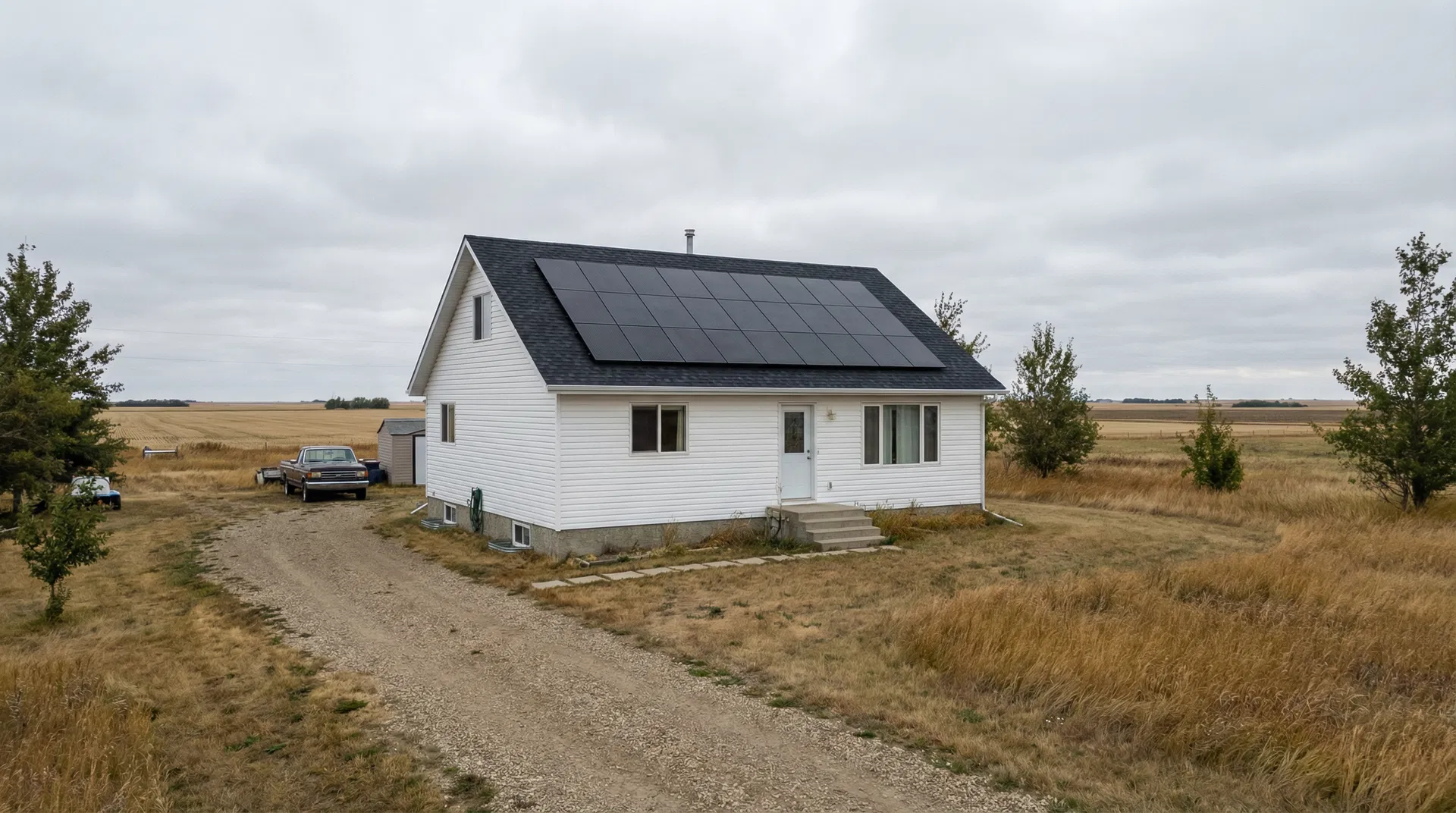
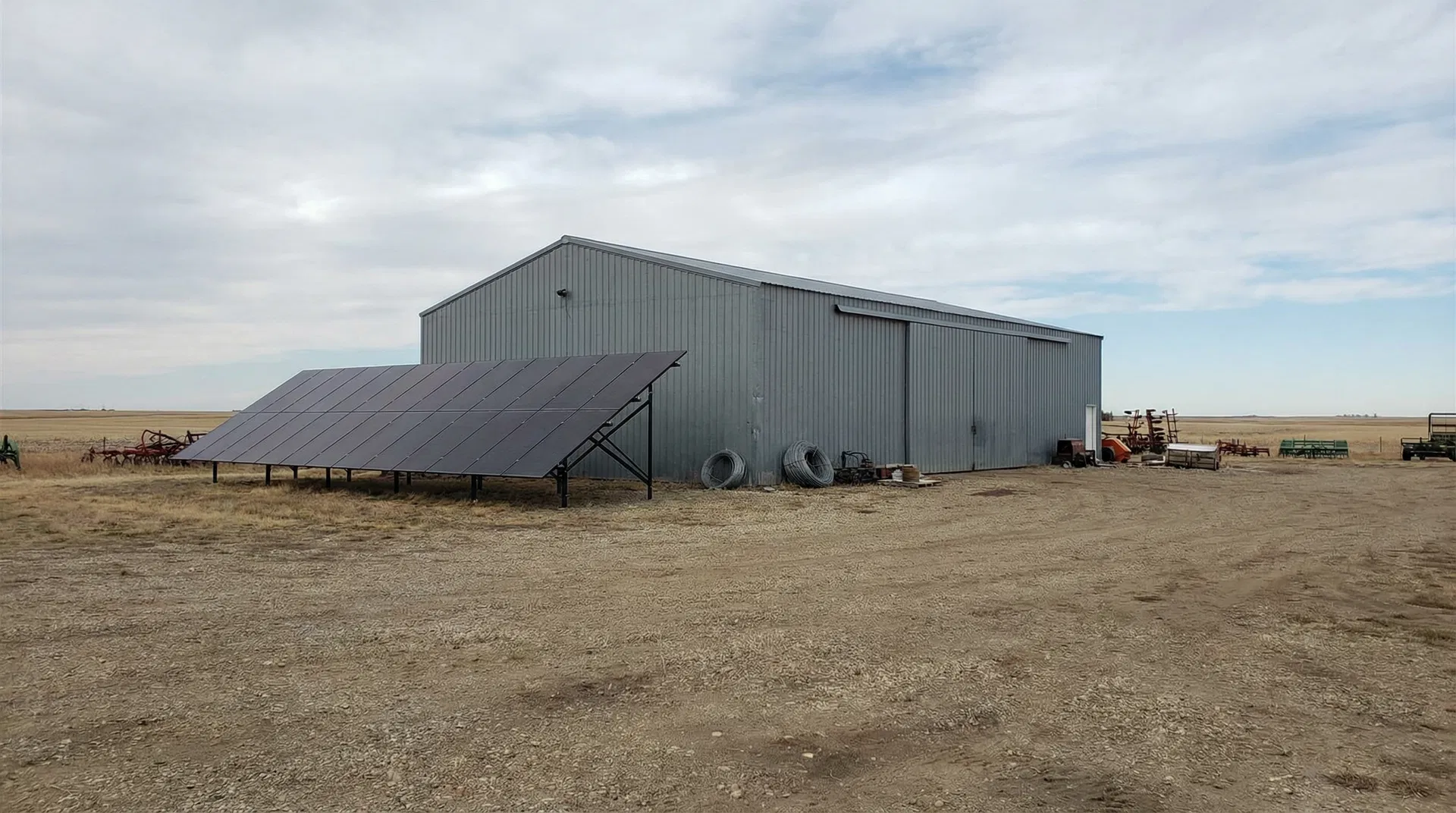
Rural Alberta properties in this area often carry more electrical load than a typical in-town house: a home plus a heated shop, a well pump, or a grain handling setup all draw from the same service, and a battery storage system sized for a house alone won't cover that. That's why we don't start with a rule-of-thumb number. We start with the 12-month usage graph on your most recent power bill, which shows how your property's load moves through the year, whether that's a winter heating spike, a summer irrigation pump, or steady use that barely changes. Roof versus ground mount comes down to the property itself. A roof with good southern or western exposure and no shading from mature trees or a neighboring building is often the simpler and more cost-effective option. Ground mount becomes the right call when a roof is shaded, pitched wrong, or when a property has outbuildings crowding the best roof space but also has open yard available for a ground array instead. We work through both options on a site visit before recommending one. Once we know the mounting approach and have your bill's usage graph in hand, we size the battery bank to the circuits and loads you actually want backed up, whether that's the whole property or a shorter list of essentials, and the solar array to match.
Typical Load Profiles We Design For Near Strathmore
Home + Attached Garage
This is the most common profile for an in-town property: a house with an attached or detached garage, routine appliance load, and maybe an electric vehicle charger. Backup priorities here usually center on the fridge, furnace, and a handful of outlets rather than the whole panel. We size the battery and the circuits it covers using the usage pattern on your most recent power bill, not a standard household estimate.
Acreage with Heated Shop
Properties with a heated shop in addition to the house carry a second, often larger, load that runs on its own schedule, whether that's heating, lighting, or power tools and equipment. The shop's draw and the house's draw don't necessarily peak at the same time, which matters for how we size the solar array and the battery bank together. We look at both loads separately on your bill's usage graph before recommending a system size.
Farm with Grain Handling or Livestock Watering
Farm properties with grain handling equipment, livestock waterers, or similar operational loads need backup power that's reliable during an outage, not just convenient. These loads can be seasonal and uneven across the year, so we design around the full usage graph on your most recent power bill rather than an average month. The battery bank and inverter configuration follow from what has to keep running if the grid goes down.
FortisAlberta Interconnection in Strathmore
FortisAlberta is the wire service here, which means any solar and battery storage system we install has to go through FortisAlberta's micro-generation interconnection process before it's turned on. We prepare and submit that application as part of your project, including the technical specifications for the hybrid inverter and battery system, so you're not the one filling out utility paperwork or chasing down requirements. Battery storage adds an extra layer to that application compared to a solar-only system, since FortisAlberta needs to know how the battery is configured and how it interacts with the grid connection. We handle that documentation as part of the design package. What we don't do is promise how long FortisAlberta will take to review and approve an application, what happens to any credits your system generates, or how current retailer policy treats exported power, because those details depend on current utility rules and your specific account, not on us. We confirm the details that apply to your property during the design review, using the rules in place at the time.
Project Economics and Design Review
| System Size | Annual Production | Year 1 Savings | Payback Period |
|---|---|---|---|
| 8-20 kW range, 12 kW typical |
Production, savings, and payback figures are specific to your property and require a design review along with your most recent power bill, not a general estimate.
How We Work in Strathmore
Bill and Load Review
We review your power bill to understand your energy use in Strathmore and size the system to your actual consumption, not a generic estimate.
Site Assessment
We assess your roof or ground area, south-facing exposure, electrical service, and utility interconnection requirements specific to your property.
Design and Utility Application
We produce a system layout, production estimate, and cost summary, then submit your micro-generation application to your utility on your behalf.
Installation and Commissioning
Our crew installs racking, panels, inverter, and electrical connections. All work is performed by licensed electricians. We commission and test before handoff.
Current Program and Interconnection Review
Utility connection review
FortisAlberta reviews every micro-generation interconnection application for grid connection before a solar and battery system goes live, and that review applies to your property the same as anywhere else on their lines. Range Road Solar prepares and submits the full design package as part of your project. We don't guess at how long that review takes or what FortisAlberta's current policy is on any specific point, we work from their current requirements at the time of your application.
Current program review
Residential, farm, and commercial properties are each reviewed against whatever program and eligibility rules are in place at the time your project is designed, since those rules change. We check your property's eligibility as part of the design review instead of assuming a program applies. If something changes between now and when your project goes to design, we confirm it again before we finalize your system.
Frequently Asked Questions
Get a Solar Assessment for Strathmore
Submit a recent power bill and we will review your consumption and provide an honest assessment for your Strathmore property. No obligation.
(587) 330-7502 Book a CallMore Solar Services in Strathmore