
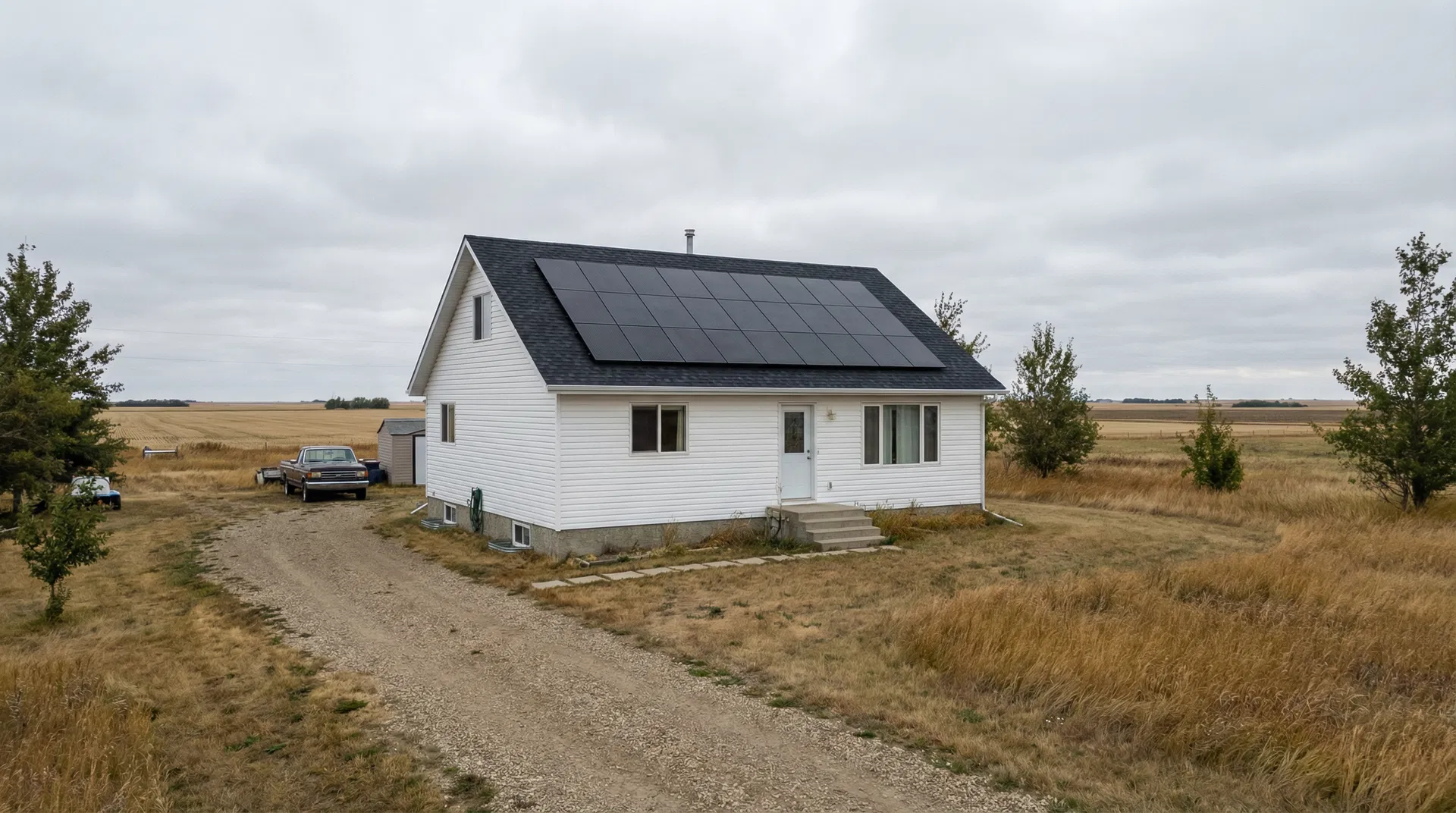
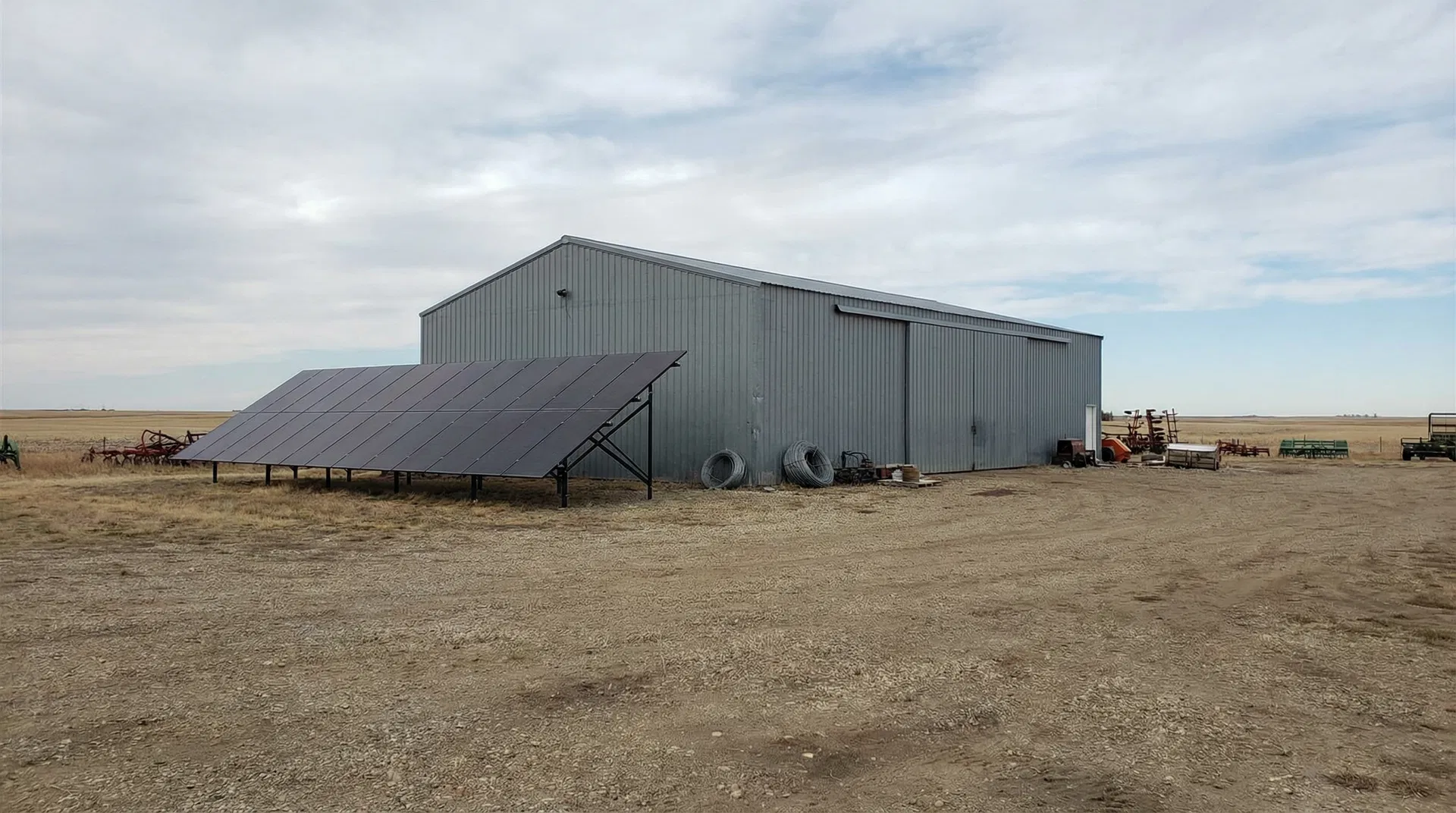
If you're looking into solar ground-mount-solar Strathmore alberta, the core idea is simple: the array sits on engineered racking set into the ground instead of on your roof. We install LONGi panels paired with APsystems microinverters, and we set the racking at the tilt and spacing your site design calls for. Microinverters suit this kind of layout. Each panel runs its own APsystems microinverter, so shade on one module doesn't pull down the rest of the array. That matters on a yard where a fence line, a tree, or a grain bin throws shadow at different times of day. On rural acreages, the usual ground-mount site is an open yard, a pasture corner, or a field edge that's been sitting idle. Farm properties often have a level spot near the shop or yard, which keeps the trench run for the cable short. A roof makes sense when it faces a useful direction, has a workable pitch, and sits clear of trees and nearby buildings. When shade from mature trees cuts into the roof, the pitch is poor, or the roof just isn't the right place for the array you need, the ground is usually the better call. Every design starts with your most recent power bill. The 12-month usage graph on that bill shows how your load moves through the year, and that drives the array size. We layer on the site layout, orientation, and shading from anything nearby, so the design matches the land you actually have. Once the design is set, we're ready to handle the racking, wiring, and install. You'll get a clear layout and a production model built from your site, not a generic number pulled off a brochure.
Solar Planning for Strathmore Properties
Properties around Strathmore, Alberta don't all look alike. Some are a few acres with a house, a shop, and a row of outbuildings. Others are working farms with yards that have more open ground than the roof ever will. Those differences change what a system should look like, so we start with the property before we talk about panels. Power here comes through FortisAlberta. On an Alberta bill, the wire charges and the power supply show up as separate lines, and FortisAlberta handles the grid connection side. We treat that interconnection as its own step in the design, not something we sort out at the end. The Strathmore Stampede is a name most people here recognize, and Kinsmen Park and the Strathmore Golf Club are places residents spend time. Landmarks don't change the engineering, though. What matters on your place is how much open land you can spare, what's casting shade on it, and what your most recent power bill says about how you use power. We confirm production and payback through the site design, not a rule of thumb. That's the honest way to plan a system, and it's why we ask for your most recent power bill before we talk numbers.
Electrical Site Review for Strathmore Properties
Voltage Rise
Voltage rise is the increase in voltage at your connection point when a solar system pushes power back onto the distribution line. How much it climbs depends on distribution conditions like line length and the load on that section of the grid. When voltage gets high enough, the inverters may clip output to stay within limits, so we factor that ceiling into how big the array should be.
Single-Phase vs Three-Phase
Rural properties can have single-phase or three-phase service, and the difference matters for inverter selection. Single-phase service suits most homes and smaller loads, while three-phase is common on larger shops and equipment. We confirm which one you have so the inverter layout and system capacity match what the service can carry.
Panel Infrastructure
Older electrical panels on rural properties were often installed for a lighter load than a shop and a house draw today. We check the breaker capacity, the panel's age and condition, and whether there's room for a solar breaker. If the panel can't support the system, the upgrade is a panel replacement, which we scope and quote before any work starts.
Service Entrance Review
We review the service entrance and meter base to check their condition and rating before the system goes in. A corroded or undersized meter base can hold up a micro-generation application to FortisAlberta, so we flag it early. If an upgrade is required, we include it in the design package, so you know the full scope before you commit.
Right-Sizing Solar for Strathmore Properties
Rural Alberta systems tend to be bigger than urban ones because the load is spread across more than one building. A house runs the kitchen and the heat, a shop runs welders and compressors, and outbuildings add lights and freezers. Irrigation pumps and grain handling add seasonal loads that a typical urban home never sees. Each of those loads shapes how much power the property uses in a year, and that's what we size against. Deciding between roof and ground mount comes down to the land and the buildings. A roof works when it faces a useful direction, has a clear pitch, and sits clear of trees and nearby structures. The ground is the better call when shade from trees or buildings cuts into the roof, when the pitch is poor, or when you've got an open yard with room to spare. We don't size from a rule of thumb. We start with the 12-month usage graph on your most recent power bill, which shows how your load moves from month to month and season to season. That graph, combined with the site design, tells us how big the array should be and where it should sit. Two acreages with the same house can need very different arrays, so we don't guess. Your most recent power bill tells us what you use, and the site design tells us what the land can deliver.
Typical Load Profiles We Design For Near Strathmore
Home + Heated Shop
A house and a 900 square foot heated shop on the same service is a common setup on rural properties. The shop's heat and tools run on a different schedule than the house, and the 12-month usage graph on your most recent power bill shows where those loads overlap. That overlap is what we design the array around.
Acreage Home + Well Pump
A house with a 1 hp well pump, a detached garage, and a hot tub draws power in short, uneven bursts. Those spikes show up on the 12-month usage graph of your most recent power bill as peaks rather than a steady line. We use that shape, along with the site design, to decide how the array fits the property's annual use.
Farmyard with Grain Handling
A yard with a 30 hp grain auger, a 10 hp bin fan, and a farmhouse runs heavy loads for a few months and light loads the rest of the year. The seasonal swings show on the 12-month usage graph, and they tell us how much of the year the big equipment is running. We size the array against the full year, not the busiest month, so the system doesn't overbuild for a short season.
FortisAlberta Interconnection in Strathmore
FortisAlberta is the wire service for properties in this area, so every grid connection for a ground mount goes through FortisAlberta. Their review is where the system meets the distribution network, and it's the step that confirms the array can connect safely to the line serving your property. Range Road Solar handles the application package from start to finish. We prepare the design, the equipment details, and the site drawings the application needs, then submit it on your behalf. What we need from you is your most recent power bill, the account details on it, and answers to a few questions about the site. Our crew handles the rest of the paperwork, so you don't have to chase forms across two companies. The electrical side of the application depends on what we find at the meter and the service entrance, which we cover in the electrical site review below. If an upgrade is needed, we tell you before the application goes in, not after. We won't promise a timeline or a bill credit before the FortisAlberta review is done. Those depend on the utility's process and current rules, and we'll tell you what applies to your property once the design is complete.
Project Economics and Design Review
| System Size | Annual Production | Year 1 Savings | Payback Period |
|---|---|---|---|
| 10-30 kW range, 15 kW typical |
Production, savings, and payback depend on a property-specific design and your most recent power bill, so we don't quote them until that review is done.
How We Work in Strathmore
Bill and Load Review
We review your power bill to understand your energy use in Strathmore and size the system to your actual consumption, not a generic estimate.
Site Assessment
We assess your roof or ground area, south-facing exposure, electrical service, and utility interconnection requirements specific to your property.
Design and Utility Application
We produce a system layout, production estimate, and cost summary, then submit your micro-generation application to your utility on your behalf.
Installation and Commissioning
Our crew installs racking, panels, inverter, and electrical connections. All work is performed by licensed electricians. We commission and test before handoff.
Current Program and Interconnection Review
Utility connection review
FortisAlberta reviews every grid connection application for properties in this area, and that review is part of what makes a ground mount safe to connect. Range Road Solar prepares the design package and handles the application side of the process. You won't have to sort out the forms yourself.
Current program review
Commercial, farm, and residential eligibility is reviewed against current rules at design time, so the rules that apply to your property are the ones we check. We don't count on any program until it's confirmed for your situation. If something applies, we'll say so during the design review.
Frequently Asked Questions
Get a Solar Assessment for Strathmore
Submit a recent power bill and we will review your consumption and provide an honest assessment for your Strathmore property. No obligation.
(587) 330-7502 Book a CallRelated Resources
More Solar Services in Strathmore