
Range Road Solar provides solar quotes in Strathmore, Alberta for homes, farms, and acreages, built from your actual power bill instead of a satellite estimate. A quote isn't a form you fill out online. It starts with a site visit, a look at your roof or the open ground around your yard, and a review of the 12-month usage graph on your most recent power bill. From there we put together a system in the 8 to 15 kW range, with 10 kW typical for a single-family home, though a property with a shop or outbuildings on the same meter often needs more. Every quote we write uses LONGi panels and APsystems microinverters. We default to this combination because APsystems microinverters let each panel operate on its own, so partial shading from a tree line or a neighboring roofline doesn't drag down the whole array, which matters on the mixed-density lots in town as well as the more spread-out acreages on the outskirts. LONGi panels give us a reliable, well-supported product to design around for both roof-mount and ground-mount layouts. The quote itself lays out system size, equipment, mounting approach, and the interconnection application FortisAlberta will need to see. We don't hand you a generic PDF with a stock photo of a roof that isn't yours. Every number in it comes from your property and your bill.
Solar Planning for Strathmore Properties
The town was incorporated in 1911, and it's grown into a community of 14,339 people anchored by places like Kinsmen Park and the Strathmore Golf Club. Every summer the area fills up for the Strathmore Stampede, and the mix of established neighborhoods, acreages on the edge of town, and working farms outside the limits means no two solar projects here look the same. A bungalow near Kinsmen Park has a different roof pitch and shading pattern than a shop on a quarter section outside town, and we don't size a system off a satellite photo for either one. Range Road Solar starts with your most recent power bill, which carries a 12-month usage graph, and a real look at your roof or your yard. FortisAlberta serves the electricity distribution for properties here, and that shapes how we design the interconnection application alongside the system itself. We're not guessing at sunshine hours or production numbers before we've seen your property. We confirm what a system will actually do for your specific roof, orientation, and load through site design and your own billing history, not a one-size-fits-all estimate.
Electrical Site Review for Strathmore Properties
Voltage Rise
Voltage rise happens when the voltage at a property measured further out on a distribution line sits higher than at the substation, and rural feeders can see more of it than tighter urban grids. That matters for solar because a microinverter has to shut down if the voltage it sees climbs past its allowed window, a condition called clipping that caps how much power the system can push out even on a clear day. We check the voltage conditions on your line as part of system sizing, not after the panels are already up.
Single-Phase vs Three-Phase
Properties here can be served by either single-phase or three-phase electrical service, and which one you have changes what inverter equipment and system capacity are realistic. Single-phase service caps how much generation capacity can typically be added without upgrades, while three-phase service, more common on farms and larger shops, usually supports a bigger system. We confirm which service type is at the panel before we finalize equipment selection.
Panel Infrastructure
A lot of rural properties are running an electrical panel that's older than the solar equipment we're proposing to connect to it, so we check breaker capacity and panel age before finalizing a design. We're looking for things like available breaker space, the panel's rated capacity versus its actual load, and whether the panel itself is still a model with available parts. If the panel can't support the added solar breaker, the project includes a panel upgrade before the system goes in, not after.
Service Entrance Review
We review the service entrance and meter base condition on every property, since FortisAlberta's micro-generation application requires equipment that meets current standards. That includes checking the meter base for corrosion, loose connections, or outdated hardware, and confirming the service entrance conductors can handle the added solar connection. If an upgrade is needed to pass that review, we fold it into the project scope upfront so it isn't a surprise partway through the application.
Right-Sizing Solar for Strathmore Properties
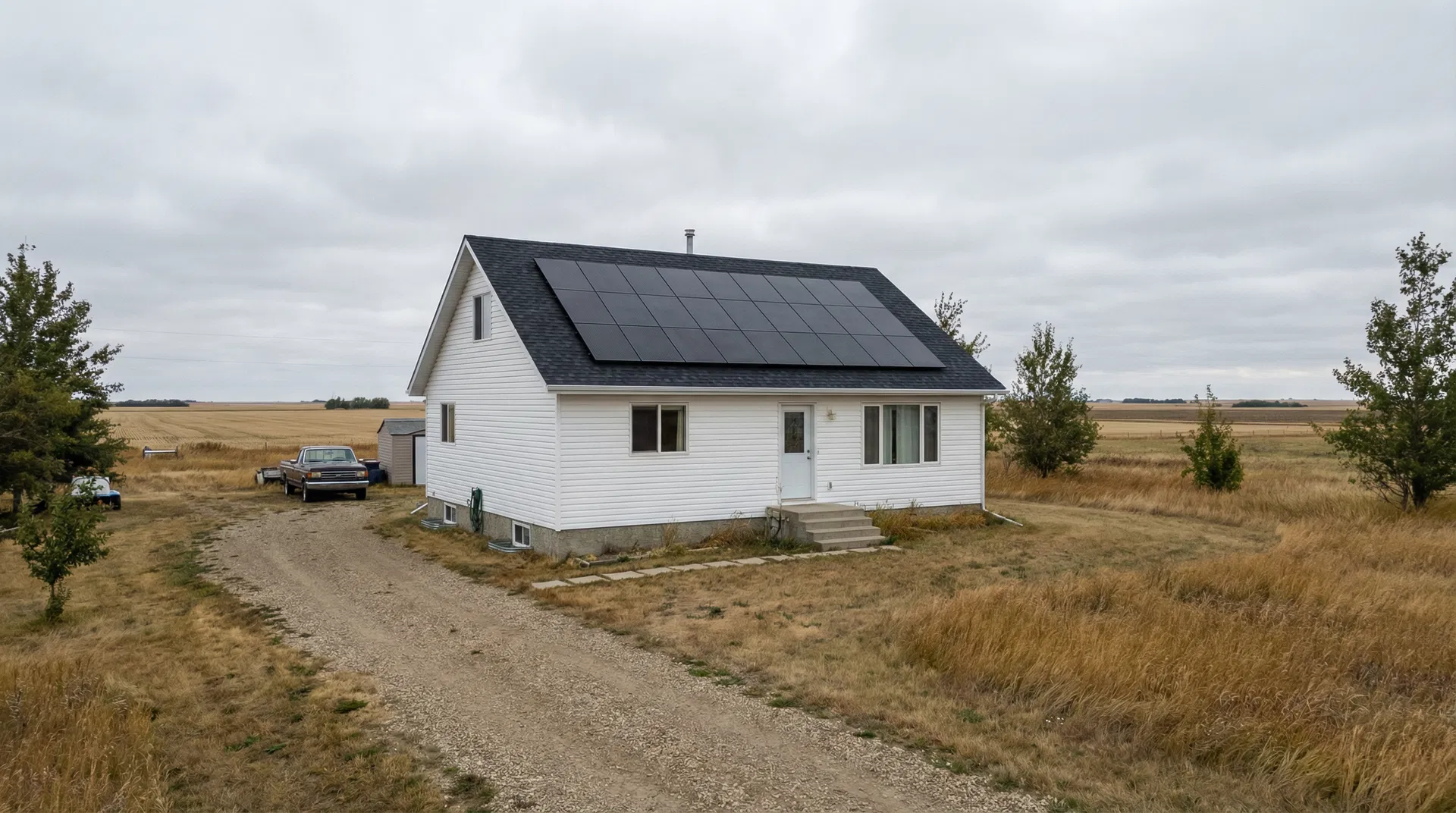
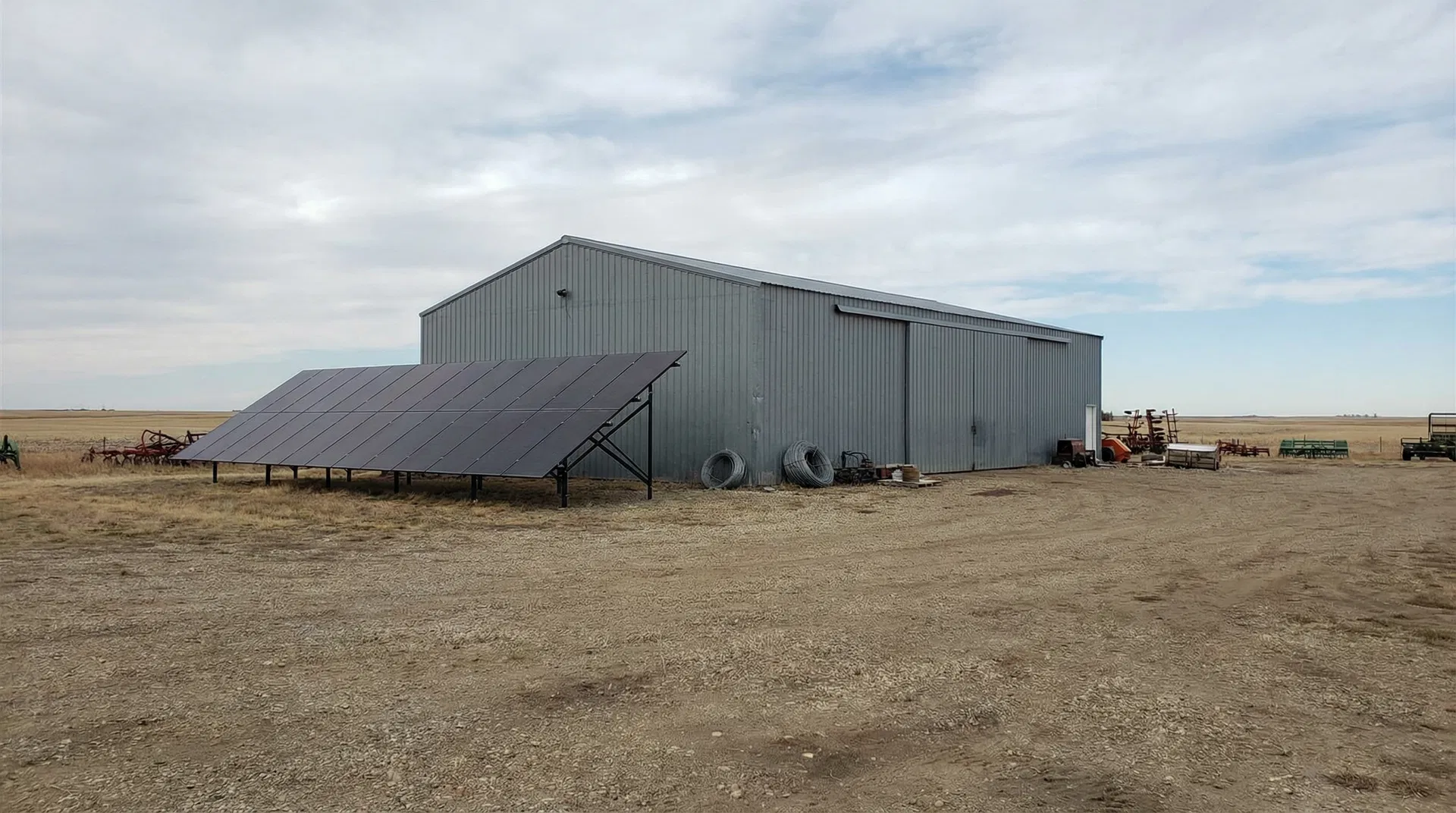
Rural properties typically carry more electrical load than a house in a subdivision: a home plus a heated shop, a well pump, grain handling equipment, or irrigation can all sit on the same account, and that pushes system sizing well past what a standalone urban home would need. That's part of why the range for this service runs 8 to 15 kW rather than a single fixed number. Roof versus ground mount comes down to what your property actually offers. A roof with good southern exposure and no shading is often the simplest option, but a roofline broken up by trees, additions, or a steep or oddly pitched section can rule it out fast. On acreages and farms with open yard space, ground mount frequently wins instead, especially when there's room to orient the array for the best exposure without fighting a roofline at all. We don't size a system off a rule-of-thumb number per square foot or per occupant. We size it from the 12-month usage graph on your most recent power bill, which shows how your actual load moves across the year, paired with a site design that accounts for shading, orientation, and available roof or ground space. That combination, your bill and your property, not a formula, is what tells us whether you need an 8 kW system or one closer to 15.
Typical Load Profiles We Design For Near Strathmore
Single-Family Home
A standard single-family home on town services usually anchors the lower half of our sizing range, closer to the 8 to 10 kW typical system. The load profile here is mostly household electrical use: HVAC, appliances, and general consumption, without a shop or outbuilding pulling extra power. We confirm the exact size from the usage graph on your most recent power bill rather than assuming every home needs the same system.
Home Plus Heated Shop
Add a heated shop or detached garage to the same meter and the load profile changes substantially, since shop heat, tools, and lighting run alongside the house. These properties often land in the middle to upper part of the 8 to 15 kW range, and three-phase service, where it's present, opens up more equipment options. We size these from your bill's usage history, not a flat per-building estimate.
Acreage with Irrigation or Grain Handling
Acreages and farms running irrigation pumps, grain dryers, or augers on the same account tend to need the top end of the sizing range, since that equipment draws hard during specific windows of the year. The seasonal spikes show up clearly on the 12-month usage graph on your power bill, which is exactly what we use to size around them instead of guessing at peak draw. Ground mount often makes more sense here given the available yard space.
FortisAlberta Interconnection in Strathmore
FortisAlberta is the wire service that owns and maintains the electricity distribution lines serving properties here, which means any grid-tied solar system needs a micro-generation interconnection application filed with them before it goes live. That application covers the technical details of your system: inverter specs, system capacity, and how the service entrance and meter base are configured. Range Road Solar handles that application as part of your project. We prepare the technical package, submit it to FortisAlberta, and coordinate the inspection and sign-off steps that come with it. We don't make promises about how long FortisAlberta's review will take or what credit or billing arrangement applies to your account. Those are set by FortisAlberta and your electricity retailer under their current rules, and we confirm the specifics that apply to your property during the design review rather than quoting a blanket policy that may not hold for your situation.
Project Economics and Design Review
| System Size | Annual Production | Year 1 Savings | Payback Period |
|---|---|---|---|
| 8-15 kW range, 10 kW typical |
Production, savings, and payback figures are only accurate once we've completed a property-specific design review using your most recent power bill.
How We Work in Strathmore
Bill and Load Review
We review your power bill to understand your energy use in Strathmore and size the system to your actual consumption, not a generic estimate.
Site Assessment
We assess your roof or ground area, south-facing exposure, electrical service, and utility interconnection requirements specific to your property.
Design and Utility Application
We produce a system layout, production estimate, and cost summary, then submit your micro-generation application to your utility on your behalf.
Installation and Commissioning
Our crew installs racking, panels, inverter, and electrical connections. All work is performed by licensed electricians. We commission and test before handoff.
Current Program and Interconnection Review
Utility connection review
FortisAlberta reviews the grid connection application for any solar system added to a property it serves, and that review covers the technical specifics of your equipment and installation. Range Road Solar prepares and submits that design package as part of your project, so you're not the one filling out utility paperwork. We don't make claims here about how FortisAlberta settles credits or how long any particular review takes.
Current program review
Eligibility for commercial, farm, and residential solar work is tied to current utility and regulatory rules, and those rules can shift. We check your property against whatever rules are active at the time we're designing your system, rather than relying on information that might be out of date by the time you're ready to install.
Frequently Asked Questions
Get a Solar Assessment for Strathmore
Submit a recent power bill and we will review your consumption and provide an honest assessment for your Strathmore property. No obligation.
(587) 330-7502 Book a CallMore Solar Services in Strathmore