Lethbridge County · Solar financing
Solar Financing in Lethbridge, Alberta
Monthly payments sized against the power bill your system replaces. We handle the design, the City of Lethbridge interconnection paperwork, and the numbers.
Solar financing in Lethbridge, Alberta is most useful when the monthly payment is grounded in what your system will actually produce, not a generic estimate pulled from a brochure. That's exactly how we structure it here. We work with financing partners that offer terms suited to residential and small commercial installs in the 8-15 kW range. A 10 kW system is typical for a Lethbridge residential property with moderate consumption, but properties with heated shops, in-floor heat, or secondary suites often push that to 12-15 kW. The payment on each of those looks different, and the offset looks different too. Every system we finance includes LONGi panels and APsystems microinverters. LONGi panels are a reliable workhorse, not a premium upsell. APsystems microinverters work panel-by-panel, so partial shading from a rooftop obstacle or a neighbouring building doesn't pull the whole array down. For Lethbridge rooftops where a chimney stack or parapet might shadow a corner of the array at certain times of year, that matters. Ground-mount systems are also financed the same way. If your rooftop isn't ideal and you've got yard space, the economics can be similar. We'll tell you which option makes more sense after the site review. Financing approval and system design happen in parallel, so you're not waiting on one to start the other. We provide honest production estimates based on your actual power bills and site conditions, not inflated projections.
Solar Planning for Lethbridge Properties
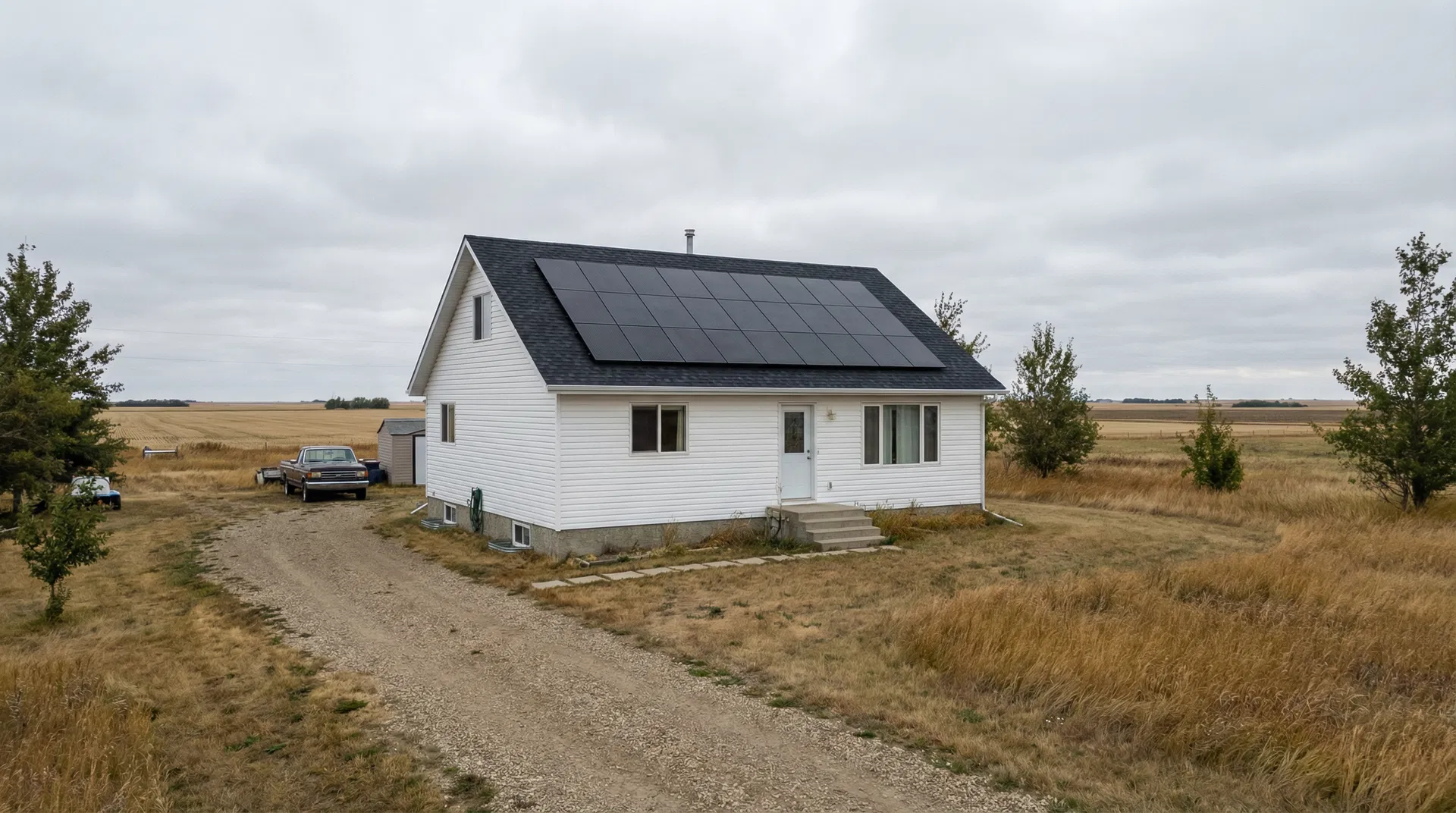
Lethbridge properties vary more than most people expect. You've got newer builds in the north end with steep south-facing pitches, older homes closer to downtown with flat or east-west roofs, acreages on the urban fringe with outbuildings to account for, and commercial properties with flat membrane roofs that need ballasted racking instead of penetrations. None of those situations gets a one-size answer. Financing changes the conversation because it ties monthly payments to the bill you're already paying, rather than asking you to write a large cheque up front. That comparison only works if the system is sized correctly. Undersized means you're still paying more in financing than you're offsetting. Oversized means you're generating credits you may never fully use. We start with the 12-month usage graph on your most recent power bill and a site assessment. From there, we build a production model specific to your roof orientation, shading conditions, and load profile. The financing structure gets applied after that step, not before. That's how we make sure the payment fits the offset, not just the sale.
Electrical Site Review for Lethbridge Properties
Voltage Rise
Voltage rise happens when a solar array pushes power back toward the grid and the local distribution line voltage climbs above acceptable limits. In some parts of the service territory, distribution conditions can make this a binding constraint that forces system sizing down even when your roof could physically hold more panels. We check for this during design so the system we quote is the system that actually gets approved.
Single-Phase vs Three-Phase
Most residential properties in the area are served by single-phase power, but some larger properties, shops, and commercial sites have three-phase service. The phase configuration affects which inverters are compatible and how the system capacity is distributed across the service. We confirm your service type during the site review before specifying equipment.
Panel Infrastructure
Older electrical panels sometimes don't have the breaker capacity or the physical space to support a solar backfeed breaker at the size the system requires. We assess panel age, main breaker rating, and available slots as part of the site review. If an upgrade is needed, we scope and price it alongside the solar install so there are no surprises once the interconnection application is submitted.
Service Entrance Review
The service entrance and meter base have to meet current utility standards before the City of Lethbridge will approve a micro-generation connection. We inspect the meter base condition, weatherhead, and service entrance conductors as part of the design process. If the meter base needs upgrading, we identify that before submitting the application so the project stays on track.
Right-Sizing Solar for Lethbridge Properties
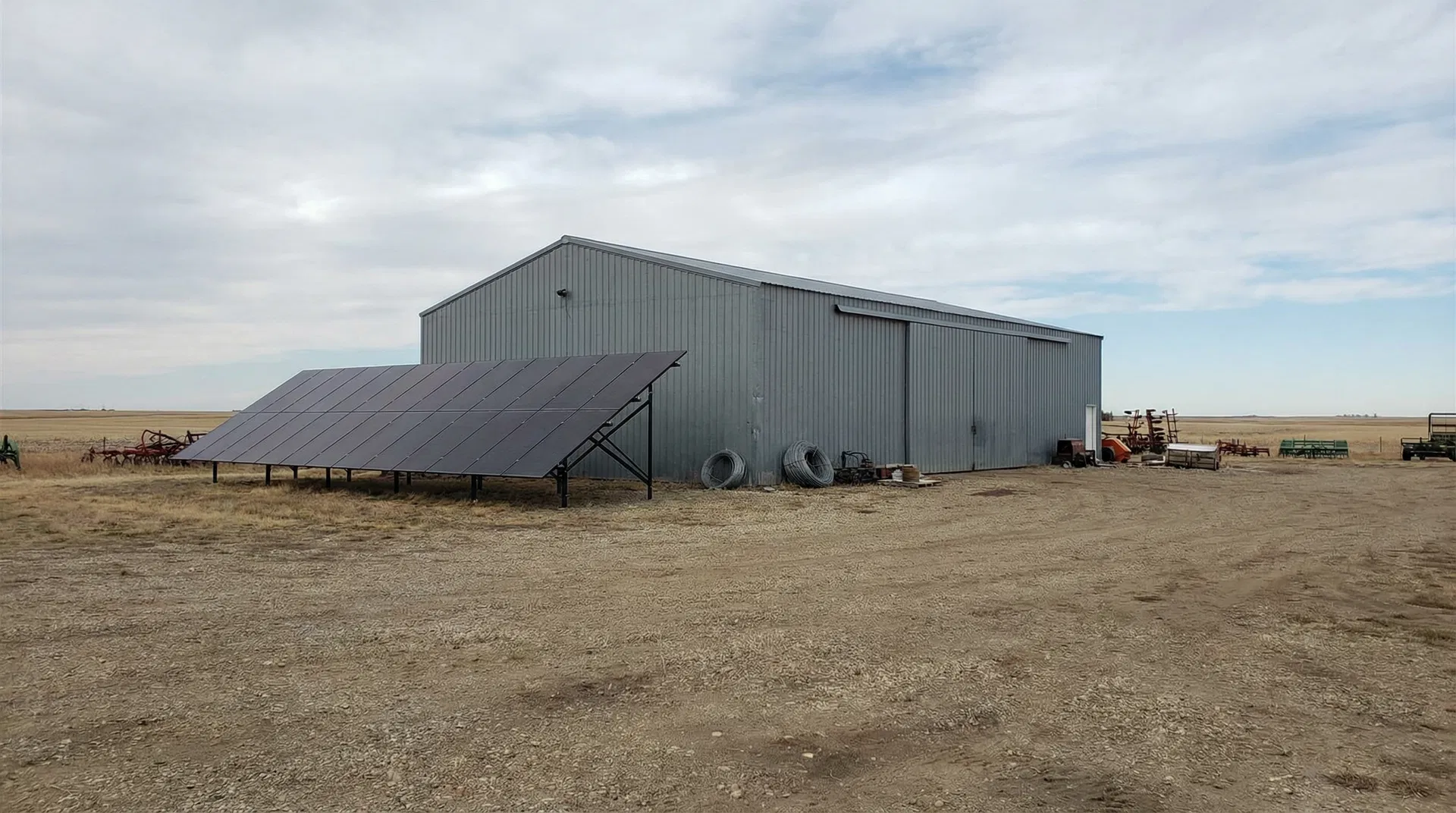
Urban and near-urban Lethbridge properties carry a wider range of loads than most people realize. A home with a heated double garage, an in-floor heating system, and a basement suite doesn't have the same consumption profile as a newer build with gas heat and average appliances. Add a small commercial operation, an irrigation pump, or an agricultural outbuilding and the numbers shift again. We don't apply a rule-of-thumb kW-per-bedroom formula because it doesn't reflect what's actually running on your service. The right starting point is the 12-month usage graph on your most recent power bill. That graph shows seasonal variation, not just a monthly average. A property that uses heavily in winter for heating and lightly in summer looks completely different from one that runs irrigation equipment from May through September. Sizing from the annual shape of that graph means the system is matched to your actual pattern, not a generalized average. Roof versus ground mount comes down to what your roof can support and what your yard allows. A south-facing roof with minimal shading and adequate pitch is a good candidate. If the roof faces east-west, has a low pitch, or carries shading from a parapet or nearby structure, a ground-mount array in an open section of the yard often produces a better result at a comparable cost. We'll walk through both options during the site visit and give you a clear comparison before the financing structure gets finalized.
Typical Load Profiles We Design For Near Lethbridge
Home with In-Floor Heat and Attached Garage
Properties with electric in-floor radiant heat and a heated attached garage carry a significantly higher winter load than a home with gas forced air. That load shape typically pushes system sizing toward the upper end of the 8-15 kW range. We pull the 12-month usage graph from your most recent power bill to confirm how pronounced the seasonal swing is before settling on a final array size.
Acreage with Detached Shop and Secondary Suite
An acreage on the Lethbridge fringe with a detached heated shop and a rental suite in the main house is running two effectively independent load centres. The shop alone can add several thousand kWh per year depending on what's in it. A 13-15 kW ground-mount array is often the right fit for this profile, but the site design and your most recent power bill confirm that rather than a rule-of-thumb estimate.
Small Commercial or Light Industrial Property
Light commercial properties, including ag-service businesses and small warehouses on the outskirts of the area, often have three-phase service and consistent year-round loads from HVAC, lighting, and equipment. A 15 kW system is a common starting point for this profile, but commercial sites require a full load audit before the design is locked in. Financing terms for commercial installs follow the same logic: the monthly payment is sized against what the system offsets, not a generic commercial rate.
City of Lethbridge Interconnection
Lethbridge is served by the City of Lethbridge as the wire service. That matters because interconnection applications, micro-generation agreements, and metering setups go through the city's utility department, not a rural cooperative or a provincial wire service like FortisAlberta or ATCO. The City of Lethbridge reviews grid connection applications for solar installs and has its own process for approving micro-generation. We handle the full application package: system design documentation, single-line diagrams, equipment specifications, and the submission itself. You don't need to navigate that process on your own. We don't quote approval timelines because those depend on the city's current workload and your specific property configuration. What we can tell you is that the application doesn't get submitted until the design is complete and accurate, which reduces the chance of back-and-forth with the utility. Getting the package right the first time is the fastest path through the process.
Project Economics and Design Review
| System Size | Annual Production | Year 1 Savings | Payback Period |
|---|---|---|---|
| 8-15 kW range, 10 kW typical |
Production, savings, and payback estimates require a property-specific design and your most recent power bill to be accurate.
How We Work in Lethbridge
Bill and Load Review
We review your power bill to understand your energy use in Lethbridge and size the system to your actual consumption — not a generic estimate.
Site Assessment
We assess your roof or ground area, south-facing exposure, electrical service, and utility interconnection requirements specific to your property.
Design and Utility Application
We produce a system layout, production estimate, and cost summary, then submit your micro-generation application to your utility on your behalf.
Installation and Commissioning
Our crew installs racking, panels, inverter, and electrical connections. All work is performed by licensed electricians. We commission and test before handoff.
Current Program and Interconnection Review
Utility connection review
The City of Lethbridge reviews grid connection applications for solar micro-generation. Range Road Solar prepares and submits the full design package on your behalf, including system documentation and equipment specifications. You don't need to interact with the utility directly during the application process.
Current program review
Eligibility for commercial, agricultural, and residential incentive programs is reviewed against current rules at the time of design. Program terms change, and what applied to an install last year may not apply today. We confirm what's available and what your property qualifies for during the design review.
Frequently Asked Questions
Get a Solar Assessment for Lethbridge
Submit a recent power bill and we will review your consumption and provide an honest assessment for your Lethbridge property. No obligation.
(587) 330-7502 Book a CallRelated Resources
More Solar Services in Lethbridge