Lethbridge County · Shop and outbuilding solar
Shop Solar in Lethbridge, Alberta for Shops and Outbuildings
Range Road Solar designs and installs 8-20 kW solar systems for shops, barns, and outbuildings in Lethbridge, Alberta, grid-tied through the City of Lethbridge.
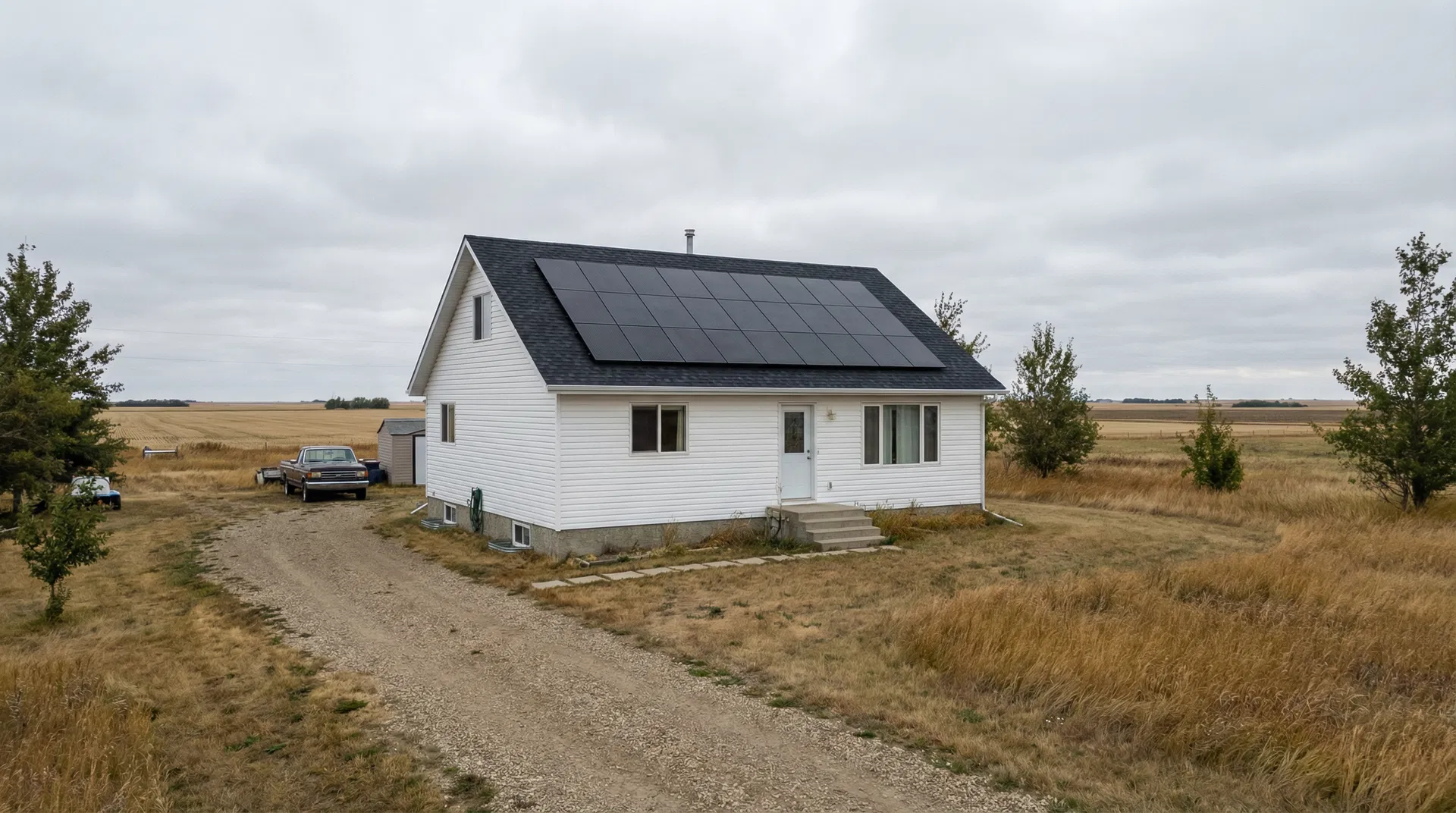
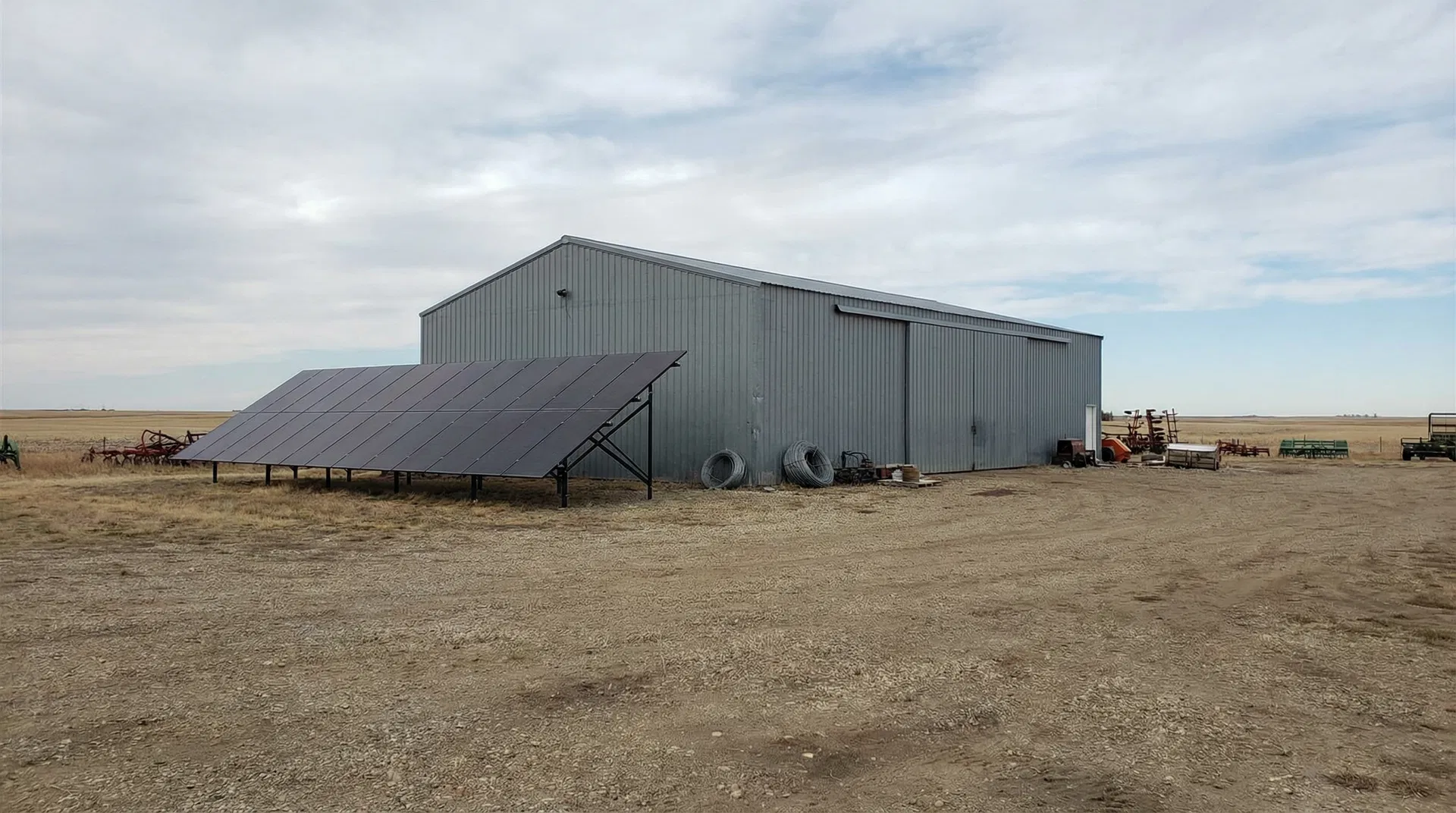
Solar shop solar in Lethbridge, Alberta covers a wide range of building types, from a single heated mechanics shop to a multi-building property with a barn, grain storage, and a separate residential service. We design systems in the 8-20 kW range for this service, with 12 kW being a common starting point for a shop running heat, compressors, and lighting year-round. Every system we install uses LONGi solar panels and APsystems microinverters. LONGi panels hold up well on metal and steel-truss shop roofs, and they work in rooftop and ground-mount configurations. APsystems microinverters are installed at the panel level, which means each panel operates independently. If one section of your shop roof is partially shaded by an adjacent building or a grain bin, the rest of the array keeps producing without the performance drag you'd see with a string inverter setup. Rooftop installations on shops work well when the roof faces within a reasonable range of south and the pitch is adequate. On properties where the shop roof isn't the right fit, because of pitch, orientation, or shading from nearby structures or trees, we'll recommend a ground-mount array instead. Ground-mount systems give us full control over tilt and orientation, and on a property with available yard space, they're often the cleaner design choice. We size every system from your actual usage data, not from estimates. Bring us your most recent power bill and we'll build the design from there.
Solar Planning for Lethbridge Properties
Shops, heated garages, barns, and outbuildings carry loads that are often separate from the main residence but still show up on the same power bill. That matters when you're sizing a solar system, because the goal is to offset the combined draw across all the buildings on the property, not just one of them. In Lethbridge, Alberta, properties range from light industrial lots on the edge of town to working farms where a shop and an irrigation system share the same service entrance. The electrical setup varies considerably, and that variation is exactly why we start with a site review rather than a rule-of-thumb number. We look at the existing panel, the meter base, the roof pitch and orientation of your shop, and whether ground-mount is a better fit for your yard layout. We're also looking at the 12-month usage graph on your most recent power bill, because that graph tells us far more about your actual consumption pattern than any estimate we could make from square footage alone. Properties tied to the City of Lethbridge grid go through a specific interconnection process, and we handle that application on your behalf. The design review is free, and it's the only honest way to know what a system will actually do for your property.
Electrical Site Review for Lethbridge Properties
Voltage Rise
Voltage rise happens when a solar system exports current back through the distribution line and pushes the voltage at the service entrance above acceptable limits. In areas where the distribution infrastructure is older or the line is shared with multiple properties, the conditions that cause voltage rise can be more pronounced. When voltage rises past the inverter's threshold, the inverter clips or shuts down to protect the grid, which reduces system output and affects how we size the array.
Single-Phase vs Three-Phase
Properties in and around Lethbridge may be served by single-phase or three-phase electrical service depending on their location and how the property has been developed. The phase configuration matters because it directly affects which inverter configurations are compatible and what the practical upper limit on system capacity looks like. We confirm the phase service during the site review so that the inverter selection and system sizing are matched correctly from the start.
Panel Infrastructure
Older shops and outbuildings often have electrical panels that weren't sized for a solar backfeed, either because the panel is undersized, the breakers are at or near capacity, or the panel itself is a model that doesn't accept a solar backfeed breaker safely. We assess breaker capacity and panel age during the site review and look for those conditions before finalizing the design. If the panel can't support the system, we'll include a panel upgrade in the project scope so the install meets code and the interconnection application is clean.
Service Entrance Review
The meter base and service entrance are reviewed as part of every design we prepare for the City of Lethbridge interconnection process. The City of Lethbridge's application requires that the meter base be in a condition that supports a bi-directional meter installation, which is the meter type the city uses to record both consumption and export. If the existing meter base is weathered, undersized, or not rated for the upgrade, we flag it early so the cost of replacement is included in the project estimate rather than discovered during installation.
Right-Sizing Solar for Lethbridge Properties
Properties in and around Lethbridge often carry more electrical load than a straightforward residential solar project. When you're running a heated shop alongside a home, and maybe an irrigation pump or grain handling equipment on top of that, the combined draw adds up fast. A system sized only for the house won't touch the shop load, and a system sized on a rough square footage guess won't be accurate either. We don't work from rule-of-thumb numbers. We start with the 12-month usage graph on your most recent power bill. That graph shows us your seasonal consumption pattern across the full year, which is the only honest way to size a system that'll actually offset a meaningful share of your total usage. Roof versus ground-mount is a genuine decision on most shop and acreage properties. If your shop roof faces south or close to it, has a workable pitch, and doesn't have shading issues from a nearby grain bin or tree line, rooftop is usually the simpler path. But if the roof orientation is off, the pitch is flat, or another building blocks the sun for part of the day, ground-mount gives us full control over the array angle and direction. On a property with available yard space, that often produces a better design outcome than forcing panels onto a less-than-ideal roof. We'll look at both options during the site review and recommend whichever one makes more sense for the actual conditions on your property.
Typical Load Profiles We Design For Near Lethbridge
Home Plus Heated Shop
This is one of the most common setups we see: a residence and a separately metered or sub-metered heated shop running on the same service entrance. The shop typically carries forced-air heat, lighting, compressors, and welding equipment, all of which add load in the winter months when the house is also running full tilt. We design from the combined 12-month usage graph on your most recent power bill to size a system that offsets the total draw, not just the easier residential portion of it.
Commercial or Light Industrial Shop
Properties with a standalone commercial or light industrial shop, think automotive service, fabrication, or equipment storage, often have a 200-amp or larger service and equipment running on 240-volt circuits. A 15-20 kW system is often where these projects land, depending on the actual usage data. We size from the shop's power bill directly and confirm whether the existing panel and service entrance can support the solar backfeed before we finalize the design.
Acreage with Shop and Irrigation
Properties that run irrigation or grain handling equipment alongside a shop and residence carry a load profile that changes sharply with the season. Irrigation draws are concentrated in summer, while shop and house loads are heaviest in winter. That seasonal swing affects how we size and orient the array to make the system as useful as possible across the full year. We model this from the 12-month usage graph on your most recent power bill so the design reflects your actual consumption pattern rather than an average.
City of Lethbridge Interconnection in Lethbridge
Properties in Lethbridge, Alberta that sit on the City of Lethbridge distribution grid connect through the City of Lethbridge's micro-generation program. This is a municipal utility, which means the interconnection process and review are handled by the city's own electrical department rather than a provincial wire service like ATCO or FortisAlberta. The application requires a design package that documents the system size, equipment specifications, single-line diagram, and installation approach. Range Road Solar prepares and submits that package on your behalf. We don't hand you a stack of forms and send you off to figure it out. Once the interconnection is approved, the City of Lethbridge installs a bi-directional meter at the service entrance so that any generation sent back to the grid is recorded. We don't make claims about credit settlement rates, payout rules, or approval timelines, because those details are confirmed by the City of Lethbridge at the time of application and can change. What we do confirm is that your system is designed to meet their technical requirements before we ever submit the paperwork.
Project Economics and Design Review
| System Size | Annual Production | Year 1 Savings | Payback Period |
|---|---|---|---|
| 8-20 kW range, 12 kW typical |
Production, savings, and payback estimates require a property-specific design review and your most recent power bill.
How We Work in Lethbridge
Bill and Load Review
We review your power bill to understand your energy use in Lethbridge and size the system to your actual consumption — not a generic estimate.
Site Assessment
We assess your roof or ground area, south-facing exposure, electrical service, and utility interconnection requirements specific to your property.
Design and Utility Application
We produce a system layout, production estimate, and cost summary, then submit your micro-generation application to your utility on your behalf.
Installation and Commissioning
Our crew installs racking, panels, inverter, and electrical connections. All work is performed by licensed electricians. We commission and test before handoff.
Current Program and Interconnection Review
Utility connection review
The City of Lethbridge reviews grid connection applications for properties on their distribution system, and Range Road Solar prepares the full design package required for that submission. We don't ask you to navigate the application process on your own. We handle the documentation so the application goes in correctly the first time.
Current program review
Commercial shop, farm, and residential installations may be eligible for programs or incentives depending on the property type and current rules at the time of design. We review eligibility against the programs that are actually active when your project goes through design, not programs that have since ended or changed. You won't get a pitch for something that doesn't apply to your property.
Frequently Asked Questions
Get a Solar Assessment for Lethbridge
Submit a recent power bill and we will review your consumption and provide an honest assessment for your Lethbridge property. No obligation.
(587) 330-7502 Book a CallRelated Resources
More Solar Services in Lethbridge