Lethbridge County · Solar quotes
Free Solar Quotes for Lethbridge, Alberta Properties
A real design review built from your actual power bill, not a satellite estimate. LONGi panels, APsystems microinverters, and a full interconnection package handled for you.
Solar quotes for Lethbridge, Alberta properties start with a real design review, not a web form that emails you a ballpark figure based on your address. When you reach out, we ask for one thing: your most recent power bill. Alberta utility bills include a 12-month usage graph, and that graph drives every sizing decision we make. We size systems based on what you're actually consuming. For residential properties without heavy shop or outbuilding loads, that typically lands somewhere in the 8 to 15 kW range, with 10 kW being a common fit for a home with a heated garage or modest secondary structure. Properties with heated shops, irrigation equipment, or multiple outbuildings often push higher. Equipment matters for how a system holds up over a long timeline. We install LONGi panels, one of the most widely deployed residential panel lines in Alberta, and APsystems microinverters, which operate at the individual panel level. That design means shading on one part of your roof doesn't clip output from the whole array. Every quote includes a full site assessment, a shading analysis, and a production model built from your power bill and on-site conditions. We don't pad numbers to close a deal.
Solar Planning for Lethbridge Properties
Alberta's electricity market is deregulated, which means your bill has two distinct parts: the distribution charge from your wire service, and the energy charge from your retailer. A solar installation offsets the energy portion. How much it offsets depends on your actual 12-month consumption pattern, your roof or ground-mount site conditions, and current interconnection rules for your property. That's why we don't quote from satellite images or web calculators. We work from your most recent power bill, which includes a 12-month usage graph on the last page, and we build the design from there. For most properties we work with in this part of Alberta, systems fall in the 8 to 15 kW range. The right number for your specific property depends on your load, your available installation space, and what your electrical panel can support. Range Road Solar handles the equipment supply, the installation, and the interconnection application to your wire service. You don't need to coordinate between multiple contractors or sort through the utility paperwork on your own.
Electrical Site Review for Lethbridge Properties
Voltage Rise
Voltage rise occurs when a solar system exports power back into the distribution line and the voltage at the point of connection climbs above the acceptable operating threshold. On lines with older infrastructure or higher impedance, this can force inverters to throttle output before the system reaches its rated capacity. We assess distribution conditions at your service entrance during the site review so voltage rise is accounted for in the design before a panel goes on the roof.
Single-Phase vs Three-Phase
Properties in this part of Alberta are served by either single-phase or three-phase electrical service, depending on when the building was originally connected and what load it was designed to carry. This distinction matters for inverter selection and how a larger system gets balanced across service legs. We confirm your service type during the site review so inverter configuration is correct from the start, not discovered during installation.
Panel Infrastructure
Older electrical panels sometimes lack the breaker capacity or physical space to accommodate a solar backfeed breaker at the size a system requires. We review the panel age, breaker load, and available slot space during every site assessment. If the panel needs an upgrade to safely support the solar installation, we include that scope and cost in the quote before any work is committed.
Service Entrance Review
The meter base condition is part of the micro-generation application review for City of Lethbridge, and a meter base that doesn't meet current utility standards can stall the application until it's addressed. We inspect the service entrance and meter base during the site visit to catch any upgrade requirements before the application is submitted. If work is needed, it's included in the project scope upfront rather than surfacing as a surprise after the application is already in.
Right-Sizing Solar for Lethbridge Properties
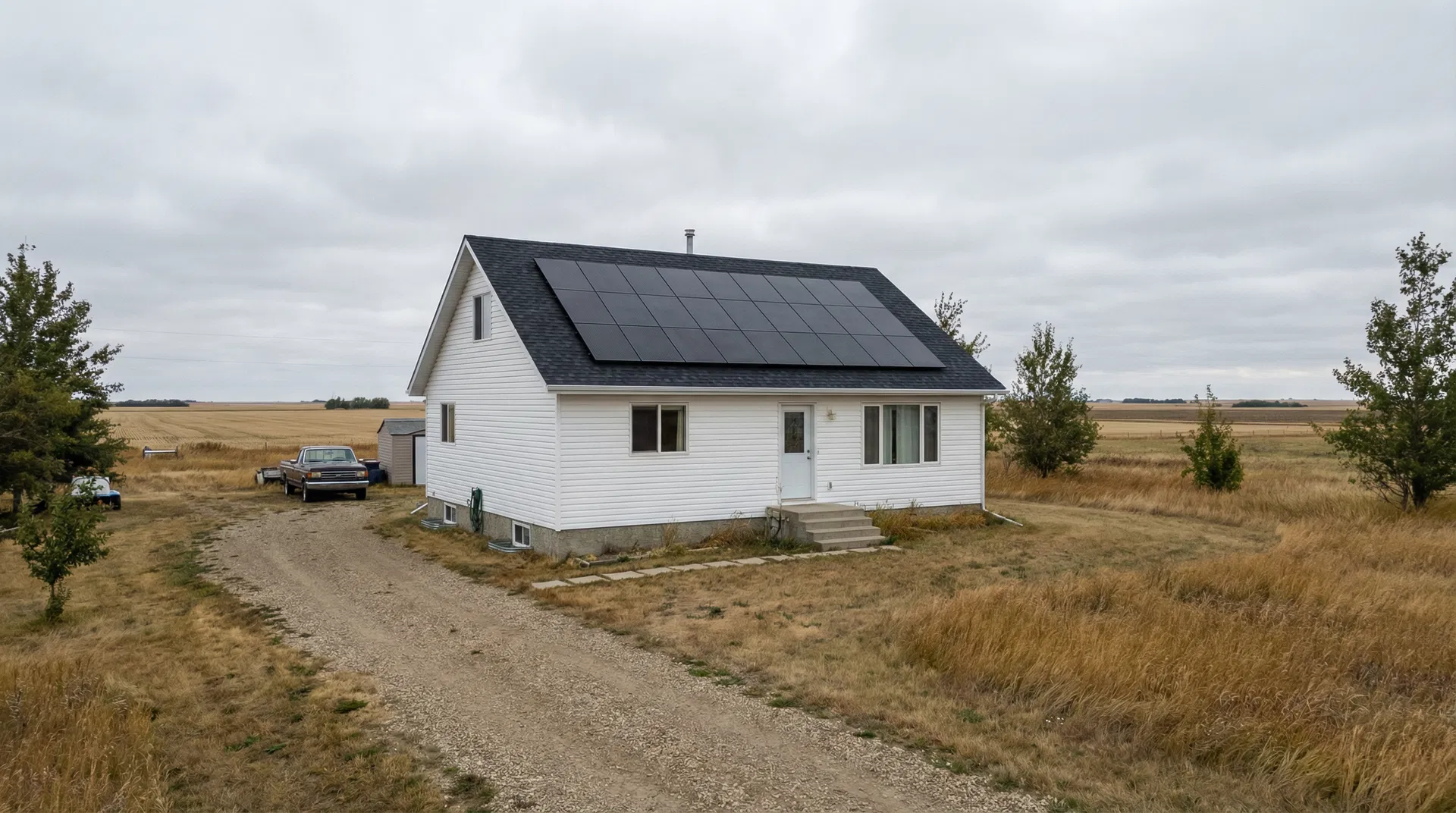
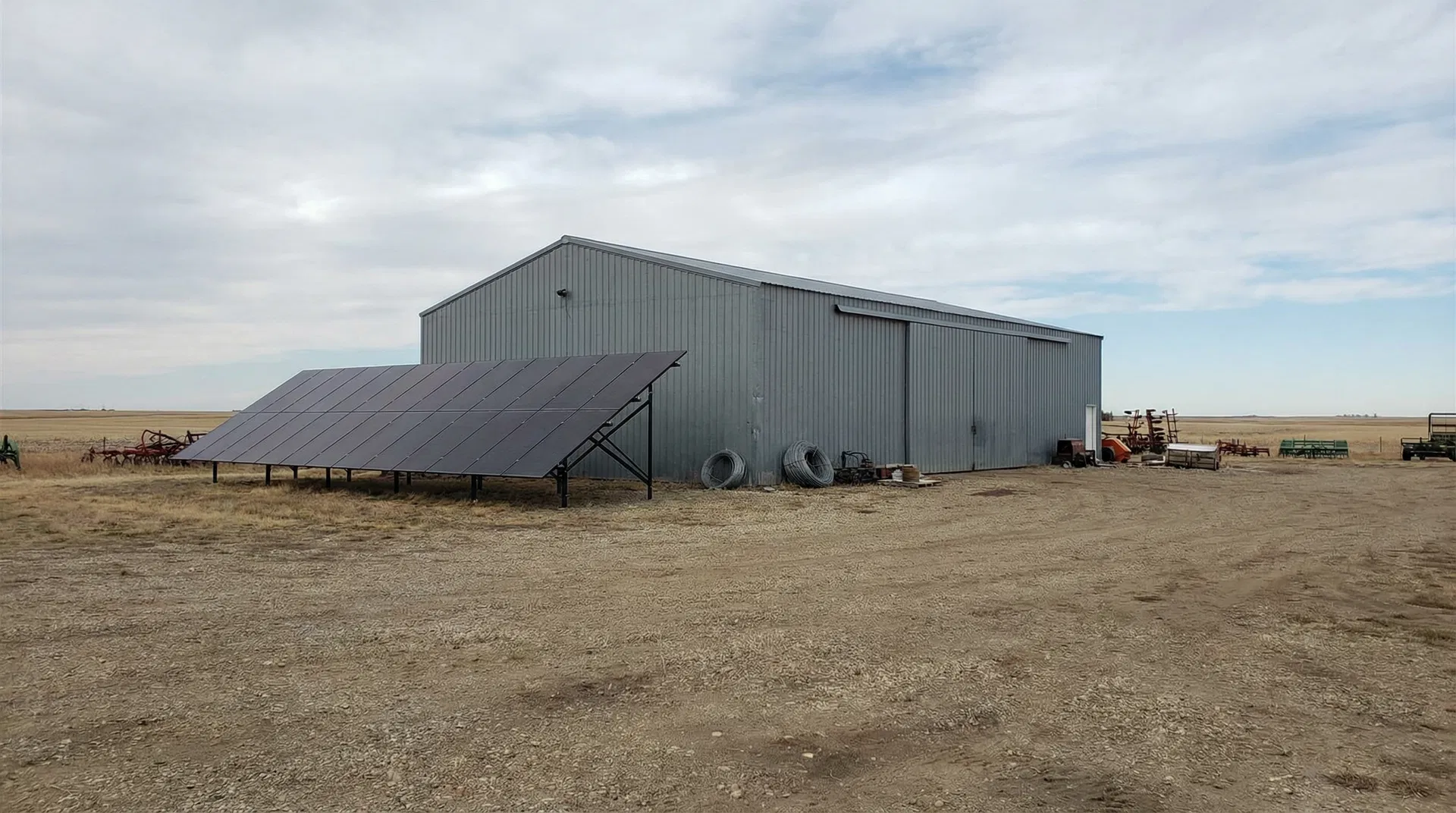
Properties outside a city core often carry more electrical load than a standard urban home, and that difference matters when you're sizing a solar system. A rural acreage might have a main house, a heated detached shop, separate outbuildings, and seasonal irrigation or grain handling loads. All of those show up in the 12-month usage history on your most recent power bill, and that's where we start every design. We don't size systems off rule-of-thumb numbers or square footage estimates. The usage graph on your most recent power bill captures actual consumption across all seasons, including winter heating loads and summer peaks from irrigation or cooling equipment. We build the production model from that graph alongside a real site assessment. Roof mount versus ground mount is a real decision for acreage and farm layouts. If a roof has heavy shading from mature trees or adjacent buildings, a poor pitch, or a layout that forces panels onto multiple orientations, a ground-mount array on available flat ground will often outperform a compromised roof install. We assess both options at the site visit and recommend based on what produces better results for that specific property. For residential systems in the 8 to 15 kW range, the difference between a well-sized design and an undersized one shows up on your bill for the next two decades. We take the time to get it right before any contract is signed.
Typical Load Profiles We Design For Near Lethbridge
Home + Heated Detached Shop
A home with a heated detached shop running tools, a compressor, or a welder is one of the most common profiles we design for in this part of Alberta. Shop heating load pushes winter consumption well above the summer baseline, and a system sized only to the warm-season average won't offset much of that. We size from the full annual usage curve, which typically puts these properties in the 10 to 13 kW range depending on shop size and how consistently it's heated.
Acreage Home + Multiple Outbuildings
An acreage with a main house and one or more outbuildings running off shared or separate electrical infrastructure is a different design problem than a single-building install. Some outbuildings run on sub-panels that aren't tied to the main meter, and the load across structures isn't always obvious from a satellite view. We map the full consumption picture from your most recent power bill and clarify which loads the system will offset before a design is committed.
Small Commercial or Light Industrial
Light commercial properties and small service businesses in this area often run three-phase service with a business-hours load pattern that differs from residential peaks. More of the solar generation happens while the building is already drawing power, which changes the offset calculation compared to a home that peaks in evenings and mornings. We model consumption timing alongside the production estimate so you understand how much of your generation offsets on-site load versus what gets exported to the grid.
City of Lethbridge Interconnection
Properties on City of Lethbridge distribution require a micro-generation application before a solar system can connect to the grid and export power. That application involves a technical design package, inverter documentation, and confirmation that your meter base and service entrance meet current utility standards. Range Road Solar prepares and submits the full application package on your behalf. We handle the technical documentation, coordinate any follow-up the utility requires, and make sure the application reflects the actual design we're installing, not a generic spec sheet. We won't speculate on review timelines or credit settlement rules. Those answers come from the utility's current policies, which we confirm during the design process. What we can tell you is that no system we install goes live before it's been through the proper approval process.
Project Economics and Design Review
| System Size | Annual Production | Year 1 Savings | Payback Period |
|---|---|---|---|
| 8-15 kW range, 10 kW typical |
Production, savings, and payback estimates require a property-specific design review using your most recent power bill and a site assessment.
How We Work in Lethbridge
Bill and Load Review
We review your power bill to understand your energy use in Lethbridge and size the system to your actual consumption — not a generic estimate.
Site Assessment
We assess your roof or ground area, south-facing exposure, electrical service, and utility interconnection requirements specific to your property.
Design and Utility Application
We produce a system layout, production estimate, and cost summary, then submit your micro-generation application to your utility on your behalf.
Installation and Commissioning
Our crew installs racking, panels, inverter, and electrical connections. All work is performed by licensed electricians. We commission and test before handoff.
Current Program and Interconnection Review
Utility connection review
City of Lethbridge reviews micro-generation applications for properties within its service area. Range Road Solar prepares the complete design package, including equipment specifications and site documentation, and submits it on your behalf. We handle the utility-side paperwork and follow up on any technical questions that come up during the review process.
Current program review
Residential, commercial, and farm properties can each qualify under different criteria depending on current program rules. We review what's applicable at the time of your project, not based on program information that may have changed since a blog post was written. Eligibility and application requirements are confirmed against current terms during the design review.
Frequently Asked Questions
Get a Solar Assessment for Lethbridge
Submit a recent power bill and we will review your consumption and provide an honest assessment for your Lethbridge property. No obligation.
(587) 330-7502 Book a CallMore Solar Services in Lethbridge