Lethbridge County · Acreage solar systems
Acreage Solar in Lethbridge, Alberta
Rooftop and ground-mount solar for rural residential properties in Lethbridge, Alberta. Systems sized 12-18 kW to match real acreage loads, not urban baselines.
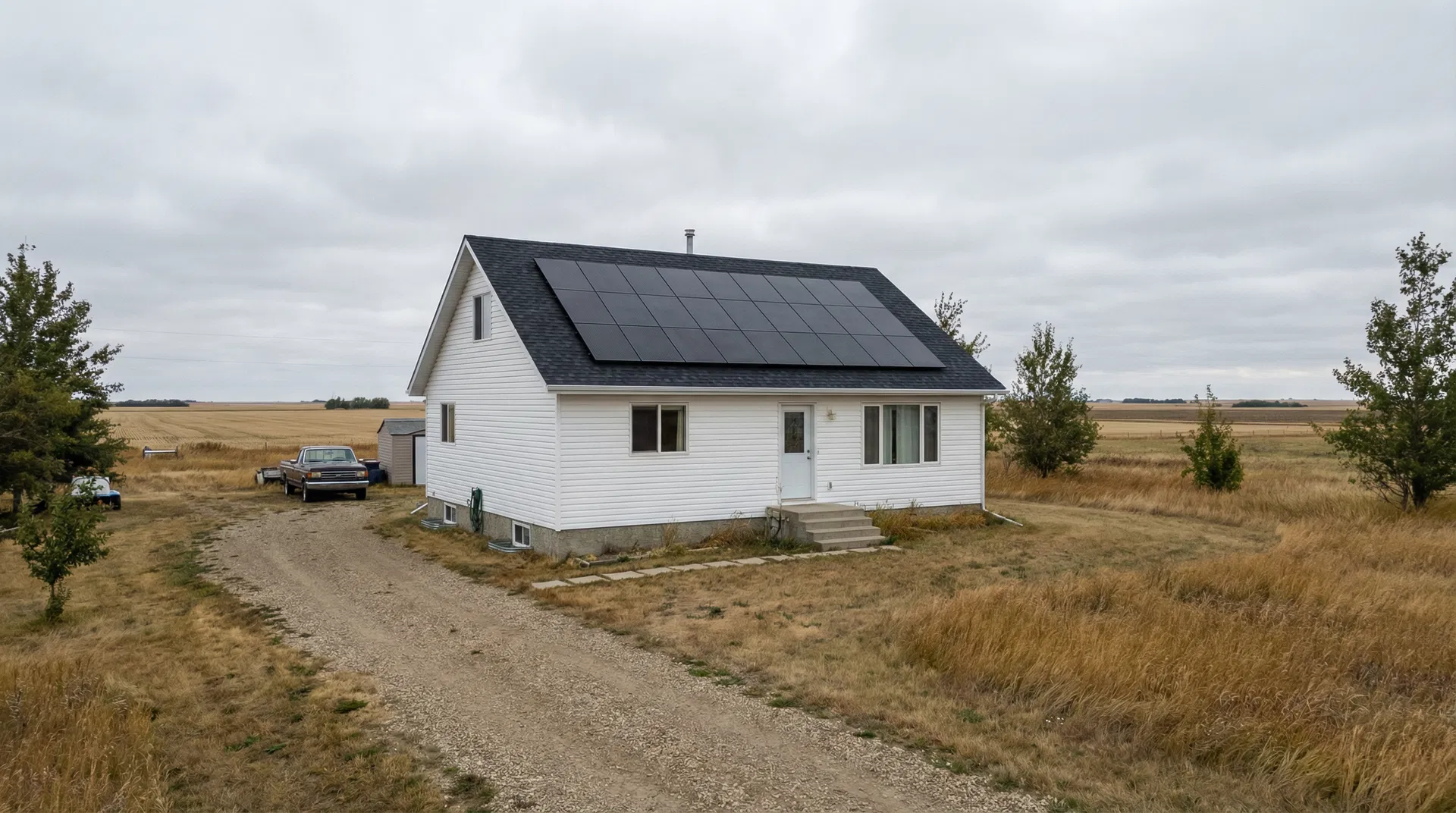
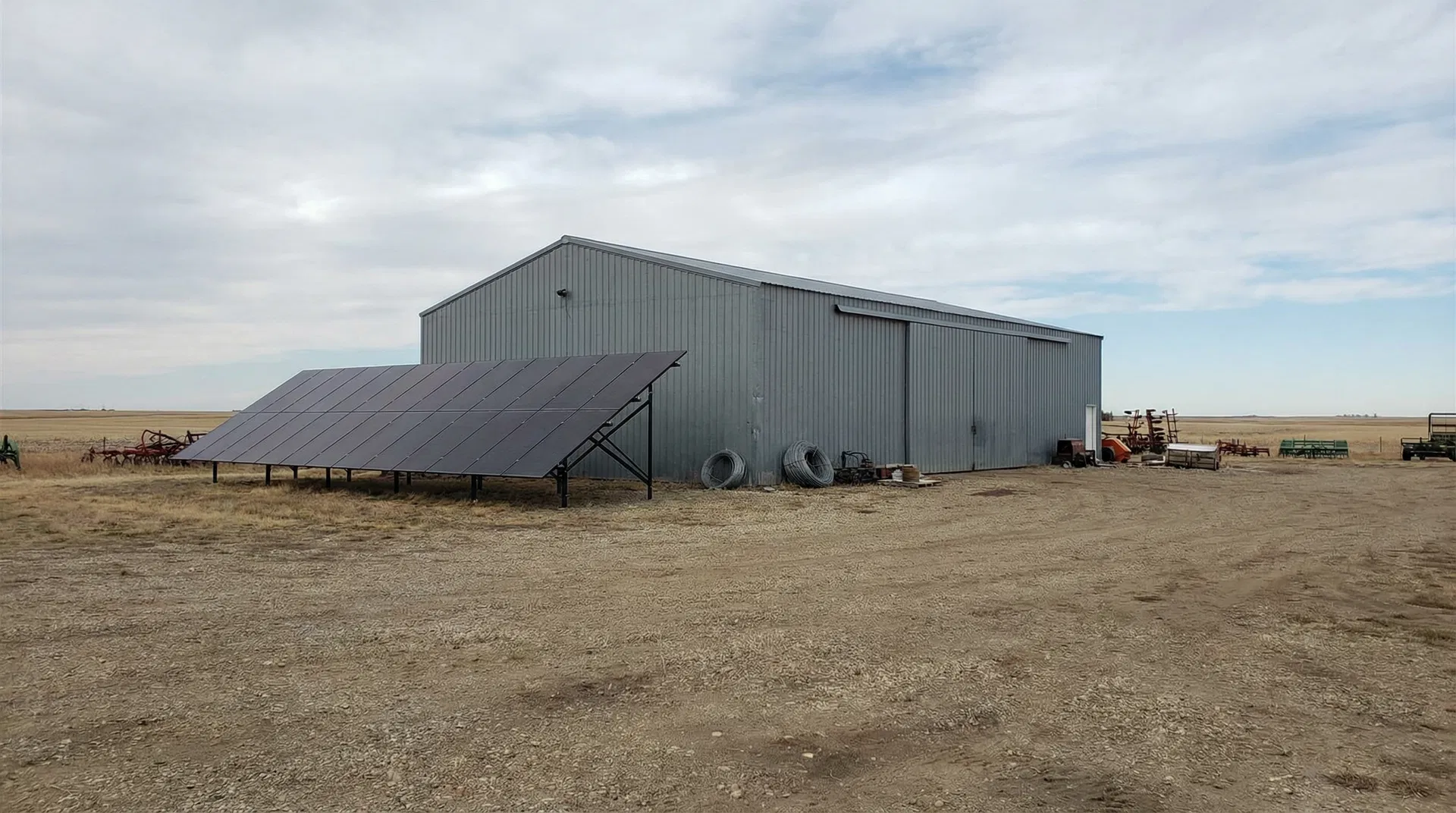
Solar acreage solar Lethbridge Alberta is a search that covers a lot of ground: hobby farms, rural residential lots, working farmsteads with residential components, and everything in between. We work across all of those property types and size each system individually. Most acreage systems we install run between 12 and 18 kW, with 15 kW being a common landing point once we've reviewed the property's full load picture. That range isn't arbitrary. It reflects the combined draw of a house, heated shop, and supporting loads that are typical out here. Smaller systems leave capacity on the table. Oversized systems don't always pencil out. On the panel side, we install LONGi solar panels. They hold up well on large roof planes and ground-mount frames, and the output is consistent across the array. For inverter technology, we use APsystems microinverters. With a microinverter setup, each panel operates independently. If one panel is shaded by a tree, a dormer, or an outbuilding roof, the rest of the array keeps producing at full capacity. On acreage properties where shading conditions vary across different structures, that matters. Ground-mount arrays are a legitimate option when the roof geometry isn't ideal or when the available yard space is better suited to a fixed or adjustable frame. We assess both options during the design review and recommend whichever one produces a better result for the property, not whichever one is easier to install.
Solar Planning for Lethbridge Properties
Acreage properties outside Lethbridge, Alberta carry loads that urban systems aren't built to handle. A heated shop, well pump, outbuildings, and a main residence running together push monthly consumption well above what a standard residential system is designed for. That gap is exactly where acreage solar makes sense. The properties we work on in this area often have large roof planes on the house and shop, flat or gently sloped yards with room for ground-mount arrays, and electrical infrastructure that ranges from recently upgraded to decades old. Each of those variables changes how we design the system. We don't use rule-of-thumb estimates. We pull the 12-month usage graph from your most recent power bill, map your roof and yard with satellite imagery, confirm shading conditions, and build a design that reflects what your property actually consumes. If the bill shows a clear seasonal spike from irrigation or grain handling equipment, that goes into the model. If it doesn't, we won't pad the numbers to sell you a bigger system. We provide honest production estimates based on your actual power bills and site conditions, not inflated projections. That approach takes a bit more time upfront, but it produces a system that performs the way it's supposed to.
Electrical Site Review for Lethbridge Properties
Voltage Rise
Voltage rise happens when a solar system pushes power back onto the distribution line and raises the voltage at the point of connection above acceptable limits. On longer rural distribution runs, line impedance can amplify this effect, which causes inverters to throttle output or shut down to stay within grid voltage tolerances. We assess voltage rise conditions during the design phase and use that data to inform inverter configuration and array sizing decisions.
Single-Phase vs Three-Phase
Rural properties can be served by either single-phase or three-phase electrical service, and the distinction affects how we design the solar system. Three-phase service allows for larger inverter capacity and more balanced load distribution across the array, while single-phase service has capacity limits that shape what inverter configuration makes sense. We confirm your service type during the site review and select APsystems microinverter configurations that match it.
Panel Infrastructure
Older electrical panels on acreage properties sometimes don't have the breaker capacity to accommodate a 12-18 kW solar system without modifications. We assess the panel's age, breaker slots, and available capacity as part of every design review. If the panel can't support the system safely, we'll include a panel upgrade in the project scope and quote it clearly before any work begins.
Service Entrance Review
The service entrance and meter base condition are reviewed as part of the interconnection application to the City of Lethbridge. The City's technical review requires that the meter base meets current standards before a micro-generation connection is approved. If the existing meter base is outdated or in poor condition, an upgrade is required and we'll identify that early in the process so it doesn't surface as a surprise during the application review.
Right-Sizing Solar for Lethbridge Properties
Acreage systems are larger than urban residential systems for a straightforward reason: there's more to power. A typical rural property near Lethbridge might include a main house, a heated shop running 240V equipment, a well pump, security lighting, and seasonal loads like irrigation or a grain auger. Each of those adds to the annual consumption number, and a system sized only for the house misses most of the opportunity. The roof-versus-ground-mount decision comes down to the specific property. If the house and shop roofs have good southern exposure, minimal shading, and adequate pitch, rooftop is often the right call. But if trees, neighbouring structures, or a complex roofline are creating shading issues, or if the yard has open space that a ground-mount frame could use more effectively, we'll design it that way instead. We don't default to one option. We size every system from the 12-month usage graph on your most recent power bill. Alberta utility bills include a usage graph that shows how your consumption shifts month to month across heating season, summer, and everything in between. That graph tells us whether your load is relatively flat year-round or whether there are spikes we need to account for. We build the system design around those real numbers. You won't get a quote based on square footage, number of bedrooms, or a province-wide average. It'll be based on what your property actually uses.
Typical Load Profiles We Design For Near Lethbridge
Home + Heated Shop
This is the most common profile we see on acreage properties in the area: a main residence combined with a heated shop running 240V tools, a compressor, and sometimes a welder or lift. The shop's heating load alone can add significantly to winter consumption, which shows clearly on the 12-month usage graph. We size the system to address the combined draw of both structures, not just the house.
Residence + Irrigation System
Properties with centre-pivot or drip irrigation see a pronounced seasonal spike in consumption during the growing months. That spike changes the shape of the 12-month usage graph in a way that affects array sizing. A system sized only for the home's baseline load will underperform when the pumps run. We factor the irrigation load into the design so the array is proportioned for the full seasonal picture.
Acreage + Multiple Outbuildings
Some properties have a main house, a shop, a barn or equipment storage building, and a second residence or suite, all drawing from the same service. That spread-out load profile often points toward a ground-mount array positioned in an open area of the yard, rather than trying to split the system across multiple rooftops with different orientations. We assess the full site layout and design accordingly.
City of Lethbridge Interconnection in Lethbridge
The wire service for Lethbridge, Alberta is the City of Lethbridge. That means your solar system connects to and is governed by the City of Lethbridge's distribution network and micro-generation framework, not a rural electric co-op or a provincial wire service like ATCO or FortisAlberta. Interconnection requires a formal application to the City of Lethbridge. The application includes your system design package, single-line electrical diagram, equipment specifications, and information about your meter base and service entrance. Range Road Solar prepares and submits that full package on your behalf. We don't hand you a pile of forms and wish you luck. We handle the technical documentation, coordinate with the utility, and keep you updated as the application moves through the process. What we can't control is the City's review timeline or any infrastructure conditions on the distribution side that may affect the application outcome. If an issue comes up during the review, we'll explain it clearly and work through the options with you.
Project Economics and Design Review
| System Size | Annual Production | Year 1 Savings | Payback Period |
|---|---|---|---|
| 12-18 kW range, 15 kW typical |
Production, savings, and payback estimates require a property-specific design and your most recent power bill.
How We Work in Lethbridge
Bill and Load Review
We review your power bill to understand your energy use in Lethbridge and size the system to your actual consumption — not a generic estimate.
Site Assessment
We assess your roof or ground area, south-facing exposure, electrical service, and utility interconnection requirements specific to your property.
Design and Utility Application
We produce a system layout, production estimate, and cost summary, then submit your micro-generation application to your utility on your behalf.
Installation and Commissioning
Our crew installs racking, panels, inverter, and electrical connections. All work is performed by licensed electricians. We commission and test before handoff.
Current Program and Interconnection Review
Utility connection review
The City of Lethbridge reviews all solar micro-generation connection applications for properties it serves. Range Road Solar prepares the full design package required for that application, including the electrical single-line diagram, equipment specifications, and site documentation. We submit on your behalf and handle communication with the utility throughout the process.
Current program review
Eligibility for federal, provincial, and agricultural programs changes over time and depends on how a property is classified and used. We review current rules at the time of your design to identify which programs, if any, apply to your situation. We don't assume eligibility in advance or build projected program values into a quote before eligibility is confirmed.
Frequently Asked Questions
Get a Solar Assessment for Lethbridge
Submit a recent power bill and we will review your consumption and provide an honest assessment for your Lethbridge property. No obligation.
(587) 330-7502 Book a CallRelated Resources
More Solar Services in Lethbridge