Lethbridge County · Battery storage
Solar Battery Storage in Lethbridge, Alberta
Hybrid inverters and lithium battery storage designed for Lethbridge properties. Keep the lights on during outages and use more of what your panels produce.
If someone is searching for solar battery storage Lethbridge Alberta, they're usually asking one of two questions: can I keep power on when the grid goes down, or can I stop sending my surplus back to the grid for next to nothing? Both are valid reasons to add storage, and the design looks different depending on which problem you're solving. We build battery storage systems around hybrid inverters paired with lithium battery banks. The hybrid inverter handles both the solar input from your LONGi panels and the battery charging and discharging in a single unit, which keeps the electrical design tighter and reduces the number of components that can fail. For backup applications, the system is configured to island the loads you care most about, typically the panel, the fridge, key circuits, and anything on a critical load sub-panel. For self-consumption applications, the battery charges from surplus solar during the day and dispatches to the home in the evening. System sizes for solar plus storage in this service area run from 8 kW to 20 kW, with 12 kW being a common starting point for a home with meaningful evening loads. Larger properties with shops or outbuildings often land in the 15-20 kW range once we run the usage numbers. Battery capacity is sized alongside the solar array, not as an afterthought. We look at how many hours of backup you need, what loads need to stay on, and how much daily surplus the panels are likely to produce based on your bill and site conditions. LONGi panels go on the roof or ground mount depending on what the site allows. The battery enclosure and hybrid inverter go in the mechanical room, garage, or a dedicated exterior enclosure. We don't do one-size-fits-all builds.
Solar Planning for Lethbridge Properties
Battery storage changes the math on a solar system. Without storage, any power your panels produce that you don't use immediately goes back to the grid. With a properly sized battery, that surplus stays on your property and gets used when the panels aren't producing. For homes and properties in Lethbridge, that means less dependence on grid draws in the evening and a real backup option when outages hit. The case for storage is straightforward on properties with large or irregular load patterns. A heated shop that runs at night, a home office that can't go dark, or a property that's had grid reliability issues, these are situations where storage earns its place in the design. We don't push storage on every job. We look at your power bill, walk the site, and tell you honestly whether it makes sense and what size makes sense. Storage also pairs differently depending on whether you're doing a new install or adding to an existing system. New builds get a hybrid inverter from the start, which is cleaner and more cost-effective. Retrofitting onto an existing string system is still possible, but the design has different constraints. Either way, we size the battery to your actual usage, not a default number.
Electrical Site Review for Lethbridge Properties
Voltage Rise
Voltage rise happens when a solar system pushes power back through the distribution line and raises the voltage at the point of connection above acceptable limits. On some City of Lethbridge distribution circuits, local line conditions can make voltage rise a binding constraint on how much a system can export before the inverter clips output to stay within the allowed voltage window. We check for this during design so the system size and inverter settings are set correctly from the start, not adjusted after the fact.
Single-Phase vs Three-Phase
Properties in and around Lethbridge can be served by either single-phase or three-phase electrical service, and this affects inverter selection and the maximum system capacity the service can support. A single-phase property has different capacity limits than a three-phase commercial or farm connection, and the inverter and battery configuration needs to match. We confirm the service type during the site review so the equipment spec is appropriate for what's actually on the property.
Panel Infrastructure
Older electrical panels sometimes can't support the breaker space or the fault-current requirements that a hybrid inverter and battery system needs. We check the panel's breaker capacity, its total amperage, and how old the panel is during the site assessment. If an upgrade is required, we tell you upfront, scope the work, and include it in the installation plan rather than discovering it on install day.
Service Entrance Review
The meter base and service entrance are reviewed as part of every design, because the City of Lethbridge checks this as part of the micro-generation application and inspection process. A meter base in poor condition or one that isn't rated for bidirectional metering may need to be upgraded before the application can be approved. We identify this during the site review and include any required upgrade in the project scope before we submit the interconnection package.
Right-Sizing Solar for Lethbridge Properties
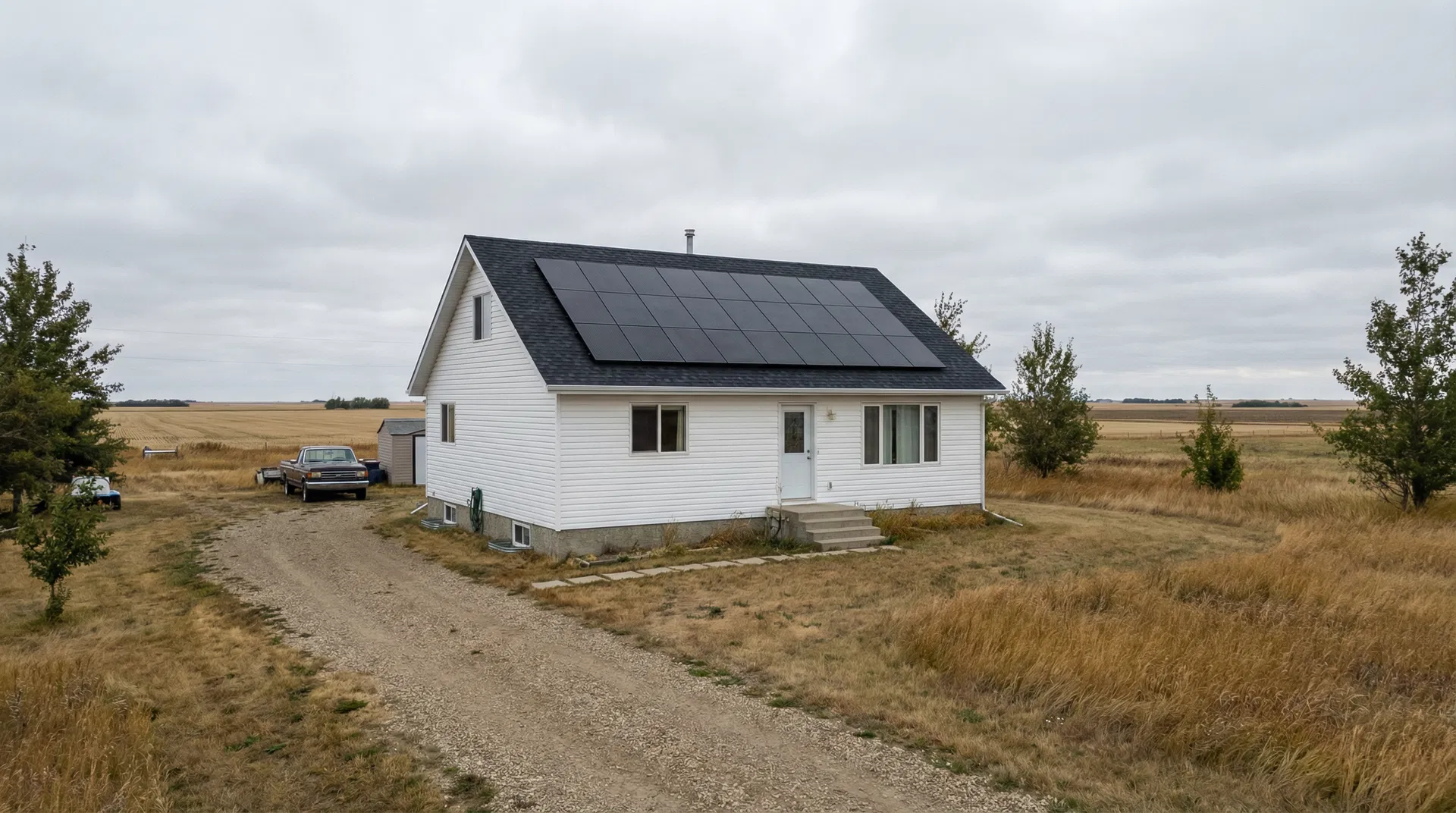
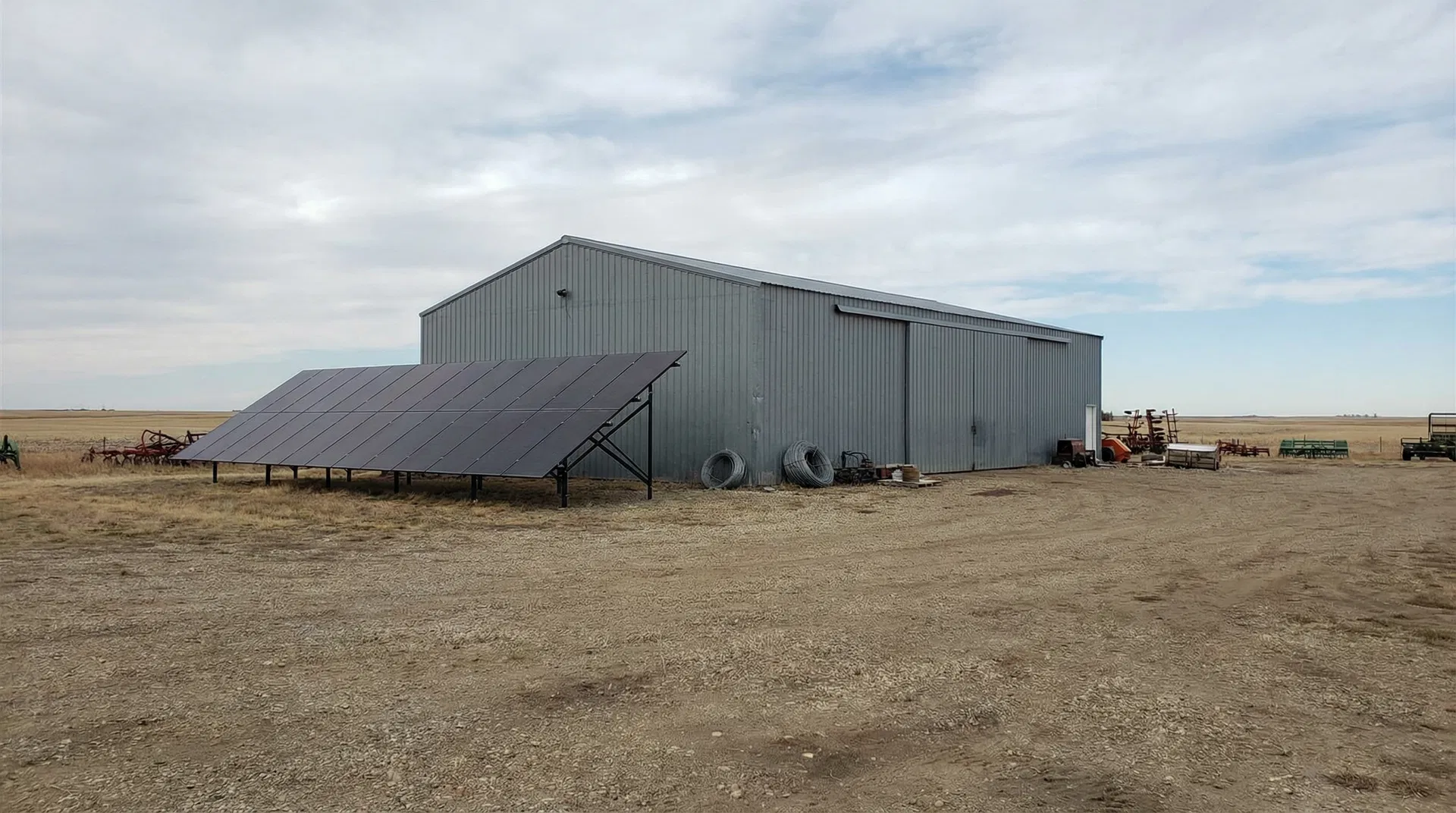
Most residential solar installs in urban settings are sized for one load: the house. Properties here often have more going on. A home plus a heated shop, a rental suite, an irrigation pump, outbuildings with their own panels and lights, these stacked loads push system size up fast. A property with all of those running through one meter can easily justify a system in the upper part of our 8-20 kW service range, and possibly a multi-system approach if the loads are spread across separate meters. Roof mount works well when the roof faces the right direction, has minimal shading, and has enough unobstructed surface to fit the array you actually need. When the roof is too small, poorly oriented, or shaded by trees or adjacent structures, ground mount is the better call. Acreage and farm-style lots often have open yard space that makes ground mount practical and sometimes preferable, since you're not constrained by rafters or roofline angles. We size every system from the 12-month usage graph on your most recent power bill. That graph shows your seasonal consumption pattern, which matters a lot when battery storage is in the design. A property that draws heavily in winter looks different from one that peaks in summer, and the battery bank and array size need to reflect that. We don't work off rule-of-thumb numbers or square-footage estimates. Your bill and the site tell us what the system needs to do, and we build the design from there.
Typical Load Profiles We Design For Near Lethbridge
Home with Heated Attached Garage
A well-insulated home with an attached heated garage adds a meaningful heating load that runs evenings and overnight, exactly when the panels aren't producing. Battery storage paired with a 10-14 kW solar array lets that garage draw from stored solar instead of the grid through the evening hours. We size the battery capacity around how many hours of garage heat and household base load need to be covered without grid support.
Acreage with Shop and Outbuildings
Acreage properties with a shop, a barn, and a main house running off one meter can have load profiles that are two to three times larger than a typical urban home. A 15-20 kW solar system with a battery bank handles daily household use while keeping critical shop circuits covered during outages. We pull the 12-month usage graph from the most recent power bill to confirm where consumption peaks before we finalize the array and battery sizing.
Small Commercial or Agricultural Operation
Light commercial properties and small agricultural operations with three-phase service and variable daytime loads are strong candidates for solar plus storage. The battery smooths out demand spikes and provides backup for process equipment that can't go down mid-run. System size for these properties is determined by a combination of the usage graph, the specific loads, and the service entrance capacity, not a default number.
City of Lethbridge Interconnection in Lethbridge
The City of Lethbridge is the wire service for properties connected to the local distribution grid here. That means your micro-generation application, the paperwork that allows your solar system to feed back to the grid and run your meter correctly, goes through the City of Lethbridge, not AltaLink or FortisAlberta. Range Road Solar handles the interconnection application as part of every install. We prepare the design package, the single-line diagram, the equipment specs, and the site layout, and we submit it on your behalf. You don't need to navigate the City's process yourself. For battery storage systems, the interconnection package includes documentation on the hybrid inverter and battery configuration, since the utility needs to understand how the system behaves during an outage and when it reconnects to the grid. We don't quote approval timelines, because those depend on the City's current queue and review process. What we can tell you is that we've done this before, we know what the City needs, and we don't leave you chasing the application on your own. Once the system is approved and commissioned, we walk you through how to read the meter and confirm everything is working as designed.
Project Economics and Design Review
| System Size | Annual Production | Year 1 Savings | Payback Period |
|---|---|---|---|
| 8-20 kW range, 12 kW typical |
Production, savings, and payback figures require a property-specific design and your most recent power bill before any number can be responsibly quoted.
How We Work in Lethbridge
Bill and Load Review
We review your power bill to understand your energy use in Lethbridge and size the system to your actual consumption — not a generic estimate.
Site Assessment
We assess your roof or ground area, south-facing exposure, electrical service, and utility interconnection requirements specific to your property.
Design and Utility Application
We produce a system layout, production estimate, and cost summary, then submit your micro-generation application to your utility on your behalf.
Installation and Commissioning
Our crew installs racking, panels, inverter, and electrical connections. All work is performed by licensed electricians. We commission and test before handoff.
Current Program and Interconnection Review
Utility connection review
The City of Lethbridge reviews grid connection applications for solar and storage systems installed within its distribution territory. Range Road Solar prepares the full design package required for the application, including the hybrid inverter and battery documentation the City needs to evaluate how the system operates. We submit on your behalf and stay involved through to approval.
Current program review
Residential, farm, and commercial solar and storage installations may qualify under various provincial or federal programs, depending on property type and current eligibility rules. We review which programs apply to your specific project at design time, because eligibility criteria and available funding change. We don't quote programs that are no longer active or that we haven't confirmed are available at the time of your design.
Frequently Asked Questions
Get a Solar Assessment for Lethbridge
Submit a recent power bill and we will review your consumption and provide an honest assessment for your Lethbridge property. No obligation.
(587) 330-7502 Book a CallRelated Resources
More Solar Services in Lethbridge