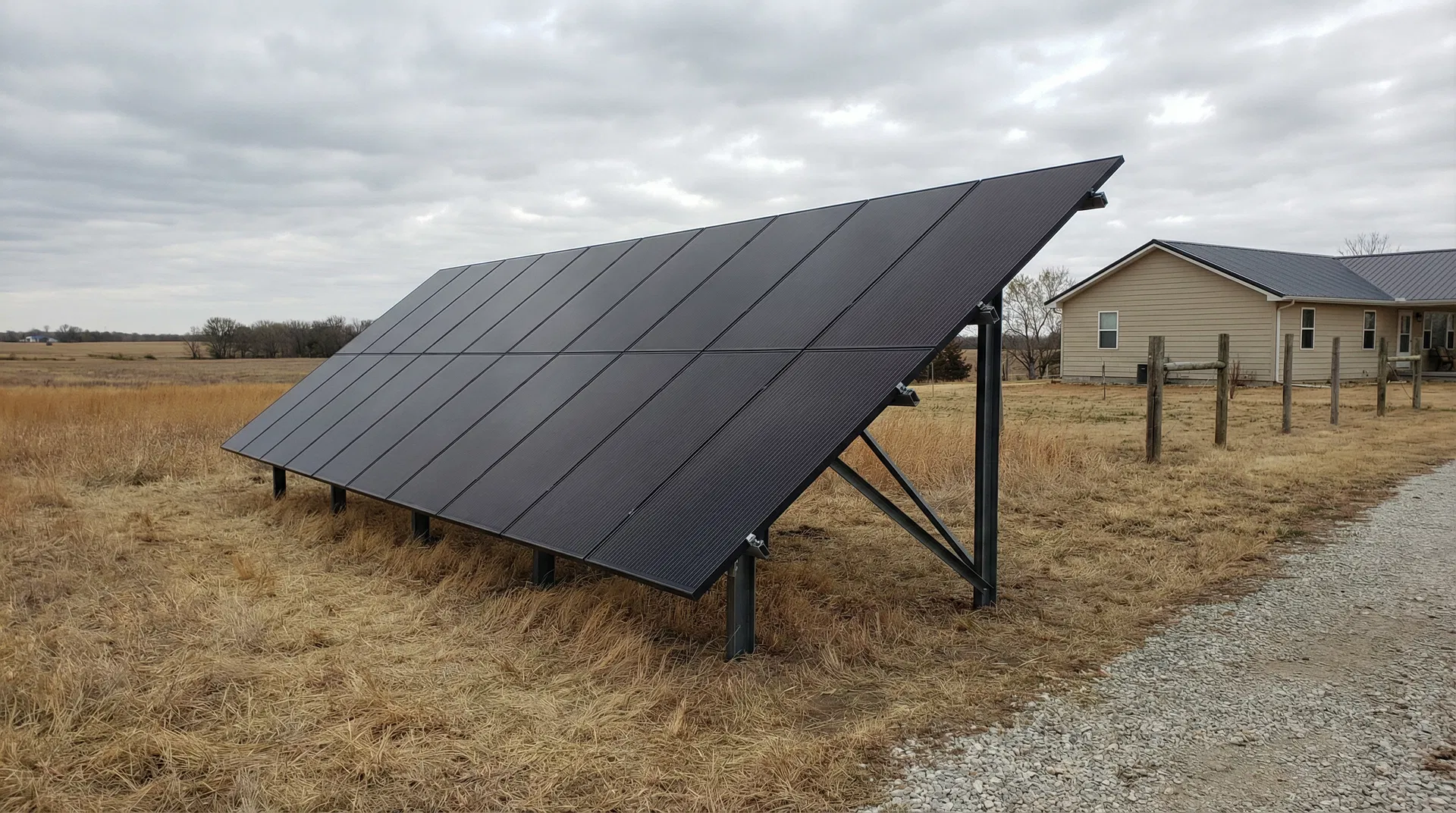
Solar battery storage in Crossfield, Alberta starts with a system designed around your property's actual load, not an off-the-shelf package. We pair LONGi solar panels with hybrid inverters and lithium battery storage sized to your usage profile. A hybrid inverter handles both the solar input and the battery charge and discharge in one unit, which simplifies the electrical layout and reduces the number of components on your wall. Lithium batteries are what we install. They hold a charge through repeated daily cycling and don't require the kind of maintenance that older battery chemistries demanded. We'll assess which battery capacity makes sense for your property during the design review. A single-family acreage with a shop might need a different configuration than a grain operation with larger three-phase loads. Backup capability is one of the main reasons Crossfield-area property owners look at storage. If FortisAlberta has an outage, a properly configured battery system with a backup gateway keeps your critical loads running. That might mean your well pump, your refrigerators, your heating controls, and your shop circuits stay live while the grid is down. Which loads get backed up is a design decision, and we walk through that with you before anything gets quoted. Installation covers the panels, the hybrid inverter, the battery bank, the backup gateway if included, and all the associated electrical work. We handle the FortisAlberta micro-generation application so you don't have to figure out the paperwork side.
Solar Planning for Crossfield Properties
Properties around Crossfield tend to carry real electrical loads. A heated shop, a well pump, yard lighting, and a house pulling from the same panel adds up fast. When you add battery storage to a solar system, you're not just generating power during the day. You're storing what you don't immediately use and drawing it down later, which changes the economics of the whole setup compared to solar-only. FortisAlberta serves this area, and their micro-generation program governs how your system connects to the grid and how credits are applied against your bill. Battery storage works alongside that framework, not against it. On days when your panels produce more than you consume, excess power can still flow to the grid under the micro-generation rules. But with storage in place, more of what your panels produce stays on your property first. The right system size depends on your actual usage pattern, not a rough guess. We pull the 12-month usage graph from your most recent power bill and build the design around that. Acreage and farm properties near Crossfield often need systems in the 12 to 20 kW range to meaningfully offset their loads. We won't know your number until we see your bill and assess the site.
Electrical Site Review for Crossfield Properties
Voltage Rise
Voltage rise happens when a solar system pushes power onto a distribution line that already has elevated voltage, causing the voltage at the inverter connection point to climb above the inverter's acceptable operating range. When that threshold is hit, the inverter clips output or shuts down briefly to protect the grid. On rural FortisAlberta lines serving properties outside the Crossfield townsite, the distribution conditions can vary enough that voltage rise becomes a real constraint on how large a system we can design and still have it run at full output.
Single-Phase vs Three-Phase
Properties near Crossfield may have either single-phase or three-phase service depending on when they were built and what loads they were designed for. Three-phase service is common where there's irrigation equipment, large motors, or commercial-scale shop loads. The phase configuration matters because it determines which hybrid inverter models are compatible with your service and affects the maximum system capacity we can connect without tripping distribution limits.
Panel Infrastructure
Older electrical panels on rural properties often have breaker capacity that wasn't sized with a solar system in mind. We check the main breaker rating, available breaker slots, and overall panel condition during the site assessment. If the panel can't support the solar and battery system safely, an upgrade is part of the project scope, and we'll include that in the quote so there are no surprises at installation.
Service Entrance Review
The meter base and service entrance are what FortisAlberta looks at when they review a micro-generation application. If the meter base is an older style that doesn't accept a bi-directional meter, the application will require an upgrade before approval. We check the meter base condition during the site review and flag any work that needs to happen before we submit the FortisAlberta interconnection package.
Right-Sizing Solar for Crossfield Properties
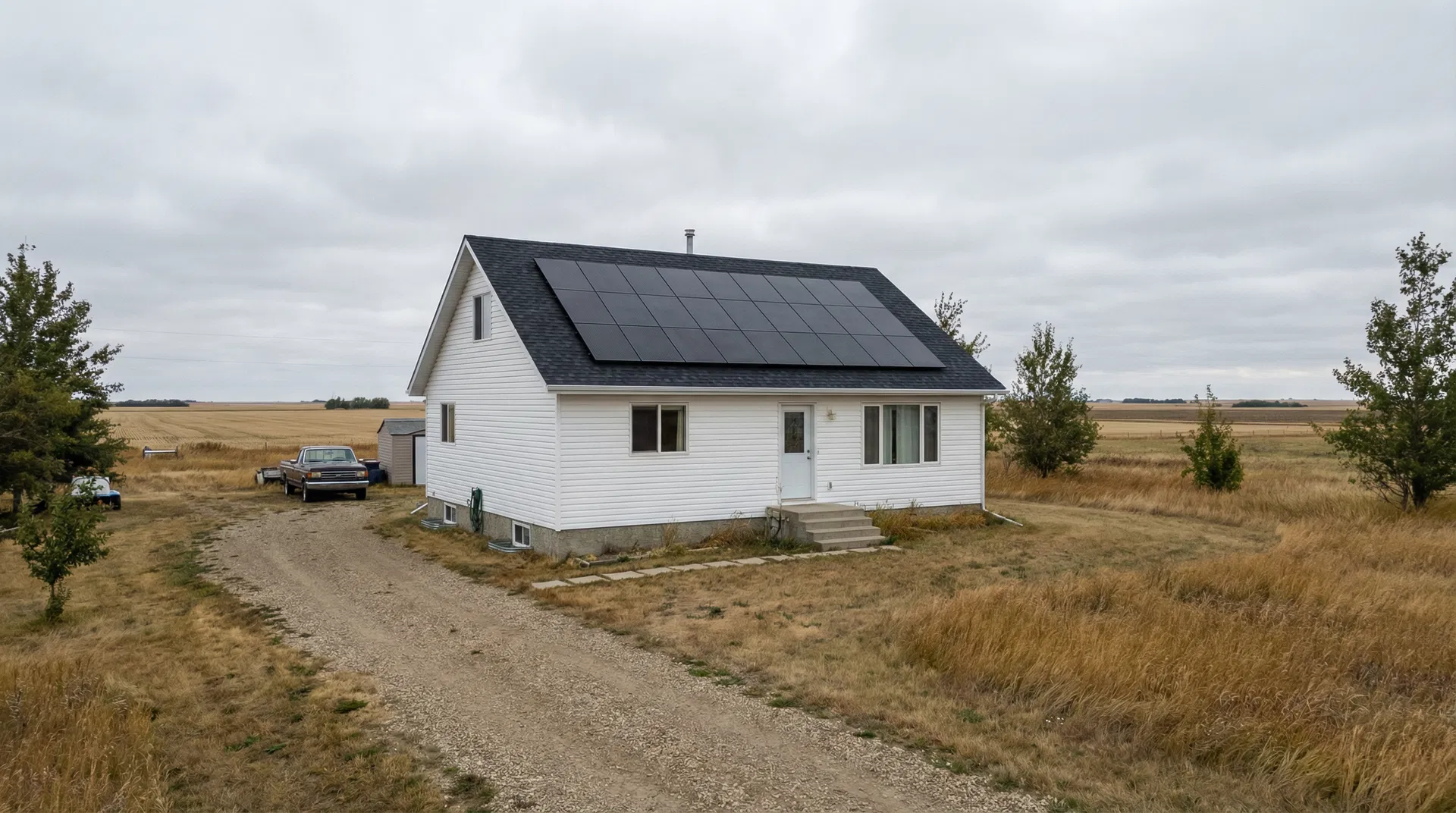
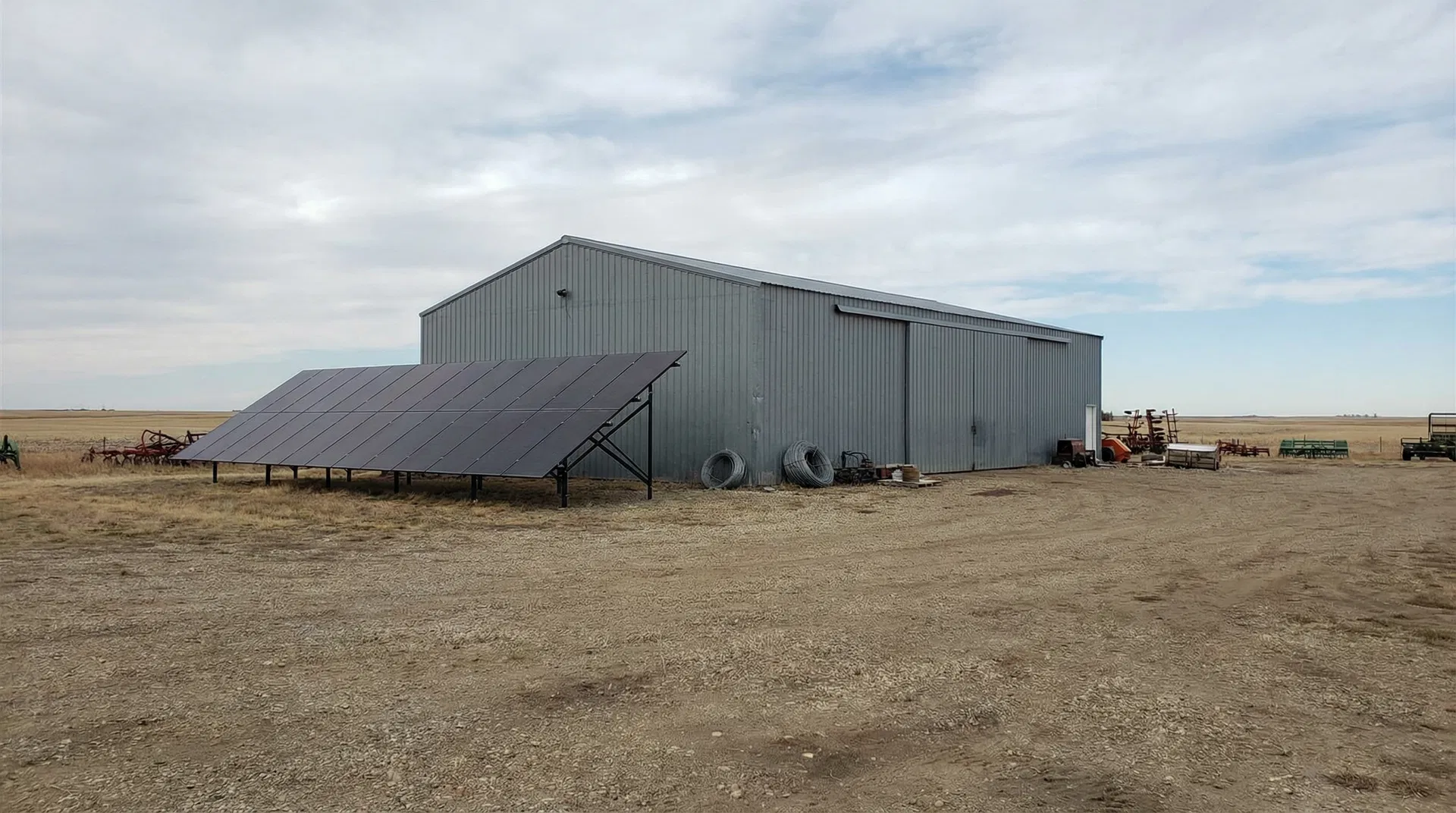
Rural properties don't size like city houses. A home in Crossfield might share a meter with a heated shop, a water well, outbuildings, yard lighting, and seasonal loads like a grain auger or irrigation pump. Stack those together and you're looking at a very different monthly consumption pattern than a suburban bungalow. That's why systems in the 8 to 20 kW range are common here and why a 12 kW system often lands as the starting point for acreage owners, not the ceiling. Roof mount vs. ground mount is a real decision on these properties. If the house roof is shaded by mature trees or a shop roof, has a poor pitch, or doesn't face the right direction, a ground-mounted array on an open part of the yard often produces better. Ground mount also makes sense when the loads are spread across the property and running a longer DC or AC circuit to a central roof doesn't make practical sense. We look at both options during the site review and recommend whichever layout produces the best output for the cost. We don't size systems from a rule of thumb. We pull the 12-month usage graph from your most recent power bill, which shows your consumption month by month, and we build the design from that. That graph tells us your seasonal peaks, your baseline load, and whether storage is going to give you meaningful daily cycling or just sit mostly full. We provide honest production estimates based on your actual power bills and site conditions, not inflated projections.
Typical Load Profiles We Design For Near Crossfield
Home Plus Heated Shop
A house and a heated shop on the same meter is the most common setup we see on acreages in this area. The shop's electric heat, compressors, and lighting can pull as much as the house itself during winter months. We size the solar and battery system from the combined 12-month usage graph on your most recent power bill so the system reflects the full picture, not just what the house uses.
Hobby Farm with Well and Outbuildings
Properties with a well pump, barn lighting, heated water bowls, and small outbuildings have loads that run at odd hours and don't always line up with peak solar production. Battery storage helps here because it captures midday solar output and makes it available for the evening barn run or overnight well cycling. We map those loads against your usage graph to confirm the battery capacity will actually cycle meaningfully each day.
Residential Acreage with EV Charging
Adding an EV charger to an acreage that already has above-average household consumption puts real pressure on a solar-only system sized to the old bill. We account for the EV load in the design by reviewing the 12-month usage graph from your most recent power bill and factoring in the expected charging schedule. A hybrid inverter with battery storage can preferentially charge the vehicle from stored solar, which changes how the economics work compared to charging straight off the grid.
FortisAlberta Interconnection in Crossfield
FortisAlberta is the wire service for Crossfield, Alberta and the surrounding area. Any solar system, including one with battery storage, that connects to the grid needs to go through FortisAlberta's micro-generation application process before it can legally export power. We handle that application on your behalf. That means preparing the single-line diagram, the equipment specifications, and the interconnection package that FortisAlberta requires. You don't need to contact them separately or navigate their submission portal. We submit the package and follow up as needed. For battery storage systems, the interconnection review covers the hybrid inverter and its grid interaction settings, not just the panels. FortisAlberta reviews the full system. We make sure the equipment we specify meets their interconnection requirements so there aren't surprises after installation. What we can't tell you in advance is how long FortisAlberta's review will take or what specific credit rules apply to your account under current tariff terms. Those details are governed by their policies, and we'll walk you through what we know at the time of your design review. The rules do change, so we always verify current requirements before we submit.
Project Economics and Design Review
| System Size | Annual Production | Year 1 Savings | Payback Period |
|---|---|---|---|
| 8-20 kW range, 12 kW typical |
Production, savings, and payback figures require a property-specific design and your most recent power bill before any numbers can be confirmed.
How We Work in Crossfield
Bill and Load Review
We review your power bill to understand your energy use in Crossfield and size the system to your actual consumption, not a generic estimate.
Site Assessment
We assess your roof or ground area, south-facing exposure, electrical service, and utility interconnection requirements specific to your property.
Design and Utility Application
We produce a system layout, production estimate, and cost summary, then submit your micro-generation application to your utility on your behalf.
Installation and Commissioning
Our crew installs racking, panels, inverter, and electrical connections. All work is performed by licensed electricians. We commission and test before handoff.
Current Program and Interconnection Review
Utility connection review
FortisAlberta reviews all micro-generation interconnection applications for properties in their service area, including Crossfield. Range Road Solar prepares and submits the full design package required for that review. You don't need to initiate a separate application or communicate directly with FortisAlberta during the process.
Current program review
Residential, acreage, and farm properties may be eligible under various provincial or federal programs depending on property type and current rules. We review eligibility at the time of your design review using the rules in effect at that point. We don't guess at eligibility in advance because the rules change and we won't give you bad information.
Frequently Asked Questions
Get a Solar Assessment for Crossfield
Submit a recent power bill and we will review your consumption and provide an honest assessment for your Crossfield property. No obligation.
(587) 330-7502 Book a CallMore Solar Services in Crossfield