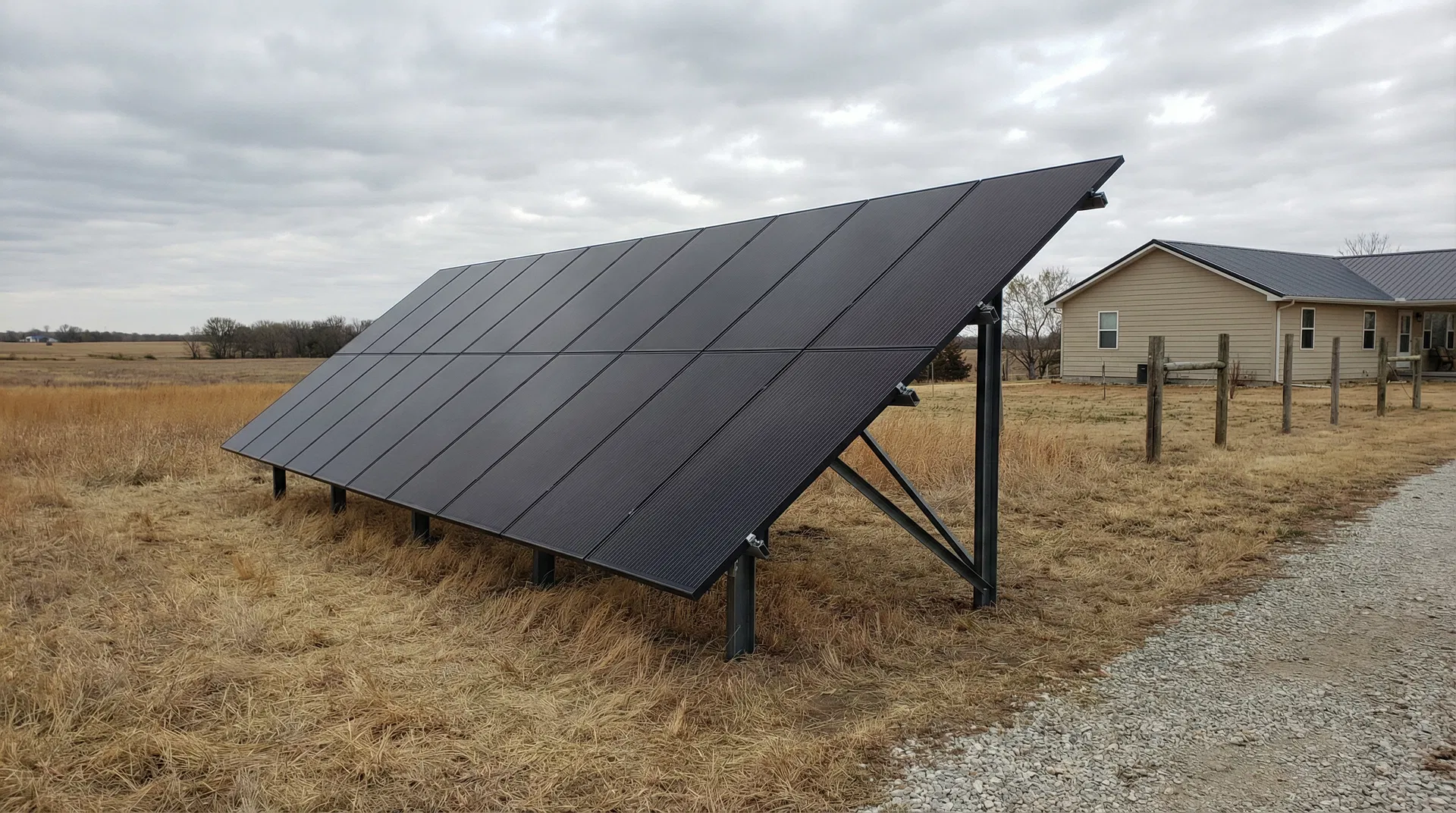
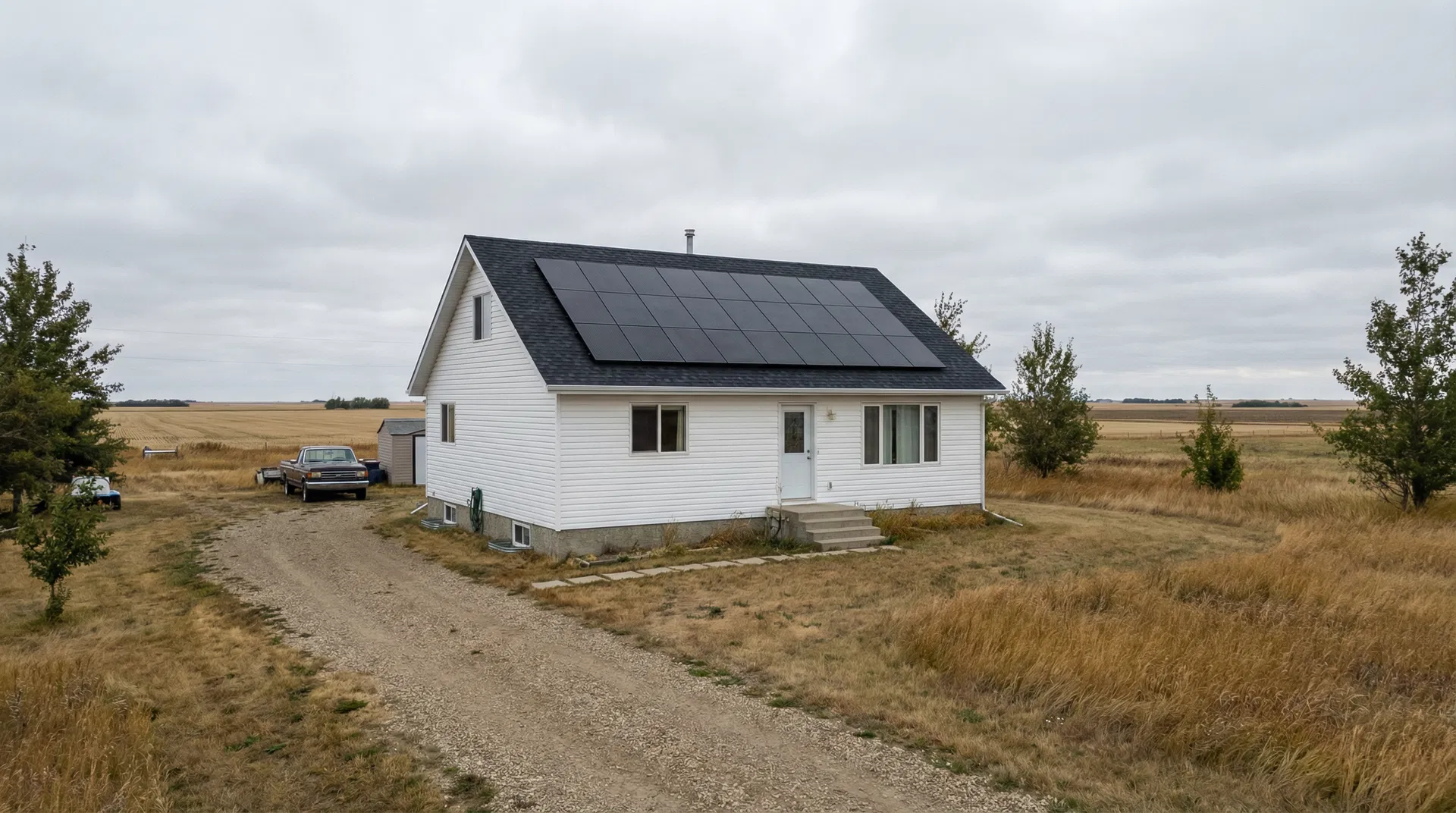
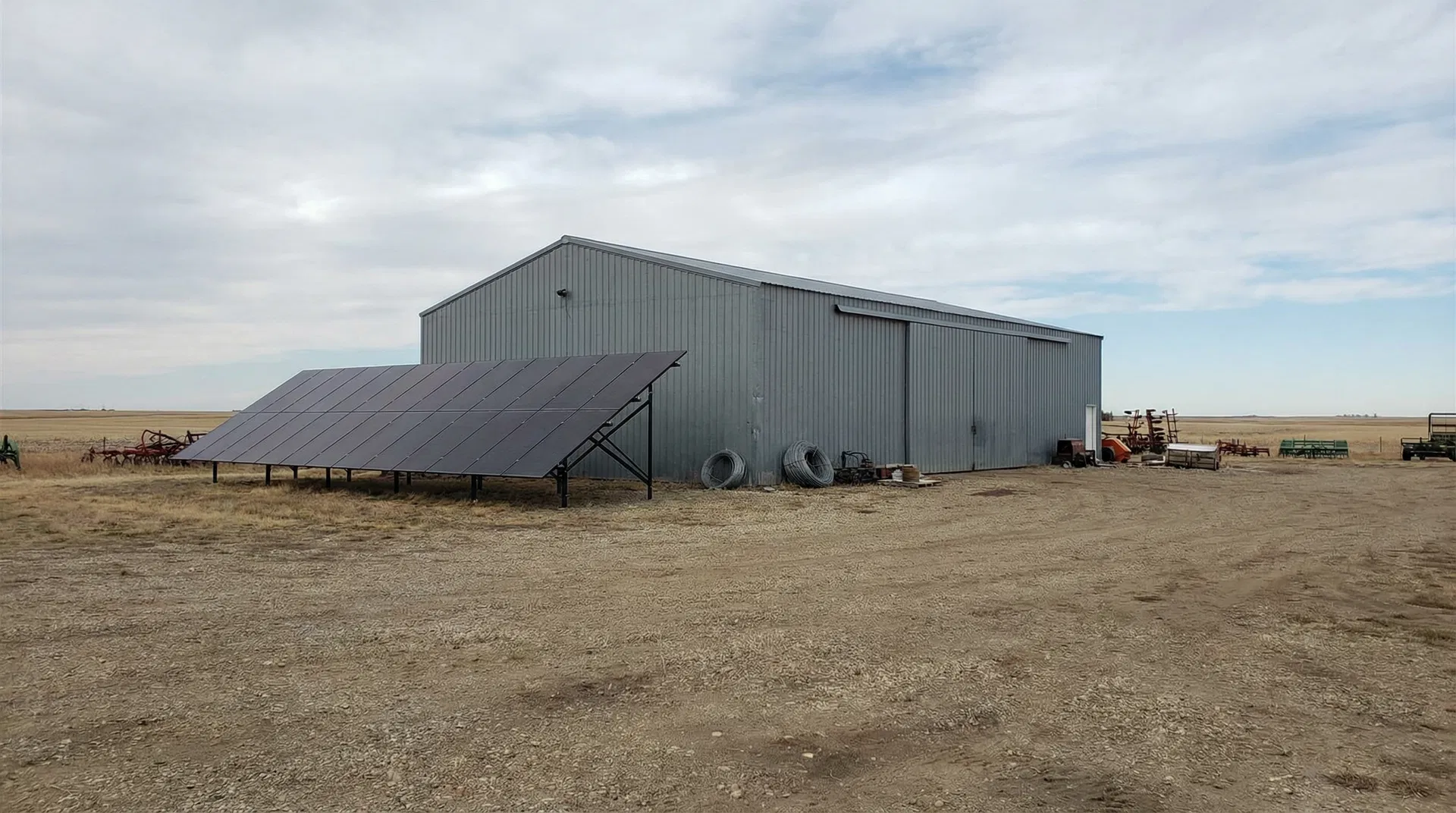
Commercial solar crossfield inquiries typically come from business owners and farm operators who are tired of electricity costs that climb every year without any visibility into what they're paying for. A properly designed commercial system starts with understanding your actual load, which is why we build every design from the 12-month usage graph on your most recent power bill rather than estimating. Systems in the 15-100 kW range cover the spectrum from a modest commercial shop to a larger agricultural or light industrial operation. A 30 kW system is common for mid-sized commercial properties, but the right size depends entirely on your consumption and how much roof or ground space is available. We don't push you toward a larger system to inflate project value. If a 20 kW system offsets the consumption you actually have, that's what we design. On the equipment side, we install LONGi solar panels across our commercial projects. For systems in the mid-to-lower commercial range, APsystems microinverters offer panel-level performance monitoring and eliminate the single point of failure that a string inverter introduces. For larger commercial systems where roof space is distributed across multiple buildings or orientations, string inverters are often the more practical and cost-effective choice. We assess which inverter architecture fits your specific site layout during the design review. Roof mounts, ground mounts, and carport structures are all options depending on what the property supports. Agricultural shops with wide flat or low-pitch metal roofs are often well-suited to roof-mount arrays. Properties with yard space and limited usable roof area are frequently better served by a ground-mount system positioned for optimal orientation.
Solar Planning for Crossfield Properties
Commercial and agricultural properties in Crossfield, Alberta carry load profiles that residential solar rarely matches. A shop with three-phase equipment, a heated wash bay, grain handling motors, or refrigeration running through the warmer months puts electricity consumption in a completely different category than a home. That load profile is exactly what commercial solar is built to address. FortisAlberta serves Crossfield as the wire service, and the interconnection rules here govern how a commercial system ties into the grid, how excess generation is treated, and what the application process looks like. We handle that process directly so you're not navigating utility paperwork alone. When we assess a commercial property, we're looking at the 12-month usage graph on your most recent power bill, the roof or ground-mount conditions available, shading from nearby structures, and the electrical service already on site. Those factors together determine what system size actually makes sense, not a number pulled from a rule-of-thumb calculator. We provide honest production estimates based on your actual power bills and site conditions, not inflated projections.
Electrical Site Review for Crossfield Properties
Voltage Rise
Voltage rise occurs when a solar system pushes current back toward the grid and the line voltage at the point of connection increases beyond acceptable limits. On distribution lines serving commercial and agricultural properties outside denser service areas, line impedance can amplify this effect depending on how far the property sits from the nearest transformer. If voltage rise limits are reached, the inverter will clip output to bring voltage back into range, which affects how much of your system's capacity you actually use. We assess this during site design.
Single-Phase vs Three-Phase
Commercial and agricultural properties in rural Alberta can be served by either single-phase or three-phase electrical service, and the distinction matters significantly for system design. Three-phase service supports larger loads and allows for different inverter configurations that distribute generation across all three legs. A system designed for single-phase service won't be appropriate for a three-phase operation, and vice versa, so we confirm the service type during our site assessment before any design work is finalized.
Panel Infrastructure
Older electrical panels on commercial or agricultural properties sometimes lack the breaker capacity needed to accommodate a solar interconnection without modifications. We assess the panel's breaker layout, total amperage, and age during the site review to determine whether the existing infrastructure can support the system. If it can't, a panel upgrade or sub-panel addition may be required before installation can proceed, and we identify that requirement upfront so it's included in the project scope.
Service Entrance Review
The service entrance and meter base condition is reviewed as part of the micro-generation application to FortisAlberta. The utility may require that the meter base meets current standards before approving the interconnection, particularly on properties where the service entrance hasn't been updated in many years. If an upgrade is required, we identify it during the design review so the cost and scope are clear before the project moves forward.
Right-Sizing Solar for Crossfield Properties
Commercial and agricultural properties near Crossfield don't follow the same sizing logic as a residential rooftop. A typical rural business or farm operation might be running a heated shop, a grain dryer, irrigation equipment, and a main building all on the same meter, or across multiple meters on the same property. That combined load profile is what we're designing against, and it's why a system in the 15-100 kW range covers the realistic spectrum of what these properties actually need. The roof-versus-ground-mount decision comes down to what the property physically supports. A commercial shop with a large, unobstructed metal roof at a workable pitch is usually a straightforward roof-mount candidate. But if the roof faces the wrong direction, carries heavy shading from grain bins or nearby trees, has a pitch that doesn't suit panel placement, or simply doesn't have enough continuous space for the system size the load requires, ground mount is the better answer. Agricultural layouts with open yard space often make ground mount the cleaner and more productive option. We don't size systems from an average kilowatt-per-square-foot estimate or a number we pull from a province-wide reference table. We size from the 12-month usage graph on your most recent power bill. That graph shows month-by-month consumption across a full year, including your highest-load months, which is where the sizing decision has the most financial impact. A system that's undersized for your peak months leaves money on the table. One that's oversized beyond what your load can absorb doesn't improve the economics. Getting it right means starting with your actual data.
Typical Load Profiles We Design For Near Crossfield
Commercial Shop with Heated Bay
A commercial shop running a heated wash bay, compressors, overhead lighting, and welding equipment carries a load profile that shifts significantly between summer and winter. We size these systems from the 12-month usage graph on the most recent power bill to capture the full range of demand, not just the average month. Roof mount is common on large-span metal shop buildings, though ground mount is considered when the roof orientation or shading from adjacent structures limits production.
Agricultural Operation with Grain Handling
Grain handling equipment, augers, and aeration fans create concentrated load periods during harvest that push monthly consumption well above the baseline. A system designed around only the quieter months will underperform during exactly the period when generation value is highest. We use the full 12-month consumption curve from your most recent power bill to ensure the system is sized for the operation's real peak demand, not a smoothed annual average.
Light Industrial or Multi-Tenant Commercial
Light industrial properties and multi-tenant commercial buildings often have three-phase service and a mix of tenants with variable load schedules. That complexity makes accurate sizing more important, not less. We confirm the service configuration, review the full 12-month usage graph, and assess whether a roof-mount array on the main building or a ground-mount system on available yard space delivers better production given the site layout. A 50-100 kW system range is common for properties in this category, though the right number comes from the design review.
FortisAlberta Interconnection in Crossfield
FortisAlberta is the wire service for Crossfield, and any commercial solar system installed here goes through their micro-generation interconnection process before it can operate grid-tied. That process involves a technical application, a design package that meets FortisAlberta's requirements, and coordination between the installer, the utility, and in some cases the electrical contractor completing the service work. Range Road Solar handles the FortisAlberta application on your behalf. We prepare the design package, submit it through the appropriate channels, and follow up as the review progresses. You don't need to manage the back-and-forth with the utility directly. The interconnection process includes a review of your meter base and service entrance. FortisAlberta may require that certain components meet current standards before the micro-generation application is approved. We flag those requirements during our site assessment so there are no surprises once the project is underway. If upgrades are needed to the meter base or service entrance, we'll identify them in the design review before you commit to the project.
Project Economics and Design Review
| System Size | Annual Production | Year 1 Savings | Payback Period |
|---|---|---|---|
| 15-100 kW range, 30 kW typical |
Production, savings, and payback estimates require a property-specific design and the most recent power bill to calculate accurately.
How We Work in Crossfield
Bill and Load Review
We review your power bill to understand your energy use in Crossfield and size the system to your actual consumption, not a generic estimate.
Site Assessment
We assess your roof or ground area, south-facing exposure, electrical service, and utility interconnection requirements specific to your property.
Design and Utility Application
We produce a system layout, production estimate, and cost summary, then submit your micro-generation application to your utility on your behalf.
Installation and Commissioning
Our crew installs racking, panels, inverter, and electrical connections. All work is performed by licensed electricians. We commission and test before handoff.
Current Program and Interconnection Review
Utility connection review
FortisAlberta reviews micro-generation interconnection applications for commercial systems in Crossfield. Range Road Solar prepares and submits the full design package required for that application, including system specifications, single-line drawings, and any supporting documentation the utility requires. You don't need to manage the utility relationship directly.
Current program review
Commercial, agricultural, and industrial solar installations may be eligible for federal or provincial programs depending on the property type, system size, and how the equipment is financed or owned. Eligibility rules and program availability change, so we review what's current at the time of your design rather than presenting information that may no longer apply.
Frequently Asked Questions
Get a Solar Assessment for Crossfield
Submit a recent power bill and we will review your consumption and provide an honest assessment for your Crossfield property. No obligation.
(587) 330-7502 Book a CallMore Solar Services in Crossfield