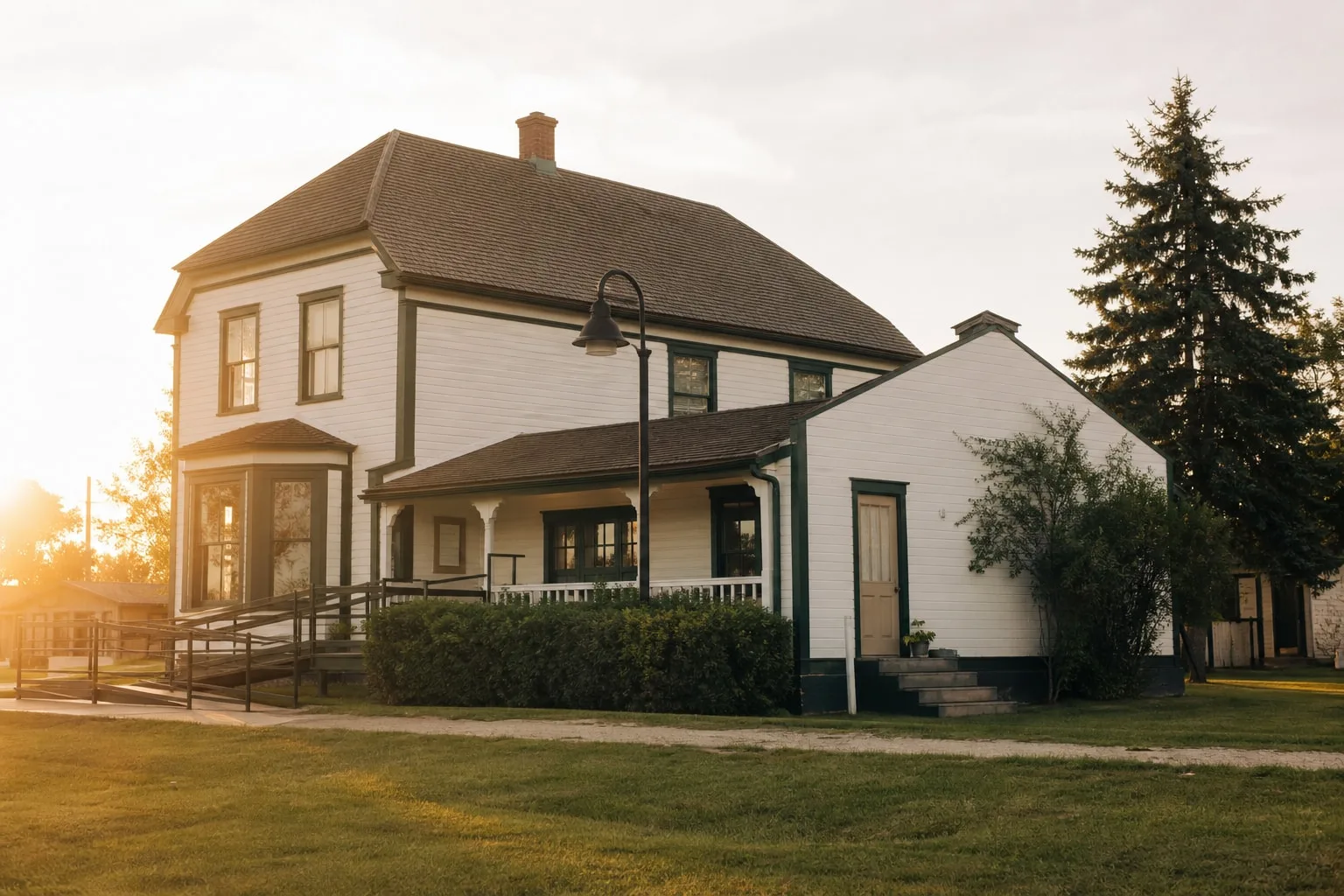
When we design commercial solar in Didsbury, we start with the building's electrical load, not a catalog spec sheet. Commercial systems here run 15 to 100 kW, with most projects landing around 30 kW once the site design accounts for available roof or ground-mount space and the building's electrical service capacity. Every system uses LONGi panels. For smaller commercial arrays we pair them with APsystems microinverters, which let us monitor production at the panel level and keep the system running even if one panel gets shaded by a nearby grain bin or equipment shed. On larger arrays, above the point where microinverters make sense from a cost and wiring standpoint, we spec string inverters sized to the building's three-phase or single-phase service. Commercial and light-industrial buildings in this area vary a lot: metal-clad shops with standing-seam roofs, flat-roofed retail storefronts, pole barns with open yard space next to them. Standing-seam roofs are usually the easiest mount, we can clamp racking directly to the seams without penetrating the roof membrane. Flat roofs need a ballasted or attached racking system engineered for our snow and wind loads. Where roof space is limited or shaded, we look at ground mount on adjacent yard space, common on properties with room to spare outside town. Before we finalize a design, we pull your electrical service details, check your panel and service entrance capacity, and review your most recent power bill. That bill's 12-month usage graph tells us more about your actual load than a square-footage estimate ever could.
Solar Planning for Didsbury Properties
Didsbury, Alberta sits inside Mountain View County, and the local economy runs on agriculture and petroleum services, two sectors with electrical loads that don't look anything like a suburban duplex. A grain elevator or an oilfield service yard draws power in bursts, not the steady evening curve a residential subdivision produces. That's the starting point for any commercial design here: we look at how the business actually uses electricity before we talk panel count. The town was incorporated on September 6, 1906, and it's grown around that same mix of farming and energy-sector work ever since. Environment Canada's climate normals put the Calgary International Airport station, the nearest long-term reference point, at 2,396 hours of bright sunshine a year. That's a regional climate reference, not a production number for your building. Actual output depends on your roof or ground-mount orientation, shading from nearby structures, and how your business draws power hour to hour. We don't quote a system size off a drive-by. A commercial job in this area starts with a site visit, a look at your electrical service, and a review of your most recent power bill before we put a number on paper.
Electrical Site Review for Didsbury Properties
Voltage Rise
Voltage rise happens when the voltage at your property's connection point sits higher than standard on FortisAlberta's distribution line, which is more common the farther a property sits from the substation. Higher voltage rise leaves less headroom for your inverter's own output, which can cause it to clip production during peak sun hours. We measure voltage at your service entrance during the site visit so we can size and select inverters that work within your actual conditions, not a textbook assumption.
Single-Phase vs Three-Phase
Commercial properties in this area run on either single-phase or three-phase electrical service, depending on the building's age and how it was originally connected to FortisAlberta's grid. Three-phase service generally supports larger inverter capacity and a bigger system, while single-phase service caps how much inverter capacity we can safely connect. We confirm which service type your building has before we spec equipment, since it directly shapes what system size is achievable.
Panel Infrastructure
Older commercial buildings in this area sometimes have electrical panels that predate current breaker capacity and labeling standards. We check your panel's age, its available breaker space, and its rated capacity before we finalize a system design, since the panel has to handle the additional circuit a solar system adds. If the panel can't support the new load, an upgrade means a new panel sized to both your existing loads and the solar interconnection, work we coordinate as part of the project.
Service Entrance Review
We inspect your service entrance and meter base condition as part of every commercial site visit, checking for wear, corrosion, or capacity limits that could affect the installation. FortisAlberta reviews meter base condition as part of the micro-generation application, so a meter base that doesn't meet current standards can hold up approval. When an upgrade is needed, we identify it early and fold it into the project timeline instead of finding out mid-installation.
Right-Sizing Commercial Solar for Didsbury Properties
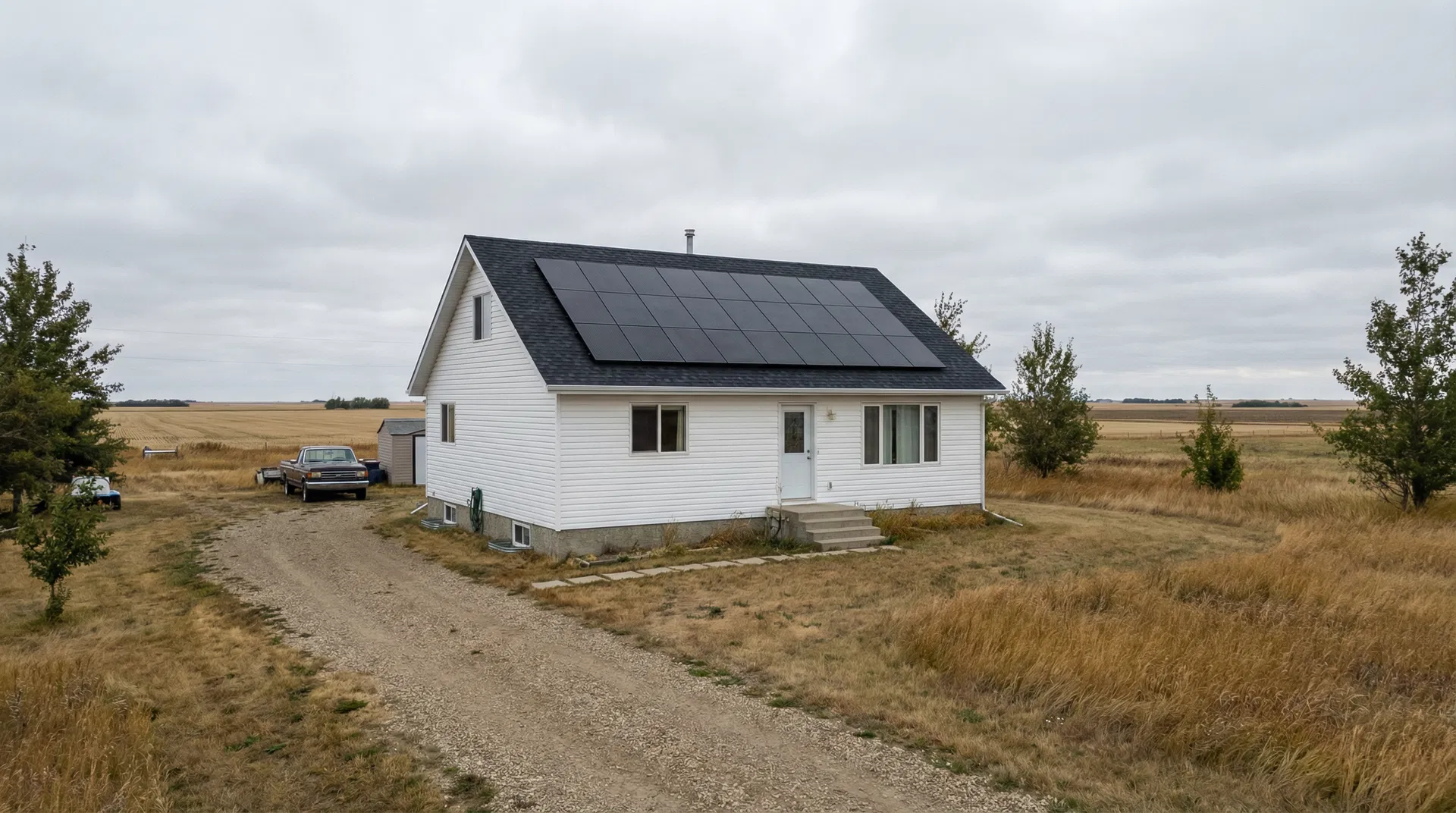
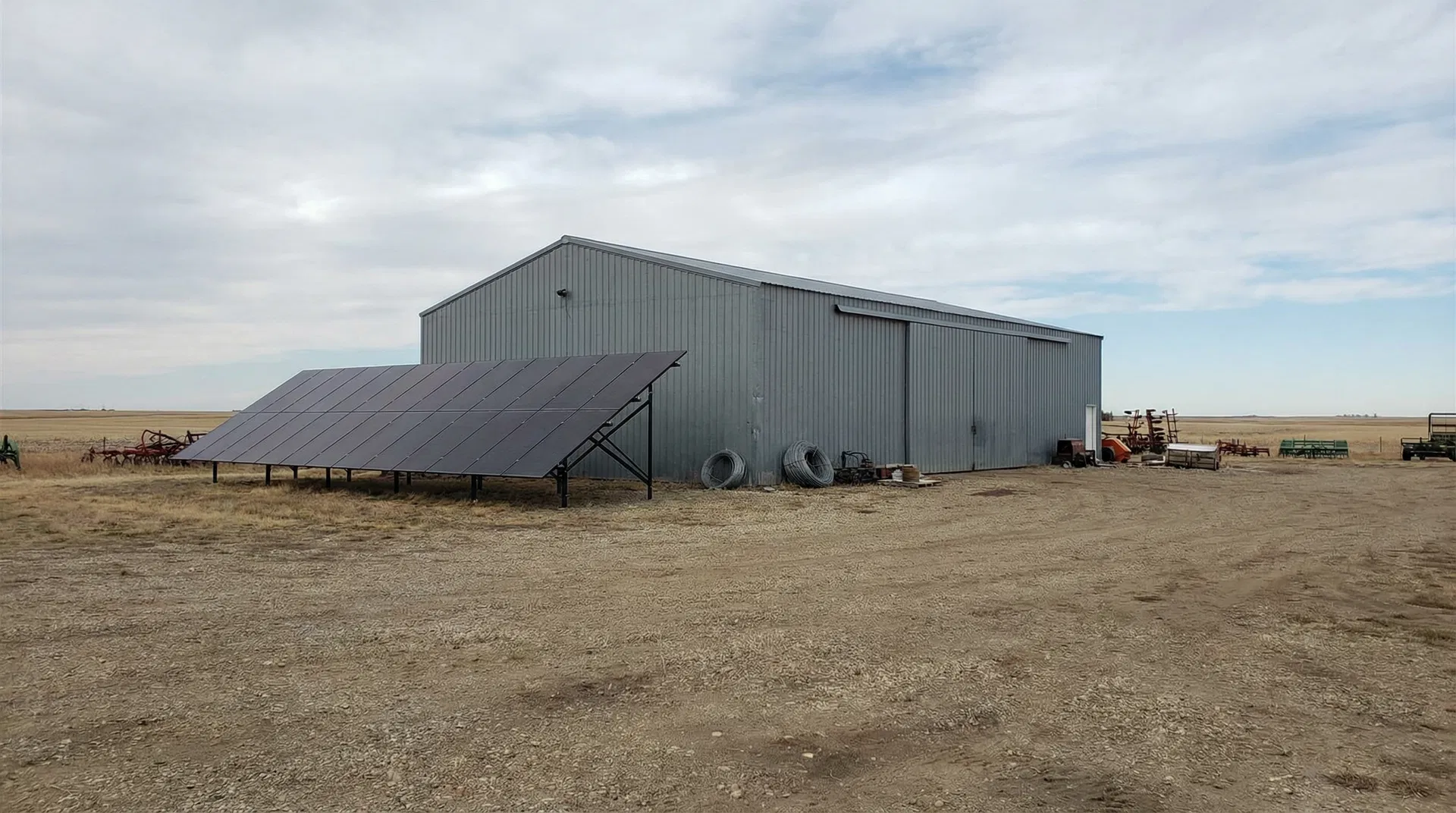
Commercial properties in this area often carry more than one load on a single electrical service: the main building, a shop or storage bay, yard lighting, and sometimes equipment tied to agriculture or petroleum-sector work. That combination is why commercial systems here tend to run larger than a typical residential install, and why we don't size off a square-footage rule of thumb. Roof mount is usually our first look, standing-seam metal roofs and newer flat roofs both work well and keep the array out of the working yard. But roof mount isn't always the right call. If the roof is shaded by an adjacent building or trees, if the pitch or orientation is poor, or if the property has open yard space that isn't doing anything else, ground mount often makes more sense. Ground-mounted arrays also give us more flexibility on tilt angle, which matters when roof orientation isn't ideal. Either way, we size the system from your most recent power bill, specifically the 12-month usage graph every Alberta utility bill includes. That graph shows us your actual monthly draw across a full year of seasonal swings, which tells us far more than a rule-of-thumb number per square foot. Combined with a site visit to confirm roof or ground conditions and electrical service capacity, that bill is what turns into your final system design.
Typical Commercial Load Profiles We Design For Near Didsbury
Retail Storefront + Office
A flat-roofed retail or office building typically runs a steady daytime load: lighting, HVAC, point-of-sale systems, and computers, with usage that tracks business hours closely. We pull the 12-month usage graph from your most recent power bill to see how that load shifts with heating and cooling seasons, then size the array to match, rather than guessing from square footage alone.
Shop + Yard Operation
A metal-clad shop paired with an active equipment yard, common among agriculture and petroleum-service businesses in this area, often has higher load spikes from welders, compressors, or block heaters alongside more constant lighting and yard power draw. These properties frequently have three-phase service, which opens up a larger system than a single-phase connection would allow, and we confirm that service type early in the design.
Multi-Building Commercial Site
Some commercial properties here run several structures off one service, a main building plus a secondary shop or storage building, each with its own load pattern. We map out how each structure draws power using your most recent power bill and a site walk, then decide whether one larger array or a combination of roof and ground mount best serves the combined load.
FortisAlberta Interconnection in Didsbury
FortisAlberta is the wire service here, and every commercial solar system we install needs its interconnection application approved before the system can be commissioned. That application is where the utility reviews your system size, your service entrance, and how the system will connect to their distribution network. Range Road Solar handles that FortisAlberta application as part of your project, from the initial paperwork through the inspection sign-off. We prepare the technical package, including your single-line diagram and equipment specifications, and submit it on your behalf so you're not the one deciphering utility forms. We don't quote an approval timeline here, FortisAlberta's review process depends on their current workload and the specifics of your service, and we'd rather tell you honestly that we don't control that clock than promise a date we can't guarantee. What we can promise is that we manage the application correctly the first time, which is the best way to avoid delays that come from incomplete submissions.
Project Economics and Design Review
| System Size | Annual Production | Year 1 Savings | Payback Period |
|---|---|---|---|
| 15-100 kW range, 30 kW typical |
Production, savings, and payback figures are only accurate once we've completed a property-specific design review using your most recent power bill.
How We Work in Didsbury
Bill and Load Review
We review your power bill to understand your energy use in Didsbury and size the system to your actual consumption, not a generic estimate.
Site Assessment
We assess your roof or ground area, south-facing exposure, electrical service, and utility interconnection requirements specific to your property.
Design and Utility Application
We produce a system layout, production estimate, and cost summary, then submit your micro-generation application to your utility on your behalf.
Installation and Commissioning
Our crew installs racking, panels, inverter, and electrical connections. All work is performed by licensed electricians. We commission and test before handoff.
Current Program and Interconnection Review
Utility connection review
FortisAlberta reviews every commercial micro-generation application before a system can be connected to their grid, checking system size, service entrance condition, and interconnection details. Range Road Solar prepares and submits that design package on your behalf, including the single-line diagram and equipment specifications FortisAlberta requires.
Current program review
Eligibility for any current commercial, farm, or residential solar program is checked against the rules in place at the time we design your system, since those rules can change. We review what applies to your specific property and business structure as part of the design process, rather than assuming a program you've heard about still applies.
Frequently Asked Questions
Get a Solar Assessment for Didsbury
Submit a recent power bill and we will review your consumption and provide an honest assessment for your Didsbury property. No obligation.
(587) 330-7502 Book a CallRelated Resources
More Solar Services in Didsbury