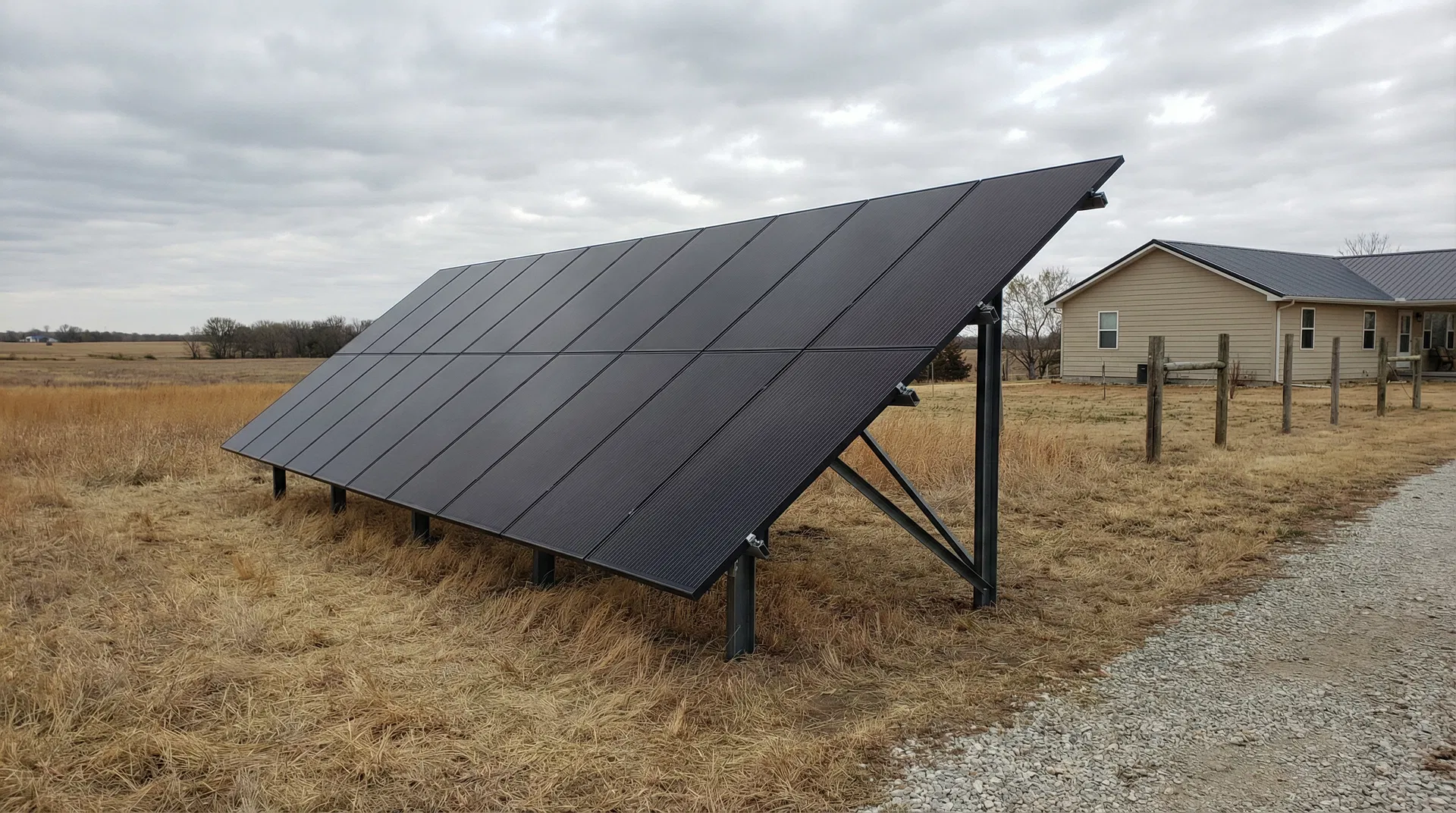
Solar solar battery Didsbury Alberta inquiries come in with a wide range of goals. Some customers want whole-home backup for outages. Others want to reduce what they draw from the grid during peak hours. A few need a system that can island completely if the line goes down. Battery storage addresses all of those, but the design has to reflect the specific goal or you end up with hardware that's either oversized or unable to carry the loads you care about most. We install LONGi solar panels, which handle the production side. Pair that with APsystems microinverters and you get panel-level monitoring and production resilience. If one panel underperforms due to shading or debris, the rest of the array keeps producing at full capacity. That granularity matters when a battery is part of the system, because you want consistent charging behaviour across changing conditions. The battery side of the design gets confirmed during the site review. We look at which loads you need backed up, how long you need them to run, and whether the battery is primarily for outage protection, self-consumption, or both. We don't recommend a battery size until we understand those priorities. Equipment and capacity are confirmed during property-specific design, not from a catalogue pick. For properties near Didsbury with shops, well pumps, or grain handling equipment, the battery design conversation gets more detailed. Those loads have higher surge demands at startup, and the system has to be built to handle them without tripping. We work through that before a single panel goes on a roof.
Solar Planning for Didsbury Properties
Properties in and around Didsbury sit on FortisAlberta distribution lines. That matters because FortisAlberta's micro-generation rules govern how your system ties to the grid, what gets credited, and what paperwork we file on your behalf. Getting that part right from the start avoids rework and delays down the line. Properties here vary widely. You'll find acreages with a house and a heated shop, hobby farms running irrigation or livestock equipment, and residential lots where the main concern is backup power during an outage. Each of those scenarios calls for a different system design. A house-only grid-tied system is sized differently from a setup that also needs to carry a shop load or provide overnight backup through a battery. Range Road Solar works through that design process before quoting anything. We start with your most recent power bill, which includes a 12-month usage graph, and then we look at your site: roof pitch and orientation, available ground space, shading from trees or outbuildings, and your panel and service entrance condition. That picture tells us what the system actually needs to do. We don't size off rule-of-thumb numbers. We size off your property.
Electrical Site Review for Didsbury Properties
Voltage Rise
Voltage rise happens when solar generation pushes voltage up along the distribution line between your property and the nearest transformer. On longer rural spans, that rise can be more pronounced than it would be on a dense urban circuit. When voltage rise is high enough, your inverters will clip output to stay within allowable limits, which reduces what the system actually produces. We assess voltage rise conditions during design to make sure the system is sized in a way that works within the electrical realities of your specific service point.
Single-Phase vs Three-Phase
Rural properties in Alberta are served by either single-phase or three-phase electrical service, and the two aren't interchangeable when it comes to inverter selection. Single-phase service is more common on residential acreages, while three-phase shows up on larger farm operations and some commercial properties. The phase configuration at your service entrance determines which inverter products are compatible and affects how much capacity the system can practically export to the grid. We confirm your service type during the site review before any equipment is specified.
Panel Infrastructure
Older electrical panels are common on rural Alberta properties, and not all of them have the breaker capacity to support a solar system without an upgrade. We assess breaker ampacity, available panel space, and the age and condition of the panel during our site review. If the existing panel can't safely handle the added generation and battery interconnection, we scope a panel upgrade as part of the project so the electrical infrastructure and the solar system go in together correctly.
Service Entrance Review
The service entrance and meter base are reviewed as part of every FortisAlberta micro-generation application. FortisAlberta checks that the meter base is in adequate condition to support the interconnection before approving the application. We inspect the meter base and service entrance before submitting anything, so if an upgrade is needed, we identify it upfront and include it in the project scope rather than having FortisAlberta flag it during their review.
Right-Sizing Solar for Didsbury Properties
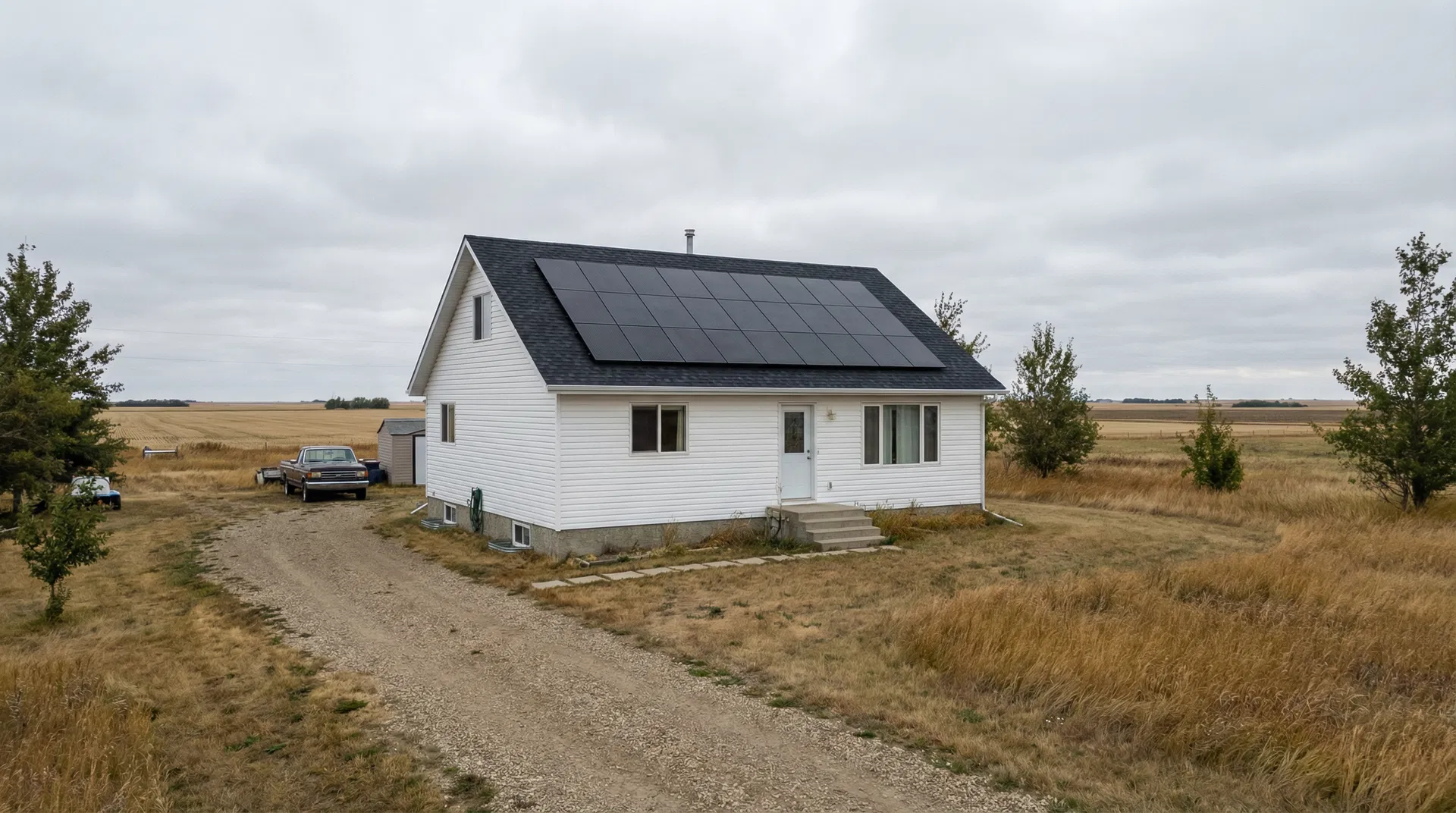
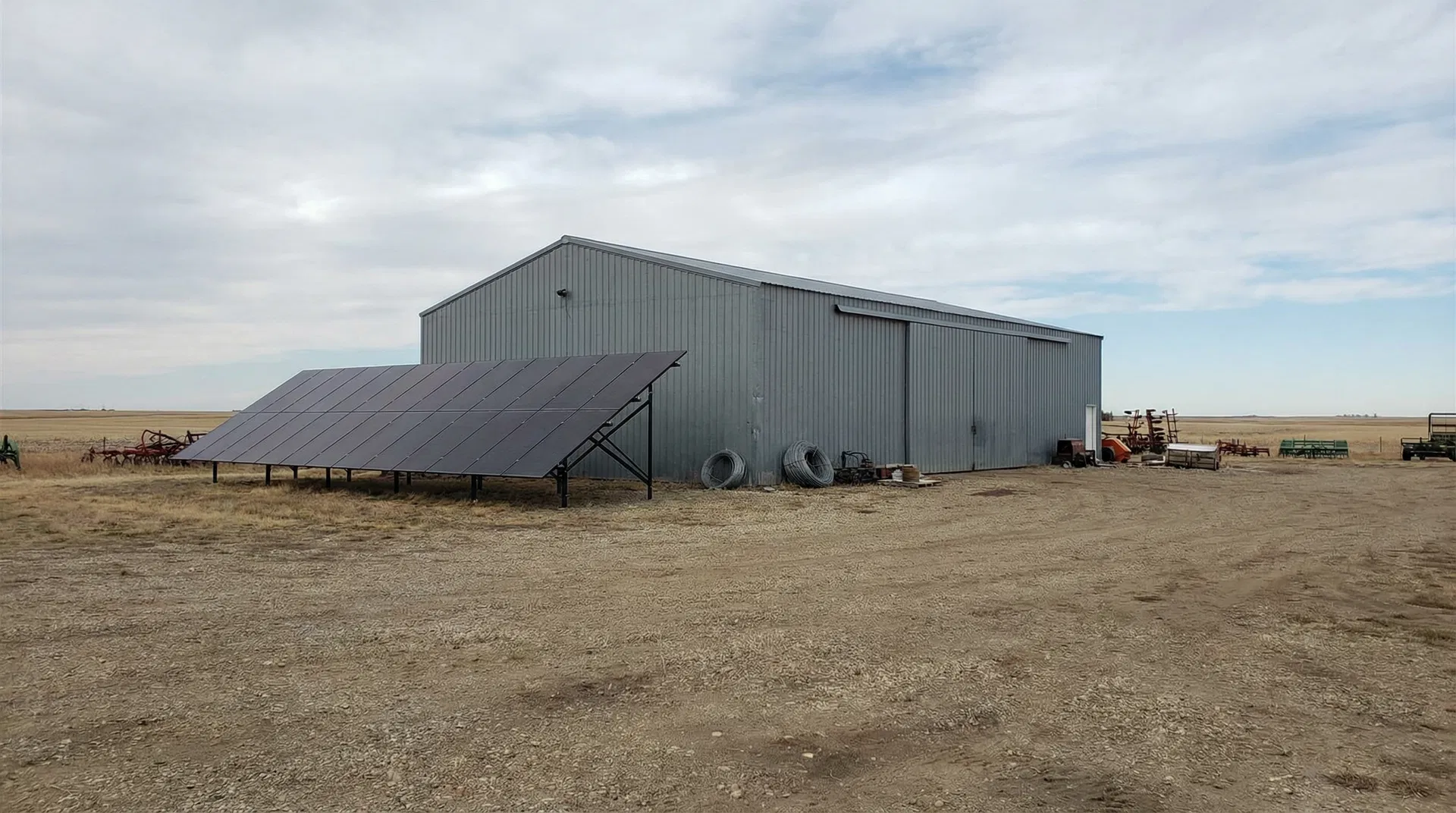
Rural properties carry more load than a city house. A typical acreage or farm operation near Didsbury might be running a heated shop, a house with electric heat or a heat pump, a well pump, irrigation equipment, or grain handling motors. Stack those together and the annual consumption can be two or three times what a residential lot in a subdivision uses. That's why we don't apply an urban rule-of-thumb to rural projects. The system has to be sized for what's actually on the property. Roof-mount works well when the house roof has the right pitch, a south or southwest orientation, and limited shading from trees or adjacent buildings. On acreages where the house roof is small, heavily shaded, or facing the wrong direction, a ground mount in the yard is often the cleaner answer. Ground mounts let us set the tilt and azimuth precisely, and they're easier to expand later if loads grow. Sizing starts with the 12-month usage graph on your most recent power bill. That graph shows us your seasonal consumption pattern and your peak months. We use that picture, combined with a look at your site, to model what a system in the 8 to 12 kW range would actually offset. We don't ask you to pull together a stack of old bills. One current bill is what we need. The usage history is already on it. Battery capacity gets sized alongside the solar array, not after. If the goal is overnight backup for critical loads, we size the battery for those specific loads. If it's whole-home coverage through a multi-day outage, that's a different conversation. We work through it with you before anything gets finalized.
Typical Load Profiles We Design For Near Didsbury
Home Plus Heated Shop
A house paired with a heated shop is one of the most common setups we see on acreages near Didsbury. The shop often runs a unit heater, compressors, and welding equipment, each of which draws differently across the day and season. We size the solar array from the combined 12-month consumption on your power bill and then size the battery to cover the loads that matter most during an outage, typically the house heating system, the well pump, and lighting, rather than trying to back up the whole property indefinitely.
Residential Lot with Backup Priority
Some customers in Didsbury aren't running a farm or shop. Their goal is straightforward: keep the house running when the power goes out. For that load profile, a system in the 8 to 10 kW range paired with a properly sized battery can cover essential circuits, including a furnace, refrigerator, and a few outlets, for a meaningful stretch without grid power. We identify those priority loads during the design review and size the battery to match them, not to a generic number pulled from a product sheet.
Acreage with Irrigation or Water System Loads
Properties running submersible well pumps or surface irrigation systems have load profiles that spike hard at motor startup. A 1.5 horsepower submersible, for example, can draw four to six times its running wattage at startup, and the battery and inverter system has to be built to handle that surge without tripping. We account for those startup demands during design so the system doesn't get specified to a nameplate running load and then fail the first time the pump kicks on.
FortisAlberta Interconnection in Didsbury
FortisAlberta is the wire service for Didsbury. Any solar or solar plus battery system that connects to the grid here goes through FortisAlberta's micro-generation interconnection process. That application requires a complete design package: system specs, single-line drawings, equipment documentation, and confirmation that the installation meets Alberta's electrical code requirements. Range Road Solar handles the interconnection application for you. We prepare the design package, submit it to FortisAlberta, and follow up through the review process. You don't have to figure out what FortisAlberta needs or how to format the submission. One thing worth knowing: if your meter base or service entrance isn't in condition to support a micro-generation connection, FortisAlberta will flag it during their review. We check for that before we submit anything, so there are no surprises mid-project. A meter base upgrade, if it's needed, gets scoped into the project upfront rather than discovered after the application is already filed.
Project Economics and Design Review
| System Size | Annual Production | Year 1 Savings | Payback Period |
|---|---|---|---|
| 8-12 kW range, 10 kW typical |
Production, savings, and payback estimates require a property-specific design and your most recent power bill.
How We Work in Didsbury
Bill and Load Review
We review your power bill to understand your energy use in Didsbury and size the system to your actual consumption, not a generic estimate.
Site Assessment
We assess your roof or ground area, south-facing exposure, electrical service, and utility interconnection requirements specific to your property.
Design and Utility Application
We produce a system layout, production estimate, and cost summary, then submit your micro-generation application to your utility on your behalf.
Installation and Commissioning
Our crew installs racking, panels, inverter, and electrical connections. All work is performed by licensed electricians. We commission and test before handoff.
Current Program and Interconnection Review
Utility connection review
FortisAlberta reviews the grid connection application for every micro-generation system installed in Didsbury. Range Road Solar prepares the full design package required for that submission and manages the application process on your behalf. We don't hand you a packet and tell you to figure out what to send.
Current program review
Commercial, farm, and residential solar installations may be eligible for programs or incentives depending on current rules at the time of installation. Eligibility criteria and available programs change, so we review what applies to your specific property type and installation at the time of your design review, not from a list that may be out of date.
Frequently Asked Questions
Get a Solar Assessment for Didsbury
Submit a recent power bill and we will review your consumption and provide an honest assessment for your Didsbury property. No obligation.
(587) 330-7502 Book a CallMore Solar Services in Didsbury