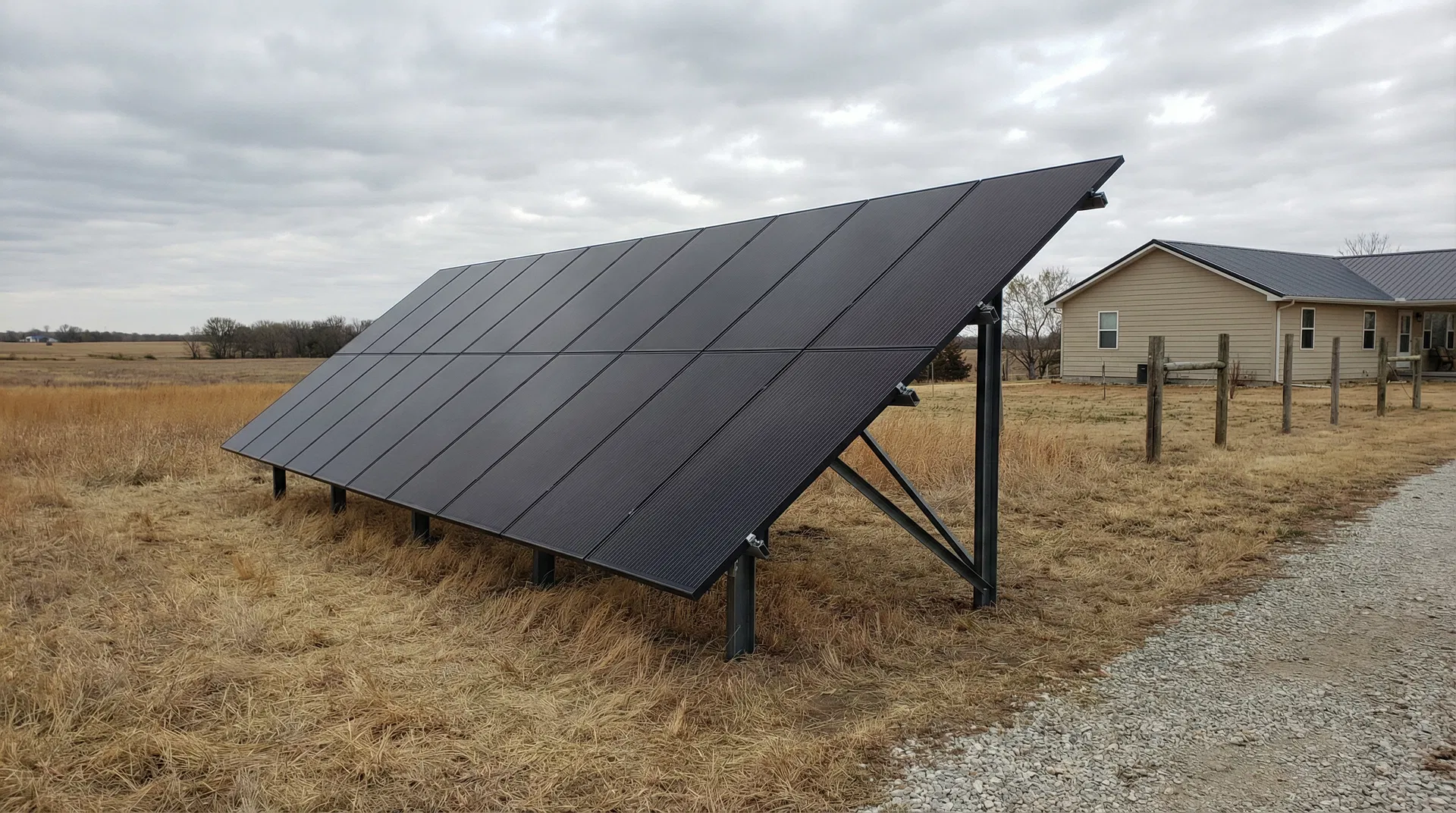
Solar battery storage in Didsbury, Alberta starts with a hybrid inverter and a lithium battery bank sized to your property. We install LONGi solar panels paired with hybrid inverters that manage both solar input and battery charging in a single unit. That matters on rural properties because it simplifies the electrical design and gives you cleaner control over what powers what during an outage. The systems we design for properties near Didsbury typically fall in the 8 to 20 kW range, with 12 kW being a common starting point for a home plus shop combination. Larger farm properties with multiple buildings or heavy motor loads often push toward the upper end of that range. Lithium battery storage is sized separately from the solar array. A 10 kW solar system doesn't automatically tell us how much battery you need. That depends on which loads you're backing up, how long you want runtime during an outage, and how many hours per day your critical loads are actually running. We design to your specific scenario. On acreage and farm properties, ground-mount arrays are common because roofs don't always face the right direction or carry enough unshaded area to fit the system. The battery and inverter equipment is typically installed inside, in a shop, mechanical room, or utility space, where it's protected and accessible. We don't just drop equipment and leave. The design is specific to your property, and we walk you through how the system operates before we're done.
Solar Planning for Didsbury Properties
Properties in and around Didsbury tend to carry real electrical loads. A shop, a well pump, a heated outbuilding, maybe grain handling or irrigation equipment. When the grid goes down, those loads don't stop mattering. Battery storage changes the equation. Instead of sending excess solar production back to the grid at whatever rate your retailer pays, a properly sized battery bank holds that energy and deploys it when your panels aren't producing, overnight, on cloudy days, or during an outage. FortisAlberta serves the area, and the way micro-generation credits work under their tariff means self-consumption has real value. Using your own solar production rather than exporting it is almost always the better outcome for properties with consistent daytime loads. Whether you're running a home office, keeping a shop operational, or just tired of losing power during storms, the design question is the same: what loads matter most, and how many hours of backup do you need? We figure that out from your most recent power bill and a site assessment, not from a guess.
Electrical Site Review for Didsbury Properties
Voltage Rise
Voltage rise happens when solar production pushes voltage up on the distribution line between your property and the nearest transformer. On longer rural service lines, the baseline voltage can already be elevated, which leaves less room for the additional rise that solar export creates. If voltage rise exceeds the allowable limit, FortisAlberta's interconnection rules require the inverter to clip output or shut down, which directly affects how much production your system delivers. We assess the line conditions at your service entrance during design and size the system to stay within the permitted limits.
Single-Phase vs Three-Phase
Rural Alberta properties can be served by either single-phase or three-phase electrical service, and that distinction shapes which inverters are compatible with your system. Most residential acreages run single-phase, but properties with larger shop equipment, grain handling systems, or irrigation infrastructure sometimes have three-phase service installed. Inverter selection and system capacity planning both depend on knowing which service type you have, so we confirm that during the site assessment before any design work is finalized.
Panel Infrastructure
Older electrical panels are common on rural properties that haven't had major electrical work done in decades. We assess breaker capacity, panel age, and available space for a solar breaker before we finalize the design, because an undersized or outdated panel can't safely support the additional circuits a solar-plus-storage system requires. If the panel can't accommodate the new loads, we include a panel upgrade in the project scope rather than leaving it as a problem to solve after installation.
Service Entrance Review
The service entrance and meter base are the connection points between your property's wiring and FortisAlberta's distribution system. We check the meter base condition, the main disconnect rating, and whether the existing service entrance is suitable for the micro-generation configuration required by FortisAlberta's application. A deteriorated or non-compliant meter base will need to be upgraded before FortisAlberta will approve the interconnection, so identifying that early keeps the project timeline from stalling later.
Right-Sizing Solar for Didsbury Properties
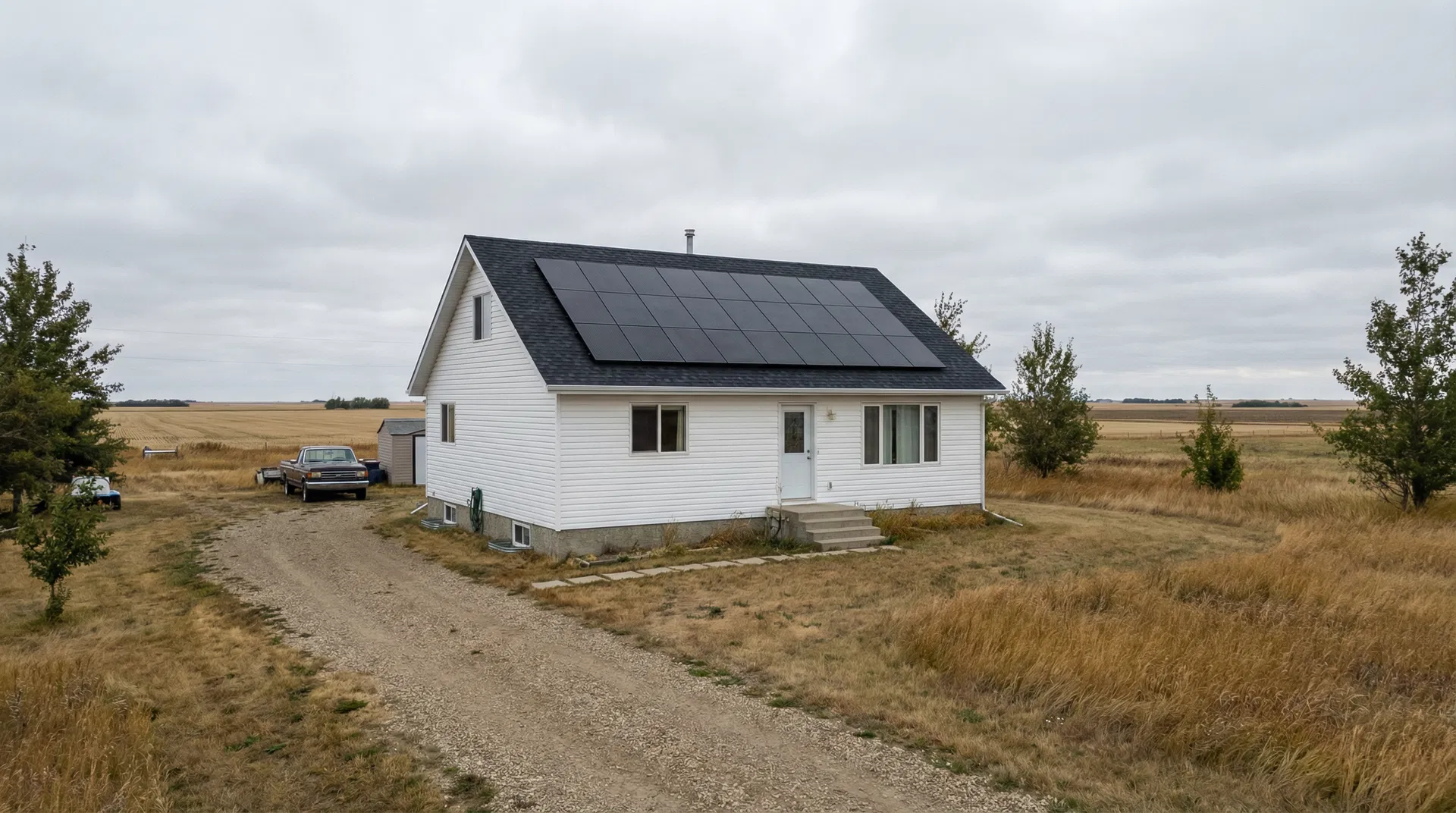
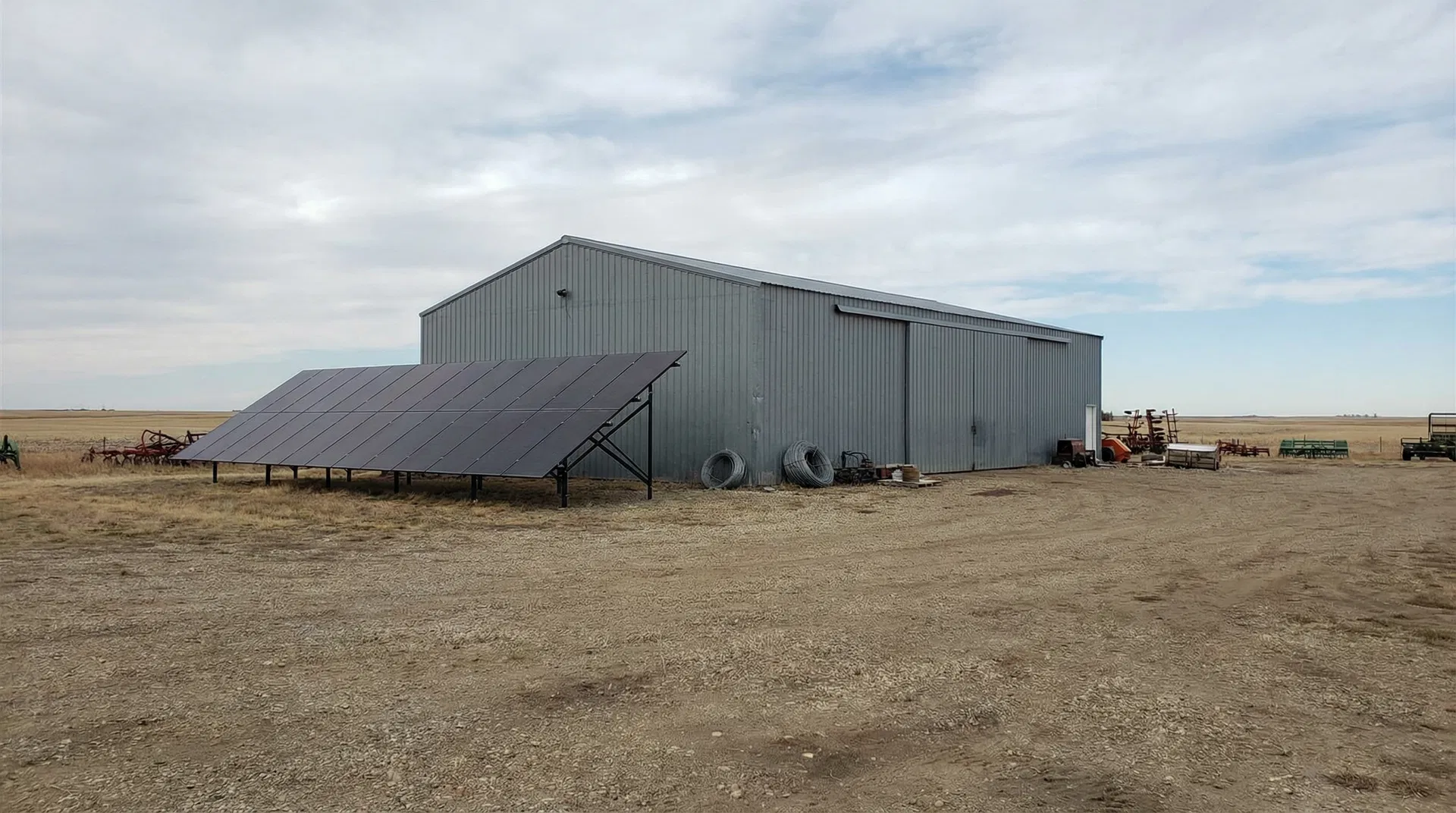
Rural properties near Didsbury carry more electrical load than a standard residential lot in a city. A home with a heated shop, a well pump, and a few outbuildings is drawing power from multiple sources at once. Add irrigation equipment or grain handling and the load profile gets more complex again. That's why systems in this area tend to land higher on the size range than suburban installations. We're not just covering a house. We're covering everything that runs on your meter. The roof-versus-ground-mount decision is the first practical question on acreage and farm properties. If the house roof faces the right direction, carries enough unshaded area, and has the structural capacity, it can work. But a lot of rural roofs don't. Barns face the wrong way. Trees shade the south side. The roof pitch isn't right. When that's the case, a ground-mount in the yard is the better call, and it's often easier to build to the size you actually need rather than compromising on a roof that doesn't fit. We size every system from the 12-month usage graph on your most recent power bill. That graph tells us how your consumption varies month to month, where your winter peaks are, and how big a system needs to be to meaningfully offset your usage. We don't use rule-of-thumb estimates. The bill is the starting point, the site design fills in the rest, and then we give you a production model that reflects your property specifically.
Typical Load Profiles We Design For Near Didsbury
Home Plus Heated Shop
A house paired with a heated shop is the most common load profile we see on acreage properties in this part of Alberta. The shop often runs 240V equipment alongside lighting and heat, which adds substantially to the total load especially through the winter months. We size the solar array and battery bank to cover both structures, with backup capacity prioritized for the loads that matter most if the grid goes down: heat, refrigeration, and the shop circuits the property depends on.
Acreage with Well Pump and Outbuildings
Properties with a well pump have a hard dependency on power that most urban solar customers don't think about. When the grid goes down and the pump stops, the water stops. A battery storage system sized to include well pump backup changes that, but the pump's starting current draw has to be factored into inverter selection because it's significantly higher than running current. We account for motor starting loads in the design, along with any outbuildings running on the same service, so the system isn't caught short when it matters.
Mixed-Use Farm Property
Grain handling equipment, irrigation controls, and livestock waterers can each draw meaningful power, and on a working farm they sometimes run simultaneously. Mixed-use farm properties often need systems at the upper end of the 8 to 20 kW range, and ground-mount arrays sized for the full farm load are common. We design from the 12-month usage graph on your most recent power bill and a conversation about seasonal load patterns, because a grain farm's August draw looks very different from its February draw.
FortisAlberta Interconnection in Didsbury
FortisAlberta is the wire service for Didsbury. Any solar system connected to the grid here requires a micro-generation application through FortisAlberta before the system can be energized. That application includes a technical package: single-line diagrams, equipment specs, and site information. Range Road Solar prepares and submits the full interconnection package on your behalf. You don't need to deal with FortisAlberta's technical requirements directly. We handle the application, respond to any technical questions from their engineering team, and coordinate the inspection process. For battery storage systems specifically, the interconnection package needs to reflect how the battery and hybrid inverter interact with the grid, including how the system disconnects during an outage. FortisAlberta's review process determines what's approved for your specific service and location. We don't quote timelines for that process because their review schedules change. What we can tell you is that we don't commission your system until interconnection approval is in hand. The paperwork is part of the job.
Project Economics and Design Review
| System Size | Annual Production | Year 1 Savings | Payback Period |
|---|---|---|---|
| 8-20 kW range, 12 kW typical |
Production, savings, and payback estimates require a property-specific design and your most recent power bill before any numbers can be confirmed.
How We Work in Didsbury
Bill and Load Review
We review your power bill to understand your energy use in Didsbury and size the system to your actual consumption, not a generic estimate.
Site Assessment
We assess your roof or ground area, south-facing exposure, electrical service, and utility interconnection requirements specific to your property.
Design and Utility Application
We produce a system layout, production estimate, and cost summary, then submit your micro-generation application to your utility on your behalf.
Installation and Commissioning
Our crew installs racking, panels, inverter, and electrical connections. All work is performed by licensed electricians. We commission and test before handoff.
Current Program and Interconnection Review
Utility connection review
FortisAlberta reviews all micro-generation interconnection applications for properties in the Didsbury service area. Range Road Solar prepares the full technical design package required for that application, including single-line diagrams and equipment documentation. We submit directly and manage the process on your behalf so you don't have to navigate FortisAlberta's technical requirements yourself.
Current program review
Residential, farm, and commercial properties may have access to programs or incentives that affect the economics of a solar or battery storage installation. Eligibility rules and program availability change, so we review what's currently accessible for your property type at the time of design. We don't quote programs that may have changed or ended since the last time we checked.
Frequently Asked Questions
Get a Solar Assessment for Didsbury
Submit a recent power bill and we will review your consumption and provide an honest assessment for your Didsbury property. No obligation.
(587) 330-7502 Book a CallMore Solar Services in Didsbury