Solar battery storage Carstairs Alberta installations we complete use hybrid inverters paired with lithium battery storage and LONGi solar panels. The hybrid inverter is the core of the system. Unlike a standard string or microinverter setup, a hybrid inverter manages power flow between the panels, the battery, the home or building loads, and the grid simultaneously. It decides in real time whether to charge the battery, export to the grid, or power your loads directly from the panels. For properties in and around Carstairs, that architecture matters. Farms and acreages with shops, heated outbuildings, or irrigation loads have variable demand through the day and through the year. A battery system that's sized correctly for that variability keeps you from exporting cheap and importing expensive. It also keeps your critical loads running when FortisAlberta's lines go down. We size battery capacity based on which loads you want backed up and for how long. A system backing up a home's essential circuits, fridge, furnace, lights, and a few outlets, has different requirements than one designed to carry a heated shop through a multi-day outage. We work through that with you during the design review so the battery bank isn't oversized or undersized for what you actually need. All systems are designed to meet FortisAlberta's interconnection standards. We handle the micro-generation application and the design package. You don't need to navigate that process on your own.
Solar Planning for Carstairs Properties
Properties in the Carstairs area sit on FortisAlberta's distribution network. That matters for how a solar and battery system connects to the grid, how your micro-generation application is filed, and how the system is designed to work within utility rules. It's not a detail you should leave to guesswork. Battery storage adds a layer to that planning. A grid-tied solar system without storage goes dark when the grid goes down, because the inverter shuts off to protect line workers. Add a battery and a hybrid inverter, and the system can island your critical loads during an outage. That's a real advantage for acreage and farm properties where a power cut can mean more than an inconvenience. At the same time, storage can increase how much of your own solar production you actually use, rather than sending it to the grid at whatever the current credit rate happens to be. The right balance between solar capacity and battery size depends on your property's load profile, your power bill, and what you're trying to accomplish. We don't apply a generic formula. We look at your actual usage data and site conditions before recommending anything.
Electrical Site Review for Carstairs Properties
Voltage Rise
Voltage rise occurs when a solar system pushes power back onto the distribution line and raises the local line voltage above acceptable limits. On rural FortisAlberta lines, the distance from the substation and the line characteristics of a given area can make voltage rise more pronounced than in dense urban grid sections. If voltage rise is too high, the inverter clips production or shuts down to protect the grid, which reduces what your system actually delivers.
Single-Phase vs Three-Phase
Properties in rural Alberta may have single-phase or three-phase service depending on how the site is set up and what loads it was built for. Farms with large motors, grain handling equipment, or three-phase shop loads often have three-phase service, which changes which inverter configurations are compatible and how system capacity can be distributed across phases. We confirm your service type during the site assessment before recommending any inverter or battery configuration.
Panel Infrastructure
Older electrical panels on rural properties often have breakers that are at or near capacity before a solar system is added. We assess your panel's breaker capacity, the age of the panel, and whether the busbar rating can accommodate the back-fed solar breaker that a grid-tied system requires. If the existing panel can't support the system safely, a panel upgrade is scoped into the project before equipment is ordered.
Service Entrance Review
The service entrance and meter base condition are reviewed as part of every site assessment because FortisAlberta's micro-generation application requires the meter base to meet current utility standards. If the meter base is outdated or damaged, FortisAlberta will flag it during their review. We identify that ahead of time so the upgrade is planned before submission, not discovered mid-approval.
Right-Sizing Solar for Carstairs Properties
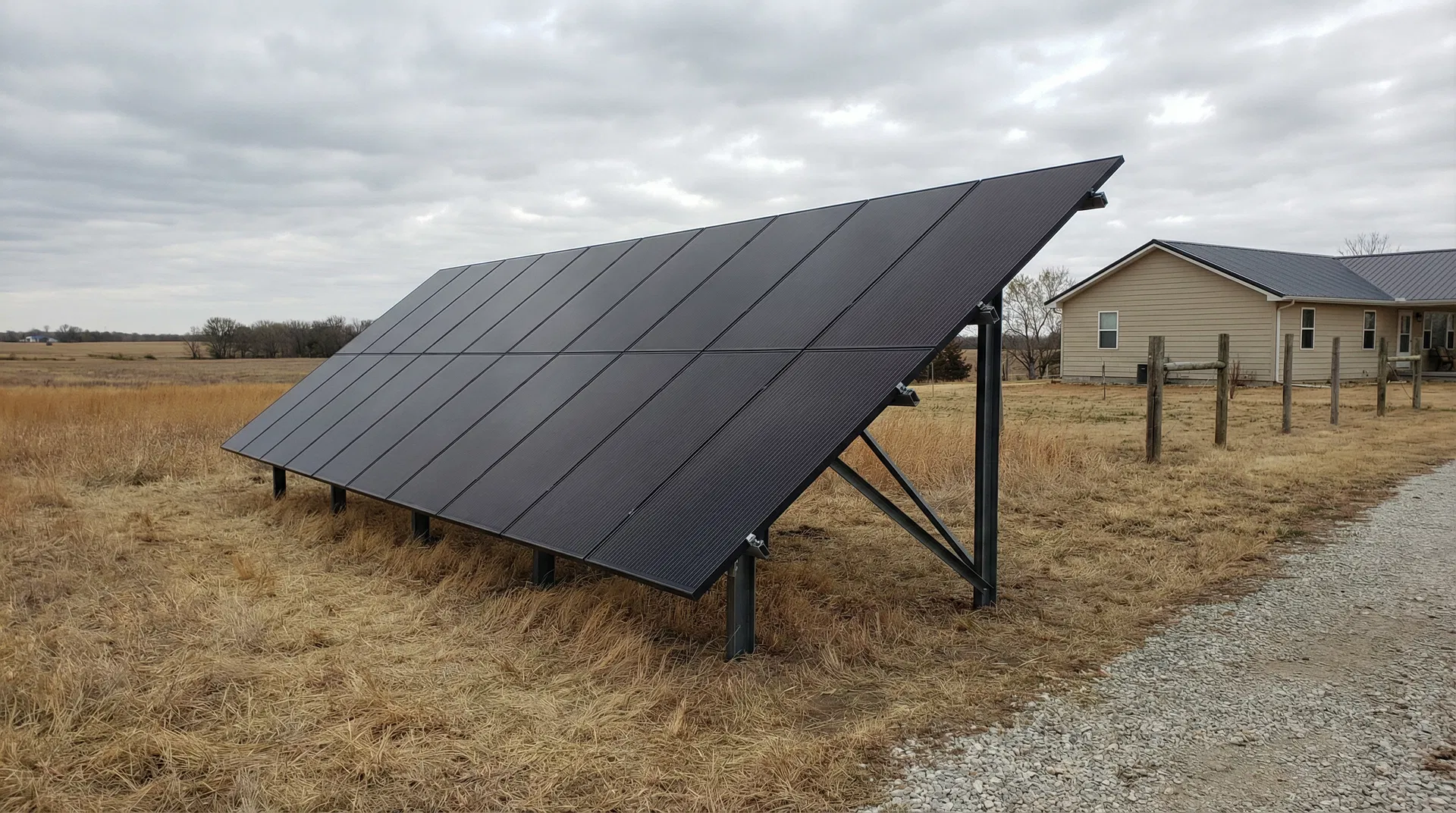
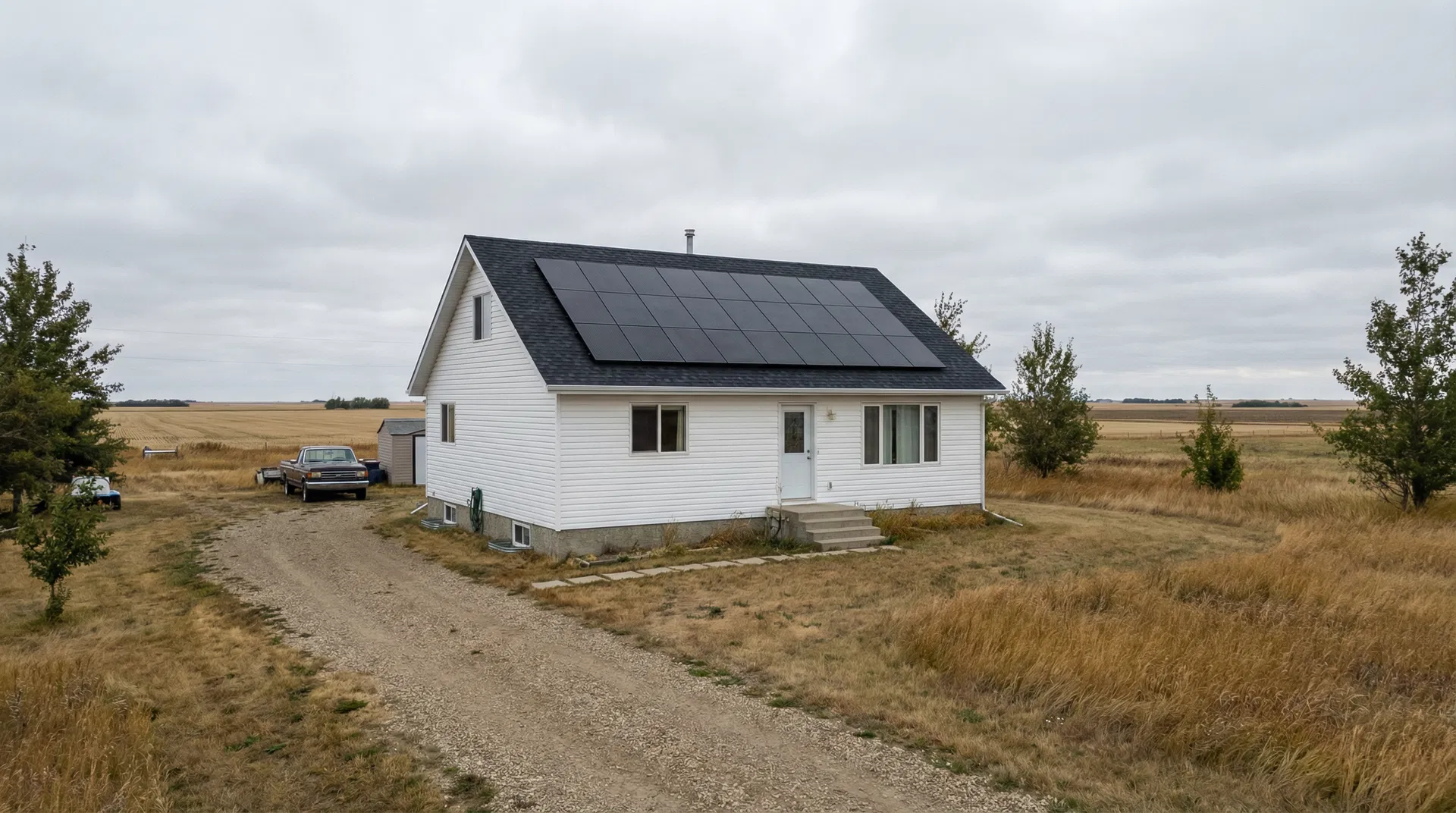
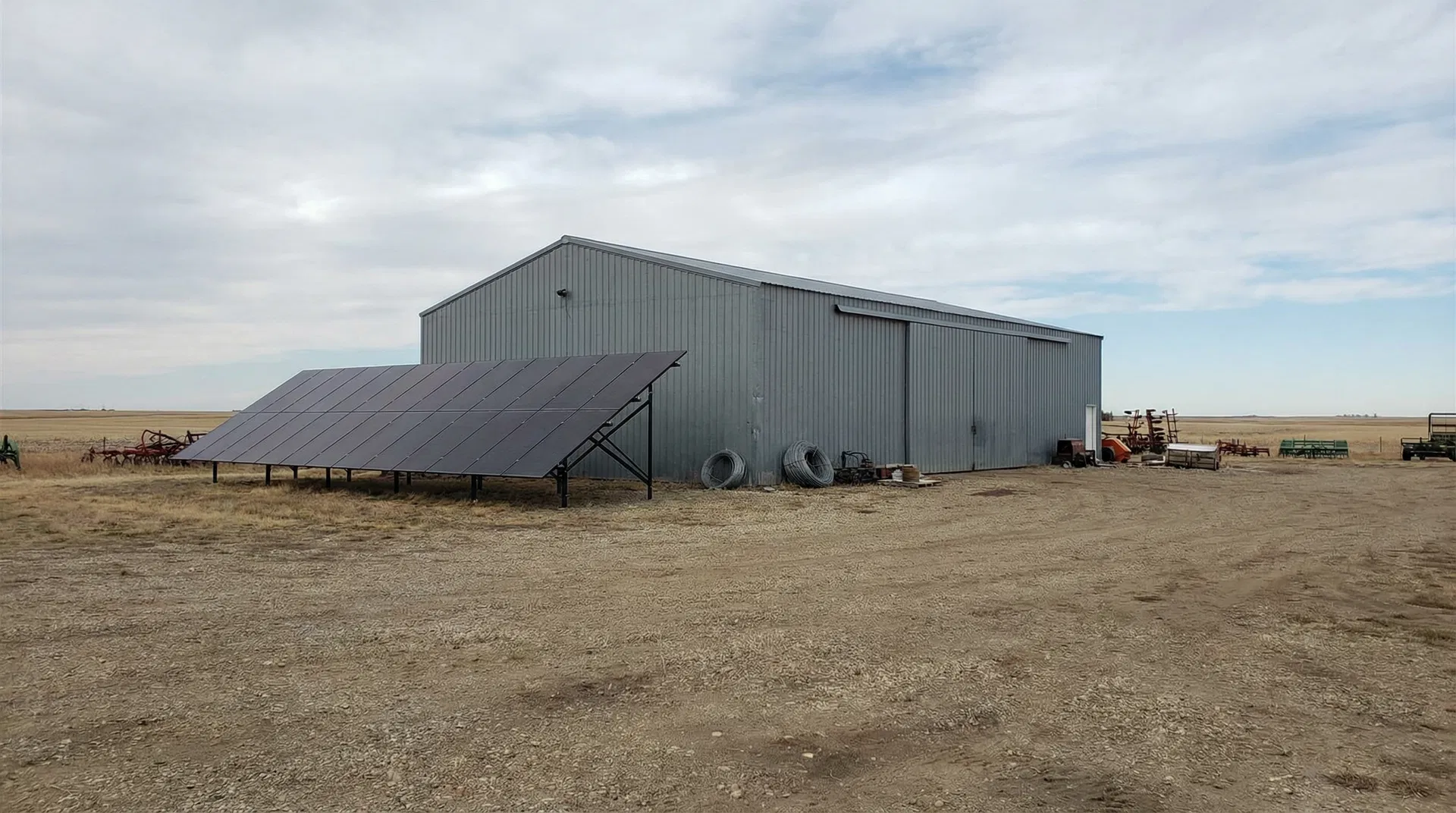
Rural Alberta properties typically carry more electrical load than a city house. It's not just the home. It's the heated shop, the outbuildings, the stock waterers, the grain auger, the irrigation pump. When you add those loads together, the system size needed to offset meaningful consumption is often well above what a standard residential solar quote would produce. That's why the 8 to 20 kW range for solar and battery systems in this area reflects actual load realities, not a sales bracket. Roof-mounted systems work well when the pitch and orientation are right and there's no heavy shading from trees, bins, or adjacent buildings. But a lot of acreage and farm layouts don't have a single roof that faces the right direction with enough unshaded area. In those cases, a ground-mount gives you full control over orientation and tilt, and lets you place the array where it actually gets the most sun rather than where the barn happens to be. We size every system from the 12-month usage graph on your most recent power bill. That graph shows seasonal variation, which matters for a battery storage system because summer and winter load profiles on a farm property can look completely different. We don't use rule-of-thumb numbers like watts per square foot. We look at what your property actually used, month by month, and design a system that addresses that pattern. That's the difference between a system that performs and one that just looks good on paper.
Typical Load Profiles We Design For Near Carstairs
Home Plus Heated Shop
A home with a heated detached shop is one of the most common setups in the Carstairs area. The shop typically runs electric heat, a compressor, and power tools, which creates a morning and evening load spike that a well-sized battery can help manage by discharging during peak periods. We size the battery bank against the shop's heating load and the household's baseline to determine how many hours of backup the system can realistically carry.
Acreage with Well Pump and Stock Waterers
Properties with a well pump and electric stock waterers have constant low-level loads that run through the night. A 12 kW solar system paired with adequate battery storage can cover those loads through short outages without the generator starting. We design the backup circuit layout to include the pump and waterers as priority loads, separate from discretionary loads like a hot tub or secondary shop circuits.
Small-Scale Grain and Mixed Farm Operation
Farms running grain handling equipment, bin aeration fans, and a yard light circuit have episodic high-draw loads that shift with the season. Battery storage on these properties is often sized more for outage protection and overnight load coverage than for peak shaving, because the aeration and auger loads are too large for most residential battery banks to carry on their own. We design the system to protect critical circuits and let the solar offset the continuous background load year-round.
FortisAlberta Interconnection in Carstairs
FortisAlberta is the wire service for Carstairs. That means any solar or battery storage system installed on a property here connects to FortisAlberta's distribution infrastructure and is subject to FortisAlberta's micro-generation application process. Range Road Solar handles that application. We prepare the design package, single-line diagrams, equipment specs, and interconnection documentation that FortisAlberta requires. You don't submit anything yourself. We manage the process from the initial design through to approval and commissioning. For battery storage systems specifically, the hybrid inverter configuration and the system's anti-islanding and grid-connection settings all need to meet FortisAlberta's technical requirements. We design to those standards from the start, which avoids rework after submission. If your property has conditions that require additional review, we flag those early rather than after equipment is ordered. FortisAlberta's requirements for metering and service entrance condition also factor into the application. We review your meter base and service entrance as part of the site assessment so there are no surprises during the utility review.
Project Economics and Design Review
| System Size | Annual Production | Year 1 Savings | Payback Period |
|---|---|---|---|
| 8-20 kW range, 12 kW typical |
Production, savings, and payback estimates require a property-specific design and your most recent power bill to be accurate.
How We Work in Carstairs
Bill and Load Review
We review your power bill to understand your energy use in Carstairs and size the system to your actual consumption, not a generic estimate.
Site Assessment
We assess your roof or ground area, south-facing exposure, electrical service, and utility interconnection requirements specific to your property.
Design and Utility Application
We produce a system layout, production estimate, and cost summary, then submit your micro-generation application to your utility on your behalf.
Installation and Commissioning
Our crew installs racking, panels, inverter, and electrical connections. All work is performed by licensed electricians. We commission and test before handoff.
Current Program and Interconnection Review
Utility connection review
FortisAlberta reviews all micro-generation grid connection applications for properties in the Carstairs area. Range Road Solar prepares and submits the full design package on your behalf, including the single-line diagram, equipment specifications, and interconnection documentation. You don't need to manage that process yourself.
Current program review
Residential, acreage, and farm solar and battery storage installations may be eligible for federal or provincial programs depending on the property type and current program rules. We review eligibility against whatever programs are active at the time of your design review. Rules and eligibility criteria change, so we confirm them at design time rather than quoting from outdated information.
Frequently Asked Questions
Get a Solar Assessment for Carstairs
Submit a recent power bill and we will review your consumption and provide an honest assessment for your Carstairs property. No obligation.
(587) 330-7502 Book a CallMore Solar Services in Carstairs