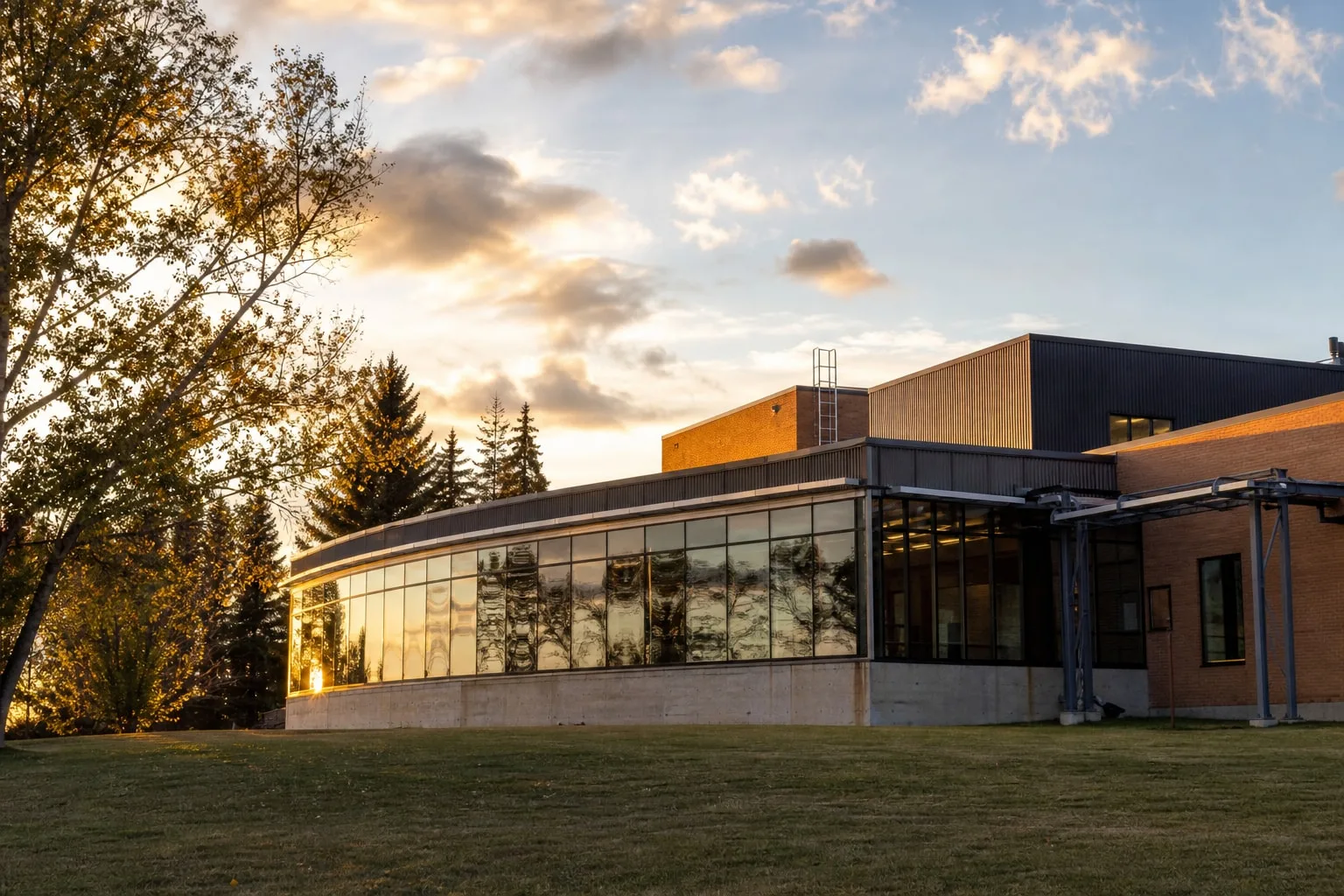
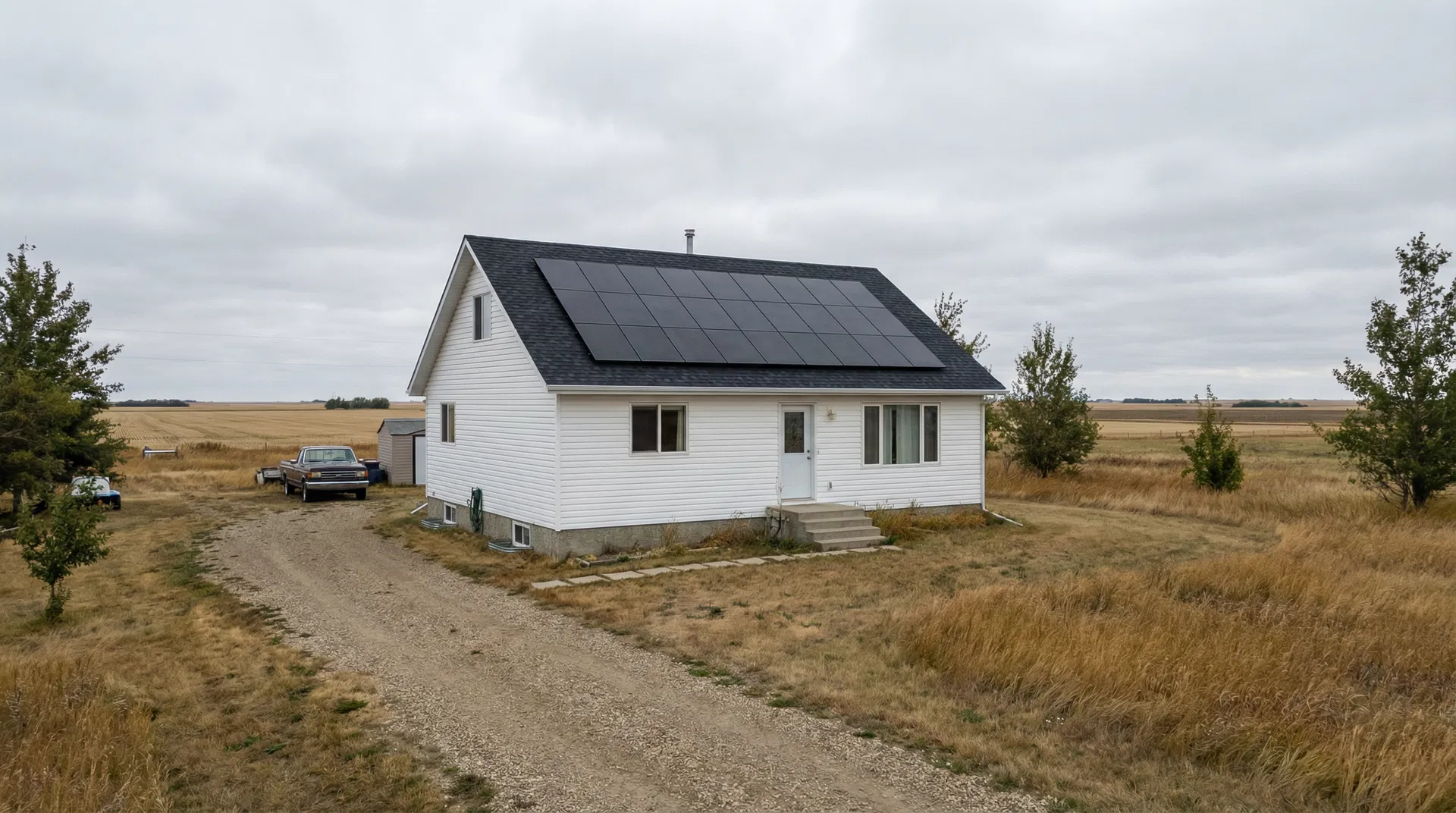
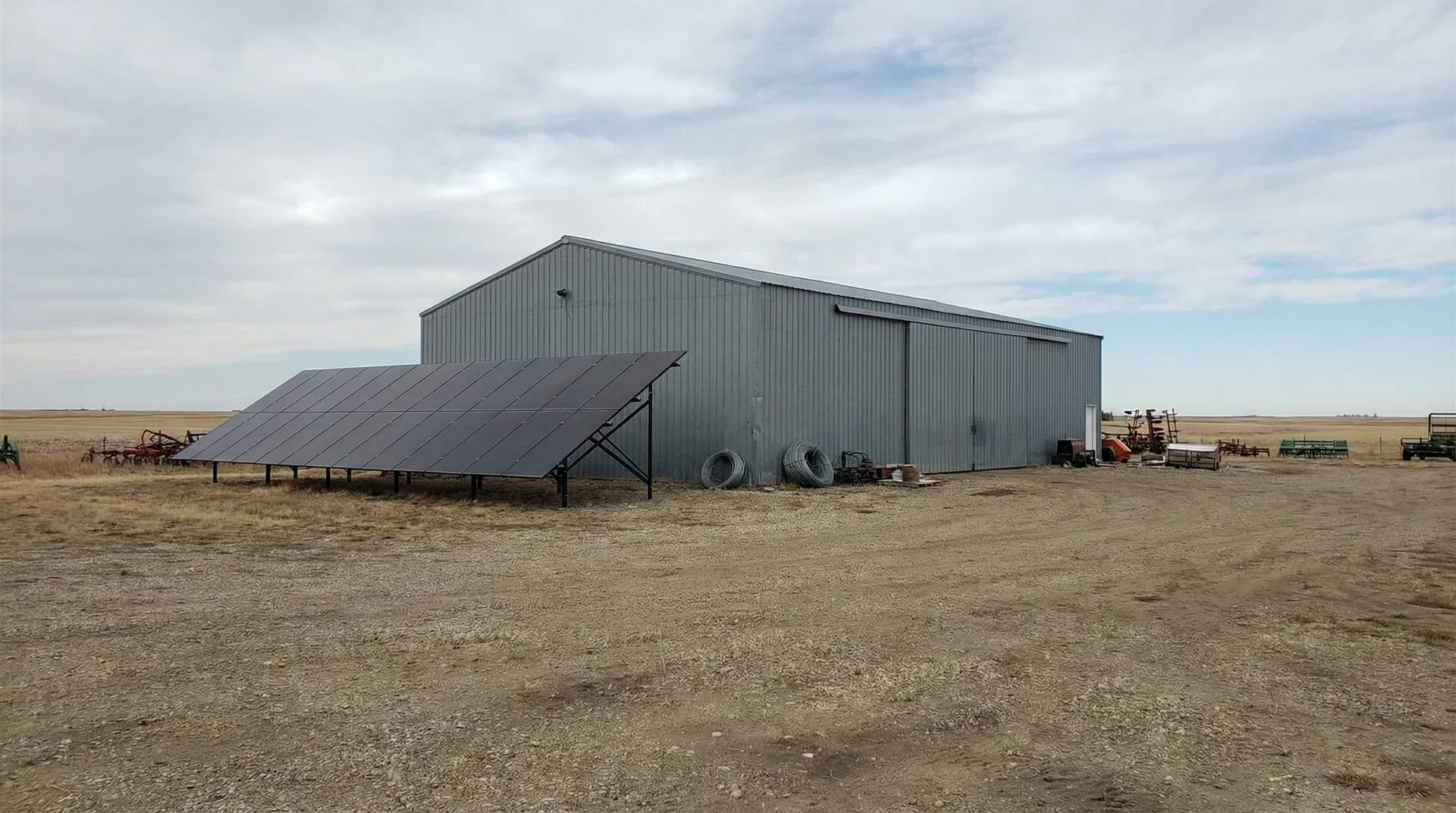
If you're searching solar olds, you're probably trying to find out who actually shows up to assess a roof or a shop instead of quoting a system off satellite photos. Range Road Solar installs LONGi panels paired with APsystems microinverters on every project we take on in the area, from in-town bungalows to acreages and working farms. LONGi panels give us a reliable, well-tested module to work with regardless of roof orientation, and APsystems microinverters let each panel operate independently, which matters when a chimney, a dormer, or a shelterbelt of trees throws partial shade across part of an array. That module-level independence also makes troubleshooting simpler down the road: if one panel underperforms, it doesn't drag the whole string down with it. Most residential and acreage systems here fall in the 8 to 15 kW range, with 10 kW being a common starting point before we add shop or outbuilding load into the design. Roof mount is the default on standard in-town lots, but properties with outbuildings, open yard space, or a roof that doesn't face a usable direction often end up better served by a ground-mounted array. We walk every property in person before we finalize a design: panel count, inverter placement, conduit runs, and where the system ties into your existing panel all get worked out on site, not over the phone. The equipment doesn't change from one property to the next, but the layout always does.
Solar Planning for Olds Properties
The Town of Olds sits within Mountain View County, incorporated on July 1, 1905, and growth here has been steady rather than explosive: the 2021 census counted 9,209 residents, up from 9,184 in the prior count. That kind of slow, real growth means most properties we see are established, not brand-new builds, which makes site assessment easier since we're often looking at years of utility history instead of guessing. Agriculture remains a core part of the local economy, and Olds College anchors a lot of activity on the north side of the area, so we design for a mix of in-town residential roofs, acreages on the edge of the county grid, and working farm properties with shops, grain bins, and irrigation pumps pulling real load. We don't guess at system size from a brochure. Every design starts with your most recent power bill and a site walk: roof pitch, shading, panel capacity, and whether a ground mount on open land makes more sense than the roof. For most properties here that lands in the 8 to 15 kW range, but the actual number comes out of your usage graph and your property, not a formula we apply to every address in the area.
Electrical Site Review for Rural Properties
Voltage Rise
Voltage rise happens when the distance and wire gauge between a property and the nearest transformer cause voltage to climb as a solar inverter pushes power back onto the line, and rural feeders with long runs are more prone to it than short urban ones. If voltage on your feeder is already running high, the inverter can clip output to stay within its safe operating range, which caps how much of your system's rated capacity you actually see. That's one of the things we check before finalizing system size, not after installation.
Single-Phase vs Three-Phase
Rural Alberta properties show up with both single-phase and three-phase electrical service, and which one you have affects which inverters are even compatible with your system. Three-phase service generally gives more flexibility for larger systems and heavier shop or outbuilding loads, while single-phase service works fine for smaller systems but narrows the inverter options. We confirm which service type a property has early in the design process, since it shapes equipment selection from the start.
Panel Infrastructure
Older rural properties often have electrical panels sized for the loads of decades ago, not a home with a shop, a well pump, and a solar interconnection added on top. We check breaker capacity, panel age, and available bus space before finalizing a design, because a panel already near its rated capacity can't simply have a solar breaker added to it. When an upgrade is needed, that usually means a licensed electrician swaps in a panel with more capacity and headroom before the solar installation moves forward.
Service Entrance Review
The meter base and service entrance are part of what FortisAlberta looks at when it reviews a micro-generation application, so we inspect their condition as part of every site visit. Corrosion, outdated equipment, or a meter base that isn't rated for a two-way feed can hold up an application even when the rest of the system design is solid. If an upgrade is required, we flag it during the design review so it gets handled before the paperwork goes in, not after it gets kicked back.
Right-Sizing Solar for Your Property
Rural systems tend to run bigger than a typical in-town roof install, and it's rarely just the house driving that. A property might have a home, a heated shop, a well pump, and maybe a grain bin or irrigation setup all pulling from the same service, and each of those loads gets added into the sizing conversation before we land on a number. That's part of why the 8 to 15 kW range covers so much ground: a modest home-only system sits at one end, and a home-plus-shop-plus-outbuildings setup sits at the other. Roof versus ground mount comes down to the property itself. A roof with good south or west exposure and no shade from trees or outbuildings is often the simplest path. But if the roof is shaded, poorly pitched, or just doesn't face a useful direction, and there's open yard space to work with, a ground-mounted array on a sturdy racking system is usually the better call, especially on acreages with room to spare. Either way, we size the system from the 12-month usage graph printed on your most recent power bill, not a rule-of-thumb multiplier. That graph shows seasonal swings, baseline load, and peak months, and combined with a site visit, it tells us what the system actually needs to offset, which is a more honest starting point than guessing from square footage.
Typical Load Profiles We Design For
Home Only
A standalone home with no shop or major outbuildings is usually the simplest load profile we design for, and it's typically where a system lands closer to the 8 kW end of our range. We size it off the usage graph on your most recent power bill rather than square footage, since two similar-looking homes can carry very different loads depending on heating type and appliances.
Home Plus Heated Shop
Add a heated shop to the mix, with a furnace, lighting, and maybe a compressor or welder, and the load profile changes substantially; this is where systems often move toward the 12 to 15 kW end of the range. Three-phase service, if the property has it, usually opens up more inverter options for a load profile like this.
Farm Operation with Outbuildings
Working farm properties with grain handling equipment, irrigation pumps, or multiple outbuildings on one service tend to have the most complex load profiles we design for, often with sharp seasonal peaks tied to harvest or irrigation season. We look closely at the usage graph's peak months for these properties, since a system sized only on average monthly use would undersize for the heaviest weeks of the year.
FortisAlberta Interconnection in Olds
FortisAlberta is the wire service for this area, and that's who we file the micro-generation interconnection application with once your system design is finalized. We handle that application as part of the project: the technical drawings, the site plan, and the paperwork FortisAlberta requires to review a grid-tied solar system before it's energized. You won't be the one chasing down forms or guessing what a utility reviewer wants to see. Every property on FortisAlberta's system gets reviewed individually. We don't promise a specific approval timeline because FortisAlberta sets its own review schedule, and we don't make claims about credit carryover, payout structure, or rate treatment because those are utility and retailer policies that can change. What we do is build a complete, accurate application package and submit it correctly the first time, which is the part actually within our control. If anything about your property's connection, like service size or existing infrastructure, needs a closer look before we apply, we'll flag it during the design review, not after.
Project Economics and Design Review
| System Size | Annual Production | Year 1 Savings | Payback Period |
|---|---|---|---|
| 8-15 kW range, 10 kW typical |
Actual production, savings, and payback depend on a property-specific design and your most recent power bill, and we won't quote numbers without both.
How We Work in Olds
Bill and Load Review
We review your power bill to understand your energy use in Olds and size the system to your actual consumption, not a generic estimate.
Site Assessment
We assess your roof or ground area, south-facing exposure, electrical service, and utility interconnection requirements specific to your property.
Design and Utility Application
We produce a system layout, production estimate, and cost summary, then submit your micro-generation application to your utility on your behalf.
Installation and Commissioning
Our crew installs racking, panels, inverter, and electrical connections. All work is performed by licensed electricians. We commission and test before handoff.
Current Program and Interconnection Review
Utility connection review
FortisAlberta reviews every micro-generation grid connection application on its own merits, checking the technical design against its interconnection standards before a system gets approved to tie in. Range Road Solar prepares that full design package, drawings, specs, and site plan, and submits it on your behalf. We don't control FortisAlberta's review process, but we make sure nothing in the application itself causes a delay.
Current program review
Eligibility for commercial, farm, and residential solar programs shifts depending on property type, system size, and the rules in place at the time of your design, so we check current eligibility against your specific property rather than assuming last year's rules still apply. That review happens as part of the design process, before anything gets finalized.
Frequently Asked Questions
Get a Solar Assessment for Olds
Submit a recent power bill and we will review your consumption and provide an honest assessment for your Olds property. No obligation.
(403) 367-5999 Book a CallMore Solar Services in Olds